Stop Making Me Defend Joe Biden!

Once again, the accountability concept is eluding Democrats.

Joe Biden is many things, few of them admirable, though he has been bolstered by either gullible or complicit journalism for decades, He is not, however, responsible for the gruesome state of the current Democratic Presidential field, nor is it Joe’s fault that Democrats are facing the prospect another defeat at the hands of Donald Trump, this one worse than the first.

In the wake of the impending collapse of Biden’s campaign, accelerated by his embarrassing showing in New Hampshire, the memo has already gone out, it seems, recruiting pundits and others to blame Joe for the current mess.

Jonathan Chait has always been one of the less impressive progressive mouthpieces in the news media, with “think pieces” that seldom show much quality thought and advocacy skills that would fail a First Year law student moot court competition. Chait was in typical form, which is to say “poor,” with this essay  titled “Biden’s Campaign Was a Disaster For Liberalism and the Democratic Party,” which concludes,

Right. It’s Joe’s fault. The fact that the Democrats tossed away all the traditions of minimal cross- party comity and attempted a never-ending coup for President Trump’s entire term: that’s on Joe. The fact that three anti-Jewish, anti-American, far, far Left women prone to saying vulgar, stupid and bigoted things, handicapped by varied ethical problems have become prominent symbols of the Democratic Party: Biden’s fault. That the Dracula-like romance between disaffected members of the Left coalition and government dominance over the economy and personal liberties has once again risen from the dead…it’s that damn Biden again! The contrived impeachment was botched so badly that it made the President more popular rather then less? That’s Joe’s doing too. Continue reading →

Lunchtime Ethics Appetizer, 2/12/20: With Just Desserts!

Bon Appetite!

In a perfect example of how avoiding bias can create bias, I am accumulating a backlog of genuine and valuable ethics stories that are triggered by or related to political developments, and deliberately talking myself out of posting them. As regular readers here know, this has been a problem since the beginning of the Trump administration, when the Democrats, the resistance and most of the media  resolved to try to bring him down and cancel the election results with a campaign to delegitimize President’s Trump’s election. I regard this as one of the greatest ethics crises in U.S. history (another, running concurrently, is the near complete abdication of professional ethics by journalists), and I can’t ignore it. But doing my job, as repetitious as it seems, also means that I am reluctant to write about other political stories that I would have included otherwise, and often they involve important issues.

1. Which reminds me: One of the Washington Post’s most reliable anti-Trump columnists, Greg Sargent, issued an opinion piece that would be a strong entrant in a “Hypocrite of the Year” competition. Here’s the line that made my head explode: “Such delegitimization of the opposition strikes at the core of our system. Recognizing the opposition’s legitimacy is a key pillar of accountability in government…”

Astounding! Sargent’s ideologically compatible pals have been working overtime to deny the legitimacy of Trump’s election, from attacking the Electoral College to claiming a Russian conspiracy,  encouraging and cheering “Not my President!” demonstrations, manufacturing impeachable offenses out of thin air, and turning such once-neutral and unifying events as the Inauguration, the Kennedy Center Honors and the White House Correspondents Dinner—and more recently, a State of the Union address where the speaker of the House, on camera, symbolically rejected the legitimacy of the speech by ripping it up on live TV——into opportunities to directly challenge this President’s right to be in office and to be accorded the same respect and civility of his predecessors. If anyone who has been part of this assault, and Sargent definitely has, makes the accusation that Trump is wrong to “delegitimize the opposition,” that critic is either deliberately gaslighting the public, or so devoid of self-knowledge as to be functionally crippled.

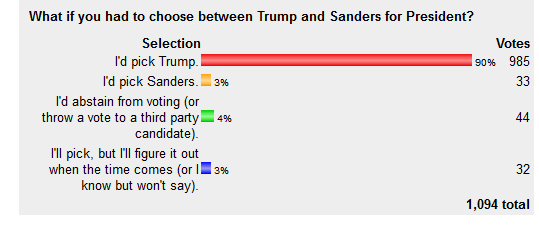
2. Here’s an unscientific poll result that should give Democrats chills. Ann Althouse asked her readers whether they would vote for Bernie Sanders or President Trump if that was the choice in November. Ann readership is Madison, Wisconsin heavy, consisting of many of her former students. She is resolutely politically neutral, laning Left, as she voted for both Hillary and Obama, twice. She has also criticized many of the attacks on Trump, including in the news media, causing her commenters, if not her readership, to see an exodus by the Trump-Deranged, much as what has occurred on Ethics Alarms. Those commenters remaining, I believe, are not uncritical of the President, and I would expect to find them on the “disapprove” side in a Gallup poll. I was very surprised at Ann’s poll results:

In a related development… Continue reading →

Ethics Hero: Exotic Dancer Genea Sky, Who Kept A-Goin’

To get the day off to an inspirational start: in the video above, now going viral across the net and deservedly so, Dallas exotic dancer Genea Sky falls almost 15 feet from her pole, lands on her face, and keeps twerking until she leaves the stage for urgent medical attention. The fall, which occurred over the weekend,  fractured the dancer’s jaw, which was operated on the next day, broke some teeth,  teeth and sprained her ankle.

On the plus side, she provided a visual example of professionalism, dedication, and guts for the ages. Her diligence in continuing to dance even after the accident is a marvelous exhibition of character. A GoFundMe page set up to help pay her medical expenses has raised more than $20,000.

Good. Sky deserves it. She had a job to do, and by God, she was going to do it. Continue reading →

Evening Ethics Reflections, 2/11/2020, While Waiting For Joe Biden To Go Down

Hi!

It looks like Joe Biden will end up fourth or worse in the New Hampshire primary, and if he does, it will all be over but for the shouting, or in Joe’s case, the blathering. This was pre-ordained from the second Joe entered the race: how anyone knowledgeable and paying minimal attention could see Joe was a shell of his former self, and his former self was never anything to get excited about in the first place. I have never believed that President Trump thought Biden was a threat to defeat him; if his determination to unravel the Biden’s influence peddling in the Ukraine had a personal component, it was that he just wanted to stick it to Joe and expose his hypocrisy. We will never know, I guess. But I assume trump knew he didn’t need to “cheat” to beat Biden.

It’s amusing and somehow fitting that Joe’s inexplicable “Lying dogfaced pony soldier” outburst is serving as a tipping point, with a lot of people suddenly smacking their heads “I could have had a V-8!” style and thinking, “Hey! This guy really is an idiot!” Yes, he really is. The fact that the bland Amy Klobuchar is surging as the new moderate (relatively) savior of the party shows just how bad Biden has been, and also just how unforgivably incompetent and unattractive a field the Democrats have offered America in 2020. On the hopeful side, at least Democratic voters have recognized Senator Warrren as the manipulative, untrustworthy demagogue she is. If a Massachusetts leftist Senator can’t beat Buttigieg and Sanders in New Hampshire, she’s not going to win anywhere.

All of this couldn’t happen to a more deserving party.

1. The President thinks Pete Rose belongs in the Hall of Fame. Of course he does. Our President has an unhealthy tolerance for liars and rogues. There has been a depressing outbreak of renewed sympathy for Rose, the game’s all-time hits leader who was banned from baseball for life after being proved guilty of betting on baseball games while a manager, betting on games his own team, the Reds, was playing, and lying about both over many years. The reason is the recent sign-stealing scandal, because, of course, one cheating scandal mitigates a completely different offense that didn’t have anything to do with cheating.

Naturally, there’s a tweet… Continue reading →

Comment Of The Day: “Titanic Ethics”

Michael West has written a remarkable Comment of the Day in several respects. For one thing, it is a comment on a post that is almost eight years old, a record for Ethics Alarms. For another, he becomes the first commenter to comment on the same post under two different screen names. Finally, there is the fact that his point is one with historic validity, yet seldom if ever mentioned by the many critics of James Cameron’s  epic yet intermittently ridiculous film, including me. Follow the tag: there are a lot of  references to “Titanic” here.

One note in prelude to Michael’s essay: the cruel misrepresentation he alludes to can be partially laid at the now dead feet of Walter Lord, who wrote the influential and popular account of the Titanic’s sinking, “A Night To Remember.” It is an excellent account, but he decided to use Charles John Joughin as comic relief, and the  movies, including the one based on his book, distorted his portrayal, which itself seems to have been unfair.

Here is Michael West’s Comment of the Day on the 2012 post, “Titanic Ethics”

How about every Titanic movie’s depiction of Charles John Joughin?

Verdict: Unethical.

Joughin was the lead baker on board the Titanic. Built big and stout as a bull according to most who met him.

When he first heard the Titanic was going to go down, on his own initiative, he rallied the baking crew to gather what bread they could to distribute ample loaves to every lifeboat anticipating they may be afloat for awhile before rescue — something like 40 pounds of bread per boat. Several witnesses and his own testimony recount that he took multiple trips to help guide passengers from below decks up to the boat deck. He proceeded to a lifeboat, which he had been earlier commanded to be a crewman for (either tilling it or rowing, I’m not sure), only to discover another crewman had taken his spot. He didn’t protest, though he could have, so he helped load that boat and then went back to find more passengers below decks. After realizing there’d not be enough life boats and that many people would have to swim for it, he began to throw as many deck chairs into the water as he could as flotation devices, later he mentioned he hoped he could possibly find one of them after the ship went under. When the ship made its final plunge, he found himself standing on the back of the Titanic riding it into the icy waves. In the water, which was so cold, most people died of hypothermia within fifteen minutes…most much sooner than that, Joughin treaded water and swam for a remarkable one and a half to two hours before finding the upside-down collapsible commanded by Lightoller. Naturally, given Joughin’s luck thus far, the collapsible had no more standing room, so he had to float to the side for a bit longer before another lifeboat came by and picked him up. Continue reading →

Oscar Ethics Part III: The “In Memoriam” Snubs, Cont.

The more I think about this, the more it angers me.

All of the performers who were arbitrarily left off the 2020 “In Memoriam’ montage were devoted dramatic artists who gave their professional lives to entertaining the public and supporting their industry and colleagues. They deserved the respect and gratitude of their community symbolized by a final remembrance for the audience, and last round of applause. An extra minute would have done it. Instead, the Academy decided that it would honor a local  NBA star who had died in a tragic accident, under the pretense that he was an Oscar-winner, a distinction itself that seemed driven by public relations considerations. The move was guaranteed to be popular among Los Angeles residents and sports fans, and perhaps even pick-up some extra ratings points. For that, an actor with  the status and body of work of  Michael J. Pollard had to be ignored, an affront to fairness as well as his families and fans.

Here are other Hollywood departed  who met Pollard’s undeserved fate.

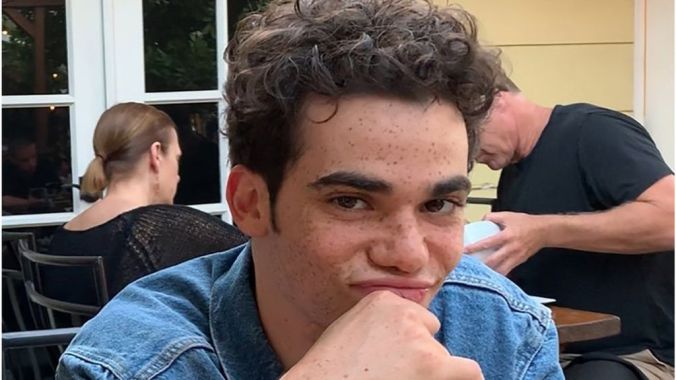
 Cameron Boyce

(May 28, 1999 – July 6, 2019)

Unless you are 15, you probably don’t know Cameron Boyce, whose most prominent claim to stardom his role as Luke Ross in the Disney Channel’s comedy series “Jessie” from 2011 to 2015. But then Boyce was only beginning his career, and died of complications relating to his epilepsy at the age of 20. Still, he had appeared in three feature films, and had a lot going that suggested that good things were on the horizon. He had bee cast in the indie film “Runt,” and last year Boyce had joined the cast of HBO’s “Mrs. Fletcher.” Just before his sudden death, Boyce was about to begin production on a new Adam Sandler film.


Ron Leibman

(October 11, 1937 – December 6, 2019)

Sometimes the Academy’s excuse for omitting an actor is that he or she was just a passer-by on the movie scene, and should be properly categorized as a TV actor, or a stage star. This was the argument when “In Memoriam” snubbed the great Carol Channing last yea, and  it will surely be the argument for ignoring Leibman, who was a major Broadway star, most notably winning awards and raves for his tour de force portrayal of Roy Cohn in both plays in the epic “Angels in America” series, arguably the last culturally significant drama Broadway has produced.

Leibman won a a 1993 Tony Award for playing Cohn. For his varied television work. He won an Emmy for Outstanding Lead Actor In A Drama Series, in 1979 for ” Kaz” (1978–79), a series which he created and co-wrote. TV is where the average member  of the public probably met him: on “Friends” he had a recurring role as Rachel Green’s (Jennifer Aniston to the culturally ignorant) overbearing father. He had a another recurring role on “The Sopranos” as Dr. Plepler, and yet another recurring role on “Law & Order: Special Victims Unit.”

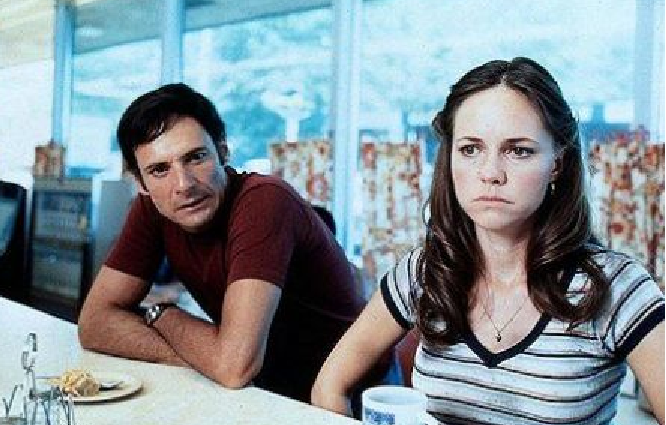
Leibman didn’t make a lot of movies—just 23— but some were important, none more than “Norma Rae,” in which he played the union organizer who mentors and pushed Sally Field into a new life and passion. Leibman’s energy and nuanced performance is a bulwark of that movie, and I would argue that Field owes her career-altering Oscar win in part to him.

If a career like Ron Leibman’s isn’t one the Academy is proud to embrace, then I don’t know what it stands for. Continue reading →

Ethics Alarms To “The Ethicist”: It’s Called “The Golden Rule”—Why Is That So Hard?

I hadn’t checked in for a while on Kwame Anthony Appiah, the N.Y.U philosophy teacher and author who finally brought ethical consistency to the New York Times magazine’s advice column, “The Ethicist.” I was surprised to find him struggling to answer two family related queries that I would have assumed he could and should have answered  easily with three words: “The Golden Rule.”

The first inquirer asked in part,

Recently a mutual acquaintance who knows my friend’s husband well told me that he has been cheating on my friend on and off for years with someone who once worked with him.I know that if I reveal this information, my friend will take their child and leave her husband. Do I sit on this information and pretend the affair isn’t happening, or do I tell her?

Isn’t that an easy call? Of course she should tell her friend. The Golden Rule applies: would she want to be told if the positions were reversed? Sure she would; anyone would. Not telling her would be a betrayal of the worst kind.

Yet Appiah uses 608 words to reach that conclusion. 608! This makes a slam dunk of an ethics decision appear to be a difficult one. Oh, it’s difficult in the sense that the inquirer has to take sides in a crisis affecting a couple she and her husband are close to, and thus the repercussions as well as the process will be unpleasant, but that’s life. One of the Ethics Alarms rules is that if you can fix a problem, fix it. The Ethicist’s rabbinical musings about the decision just supplies a dangerous volume of rationalizations to temp the questioner into keeping the husband’s secret, and abetting the harm. Continue reading →

Wasted Day Evening Ethics, 2/10/2020: As Your Host Tries To Salvage Some Productivity In A Messed Up Monday [CORRECTED]

I don’t want to talk about it.

1. Is it ethical to point out that the candidate my desperate progressive friends are trying to justify supporting in the arid Democratic field is really a jerk? Sure it is! In a deft call that I missed, Rolling Stone writer Tim Dickinson found yet another striking example of Pete Buttigieg’s hypocrisy. He writes,

For much of the presidential campaign, Pete Buttigieg has championed the importance of the popular vote. In a town hall nearly a year ago, Buttigieg proclaimed: “One thing I believe is that in an American presidential election, the person who gets the most votes ought to be the person who wins.”

Yet after the Iowa caucuses, where Bernie Sanders clearly got thousands  more votes, Buttigieg has been trumpeting victory — on the basis of a metric that can subvert the popular vote, the state delegate haul from Iowa’s equivalent of the electoral college.

To be plain, the actual tally in Iowa seems to matter less to the Buttigieg campaign than building a perception of victory. On the night of the caucuses, long before any of the official tally had been reported, Buttigieg dubiously declared he had won..the Iowa Democratic Party has now released 100 percent of the state results. The current tally shows Buttigieg trailing Sanders by 2,631 votes, yet leading by 2 “state delegate equivalents” — a margin of 0.1 percent on that metric. Yet the official tally includes many documented and uncorrected errors and what the state party deems “inconsistencies in data.” The Associated Press has refused to call the election, and Democratic party chair Tom Perez has demanded a “recanvass” or recount. Despite the tenuousness of these results, the Buttigieg website now proclaims: “It’s official: Pete won the Iowa Caucuses!”.

President Trump’s election, however, was illegitimate. Continue reading →

Oscar Ethics Part II: The “In Memoriam” Snubs

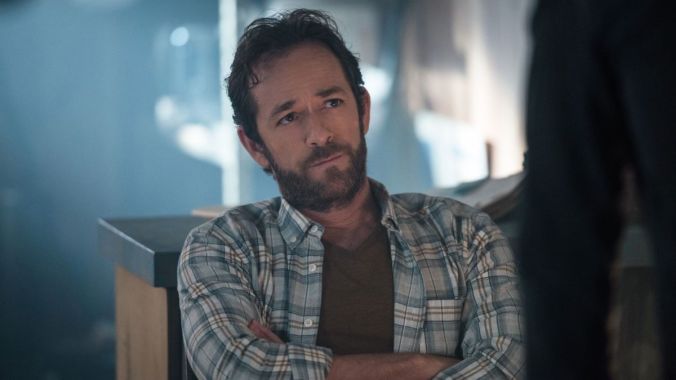
For some reason, Luke Perry’s snub (That’s Luke above) has attracted most of the outrage, though he is far from the worst of the omissions, as you will see.

Luke Perry

(October 11, 1966 – March 4, 2019

Perry became a teen idol at 23 after he was cast as the brooding son of a millionaireon Fox’s prime time soap opera,  “Beverly Hills, 90210.”  A riot broke out when 10,000 teen girls attended one of his  August 1991 autograph sessions  While starring in “90210,” Perry appeared in the original film version of Joss Whedon’s” Buffy The Vampire Slayer” (1992). That was pretty much the high point of his film career, though he had a small role in “Once Upon A Time In Hollywood.”  Mostly he was a TV actor whose career, after a spectacular launch,  settled into the typical orbit of supporting roles in various series and guest shots in everything from sitcoms like “Will and Grace” to “Law and Order: SVU.”  Between those jobs, voice-over work and regional theater paid the bills and kept him working.

He was, in short, a working professional actor who had one burst of superstardom, which is more than most. Perry was only 52 when he died of a massive stroke.

Michael J. Pollard

(May 30, 1939 – November 20, 2019)

Pollard rose to fame in 1967 as  Bonnie and Clyde’s dim-witted gang member, earning an Oscar nomination along with the other honors racked up by Arthur’s Penn’s ground-breaking, violent epic about the lover-killers. He went on to a long career as a Hollywood character actor, aided by one of the most memorable faces in screen history. That face had made him a familiar TV actor before “Bonnie and Clyde” made him famous: he played the cousin of Maynard G. Krebs (Bob Denver) on “The Many Loves of Dobie Gillis,” and Virgil, the cousin to  Barney Fife (Don Knotts), on “The Andy Griffith Show.” In the first season of the original “Star Trek,” he was  a creepy  teenage cult leader on a planet of children.

Pollard continued to make significant films after his Oscar nomination, such as  “Little Fauss and Big Halsy” (1970), a motorcycle racing buddy film in which he co-starred with Robert Redford. He was Billy the Kid in “Dirty Little Billy” (1972), an inept fireman in “Roxanne” (1987), the friend of a Utah gas station owner  who claimed to be Howard Hughes’s beneficiary in“Melvin and Howard” (1980), and  surveillance expert Bug Bailey in “Dick Tracy.”

Pollard was acting right up until his death: two of his films that yet to be released. Continue reading →

Oscar Ethics 2020, Part I

I wrote last night that I would not dare watch the Academy Awards broadcast because I was afraid that the political grandstanding might cause me to snap and run through the streets wielding a machete. Alexandria, VA. can thank me now.

  • Almost immediately, the expected “Best Supporting Actor” win by Brad Pitt for “Once Upon A Time In Hollywood” resulted in the first politiacl commentary of the night. Pitt began, “They told me that I only had 45 seconds up here, which is 45 seconds more than the Senate gave John Bolton this week. I’m thinking maybe Quentin does a movie about it, and in the end the adults do the right thing.”

Yeah, that would be the adult voters taking the gavel away from Nancy Pelosi and Adam Schiff losing his seat to the wonderful pit bull Brad’s character owned in “OUATIH.”

  • Do you think Brad, or many of the assembled Hollywood VIP’s, noticed that Julia Reichert, accepting the Oscar for the Netflix documentary  “American Factory,” said “Working people have it harder and harder these days – and we believe that things will get better when workers of the world unite.”

That’s a Karl Marx quote and a deliberate callout to “The Communist Manefesto.”  You have to be  historically illiterate to believe that “Working people have it harder and harder these days,” and it’s fascinating that the Obamas are funding platforms for Communist propaganda.

I wonder what Chris Matthews would say about that? Continue reading →