The Amazing Saga Of Big Papi And Maverick Schutte: This One Has Everything, Folks: Baseball! The Bambino! Courage! Kindness! Compassion! Heroics! Moral Luck! Hubris! Consequentialism! And Dammit, I’m Crying Again

Let’s see if I can through this to the Ethics Quiz portion without shorting out my laptop.

Maverick Schutte, a 6-year-old from Cheyenne, Wyoming, has required over 30 surgeries, including five open chest procedures,  to treat a heart condition.He still must be hooked up to a ventilator most of each day to allow oxygen to reach his lungs, and more surgery will be needed, as he is in constant danger of heart failure.

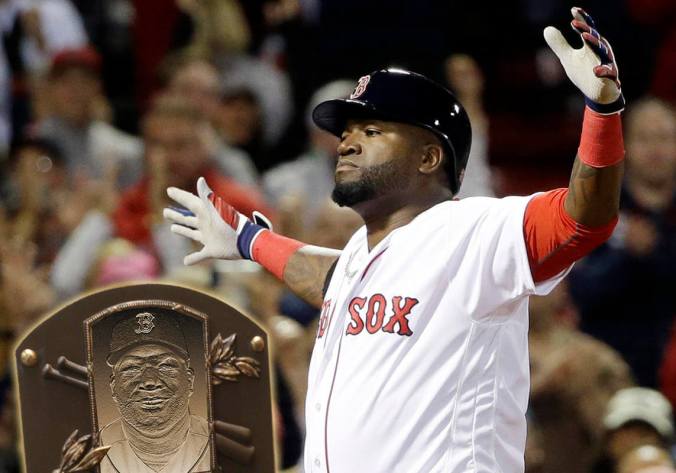
The child’s greatest joy is baseball, and he has adopted his father’s team, the Boston Red Sox, as his passion. The Children’s Miracle Network put the family in touch with former Red Sox player Kevin Millar, now an MLB host and broadcaster, and Millar contacted Red Sox slugger David Ortiz, Maverick’s favorite, after the family explained that Maverick was in the hospital again and needed a morale boost. With Millar, Ortiz made a video for Maverick, ending with Ortiz promising to hit a home run that night, just for him. I didn’t believe it when I heard the story, but it was true. “Stay positive, keep the faith, and I’m going to hit a home run for you (Friday night),” Ortiz says in the video. “Remember that.”

Your Ethics Alarms Ethics Quiz for today before, as Paul Harvey would say, you learn “the rest of the story”…

Was it ethical for Ortiz to make such a promise to Maverick?

Continue reading

Ethics Quiz: The Aborted No-Hitter

Friday night, Miami pitcher Adam Conley  was pitching a no-hitter against the Milwaukee Brewers with two outs in the eighth inning, meaning that he was just four outs away. A no-hitter—no hits, no runs, for an entire game—places a pitcher name in the  Hall of Fame. It makes him an instant part of sports history. In today’s hyper-celebrity culture, it means interviews and endorsements.

Moreover, the Marlins needed something to make their fans feel better. Dee Gordon, the team’s star second baseman, had just tested positive for steroids and was suspended for 80 games. Nonetheless, Marlins manager Don Mattingly lifted Conley because he had exceeded his pitch count. Though baseball paid little attention to the statistic for 70 years, today teams carefully monitor how many pitches a hurler throws, both to anticipate ineffectiveness, and to guard against injury.

In Conley’s case, he had never thrown more than a hundred pitches in a game, and had topped out at 116. To Mattingly and Marlins pitching coach Juan Nieves, that meant that even on the verge of immortality, Conley had to be removed. Conley was angry, though he said all the right things after the game. Still, knowing the alleged risk to his arm and career, he wanted to try to finish his masterpiece. (The Marlins blew the no-hitter and the shutout in the 9th, though still managed to win 5-3.)

Your Ethics Alarms Ethics Quiz of the Day:

Was removing Conley “for his own good” when he wanted to have the chance at a no-hitter fair?

Continue reading

Ethics Dunce: Miami Marlins Manager Don Mattingly

stabbed-in-the-back

When new Miami Marlins manager Don Mattingly chose Barry Bonds as his batting coach, it was considered a bold move. Bonds, after all, is simultaneously baseball’s all-time home run champion, holding both the single season and career records, and its biggest cheat, having achieved both records while being secretly, illegally and unethically assisted by steroids. In addition to knowing how to cheat, Bonds undeniably knows how to hit (he was a great hitter before he decided to mutate himself), so this was a chance at redemption for Barry, as well as an opportunity to soften some of the sports media antipathy toward his conduct and character which has so far kept him out of the MLB Hall of Fame.

Asked this week how Barry Bonds was doing as batting coach, Mattingly replied,

“Him getting used to the coaching part of it is a work in progress from a standpoint of the amount of time and the preparation. You see [assistant hitting coach Frankie Menichino] still doing a lot of the prep work. Barry is still getting into the routine of the ugly side of coaching — being here at 1, and studying video, and studying on the plane and you don’t get a chance to watch movies, and things like that. It just depends how good you want to be as a coach. If you want to be a really good coach, you’ve got to do the work.”

Translation: “So far, Barry’s been lazy and isn’t doing his job. His assistant is doing it for him. The job requires a lot of hard, tedious work, and Barry hasn’t shown that he’s willing to do it. At this point, he not a good coach.”

Ethics foul. Mattingly was a fool to hire Bonds, and MLB is wrong to let this sport-wide ethics corrupter set foot in a clubhouse. Bonds is a living, breathing advertisement for the proposition that cheating pays, and should not be trusted not to promote that proposition to young players. Having hired Bonds, however, Mattingly still is obligated to treat him fairly and professionally.

It is not fair and professional to make a negative job review public by communicating it to the news media. Mattingly gave a critique of Bonds’ performance that should have passed from him to Bonds, and only from him to Bonds, in private. Attacking Bonds—and it was an attack, if a passive aggressive one—in the press is unfair, irresponsible, disrespectful, a betrayal of trust, and also cowardly.

Mattingly’s job is called “manager,” and this is atrocious, unethical management. He owes Bonds an apology, and if I were Marlins management, I would be thinking very hard about whether Don Mattingly is qualified for his job.


Ethics Hero: Boston Red Sox Pitcher Steven Wright

beaning

On Sunday, Boston Red Sox knuckleballer Steven Wright hit Toronto first baseman Chris Colabello square in the helmet, and not with his usual floating trick pitch, but with an 87 mph fastball, making a frightening sound and causing  Colabello to collapse on the field.  After being checked out by the team trainer and allowing the replay of his life that flashed before his eyes to wind up, Wright’s beanee took first base and remained in the game.

Wright appeared visibly upset on the mound,and apologized to Colabello when he made his way to first.

The next morning, Colabello found an expensive bottle of liquor in his locker, a present from Wright. He was surprised. “He went above and beyond in my eyes,” the player with the sore head said. “It was pretty obvious there was no intent [to throw a beanball]. You could see by his reaction.” Continue reading

From The “Everybody Does It” Files: “Welcome to Chico’s Bail Bonds Park!”

Bad News Bears

The Washington Nationals announced this week that it has partnered with Major League Baseball Advanced Media and the consulting firm Korn Ferry to sell naming rights to Nationals Park, as the team’s home field has been known since it opened in 2008.

After all, the team explains, plastering a corporation’s name on the ballpark could add between ten and twenty million dollars a year to the team’s revenue, and imagine how much better the team will be with another starting pitcher or slugging outfielder. Why wouldn’t a team sell its home’s name, and a large chunk of its identity, to a bank, a website, or a pet supplies company?

I admit it: being a life-time fan of the Boston Red Sox, who play in one of the the ten major league parks ( the others: Angel Stadium of Anaheim, Dodger Stadium, Fenway Park, Kauffman Stadium, Marlins Park, Nationals Park, Oriole Park at Camden Yards, Turner Field, Wrigley Field, and Yankee Stadium ) belonging to teams that have not accepted filthy lucre to mar their stadium entrances with the names of companies Bernie Sanders would hate, I find the idea revolting.  A baseball team represents its community; its lore becomes part of the culture and shared memories passed downfthrough generations.. That has value, and symbolic significance. How much is it worth? It’s priceless, or should be. Continue reading

Ethics Quiz: The Smokeless Tobacco Ban

Chicago recently became the fourth city—Boston, Los Angeles and San Francisco—to enact a ban on using smokeless tobacco in sports stadiums. I initially ignored it, in part because I never use the stuff and have never known anyone who did, and in part because I knew that Major League Baseball has been trying, with some success, to discourage its ballplayers from chewing and especially spitting on camera, since it is a) disgusting and b) encourages impressionable tykes to take up an ugly and perilous habit. I’m inspired to make the issue an ethics quiz because of the pronouncements of law professor-blogger Jonathan Turley on the issue and the vociferous debate his comments sparked on his blog.

Turley wrote…

This is a lawful product like smoking tobacco. People have a right to make choices about their lifestyle so long as they do not harm others. That is why I always supported the bans on smoking in public areas due to the second-hand smoke research. That is an externalized harm. What is the externalized harm of smokeless tobacco?

…I happen to deeply dislike smoking and I find chewing tobacco disgusting. I also do not question the link to serious health problems like cancer. However, that should be the subject of an educational campaign by the government and MLB. Yet, in the end, people need to be able to make choices in our society rather than go down the path to paternalistic legislation regulating our good and bad choices.

His supporters on the blog were typified by this comment by Beth (not our Beth, I presume)…

“Tobacco, in all forms, is NOT a singular activity that affects no one else. Tobacco use weighs very heavily on the public at large in the form of health care costs, higher insurance premiums, toxic litter, poisoned air and ground spit. To suggest that limiting tobacco, smokeless tobacco and e-cigarettes should not be controlled substances goes against all manner of policy for the public good. Wrong stance, Mr. Turley.”

This comment, from “wonderer,” is a fair summation of the other side, which mostly came from the libertarian side of the metaphorical aisle:

“The efforts to ban “icky” behaviors are of a piece with the bans or taxes on sugared beverages. What seems to be happening is that some people want to push bans on behaviors of “out of favor” groups. Those “big soda” people are Walmart denizens, so they clearly need to be told what to do. But keep hands off urban bicycling. As risky as that is, it’s one of the things “enlightened” people do. Bans (at least here in California) seem to be all about the condescension.”

Your Ethics Alarms Ethics Quiz of the Day:

Is a ban on smokeless tobacco in ballparks an abuse of government power and an unethical breach of personal choice, autonomy and liberty, or is it a responsible use of government power to encourage public health and safety?

I’ll hold my fire on this one until sufficient numbers weigh in. Remember, the issue here isn’t policy, but ethics.


Adam LaRoche Drama Epilogue: A Reflection On Life, Kids, Baseball And Ethics

drake-adam-laroche-

Well, I don’t recall anyone leaving baseball like this before.

When last we visited Adam LaRoche a couple of days ago, he was retiring from baseball (and abandoning his 13 million dollar 2016 contract  to play for the Chicago White Sox) because team executive Kenny Williams asked that he not have his 14-year-old son Drake living and traveling with the team, as well as being being perpetually in the clubhouse, as he was all last year. Today LaRoche released a remarkable statement explaining his decision.

It is well worth reading. I’ll have some comments at the end about the bolded sections, marked by me with letters. Now, here’s Adam:
Continue reading

Loyalty Drama: The Strange, Sudden, Ethical, Unethical Retirement Of White Sox First Baseman Adam LaRoche

chi-adam-laroche

Yesterday,  baseball’s Spring Training was shaken when Chicago White Sox first baseman Adam LaRoche unexpectedly announced that he was retiring, effectively giving up his guaranteed 13 million dollar salary. LaRoche had suffered a down year in 2015, but he was healthy, and assured of a place in the ChiSox line-up. The reason for the precipitous decision was mysteriously and ominously reported as caused by a “personal matter.”  Was there dire illness in the family? What would make a healthy athlete walk away from his team mates and so much money?

Today, the club revealed the surprisng answer. Last year, LaRoche’s son, Drake, 14, spent most of the season with his father and the team and even had his own locker in the home clubhouse at U.S. Cellular Field. Drake was with also with the team in this year’s spring training. White Sox executive vice president Ken Williams told LaRoche that he would have to limit the amount of time his son spent in the clubhouse this season, and in response, LaRoche announced he was quitting.

Again, the threshold question to so much ethical analysis is crucial: What’s going on here?
Continue reading

Jenrry Mejia, The Inexplicable Ethics Mega-Dunce

mejia

What is the explanation for this?

Jenrry Mejia is a young New York Mets relief pitcher who until recently had a bright future as a star closer and a guaranteed multi-millionaire.  Now, entirely on his own initiative, he has become the first player ever banned from baseball for using steroids .

This is not easy, though Mejia did it with ease…and speed.  After recovering from Tommy John surgery, Mejia was establishing himself as the Mets closer by the end of the 2014 season. But he began the 2015 season with an 80-game suspension for testing positive for a common PED (Performance Enhancing Drug), then, even before completing that punishment,  flunked another urine test and earned himself a 162-game suspension a few months later.

Knowing full well that a third positive test would end his career, Mejia tried a different banned steroid, was caught again, and that third strike triggered a lifetime expulsion from major league baseball under the sport’s rules. Nobody has been that reckless and stupid, not even Manny Ramirez (who was caught twice), and Manny’s picture is in the dictionary under “reckless and stupid.” Continue reading

The Chris Davis Saga: How Much Money Is “Enough”?

Chris Davis is under there somewhere...

Chris Davis is under there somewhere…

I have too many political issues on the runway, and I’m about to be buried in snow. This seems a perfect time to reflect on Chris Davis, the slugging Baltimore Orioles first baseman who just re-signed with the team in a seven-year, $161 million deal. Yes, he’s a baseball player, but the ethics issue here is not confined to baseball, or even professional sports.

Two weeks ago, it looked as if Davis and the Orioles were at an impasse. The team had, we were told, offered a take-it-or-leave-it 150 million dollar package, and Davis and his agent had turned it down. Davis’s manager, Buck Showalter, told the press that he had asked Davis, who by all accounts loves playing in Baltimore,”How much is enough?”:  “I asked Chris during the season, ‘Chris, when you walk into a Target store, can you buy anything you want. So, how much is enough?'”

Sportswriters, not being reflective sorts,  even the smarter ones, who are always taking the players union’s position that the more money a player can squeeze out of fat cat owners the better, jumped on Showalter. Said CBS writer David Brown, “Showalter trying to shame him into taking less — so that ownership can keep more — is shameful in itself. Why isn’t Showalter asking Angelos ‘ How much is enough?'”*

Showalter, who is one of the most intelligent and perceptive people in the game, was not trying to shame Davis. He was trying to get him to think; he was trying to impart some wisdom…and some ethics. Continue reading