Once Again, Fairness vs. Integrity In A Baseball Controversy

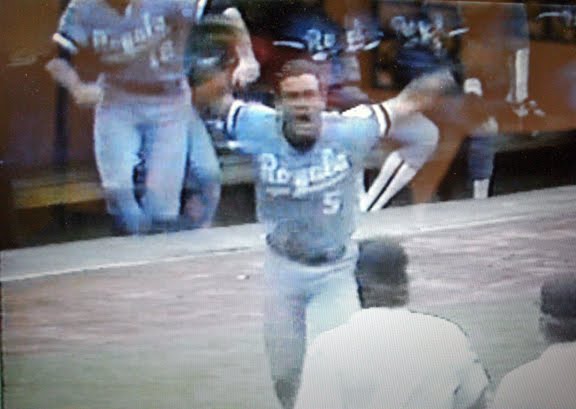
George Brett was a bit chagrined when his home run was disallowed...

George Brett was a bit chagrined when his home run was disallowed…

It has happened again, as it has thousands of times since the great game of baseball was invented. A result that is permitted by the rules violates the sense of fairness of  objective observers, who thereupon demand that the result be “fixed,” after the fact, by baseball’s powers that be. The most infamous recent example of this scenario was in 2010, when umpire Jim Joyce robbed a deserving pitcher of the perfect game he had pitched (27 batters, 27 outs) by calling the final batter safe at first on a close play, when the player was obviously (to all but Joyce, that is), out. The umpire quickly and openly admitted his error after the game, but there is no provision in the baseball rules for the League or Major League Baseball reversing an umpire’s judgment call after the fact, no matter how bad it was or how unjust the results. Baseball’s Commissioner Bud Selig, to his credit, refused to yield to the popular outcry to give the unfortunate Detroit Tigers pitcher, Armando Galarraga, the achievement and place in baseball history that should have been his. The rules say that unless umpires have actually misinterpreted the black letter rules of the game, there is no remedy. Umpire errors, like player errors, are part of the game.

Last night, what should have been a game-winning home run was called a double by umpires, and what was worse, they held to their mistaken call even after the mandated video review MLB now allows for disputed home run calls. The umpires viewed video that clearly shows the Oakland A’s Adam Rosales’ hit clearing the wall, but crew chief Angel Hernandez bizarrely claimed that the video wasn’t conclusive enough to justify a reversal. Since the A’s lost the game by one run, this altered the result, and there have been calls for an official reversal with the game being replayed. Continue reading
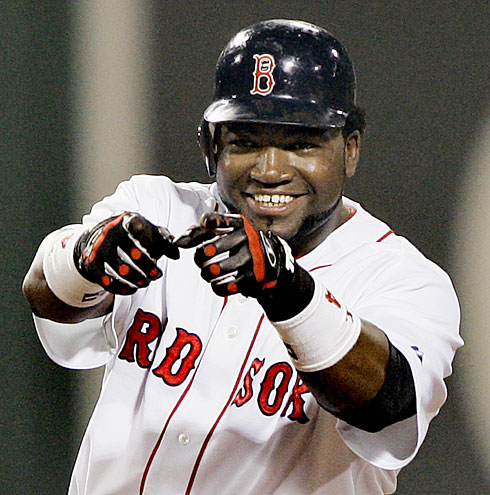
Unethical Quote Of The Week: Boston Red Sox Star David “Big Papi” Ortiz

“This is our fucking city!”

—Boston Red Sox designated hitter and icon David Ortiz, aka “Big Papi”, representing the team in a pre-game ceremony at Fenway Park honoring Boston in the wake of the past week’s violence, heroism and travails.

"Big Potty-Mouth"

“Big Potty-Mouth”

I love you, David, and you got us past the Yankees in 2004, but your choice of words  was classless, crude and unnecessary.

There were children in that crowd and watching on TV, as I was. You are a role model, and locker room language belongs in the locker room, not in public events. Your obviously calculated incivility moves the culture one more step away from public manners and toward obscenity as standard expression.

I’m disappointed in you, and you also embarrassed your sorority sisters at Delta Gamma.

Ethics Dunce: Tony Kornheiser

Ugh.

No pardon for you, Tony...

No pardon for you, Tony…

Tony Kornheiser is a sportswriter and humorist as well as a television and radio personality. I’ve been reading, watching and occasionally laughing at him since I moved to D.C. eons ago, when he was a Washington Post columnist. This post has nothing to do with sports, however, though the issue arose in a sports context. It has to do with the depressing fact that Tony’s mode of ethical analysis is still based on consequentialism and an ignorance of moral luck, and that he is, despite being an educated, erudite and clever man, typical of the public in this respect.

It is depressing, and thus I say, “Ugh.”

For the second time in two days,  the ten minutes I had time to watch TV randomly brought me to a discussion of umpire Marty Foster’s botched third strike call to end a close game between the Tampa Bay Rays and the Texas Rangers. Tony was arguing with Michael Wilbon on their hit ESPN show, “Pardon the Interruption.” [ Aside: And why did my channel surfing pause there? Because the project that has eaten my life the last couple weeks requires me to mention, in a speech, the HBO Larry David show “Curb Your Enthusiasm, ” and I keep wanting to say “Pardon the Interruption.” I blew it again last night, so naturally, the first thing I see this morning is the show I’m trying to purge from my brain.] They were debating whether Foster should be disciplined for his bad call, an idiotic issue, since the answer is “Of course not; are you nuts?” Umpires make hundreds of judgment calls every game, and mistakes are inevitable. As I wrote yesterday, Foster’s handling of this botched call was exemplary, because he admitted that he had erred. Punishing him or any umpire who misses a visual call would be unfair and destructive; such punishment could only be valid in the case of actual misconduct or negligence, as in the case of an umpire ignoring or not knowing the rules. Continue reading

Ethics Quote of The Week: Umpire Marty Foster

“I saw the pitch and of course don’t have the chance to do it again. But had I had a chance to do it again, I wouldn’t call that pitch a strike.”

—– American League Umpire Marty Foster, in the wake of the controversy over his game-ending strike call in the Texas-Tampa Bay game last night.

In other words, “I missed it. I was wrong.”

Strike Three?

Strike Three?

Good for Foster. His wildly inaccurate call was strike three on Rays batter Ben Zobrist, who thought that he had worked a base on balls. This would have placed Rays runners on first and second with two outs, creating a reasonable opportunity for the Rays to tie or win the game.  Instead, the Rangers got a gift. Rays manager Joe Maddon, in interviews and in a tweet to his followers, said, “That can’t happen in a major league game,” meaning that the call was beneath major league umpiring standards.  Of Maddon, Foster said,  “He was frustrated and I understand .He acted probably the best he can under that situation.”

Obviously, there have been many, many worse calls, nearly as bad calls, and only a smidge better calls, and there will be this season. In the vast majority of those, umpires have and will remain mum, maintaining that they were in the best position to judge the pitch or the play, and that even video showing their gaffes are misleading. Foster, however, did the hardest thing for many of us: admitting a mistake. Admitting so, to himself as well as the world, doesn’t make him a worse umpire; it makes him a better one.

Note: I apologize for the sparse postings the last few days. I am involved in a night and day project that is preventing me from doing thinking and working on anything else…even baseball. Naturally, the only game update I happened to watch, at 2:20 AM, was an ethics story.

___________________________________

Sources: NBC Sports (and Graphic); Townhall

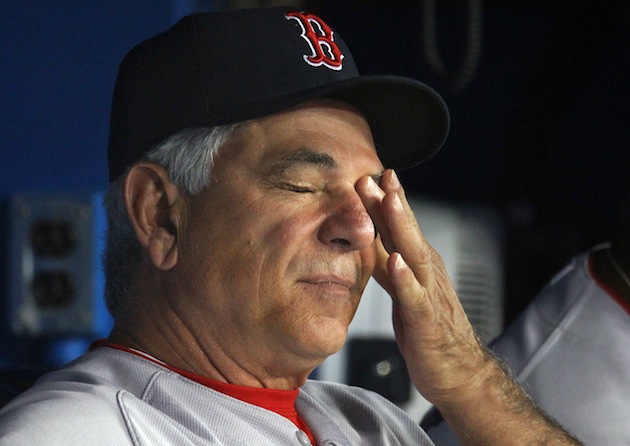
Valentining Bobby Valentine, Victim of Three Biases

MLB: Boston Red Sox at Toronto Blue Jays

Hindsight bias is bad, confirmation bias is worse, and naked bias is the worst of all. 2012 Red Sox manager Bobby Valentine was the victim of all three with a vengeance during that disastrous Boston baseball season, and is still. I have been tempted to write about Bobby’s plight since last August, when the Red Sox management threw in the towel on the season and the long knives really came out in the Boston press corps. Now Valentine has been gone for six months, half the team has been replaced, and spring is dawning, yet hardly a day passes in which one of these ink-strained wretches  doesn’t take a pot-shot at the deposed manager, leaving the absolutely false impression that he could have done anything to forestall or mitigate the cataclysm that befell the Red Sox in 2012. Continue reading

Bimbo Ethics in Spring Training

Stipulated: If you work for Hooters, and accept a job as an on-field ball girl for a Major League Baseball team, in this case, the Philadelphia Phillies, you may not object to the unflattering sobriquet “bimbo,” especially when you act like this:

Admittedly, the team is at fault, endangering its players and undermining the integrity of the game, by putting someone on the field who clearly 1) doesn’t know a foul ball from a nectarine 2) doesn’t have the sense God gave a muskrat and 3) hasn’t been told that her minimal duty is to pay sufficient attention to the game to avoid becoming part of it.

Still, this lovely blonde woman is allegedly an adult, and should be able to figure these things out for herself. She has a job that a seven year-old T-ball player could do with a minimum of thought, and still can’t do it right. It’s unethical to accept jobs you’re not qualified to do or not willing to learn to do, which in this case, apparently means any job that requires being more than vicarious visual sexual stimulation for middle-aged baseball fans.

___________________________
Pointer: Craig Calcaterra

Proofreading Kudos: David Elias, who was the first to flag “Sping Training”

Dog Owner Ethics: The Suicide and the Pitcher

Does one of these nice creatures not belong in this picture? Ontario says yes. The correct answer is  no.

Does one of these nice creatures not belong in this picture? Ontario says yes. The correct answer is no.

Our life-changing events often become crises for our canine companions. In the news today: ethical  and unethical responses in such circumstances, by two individuals in the public eye.

The Unethical

Mindy McReady, the troubled country music star, committed suicide Sunday on the front porch of the home she shared with her boyfriend, who had recently committed suicide there as well. She apparently killed the couple’s dog before taking her own life. McReady’s friends insist that she didn’t kill the dog out of malice, but because she didn’t want to leave the dog alone. Granted, McReady deserves consideration and compassion, since her actions that day were not those dictated by a healthy or fully functioning mind. Still, I read of dog owners doing this a lot, and I’ve known a few—not committing suicide, but killing their dogs when they knew they wouldn’t be able to keep them any more, on the theory that the dog would be happier dead than with new owners. Continue reading

Topps’ Pete Rose Abuse

Pete Rose now, with his Playboy model wife (he calls his marriage "Tits and Hits"), and as a player, when the fact that he was a low-life didn't seem to matter.

Pete Rose now, with his Playboy model wife (he calls his marriage “Tits and Hits”), and as the  player called “Charlie Hustle,” when the fact that he was a low-life didn’t seem to matter.

Baseball season is fast approaching, and with it the usual welter of fascinating ethical issues that sport always generates. Here is an early one, arising out of one of the first signs of Spring Training, the release of the Topps’ baseball cards.

Pete Rose, as every educated American should know, was a wonderful player on the baseball field and a certifiable low-life off of it. Though he is the all-time leader in career hits, the former Cincinnati  Reds icon has been banned from baseball for two decades, the result of defying baseball’s “third rail” by gambling on the game after his playing career, when he was a manager. (Rose also lied about his conduct, helped send a Commissioner of Baseball to an early grave, and has served time for tax evasion…and even without all this, he would still be an insufferable slime-ball. Trivia note: Pete was in the very first group of “Ethics Dunces” in 2004, along with Bindi Irwin‘s dad, and Fox.  See? Nothing changes!) Never mind, though: Rose’s records have never been regarded as anything but legitimate, unlike those of baseball’s other living major miscreant, lifetime home run champ, steroid cheat and ethics corrupter Barry Bonds.

Yet as Aaron Gleeman reports on NBC sports, Topps is now, based on the evidence of its 2013 line of baseball cards, going out of the way to purge Rose’s name from all honor and memory: Continue reading

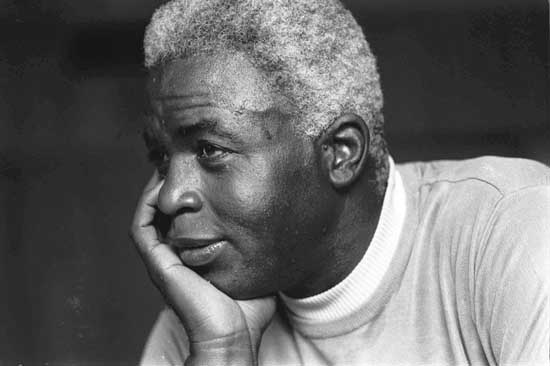
Today is Jackie Robinson’s birthday. He would be 94, but he lived only slightly more than half that long. He was one of our greatest ethics heroes, and I’d like to honor Mr. Robinson by reblogging a post from April 16 of last year.

Jack Marshall's avatarEthics Alarms

Yesterday, the media, history buffs and Kate Winslet fans were obsessed with remembering the Titanic, sometimes even with proper reverence to the 1500 men, women and children who lost their lives in the North Atlantic on April 15, 1912. A strong argument could be made, however, that the most significant event that occurred on April 15 took place in 1947, in Brooklyn, New York. For that was the day that Jackie Robinson ran out to his position at first base as a member of the Brooklyn Dodgers, and became the first African- American to play baseball in the Major Leagues since the earliest years of the game.

With that act, and his epic heroism for the rest of the season, Robinson changed baseball, sports, American society and history. It was a cultural watershed in a nation that had been virtually apartheid since the end of the Civil War, a catalytic…

View original post 781 more words

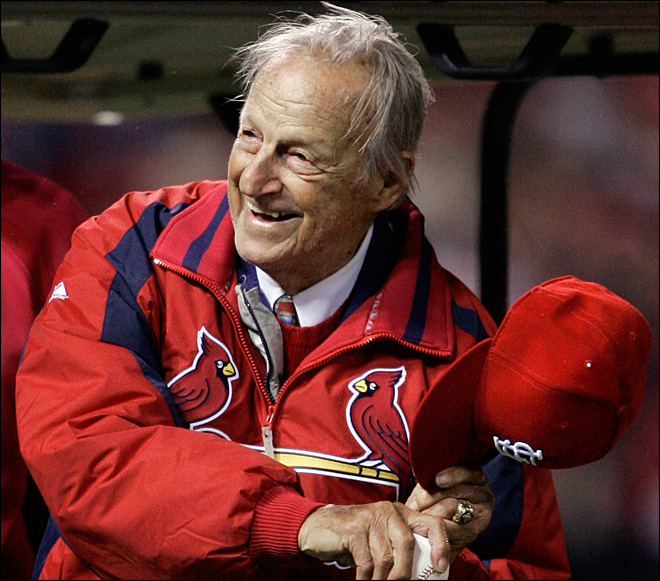
Ethics Hero Emeritus: Stan (“The Man”) Musial, 1920-2013

Stan Musial

Baseball great Stan Musial is a different kind of lifetime ethics hero, which is one reason it is important to so honor him. Unlike everyone who has ever received that designation here,  the iconic St. Louis Cardinal had no famous episode that crystallizes his character for posterity, no inspiring quotes attributed to him, nothing at all as impressive by itself as his athletic feats on the baseball field, which were among the most distinguished of any Major League baseball career. What was remarkable about Stan Musial is that over three decades in the public eye and four more after leaving it, he never did anything wrong.

Musial remained with one team his entire career, out of loyalty to the city and the fans who loved him. He never complained about where he batted in the order, or where he played; though he spent a lifetime being overshadowed in the sports pages by more colorful, edgier personalities like Ted Williams, Mickey Mantle and Willy Mays, he never whined about it, or made transparent efforts to seek the spotlight. He famously gave out autographs to all who asked with grace and a smile, even when the inflated price of athlete autographs soared. His team mates say that Musial visited children’s hospitals without the press or photographers in tow, because he performed such acts of kindness not for himself, but for the kids. Continue reading