The Monsters, the Baseball and the Kid

“WAAA! I wanted that ball! By the way, where am I?”

I skipped this ten-minute controversy from last month, but I think it was worth mentioning from several ethics angles, so consider this catch-up.

Rangers fans Sean Leonard and Shannon Moore were at a Texas Rangers-Yankee game a few weeks ago when a  game ball was tossed into the stands by Texas’s Mitch Moreland. They caught it and gleefully posed for the TV cameras, which also caught a three-year old boy crying hysterically next to them. Immediately, the couple was vilified far and wide, on TV, in blogs and on radio talk shows ( Business Insider called them “The Monsters Who Made A Little Boy Cry”)  for taking the ball and not giving it to the child. The main accuser  who sparked all this hatred was Yankees broadcaster Michael Kay, who told his radio audience that the couple was taunting the unhappy boy.

Outrageous, all right, but Kay, not the couple. Kay’s description of what occurred was speculative and even fanciful, and for other commentators to commence vilifying the two fans without knowing anything about them, or even why the child was crying, was frighteningly unfair, irresponsible and cruel. Yes, you too can be caught on camera and turned into a national punching bag! Later, we discovered that…. Continue reading
Umpire Accountability, As The Day of the Robots Fast Approaches

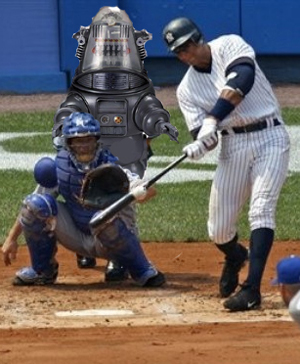
If Robby replaces you, Larry, it's your own fault.

Are baseball’s umpires trying to get themselves replaced by machines? Or perhaps baseball’s brass are conspiring to allow incompetent and lazy umpires to do themselves in, as their miserable work wins over the traditionalists and the Luddites to mechanical ball and strike-calling and their overseers refuse to take decisive action against the worst officials they have. Whatever the explanation, today’s debacle ending the Tampa Rays-Red Sox game in Boston showed an appalling lack of accountability and professionalism in a segment of the game that is critical to its credibility and integrity. Continue reading

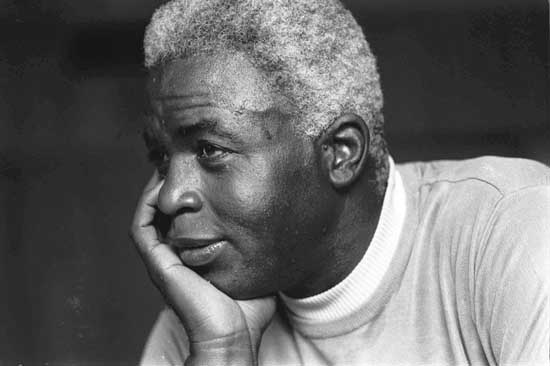
Ethics Hero Emeritus: Jackie Robinson (1919-1972)

Yesterday, the media, history buffs and Kate Winslet fans were obsessed with remembering the Titanic, sometimes even with proper reverence to the 1500 men, women and children who lost their lives in the North Atlantic on April 15, 1912. A strong argument could be made, however, that the most significant event that occurred on April 15 took place in 1947, in Brooklyn, New York. For that was the day that Jackie Robinson ran out to his position at first base as a member of the Brooklyn Dodgers, and became the first African- American to play baseball in the Major Leagues since the earliest years of the game.

With that act, and his epic heroism for the rest of the season, Robinson changed baseball, sports, American society and history. It was a cultural watershed in a nation that had been virtually apartheid since the end of the Civil War, a catalytic moment that served notice that racism was no longer the future of America. Robinson’s dramatic debut in 1947 was more than a year before President Harry Truman desegregated the military, and seven years before the Supreme Court ruled that “separate is inherently unequal” in declaring public school segregation unconstitutional. Further down a difficult road that has not ended yet were the crusade of Rev. Martin Luther King, the Civil Rights Act, Bill Cosby, Oprah Winfrey and Barack Obama, but it was Jackie Robinson who led the way.

And no one should ever think that he just happened to be in the right place at the right time. It wasn’t merely the opportunity. It was him. Continue reading

Were The Marlins Right To Suspend Ozzie Guillen for Loving Fidel Castro?

And imagine...Media Matters had NOTHING to do with it!

‘”I love Fidel Castro,’ blurts Ozzie Guillen, the new manager of the Miami Marlins, in his Jupiter, Fla., spring-training office before an early-March team workout.”

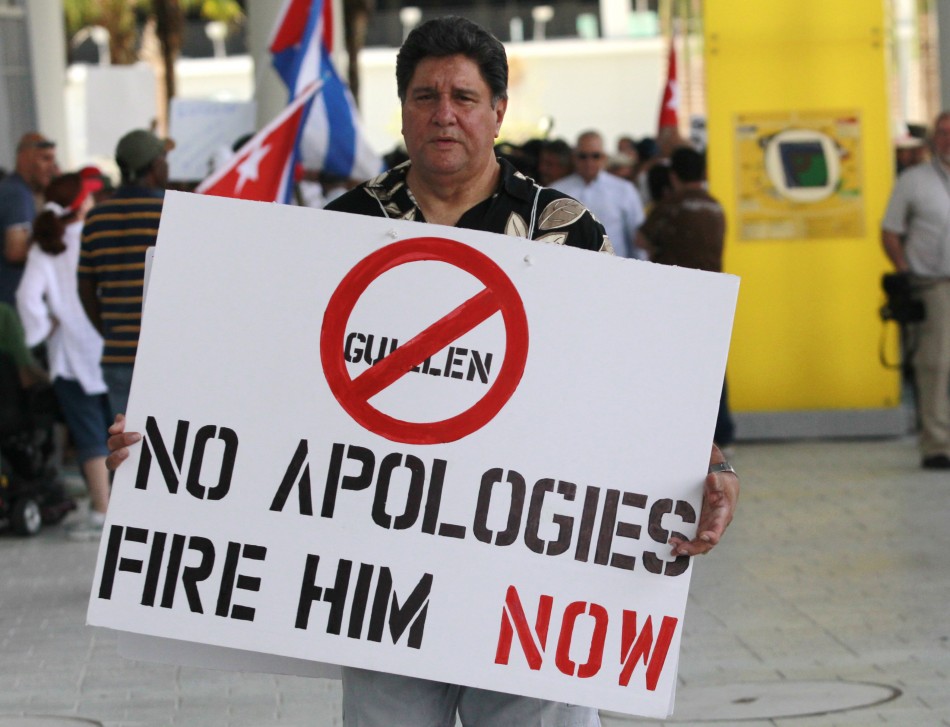
And with that spontaneous utterance, quoted in a Time magazine feature, Guillen, who was hired during baseball’s off-season to lead the long-languishing Miami baseball franchise to elusive community popularity and on-the-field success, suddenly found himself at the epicenter of a career-threatening controversy. Cuban groups in the Miami area were horrified, and demanded that Guillen be fired. Guillen immediately went on an apology tour, arguing that he had “mistranslated in his head from Spanish to English,” and that he emphatically did not “love” the Cuban dictator, but in fact hated him. Even though he said he loved him. That’s some bad translating.

“I feel like I betrayed my Latin community,” Guillen said to one Miami group, according to ESPN’s translation of his comments in Spanish. “I am here to say I am sorry with my heart in my hands and I want to say I’m sorry to all those people who are hurt indirectly or directly. I’m sorry for what I said and for putting people in a position they don’t need to be in. And for all the Cuban families, I’m sorry. I hope that when I get out of here, they will understand who Ozzie Guillen is. How I feel for them. And how I feel about the Fidel Castro dictatorship. I’m here to face you, person to person. It’s going to be a very difficult time for me.”

He got that right. Today the Marlins suspended their manager for five games, saying in a statement, Continue reading

Role Model Ethics: A Spring Training Drama in One Act

Kevin Youkilis, role model

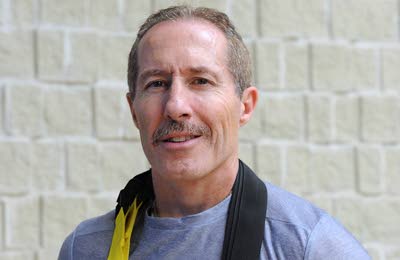
From Fort Myers, Florida, where the Boston Red Sox are in the early stages of  Spring Training, Boston Globe sportswriter Pete Abraham reports the following scene involving Kevin Youkilis, the Boston third baseman:

The Red Sox infielders were taking grounders on Field 2 this morning when a kid who looked to be 10 or 11 yelled out, “Hey, Youk, give me a ball!”

Kevin Youkilis looked up and said, “What’s the right way to ask?” Chagrined, the kid said, “Can I please have a ball?”

Youk tossed the kid a ball. “Don’t ever forget that for the rest of your life,” he said.

“Thanks,” said the kid.

It may not take a village to raise a child, but the village can certainly help out, especially those who children admire, look up to and respect. Kevin Youkilis took the time to teach a boy he had never seen before a crucial lesson about politeness, civility and respect, and because the lesson  came from a baseball player, the boy really might remember it for the rest of his life. This was a gift. It only took a few seconds, but it might make a huge difference over time as the boy grows to manhood, and all because a professional athlete accepted the responsibility of being a role model.

Nice job, Youk.

Now try to stay healthy this year.

Ryan Braun, Steroids and Fairness

If Ryan Braun is innocent, this man, who never met him. tried to ruin his career. It can happen…you know, like Mark Furman tried to frame O.J.

The strange case of Ryan Braun, the 2011  National League Most Valuable Player who tested positive for steroids during the post-season play-offs, once again raises the perplexing ethical issue of fairness when formal procedures concerning alleged wrongdoing are involved.

Braun’s positive test sent a shudder throughout baseball. He was supposed to  be one of the game’s rising young “post-steroid era” stars. For Braun to be caught cheating was a discouraging reminder that the game had not left its disastrous days of pumped-up stars and dubious records behind: now the legitimacy of an MVP season was being called into question. Braun vehemently denied the charges (as every positive-testing player has) and appealed them, a move that had been futile in every previous case. To literally everyone’s surprise, however, the three member arbitration panel ruled 2-1 in Braun’s favor. Although the report of the independent arbitrator who cast the deciding vote has yet to be released, the reason Braun prevailed appears to be that the Major League Baseball contractor who had  responsibility for sending Braun’s urine samples to the testing facilities had to store them at his house for the weekend because FedEx had closed before he could mail them to the lab. This created a sufficient break in the chain of custody, it seems, to make the results invalid. Continue reading

Albert Pujols, Stan the Man, and the Shameless Jeremy Lin Censors

THIS is "El Hombre." Stan's Polish, by the way. Do you care? Does the Asian American Journalists Association?

If you don’t know who Albert Pujols is, you should: he’s probably the best hitter in baseball, a slugging first baseman whose career so far has already guaranteed him a spot in baseball’s Hall of Fame. Over the winter he left his original team and the city that worshiped him, St. Louis and its Cardinals, because, though the team he professed to “owe everything” offered him a deal that would guarantee that his great-grand children could be beach bums all their lives, a team in Southern California, the Angels, offered him even more, so he can light his cigars with C-notes and pave his driveway with gold.. I think elevating money over every other value to that extent is an unethical and culturally corrupting choice, and said so at the time.

Now Albert has re-endeared himself to me  by publicly objecting to the Angels’ pre-season promotional campaign calling him “El Hombre.” “What?” you say. “I thought you have been condemning political correctness in the discussion of athletes with ethnic identities! Don’t you think it’s ridiculous for Pujols, who is of Hispanic descent, to object to a nickname that plays on his heritage?” Indeed I have been condemning such political correctness and over-sentivity, and still do. But that isn’t why Albert is objecting.

Back in St. Louis, you see, they also tried to call Pujols “El Hombre,” in a deliberate evocation of the city’s most famous and celebrated slugger, the great Stan “The Man” Musial, one of the best and most admirable players in baseball history. Pujols put a stop to it. There was only one player in the city who could carry the title “The Man”, he said, and that was Musial, who is alive and in his 90’s. Just saying “the Man” in a different language didn’t change the fact that the honor was Musial’s, and shouldn’t be taken  away. Stan Musial was and is “the Man;” Pujols respected that, and defended it Continue reading

Ethics Alarms Recap: A Long Weekend of Ethics

If the long Presidents Day weekend took you hither and yon and away from ethical dilemmas and controversies, welcome back! Here is what went on here in a lively three days:

Tim Wakefield, the Knuckleball, and Character

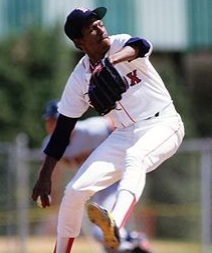
My favorite baseball player retired a few days ago. Tim Wakefield, a knuckleball specialist who had pitched the last 17 years with my home town Boston Red Sox, finally decided to hang up his spikes at the age of 45. There were several remarkable aspects to his long and successful career (he won 200 games, something the vast majority of major league pitchers never do), not the least of which was throwing the knuckleball almost exclusively, an infamous and rare pitch that is almost as difficult to throw as it is to hit or catch. (Former catcher Bob Uecker famously quipped that the best way to catch a knuckleball was to wait until it stopped rolling, and pick it up.) The most remarkable, however, was the way Wakefield always exhibited exemplary character, on the field and off of it. Continue reading

Ethics Dunce: Dennis “Oil Can” Boyd

Well, I can’t say I’m really very surprised.

And another mystery solved: Why was he called "Oil Can"? Because apparently that's what he has on top of his neck instead of a head.

Former Red Sox pitcher Dennis “Oil Can” Boyd, one of my favorite characters when he was active, admitted this week that he was stoked up on cocaine when he pitched more often than not. “Oh yeah, at every ballpark. There wasn’t one ballpark that I probably didn’t stay up all night, until four or five in the morning, and the same thing is still in your system,” Boyd told WBZ NewsRadio 1030’s Jonny Miller in Fort Myers, Florida, where the Red Sox are about to start Spring Training.  “Some of the best games I’ve ever, ever pitched in the major leagues I stayed up all night; I’d say two-thirds of them. If I had went to bed, I would have won 150 ballgames in the time span that I played. I feel like my career was cut short for a lot of reasons, but I wasn’t doing anything that hundreds of ball players weren’t doing at the time; because that’s how I learned it.” Continue reading