
Slogging through 199 Donald Trump quotes is too much for anyone to endure. Here are 40 that matter…
I don’t like or trust the technique of cherry-picking quotes from famous people to make them sound stupid, venal, mean or distasteful. First of all, the technique has been abused by the news media, which uses it against people like Sarah Palin and Dan Quayle, but seldom digs up quotes to embarrass the leaders and political figures they like and support. Many liberal icons—Barney Frank comes to mind—talk so incessantly that it would be easy to make them sound like monsters or fools using the technique, but if it is done to these people at all, it is done by ideological blogs with minimal exposure. Second, those who make such lists often cheat, taking quotes out of context, or worse, making them up. Many lists designed to show that Sarah Palin is an idiot, for example (she is many things, but idiot is not among them) use lines actually said by Tina Fay while lampooning Palin.
Michael Kruse’s feature for Politico called “The 199 Most Donald Trump Things Donald Trump Has Ever Said”, however, deserves a bit more deference. After all, he appears to have waded through a putrid swamp of Trump interviews, books, and videos, which probably left him drooling and giggling in a corner some place; I’ll be relieved when I see evidence that he’s OK. That task took courage, dedication and endurance: attention must be paid. Moreover, this isn’t the usual list of ten or twenty quotes: you could make Stephen Hawking seem like a dolt in twenty quotes if you chose them maliciously. This is 199. Impressive.
Also horrifying. In selecting the 199 juiciest and most provocative quotes from any prominent American, wouldn’t you expect at least one that was articulate, thoughtful, wise or memorable? I’m not looking for Samuel Butler here, or even Barack Obama, but for someone who is at least for the nonce a “serious” candidate for the highest office in the land, it would be reassuring to find some evidence of wit, perspective, reflection, or a vocabulary beyond that of a typical 8th grader, and it just isn’t there. Has Trump read any literature? Has he ever seen a play? Is he capable of a relevant famous quote or a cultural reference (saying that Bette Midler is “grotesque” doesn’t count, though “grotesque” may be the most sophisticated word that appears on the list)? If so, there is no hint of it. Maybe Kruse intentionally left out quotes that would reflect well on Trump, and omitted utterances like “I suppose there’s a melancholy tone at the back of the American mind, a sense of something lost. And it’s the lost world of Thomas Jefferson. It is the lost sense of innocence that we could live with a very minimal state, with a vast sense of space in which to work out freedom” (George Will) or “When buying and selling are controlled by legislation, the first things to be bought and sold are legislators” (P.J. O’Roarke) or even“Our political differences, now matter how sharply they are debated, are really quite narrow in comparison to the remarkably durable national consensus on our founding convictions.” (John McCain). I doubt it.
There are three Trump bon mots in the 199 that barely justify quoting, like #57: Continue reading →


 Ethics Alarms
Yes, it IS the same thing as “out of the circle”: you know, Rude.
I allowed, for the most part, the debate following the post from last week, “Ten Questions For Supporters Of “The Movement For Black Lives” And Anyone Else With The Guts To Consider Them.” to continue largely unimpeded by interjections by me. I did this in part because of lack of time and energy–I am still wiped out by a bout with bronchitis—but eventually because I wanted to see where the discussion went without me. I saw. I read. I was depressed.
Here is how I would answer the ten questions. I will for the most part use Charlie Green’s responses as a foil, because he can take it.
To briefly review for those who did not see the initial post, the questions were sparked by an incident following the a three day conference held at Cleveland State University for the Movement for Black Lives.
On the final day, as supporters of Movement for Black Lives were leaving CSU, they saw Greater Cleveland RTA officers with a black teenage boy in handcuffs at a bus shelter. The rest is from Cleveland.com, linked in the article:
The conference participants immediately assumed that the police – not the boy – had done something wrong and began rallying against the police, demanding to know why he was in handcuffs and that he be released. Nobody could have known what was going on. But that didn’t’ seem to matter. The crowd fed on itself.
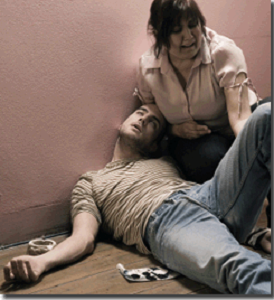
The RTA later explained that its officers had removed the boy – who they suspect was intoxicated — without incident from a bus and sat him at shelter at Euclid Avenue and East 24th Street so they could get information from him and call his parents. The police officers said in a report that they found the teen on the bus passed out and drooling. He was cuffed as a matter of procedure. As the crowd swelled, the police placed the boy in a police car for his safety, the RTA said in a statement. Then, protesters — many of whom were filming the action on their cell phones – surrounded the RTA police car and prevented the police from moving the teen. (Normally, RTA officers take juveniles to police headquarters, where they are released to an adult.)
An RTA officer then did something stupid. He shot pepper spray at people blocking the patrol car — a move that incited the crowd and played perfectly into the conference narrative about police. Several people were hit and were seen washing out their eyes with water, according to video of the incident posted online….
When an ambulance arrived to check on the teen boy, the crowd moved to allow him to be examined. As police walked him to the ambulance, the crowd chanted “Take them off, take them off” in reference to the handcuffs. The teen was released to his mother, who arrived on scene, and the incident ended….
Brandon Blackwell, a crime reporter for the Northeast Ohio Media Group who frequently covers police and demonstrations, saw the pepper spray video and rushed to the scene. When he arrived, the police were gone but the crowds remained. Blackwell then did what he always does. He started recording with his cell phone and asking questions. On Sunday, he used Twitter’s Periscope app to broadcast the scene live. But the crowd turned on Blackwell as he filmed a large group gathered in a circle on a sidewalk outside of a CSU building. A man announced the circle was only for people of “African descent.”
Blackwell, who is white, was dressed in his daily uniform of jeans, a black T-shirt and Converse shoes. He stepped outside the circle and continued to record. Then, people began blocking his camera with shirts, theirs hands, signs and other objects, including an orange traffic cone….During one of the tense moments in the exchange, Blackwell demanded that those blocking his view not touch his camera.
“I got 800 black people behind me, what the fuck you going to do,” a man responded, getting in Blackwell’s face while continuing to block his camera.
Blackwell asked for someone to get the guy away from him, but more people came at Blackwell instead.
1. How was this rally ethically distinguishable from a white supremacy or a KKK rally?
To begin with, it was a spontaneous rally arising out of an organized gathering. The apparent purpose of the demonstration, a protest against alleged police mistreatment of black citizens, is ethically valid, unlike protesting the “mongrelization of the white race” or equal rights for African Americans. However the manner of the protest and its demonstrated values—animus to another race and presumed bad character and lack of trustworthiness of “the other,” in this case, those not of “African descent,” is similarly exclusive, unjust, divisive, unfair, irresponsible and prejudiced—racist.
The answer, therefore, is “Not enough.”
Charles answered, “The same way an anti-Jewish Nazi rally is ethically distinguishable from a Jewish anti-Nazi rally. Does this really require explanation given history?” It’s a flip answer, but it is also dead wrong, and more than a little bit of a deflection. The crowd was protesting abusive police practices, supposedly, not white abuse practices, and not whites. Why would an anti-Klan rally or an anti-Nazi rally demand a racial or ethnic qualification to participate? Presumably anyone who objected to these racist movements would be welcome to a protest, and if they weren’t, then there is a rebuttable presumption that was demonstrating against something more than just conduct.
2. If Blackwell refused to “go to the back of the bus” as commanded, why would he be any less in the right than Rosa Parks?
Charles’ deflection got more desperate here. He wrote: “That is an absurd analogy. Blackwell was not a minority. Parks was not a reporter. You didn’t state whether the press was allowed, or disallowed. I honestly don’t know enough to answer, but if you do, you should have mentioned it. Not enough info, and an inflammatory metaphor on your part.” I said that the rally was on public property, and that is enough. The press cannot be excluded from a public event, which this was, on public property.
Let’s assume, for Charles’ comfort, that this spontaneous rally of race-baiters who automatically assumed that a drunk and drooling kid being taken off a bus for his own good was going to be executed a la Walter Scott took place on the bus itself—which is no more or less public than the street or a public university. Blackwell was being relegated to second-class citizen status—“out of the circle” is no different from “the back of the bus,” and arguably it is worse—due to his skin color, and for no other reason. That’s racism. That’s oppression. That’s unethical; that’s wrong. That he may not be a “minority” according to the demographic of the nation—gee, can he feel discriminated against in 2050, when whites will be a minority, Charles?—is absolutely irrelevant, unless you believe, as I am sure Charles does not, that prejudice and discrimination on the basis of skin color is only wrong if a majority member does it. Moreover, Blackwell was not in the majority there, as the nice gentleman who threatened him with mob violence was kind enough to point out.
The correct answer: Blackwell had every bit as much right to hold his ground in a public place against a racist command that denigrated him as a human being and as a citizen as Rosa Parks did. If it’s an inflammatory comparison, that is only because those rationalizing the conduct of the demonstrators recoil at the ugly truth.
3. If this is the developing tenor of the BlackLivesMatter movement, why shouldn’t the movement be regarded as a racist one and treated accordingly?
Is it the tenor of the Black Lives Matter movement, as well as “The Movement For Black Lives”? That certainly seems to be what all the signs point to, though I am willing to wait a bit longer. In this case, the group instantly began interfering with legitimate police work, without knowing any facts. That is certainly bigotry, if not racism. Bigotry arises from an irrational, automatic assumption that a group’s members are not trustworthy because they are assumed to possess unattractive and negative characterizations and behavior traits.
Answer: If the various movements continue to act in a bigoted, prejudicial or racist manner, and they have, then they should be regarded and treated as they are.
Charles answered, in a line he may long regret, “Rudeness still does not constitute racism under the law, at least as I understand it. A false conclusion.” Ordering a black man out of a restaurant because of his skin color is rude—it is also dehumanizing, humiliating, offensive, cruel, divisive, and racist. So is telling a reporter that he must “leave the circle” because of where his ancestors came from.
4. How can a university justify allowing a racially segregated event like this to occur on campus?
Trick question. The university didn’t, because the event itself wasn’t segregated. Reports indicated that the conference was racially diverse. However, no public institution could ever ethically use its authority to allow a racially segregated group to hold an event. White students must be allowed to take Black Studies courses.
Charles wrote: “This is the question that colors all the others. Is the university allowed to distinguish between in-group meetings, or not? If it permits such meetings, I see nothing unique about race that would distinguish it. If you’re allowed to have Jewish-only or gay-only groups, then how can you argue you shouldn’t have race-only groups?”
My position is this: if racial minorities do not want to be excluded on the basis of race, then they cannot argue that racial exclusion is justified. The Golden Rule applies. Any other stance is hypocrisy, and permanently undermines progress in eliminating racial bias as long as it persists. This is why affirmative action is both ethically wrong and counter-productive. It is why there should not be televised awards shows for black athletes and black entertainers, and it is why the race-based appointment policies of the Obama Administration have undermined racial trust. You cannot end discrimination by discriminating, and you cannot simultaneously condemn racism while practicing it.
5. Why isn’t condemning such demonstrations a liberal and progressive obligation, and supporting such a demonstration a reactionary one, hostile to civil rights?
Answer: It is an obligation. Because civil rights advocates are unwilling to give up the racial spoils system that sustains them and their organizations, they refuse to meet it. Obviously supporting a race-segregated demonstration is hostile to civil rights.
6. Is there an African-American leader, elected official, commentator or reporter with the courage and integrity to state that this conduct is unethical, illiberal and damaging to the social fabric of the country?
and
7. Are there any white ones with that courage and integrity?
Charles jumped the shark here, answering: “If it’s not unethical or illegal, then the race of someone refusing to agree with you is irrelevant.” This both unethically re-frames the question as being about me, and eliminates a key element of the question, that the conduct is unethical. The conduct involved discrimination based on skin color and ancestry, and that is per se unethical, racist and wrong, no matter who engages in it. That is not my opinion; that is truth. The reason that I selected these individuals for the query is that their societal roles makes truth-telling part of their professional and ethical obligations. As for whites, the issue is fear of being called racist by a panel on CNN or MSNBC.
Answer: If there are, they have been mighty quiet about it.
8. If a rally at the University of Massachusetts demanded that all non-whites leave, this would be a major news story and pundits would be warning that a new wave of anti-black racism was on the rise on college campuses. Why didn’t this incident spark the same kind of publicity and commentary?
Charles denied that a white mob at UMass demanding that a black reporter step to the back of the circle would get negative publicity, a denial that defies explanation, logic and history.
My answer: It didn’t attract the same kind of publicity and commentary because there is a pernicious double standard among the commentariat and in the culture that excuses and rationalizes anti-white racism, just as Charles does.
Here I will address briefly the cultural comments Charles made in a subsequent comment…briefly, because I believe long-time commenter here Glenn Logan knocked them over the wall. A lot of these discussions end up in dead-end alleys where an advocate for a manifestly bigoted and racially biased-position held by the African American community argues that whites don’t understand why blacks feel the way they do. This was the issue that got me censored on Ampersand’s progressive blog, and ended his helpful, if predictable, ideological contributions here. His f0llowers insisted that it wasn’t unreasonable for blacks to feel that George Zimmerman should have been convicted of murder—absent any convincing evidence other than the color of the victim, Trayvon Martin—because of history, and accumulated grievances. Similarly, this was the argument for why the shooting of Michael Brown should have led to charges against Darren Wilson–because everybody knows “this” happens all the time, ergo it is reasonable to assume that it happened to Brown, regardless of the facts. This was essentially the damaging rationalization offered by President Obama in the wake of the Ferguson riots.
This reasoning is just a rationalization for bias, emotion over reason, bigotry, injustice and prejudice. I can understand how people become racists or sexists or anti-Semites, and why blacks assume that every black suspect killed by a police officer was an unarmed innocent who had no part in his own demise, can’t you? I understand why so many blacks distrust people because of the color of their skin; what I can’t understand is why they can’t figure out that if they act exactly like the whites who made them distrust whites, whites will continue to distrust them. This is all bias, and people telling me that a destructive bias should be accepted because there’s a reason for it is not a persuasive or a responsible argument. Biases always come from something; there are always reasons people are biased. So what? It’s still bias, and anti-white biases are no more acceptable and no less destructive than other biases.
9. How is the sentiment, message and conduct illustrated by demonstrations such as these helpful, productive, or anything but destructive?
Answer: It’s terribly destructive, and since it is, it should be called such by the most respected and trusted voices in the culture, and not minimized with euphemistic terms like “rudeness.”
10. A popular and much quoted tweet, attributed to various conservative wags, is this. It is dismissed by Democrats and progressives as being an anti-Obama shot and no more. Why isn’t its underlying message undeniably true?
Charles said: “This is inflammatory, ridiculous, and goes to the heart of the matter. You know better and it is beneath you. It is people like the echo chamber you lead on this particular issue who insist that racism is the fault of the victims, that Obama has been the cause of greater racism, and that blacks should shut up, ignore history, behave themselves and all of us agree to pretend that racism is something that happened long ago, and if everyone just acted white it would all go away.”
I have never insisted or argued that racism is the fault of the victims. And Charles knows this is no echo chamber. On this topic, it is the mainstream media that is the echo chamber.
But the “underlying message” is 100% true. Railing against those with the integrity to call out the divisive—not always intentionally divisive, but incompetently, irresponsibly divisive—policies, manipulations and rhetoric of the Obama Democrats doesn’t obscure what surveys show, what we see and hear, and the sudden spike of murder statistics across the country as a direct result of casting law enforcement as racial conspiracy.
It all was seeded, of course, by the cynical strategy, developed even before Obama was elected, to characterize the same kind of criticism all recent Presidents have been subjected to as racially-motivated, even as this ill-prepared leader has lurched from one disaster to another, domestically and abroad. This was excellent for the goal of making sure that African Americans, whose fortunes have suffered more under this President than any other group, voted for skin-color over self interest in 2012. It has also been a social and cultural calamity. Still, the strategy continues. In the Washington Post last week, for example, African American columnist Colbert King relayed this:
That’s right, opposition to the insane Iran deal is all about racism. Netanyahu isn’t worried that a nuclear powered state that continues to declare that it will wipe Israel off the face of the earth might just do it; naw, he just doesn’t like blacks who are presidents. And since Republicans gave him a chance to plead for his nation’s existence, this is just more proof that they are racists too.
Hey, but I understand why they feel that way, so it’s okay.