“It’s Unethical To Be A Weenie,” Part I: The Lipreading NFL Fans

Preface: The Rise of the Weenies

Tom Brady, mid-

Tom Brady, mid-“Fuck!”

Everywhere we look, it seems, we see the United States culture being threatened by weenies and the rise of Weenyism. In a nation founded on the principles of self-reliance and individual liberty, built and shaped by stunningly brave men and women who hacked civilization out of an uncertain and perilous wilderness, there is a growing mass of citizens—the cancer imagery is intentional—who are committed to giving the government near total control over every conceivable danger, threat, peril, offense, inconvenience or annoyance, real or imagined, as the role of individual Americans devolves into pointing and saying, “There! Fix that! I don’t like that! Arrest them. Fine him.” Increasingly, the primary motivation for public policy is fear, planted by activists and politicians to panic, terrify and mobilize the weenie base, who are ever eager to trade individual freedom for protection against, well, almost everything.

I know I am hyper-sensitive to the weenification problem right now, having spent three weeks reviewing the history of the American West and its portrayal by Hollywood in preparation for my Smithsonian Associates program last week on how the Hollywood Western shaped American culture. Around the same time that the Sixties exploded, the culture’s unified acceptance of traditional American values began to collapse, just as the primacy of the Western as an entertainment genre declined. Now weenyism is in its ascendency. There are those who claim that the name of a distant football team causes psychological trauma to Native Americans who don’t follow football. Blogger Andrew Sullivan (a candidate for Head Weenie) asserts that the United States should have the “courage” to do nothing about ISIS and allow it to run amuck (the ultimate goal of the Weenies: an Orwellian “Weenies Are Heroes” motto). Feminists insist that women are so vulnerable to male sexual predations on campus that due process, fairness, common sense and much of the respect as equals their predecessors fought for must be surrendered, in a new system that begins with the presumption that all men are potential rapists and all women simpering, helpless victims, even when they say “yes.” College students and other are demanding that books, stories, essays and blog posts contain “trigger warnings” to alert weenies that words and topics in the text might give them the vapours. Needless to say—I hope—this not a healthy development for the United States, or  our culture.

The resistance to Weenyism ought not to be a partisan issue. The obligation to help the weak, disadvantaged and powerless become stronger, overcome their handicaps and acquire power is part of the American tradition too. Somewhere, however, this obligation was distorted by the realization that in a system where the government is looking for victims to justify its existence, Weakness Is Power (Orwell again). Weenies—fearful, risk-averse, passive-aggressive citizens who shrink from conflict, confrontation and the messy process of democracy— have realized that they can mobilize power to satisfy their narrow biases and interests, often at the expense of their fellow citizens’ right to liberty and the pursuit of happiness. Now the culture is tilting away from the uniquely American model that encouraged individuals to fight their own battles and succeed or fail on the merits of their causes and their own determination and skill, to one that rewards the perpetually offended, victimized, and passively unsuccessful.

It is unethical to be a weenie, and equally unethical to allow Weenieism to overcome what has been an American cultural strength.

Part I: The Lipreading NFL Fans

Several TV viewers who watched the NFL’s  New England Patriots-Green Bay Packers made official complaints to the Federal Communications Commission because they could see Patriots quarterback Tom Brady saying “fuck” repeatedly on the sidelines in frustration over his own play.  They couldn’t hear it, mind you: they were just able to read his lips. This was so horrible that they felt that the Federal government needed to investigate and take remedial action.

One complaint was from an Indianapolis parent who wrote that their “6 year old children know how to read lips.” Another was from a Pennsylvania grandparent who complained to the FCC,  “My 8 year old grandson was watching the game with me and even commented that he should not have said that.”

The Horror. Law professor Jonathan Turley opined on his blog,  “I do not believe that this was a good thing for a NFL QB to be doing.” Well, sure: he should be picking his nose of grabbing his crotch, either, but this isn’t scripted, and its a football game.  The whistle has to be blown for Federal retribution for mouthed obscenities to nobody in particular, as these sensitive parents and grandparents happily allow their delicate charges to cheer men in the process of maiming themselves and risking that their children will be changing their fathers’ diapers in the disturbingly near future?

The really frightening thing is that our regulatory morass encourages such attempts at censorship. Continue reading


Ethics Alarms Mail Bag: The Cologne Allergy

Perfume allergyEvery now and then readers think I’m Ann Landers. Today I got a “Dear Ethics Alarms: What’s right?” e-mail from a friend, and I thought I’d answer it on the blog because it raises a classic ethics conundrum.

The inquirer belongs to a social group that meets weekly. It is a weekly joy, I am told; the writer has been attending for years. Everyone convenes, on the given day, right after work. Attendance varies, and membership is informal, though individuals have been told, on rare occasions, to come no more.

Of late an infrequent attendee, but a member of long standing, has begun to attend meetings with some regularity. My friend says this is not the happiest of developments, because the two do not get along. It is a breach of long-standing, I am told and is not going to be healed. “She is an asshole,” is how the letter delicately puts it.

Last week, shortly before the end of the 90 minute gathering, the recent interloper stood up and declared that she had developed a serious allergy to colognes, perfumes, aftershave, and all chemical scents. Looking right at my friend, she declared that this allergy made exposure to any sort of commercial scent unbearable, and she asked that in the future no members should wear perfume of any kind.

“I have worn a favorite brand of cologne every day for over thirty years,” the from my acquaintance letter says. “I always get complimented on it; the scent is subtle and nobody would notice it unless they were right next to me. The asshole and I have been separated by the length of the room since she started coming. Personally, I think she made the demand just to make me miserable. She knows, from our previous relationship [NOTE: I think it was more than just a friendship], that I wear the cologne.”

The question: Is she ethically obligated to stop wearing cologne on the day of the meeting (she goes right from work) to accommodate this member’s special problem?

Add to this the broader ethics question that comes up often: Does a group member with special sensitivity have the ethical upper hand allowing such a member to demand that all other members avoid conduct that only bothers that member? Continue reading

The Sony Hacks, Hollywood Hypocrisy and The Full Pazuzu

Amy Pascal, apparently...

Amy Pascal, apparently…

You can’t make this stuff up. First North Korea apparently hacks Sony’s emails to punish it for producing a Seth Rogen comedy,—which, by the way, would justify a national response if the current leadership didn’t object to necessary retaliation on principle: this is a foreign attack on American soil, just not a fatal one—-then the revealed e-mails showing  enthusiastic Obama supporters Amy Pascal, Sony Pictures co-chair, and movie producer Scott Rudin making racist jokes worthy of  the readers of Chimpmania.

Of course, Buzzfeed shouldn’t have published hacked e-mails—private is private— but it couldn’t resist. Let’s see: Buzzfeed, Pascal, Rudin, North Korea…let’s throw in our government being unwilling to stand up against vile foreign governments cyber-attacking citizens and businesses: yes, I’d say this qualifies as an Ethics Train Wreck.

Here was the email exchange between Pascal and “The Social Network” producer Scott Rudin, when Pascal sought his advice on what she should say to the President at an upcoming Hollywood fundraiser:

Rudin: Would he like to finance some movies [?]

Pascal: I doubt it. Should I ask him if he liked DJANGO?” [ The violent Tarentino “Escaped-slave-kills-white-guys” Western mash-up revenge epic ]

Rudin: 12 YEARS [A Slave]”

Pascal: “Or the butler [“Lee Daniels’ The Butler”]. Or think like a man?” [ Steve Harvey comedy “Think Like A Man”]

Rudin: Ride-along. [“Ride Along,” a failed cop buddy movie-action flick starring a mostly black cast] I bet he likes Kevin Hart.

Let me focus for the nonce, however, on the absurd and self-indicting apology by uber-hypocrite Amy Pascal, who said: Continue reading

Smith College President Kathleen McCartney’s Apologizes For Saying “All Lives Matter”: Is There A Problem?

Damned if you do, damned if you don't.

Damned if she does, damned if she doesn’t.

There is a problem, all right, but not the one you might think—at least not this time.

Smith College President Kathleen McCartney attempted to  show support for her students  protesting racism and police brutality by sending a campus-wide email titled, “All Lives Matter.” But the official slogan of such protests is “black lives matter.” McCartney immediately came under fire from black students and others, accusing her of minimizing the specific nature of her concerns. “No, Kathy. Please do not send out an email saying ‘All lives matter.’ This isn’t about everyone, this is about black lives,” Sophia Buchanan, a Smith student, in a typical critique.

The college President apologized several hours later, saying that she hadn’t thought about the fact that “all lives matter” was being used by some as a rebuttal to “black lives matter”:

“I regret that I was unaware the phrase/hashtag ‘all lives matter’ has been used by some to draw attention away from the focus on institutional violence against Black people…. “It minimizes the anti-blackness of this the current situation; yes, all lives matter, but not all lives are being targeted for police brutality. The black students at this school deserve to have their specific struggles and pain recognized, not dissolved into the larger student body.”

That statement put her in the cross-hairs of the “conservative media” and others, who treated it as a full-fledged “gotcha!” What??? Saying that all lives matter is offensive now? What next Orwellian proposition will political correctness bullies demand from spineless college administrators? Continue reading

Transparency, Causation, Eggshells, Trust : Seven More Ethics Issues In The Eric Garner Case

jigsaw-puzzle-record

1. There is near unanimity in the response to the non-indictment by the Staten Island jury in the Eric Garner case. In light of the graphic video, it is hard to see how there wasn’t probable cause to indict. The coroner verdict of “homicide” would see to provide sufficient evidence all by itself. However, in the absence of the complete record of what the grand jury heard and saw, nobody can be certain that this was a miscarriage of justice. However, given the context of the case and its deleterious impact on faith in the justice system, that is no solace and scant mitigation. As in Ferguson, it is prudent and essential that the public see what the decision was based upon. It is true that those who are determined to see injustice, bias and racism will do so regardless of what the evidence shows–again, as in Ferguson—but the only evidence that has been made public, the various videos and the officer’s testimony–only makes the non-prosecution more suspicious.

2. Can the non-prosecution be justified? If so, the only reason I can see would be lack of proof of causation. Causation is tricky, and  juries get confused about how to analyze it. Since it is fair to assume Daniel Pantaleo did not intend to kill Eric Garner, the issues are a) whether his actions during the arrest were negligent, and b) whether they were the proximate cause of Garner’s death. That his conduct was negligent is not enough to sustain and indictment—that negligence had to be the reason Garner died. Remember, he was not choked to death. The medical examiner ruled that Garner died from a collection of factors: compression on his chest and throat, the position he was forced into, his obesity, weak heart, and asthma, all causing asphyxia.

  • If Pantaleo’s actions alone would not have caused Garner’s death, then it could be legitimately argued that he was not guilty of a crime. The other officers were given immunity for their testimony, which seems like either a bad decision by the district attorney, or intentional sabotage of the case against Pantaleo’s. If it was the collective action of the police that caused Garner’s death, it would be unjust to make Pantaleo the sole officer punished. If some of the testimony from the unchargeable cops made the case that it was another officer, or several, who really caused Garner’s death, that would explain the no indictment result.

In the widely seen video of the arrest, Pantaleo can be seen with his arm around Garner’s neck as Garner is taken to the ground and for some time thereafter, but in watching the video it’s difficult to determine whether Garner was in fact choked. And if he was, it did not appear it was long enough even to render him unconscious, much less kill him…I saw nothing excessive in the manner in which the officers subdued Garner. He was neither beaten with batons nor even punched. To me, it appeared to be a fairly typical scuffle with a large man who had clearly demonstrated his unwillingness to be arrested peacefully.

He misses the point. The question is whether the take-down was excessive for Garner, not some theoretical average arrestee. It is true that with a normal, healthy subject, what the officers did would not typically cause death….but Garner was obviously not normal, nor healthy. He was morbidly obese, and 350 pound middle-aged people tend to have the kinds of heath issues Garner in fact had. Nobody would argue that an elderly woman or a ten-year old girl or someone in a wheelchair should be manhandled like that. Such treatment was negligent for Eric Garner, and the deadly result could and should have been anticipated.

It is true that the officers couldn’t know that Garner had a weak heart and suffered from asthma, but it doesn’t matter: the rule in negligence is that “you take your victim as you find him.” If your negligence is the proximate cause of someone’s death, the fact that it wouldn’t have caused anyone else’s death is no defense. This is the so-called “Egg-shell Skull” rule.

Garner was an egg-shell perp. Continue reading

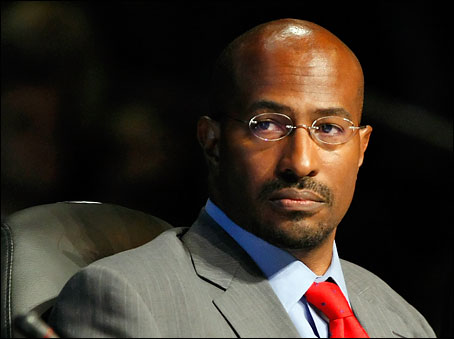
Ethically Incoherent Statement Of The Month: Van Jones

Van Jones: Reasonable or biased?

Van Jones: Reasonable or biased?

Van Jones, the former White House “czar” of something or other turned smooth-talking racialist warrior on CNN’s “Cross-Fire” and various TV panels, was arguing for frank racial dialogue on ABC’s “This Week With George Stephanopoulos,” in the context of the protests over the Ferguson and Staten Island police grand jury decisions. Sounding reasonable as he often does, Jones then said that what should be an area of agreement is the need for a special prosecutor whenever police misconduct is before a grand jury, noting that it was an “obvious conflict of interest”for prosecutors who work with police as a core element of their job.

I have addressed this argument before, but let me be clearer. This is a conflict of interest that a competent and ethical prosecutor should acknowledge and be able to deal with as the legal ethics rule require. The prosecutor should get a waiver from his or her client—not the victim’s family, but the government the prosecutor represents—and honestly assess whether the fact that the police serve the same client will prevent the prosecutor from being fair and objective. If the answer is yes, then the prosecutor must recuse, but I see no reason why the answer should be yes, if the prosecutor is ethical and worthy of the position.(Jones and other advocates for this “solution” have a bias against prosecutors, whom they view as presumptively unethical.)

Theoretically, every case in which an officer’s credibility determines whether a citizen should be charged poses the same conflict: it is endemic to the prosecutor’s job. Indeed, prosecutors have a very good reason to want bad cops punished and removed from the police force; I’m not at all certain that there is a necessary bias on the part of prosecutors in favor of letting such cops escape legal consequences of their actions. That assumption is based on the assumption that prosecutors don’t care about  justice. Nobody who doesn’t care about justice becomes a prosecutor. Why would they? It is a hard, frustrating job and the pay isn’t anything special.

The strongest argument for a special prosecutor is a different ethical problem, the appearance of impropriety. If the decision to prosecute or not is tainted with suspicion of bias, then the justice system is compromised and breaks down. This is why, for example, it is terrible that the Justice Department, a super-politicized one at that, is supposedly investigating the I.R.S. scandal.

As George moved to another topic, Jones blurted out a final statement that caused me to spit-take a mouthful of coffee. It undermined all of his finely tuned rhetoric about fairness and non-partisan dialogue about race, and exposed, ironically, his own biases. He said;

“If there had been a special prosecutor in Ferguson, we would have had a different result.”

AHA! Continue reading

Unethical Tweet Of The Month (Or Eternity?), “Jackie’s” UVA Gang Rape Ethics Train Wreck Division: Melissa McEwan

Melissa McEwan's profile photo. I'm not going to say a thing. No, really. Not a thing.

Melissa McEwan’s profile photo. I’m not going to say a thing. No, really. Not a thing.

“I can’t state this more emphatically: If Jackie’s story is partially or wholly untrue, it doesn’t validate the reasons for disbelieving her.”

Melissa McEwan,  feminist proprietor of @Shakestweetz, an-all tweet blog, responding to the meltdown of the Rolling Stone story accusing a University of Virginia fraternity of gang rape.

Look, I’m not going to insult you by explaining what’s wrong with the assertion that those accusing others of horrific crimes shouldn’t be held to strict standards of credibility.

What is more significant than McEwan or her tweet is that this frightening and dangerous state of denial is moving from the status of self-evidently insane to acceptable. As I suggested in the previous post about the Rolling Stone retraction of its explosive story by Sabrina Rubin Erdely, the Ferguson demonstrators, the “Hands up!” protestors, the Congressional Black Caucus, and  pundits like Eugene Robinosn who are still arguing that Officer Wilson should be indicted are doing essentially the same thing. Having decided that the Ferguson narrative pressed by civil rights activists communicated a deep truth about America, they refuse to accept that it was false even in the face of overwhelming evidence because they are intellectually and emotionally committed to that “truth.”

The tweet also forces me to upgrade the Rolling Stone fiasco to Ethics Train Wreck status. Continue reading

Observations on the Eric Garner Non-Indictment

http://www.youtube.com/watch?v=En5linhM7Qo

The New York Times, among others, reports that the Staten Island grand jury has brought no indictment in the Eric Garner case, in which a large African American man resisted arrest and was brought down by multiple cops, as one, Daniel Pantaleo, used a choke hold to restrain him. After saying that he couldn’t breathe, Garner, who was asthmatic, stopped breathing and died

Observations:

1. I haven’t seen all the evidence, and stipulate that there may be some good reason for the non-indictement that I am not aware of. That aside, however, it certainly seems like this case embodies many of the features that were not present in the death of Michael Brown but that the media and activist narrative attributed to it nonetheless. Garner’s case, in contrast, appears to demonstrate an unwillingness of the law enforcement and justice system to hold police officers accountable for the results of excessive force, even when the result is death.

2. Again, absent some significant evidence that has not been made public, I believe that the video of the fatal arrest, the fact that the choke hold tactic is prohibited by police department policy [ Note: I originally wrote that it was illegal; that was in error, and I apologize for the mistake], and the coroner’s verdict that Garner’s death was a homicide should have been sufficient to mandate the grand jury finding probable cause for at least a charge of negligent homicide.

3. This seems like a result worthy of protest. It is one more reason why activists continuing to use Brown’s death as a rallying point is foolish and wrong. For their purposes, it is a weak case. Garner’s is not. Continue reading

Contest Entry For Most Unethical Column, Post Or Essay About The Ferguson Ethics Train Wreck: Hip-Hop DJ Jay Smooth

http://www.youtube.com/watch?v=8v-Pd62hq0w

It goes without saying that my efforts to avoid more Ferguson commentary is a failure. The race-baiters, grievance-mongers, police-haters and cynical Democratic-base-goosers are engaging in an orgy of self-righteousness, aided by an uncritical news media and encouraged by public sentimentality and ignorance. This is horrible for the rule of law, law enforcement, race relations and the nation, but to close our eyes and repress our gag reflexes, hoping it will go away, is cowardly and irresponsible. This stuff is dangerous, to be blunt. Lies always are, and public policy built on lies will always result in harm and distrust.

The onslaught is much more powerful than I expected: several member of the Congressional Black Caucus actually brought the false “Hands up! Don’t shoot!” rallying cry onto the House floor yesterday. Charlie Rangel is using the lawful shooting of Brown based not on race but on his conduct alone to re-open demands for slavery reparations.

In this context, I’m entering this video blog by John Randolph, a.k.a “Jay Smooth,” a popular and outspoken hip-hop DJ with pretenses of social relevance.  It is genuine mind-poison. “Smooth” is sure smooth: he’s articulate, facile, a good actor, attractive, and facts mean absolutely nothing to him. Here he spins a persuasive justification for the Ferguson riots based on a series of demonstrably false premises: garbage in, but insidiously persuasive garbage out, especially to his audience. It begins with an apparently popular tweet he made before the grand jury results came out, which said, “The fundamental danger of a non-indictment is not more riots, but more Darren Wilsons.” If Wilson was not indicted for lawfully protecting himself from a subject who attacked him, more police will protect themselves from attacking suspects? The tweet is cleverly misleading: it assumes, without stating, that a racist cop murdered a black youth, and the video blog proceeds accordingly from that assertion. The truth is that the danger of having an indictment would be to allow mob justice and vengeance to preempt due process and fairness. Not surprisingly, Smooth later reveals that he sent essentially the same dishonest tweet about the George Zimmerman trial. Continue reading

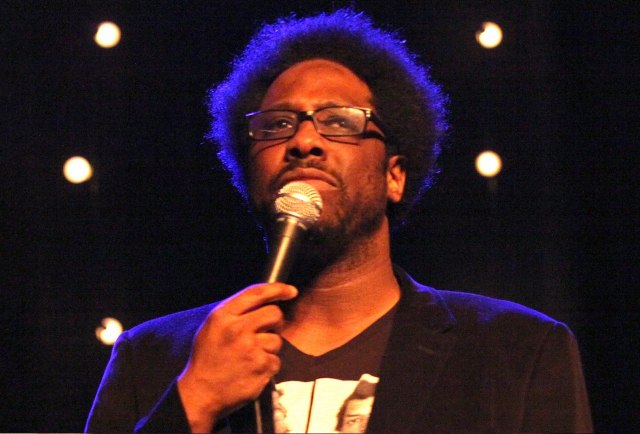
Contest Entry For Most Unethical Column, Post Or Essay About The Ferguson Ethics Train Wreck: Vanity Fair and W. Kamau Bell

Large, male, black...also irresponsible and dishonest.

Large, male, black…also irresponsible and dishonest.

My nominee for the contest: Vanity Fair’s “On Being a Black Male, Six Feet Four Inches Tall, in America in 2014” by comedian W. Kamau Bell.

Maybe Bell thinks the extra face-time on cable news this despicably deceitful essay gets him does enough for his career to justify adding to the false narrative about the Michael Brown shooting.  It isn’t. Nor is it worth the ignorance, hatred and fear he is sowing by intentionally misrepresenting what happened to Mike Brown as simply the natural consequence of his race, gender and size. Conduct had a lot to do with it too.

The article is really sinister, repeatedly comparing the author, who is about the same height as Brown was, to the slain teen, implying but never quite saying that Brown was killed simply because he was, in the author’s words, black, male, and large. Here’s a typical passage:

“I am afraid of the cops. Absolutely petrified of the cops. Now understand, I’ve never been arrested or held for questioning. I’ve never been told that I “fit the description.” But that doesn’t change a thing. I am afraid of cops the way that spiders are afraid of boots. You’re walking along, minding your own business, and SQUISH! You are dead.  Simply put, I am afraid of the cops because I am black. To raise the stakes even further, I am male. And to go all in on this pot of fear, I am six foot four, and weigh 250 pounds. Michael Brown, the unarmed Missouri 18-year-old shot dead by police this summer, was also six foot four. Depending on your perspective, I could be described as a “gentle giant,” the way that teachers described  Brown. Or I could be described as a “demon,” the way that Officer Darren Wilson described Michael Brown in his grand-jury testimony.”

He doesn’t exactly say that Brown was “walking along, minding his own business,” but that’s his intent, and he knows that’s what thousands have chosen to believe. He says that he, like Brown, could be described as a “gentle giant,’ but omits the detail that Brown was obviously not accurately described as “gentle.” If he were gentle, he would be alive. He also, being intentionally misleading, fails to mention that Wilson described Brown as looking like demon when the teen was attacking him.

Michael Brown wasn’t shot because he was large, black and male. He was shot because he attacked a police officer, twice, and because his size made that attack more legitimately threatening.  Because of his size and what he was doing with it, no reference to Brown’s color is necessary or relevant.

Bell’s perceptions of white reactions to a law-abiding, civil citizen because he happens to be a large black male  have added some useful perspective  to the national discussion of racial bias and police conduct, had he not chosen the path of using the topic to insinuate an innocent victim’s status for Michael Brown that does not comport with facts, slanders Darren Wilson, and fans the flames of ignorance and hate.

No responsible publication should publish something like this.