A Kevin Spacey Update, The Sexual Harassment Feeding Frenzy, And A Guide To Sexual Harassers In The Workplace

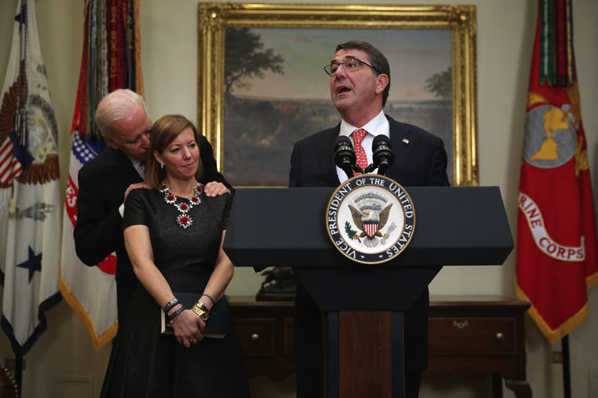
This photo seemed appropriate somehow…

Kevin Spacey, it is now fair to say, has been a habitual sexual harasser.

We did not know that when Anthony Rapp made his accusation against the actor in a Buzzfeed interview. I would be very interested in knowing whether Rapp knew that. The posts here (this, and this) began with the assumption that Rapp’s motivations were as he stated them, and he did not say or suggest that Spacey was, like Harvey Weinstein, an active predator.

But in the ensuing days,  the pattern typical of accused harassers who really are harassers has emerged regarding Spacey. Other alleged victims came forward with their accounts.  Next  the employees on Spacey’s hit Netflix series “House of Cards” expanded the narrative…from CNNMoney:

Spacey made the set of Netflix’s “House of Cards” into a “toxic” work environment through a pattern of sexual harassment, eight people who currently work on the show or worked on it in the past tell CNN. One former employee told CNN that Spacey sexually assaulted him.

That, as they say, is the ball game for Spacey. He has even followed the hackneyed script for so many celebrities caught in misconduct: he’s getting “treatment.” Well, he doesn’t have many options. His show has been cancelled; his agency has dropped him. Spacey is very talented, but it will take him a long, long time to even partially recover from this, if he can.

I am going to write this anyway even though it won’t register on most people: the fact that Spacey turned out to be a lot more than a guy who got drunk and treated a 14-year old actor inappropriately at a party three decades ago doesn’t retroactively make the way Rapp’s ambush accusation fair or right. If he knew that Spacey was a present day harasser and made the accusation to break the dam, that’s something else, but again, he didn’t suggest that.

I’d guess that he’ll say that now, whether it is true or not.

Since Spacey was accused, several other celebrities, including Dustin Hoffman, have been fingered. The latest development is that several female members of Congress have said that they have been sexually harassed by their male colleagues, and of that I have no doubts whatsoever. Nonetheless, we are still in the witch hunt yellow zone, creeping into the red.

Here is part of a cautionary LA Times op-ed  by Cathy Young:

The fallout from the Harvey Weinstein scandals and the ripples from the “#MeToo” movement are having indubitably positive effects — above all, exposing and bringing to account predators who have enjoyed impunity due to their power and status. But there are some pitfalls. Many people — not just men with skeletons in the closet — fear that careers may be destroyed over minor misconduct and ambiguous transgressions. Troubling rhetoric abounds, condemning all sexually tinged dynamics in the workplace, stereotyping men as abusers and women as perpetual victims in need of quasi-Victorian protections.…Concerns that the post-Weinstein climate may lead to witch hunts against any man who flirts with a female colleague have been met with angry comments along the lines of “flirting in the workplace IS HARASSMENT.” A tweet by singer/songwriter Marian Call that got more than 2,000 retweets and nearly 6,500 “likes” asked, “dudes are you aware how happy women would be if strangers & coworkers never ‘flirted’ with us again … this is the world we want.”

But is it? It’s certainly not the world I want: Except in college, nearly every man I have ever dated was either a co-worker or, once I switched entirely to free-lancing, someone I met through work. This is not unusual, even in the age of dating websites and apps.

This has always been the aspect of sexual harassment law that renders it inherently unfair and to many, incomprehensible. In many cases the exact same conduct is harassment if unwelcome, and successful mating strategy if welcome.  Don’t bite my head off, but this was what Donal Trump was alluding to in his repulsive conversation with Billy Bush. He was claiming  that women like being sexually assaulted by the rich and powerful. In many cases, he may be right. Legally, when he’s right, it may not be sexual harassment. Ethically, it is still wrong. If the women feels compelled not to object to the sexual overtures because of an inequality of power, it is very wrong, and illegal. Continue reading


Further Ethics Observations On The Kevin Spacey Scandal [Part 2]

[Continuing the reflections on the accusation against Kevin Spacey and its aftermath…Part One is here.]

I have always assumed that Spacey had endured some kind of serious trauma that explained his aversion to confirming that he was gay, since, really, it was so, so obvious. Many actors become actors because of familial abuse and self-loathing: if you think about it, it makes sense. They don’t like who they are and what real life has been, so they seek the fantasy life of being someone else on stage, films and TV.  Maybe Spacey’s long obsession with performer Bobby Darrin provided a clue. (Spacey eventually played Darrin in his own vanity film project. “Beyond the Sea.”) You have to be really unhappy with yourself to fantasize being in the shoes of Darrin, the talented, troubled heterosexual  actor-singer who died before he turned 40. Thus I was not surprised when Spacey’s brother Randall Fowler, 62, a limo driver and professional Rod Stewart impersonator, described the home in which he, Kevin and their sister were raised as resembling the plot a  horror movie.

  • Fowler says he and his brother were both sexually abused by their father, Thomas Geoffrey Fowler (whom the children called “The Creature”), and that their mother knew about their treatment at his hands. Their older sister, Julie, was also abused before she fled home when she was 18. In a 2004 interview, Spacey’s brother described how their ultra-right-wing father was a member of the American Nazi Party. He was so enamored with Adolf Hitler, Fowler claimed, that he trimmed his mustache to resemble Der Fuehrer’s.

“I grew up in a living hell. There was so much darkness in our home it was beyond belief. It was absolutely miserable,” Spacey’s brother said then. “Years later, our mother actually wrote a letter to all three of us, trying to justify what had gone on by saying she was abused as a child and so was our father. Kevin tried to avoid what was going on by wrapping himself in an emotional bubble….He was so determined to try to avoid the whippings that he just minded his Ps and Qs until there was nothing inside. He had no feelings.”

Fowler described his younger brother was an “empty vessel” who had never been in a real relationship with anyone. “Neither of us had a chance growing up with two such damaged parents, ” he concluded.

No, I don’t know that what a Rod Stewart imitator and publicity-seeking sibling of a famous actor says is completely true, exaggerated, or a fabrication.  But it fits. Spacey should be given the benefit of the doubt, and accorded some compassion. We all deserve that. Continue reading

Further Ethics Observations On The Kevin Spacey Scandal [Part 1 of 2]

The comments regarding yesterday’s ethics quiz have been varied and vigorous. As to the quiz question itself,

Is [Anthony] Rapp’s public accusation [against actor Kevin Spacey alleging that Spacey sexually assaulted him 30 years ago when Rapp was only 14] fair, responsible, and ethical?

I have arrived at my answer, and am abashed that I didn’t see it immediately.

No, the accusation was not fair, and it was unethical. It fails all ethical systems. It is a Golden Rule breach: What Rapp did to Spacey is not how he, or anyone would want to be treated. The fair and decent thing would have been to confront Spacey privately.  Maybe Rapp has distorted the incident over time; maybe Spacey is as remorseful and embarrassed by the incident as Rapp has been traumatized by it. All of us would want at least a chance to explain or make amends before being exposed…in Buzzfeed(!?).

Other observations, as Spacey is being metaphorically disemboweled by an angry mob…

  • Rapp also stomped on Kantian ethics, which forbids using human beings as a means to an end. Rapp says his goal was “to try to shine another light on the decades of behavior that have been allowed to continue because many people, including myself, being silent.” Wait: is there a shred of evidence that Spacey engaged in such conduct over “decades”? Is there any indication that Rapp is protecting future teens from his assaults? No, he’s just jumping on a train, joining a virtue-signalling mob engaged on what appears to be a scalp-hunting expedition. His late hit on Spacey didn’t stop a predator (as with Weinstein), didn’t report a crime to authorities (the statute of limitations is long past), didn’t accomplish anything postive and productive involing Spacey at all. I was just symbolic, and Kant, correctly, holds that it is unethical to destroy real human beings to make a political, social or culotural point, in this case the point being, “Don’t stay silent for 30 years if you have been abused, harassed or molested!”

This also fails any Millsian or Benthamist test of utilitarianism. The ends accomplished by Rapp’s accusation consist almost entirely of destroying Kevin Spacey. What else? I suppose its a warning too: anything you did that society will regard as worthy of making you a pariah can be revealed by an angry, vindictive or politically motivated alleged victim at any time, and you will have no recourse. Call it the Anita Hill Principle. That’s not enough of a “benefit” to society to destroy someone’s life. We have the Weinstein example, and the Bill Cosby saga. They were–are?—both serial offenders. Taking out Kevin Spacey based on one very old incident is not a means justified by any end.

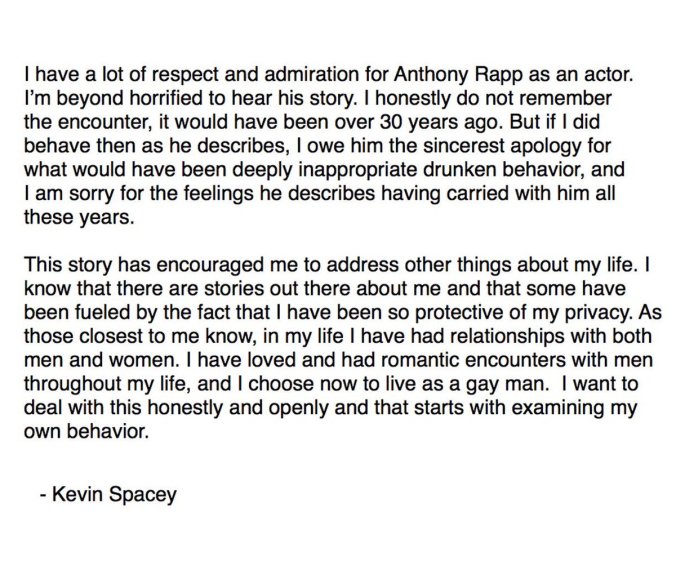
  • Upon examination, Spacey’s response was a mistake and an ethics botch on multiple levels. Here it is again:

First, here we have another example of why Twitter is dangerous. Spacey is a smart guy, yet he foolishly, in his rush to deal with this crisis, authored his own rapid response on social media. In the old days, as my late friend Bob McElwaine, Hollywood publicist for Danny Kaye, Dean Martin, Robert Mitchum and many other stars, told me, he job was to make sure nothing attributed to his Hollywood clients was authored by them. Continue reading

The “Survivor” Ethics Bomb: Dubious Setting, Interesting Issues

An ethics bomb exploded on  the CBS reality show “Survivor” last week.

Ethics bombs are unforeseen and unforeseeable incidents that suddenly start a chain reaction of ethics problems, dilemmas and conflicts in all directions. This was a lulu. Well, it was a lulu unless one thinks that nothing that happens on a reality show can teach any ethics lessons at all, since they are all, by definition, fake news. If you watch the show, what happens on it matters to you; you have accepted the devil’s bargain of pretending what is manipulated and edited  by writers and directors is “real” in exchange for being diverted and entertained—so the ethics scenarios that periodically break out seem worthy of serious consideration. If you would rather watch paint dry—this is my niche—caring about the pseudo-real crises that actually happened months ago in the most contrived situation imaginable makes as much sense as cheering at a professional wrestling match.

However, just as illuminating ethics issues are raised on “The Walking Dead”—kind of a post-apocalyptic version of “Survivor” with zombies—they can arise on a reality show. In this case, the ethics bomb spread out into unscripted “reality.”

“Survivor” has been on the air for 17 years and 34  seasons—I can’t believe I just wrote that— and is itself an ethics bomb, since it launched the reality TV virus into the culture. Copied from a Japanese show, the idea is that a group of contestants are forced to compete in a remote and harsh location, divided up into teams (tribes) that are guided through daily challenges that yield various prizes, ranging from food to immunity from being ejected.. Each episode sees the losing team gathered around a campfire (“the tribal council”) where they vote on which team member to kick “off the island,” a phrase that has entered our lexicon. Contestants form alliances with each other and often reveal their character, or lack thereof, by engaging in various Machiavellian tactics to survive, all captured on camera. Some contestants lie, cheat and steal. Sometimes it works.

Last week, the tribal council took a sharp turn into real world social tensions when player Jeff Varner, knowing that he was poised to be jettisoned by his tribe and desperately trying to get their ire focused elsewhere, attempted to undermine fellow contestant and tribe member Zack Smith. Varner began by darkly claiming that all was not as it appeared, for there was widespread “deception” afoot.

“There is deception here,” Varner said. “Deception on levels, Jeff, that these guys don’t even understand.” “Continue,” said show host and producer Jeff Probst, who has presided over and moderated each tribal council from the beginning of the franchise.

Varner then turned to  Smith and said: “Why haven’t you told anyone you’re transgender?”

BOOM!

Continue reading

Comment Of The Day: “CVS Line Ethics”

golden-2

Texaggo4’s Comment of the Day  enriched the surprisingly lively discussion about  the ethical conundrum of how many single-item purchasers a CVS customer in line should let go before him to checkout if he had, as I did last week, a full cart.

 His discussion of applying The Golden Rule to the situation took off from my comment referring to his earlier assertion that it wasn’t strictly a question settled by Reciprocity. The numbered statements on Tex’s post are from me. Here is Tex’s COTD on the post, “CVS Line Ethics”—I added another brief comment he offered in the same thread at the end, as it is germane:

1.“I don’t recall Jesus, Zoroaster, Buddha and the rest ever noting the CVS exception.”

I don’t recall ever noting an exception either…since this isn’t necessarily Golden Rule territory. In this scenario, application of the Golden Rule would arise as the exception.

“2. The GR has nothing to do with an obligation. It is never an obligation. It is based on altruism.”

It is very much about obligation– and obligation isn’t a dirty word. The real question here is where do you draw the line on whose needs outweigh the others, and if they really do or not. Golden Rule would compel you to allow someone to cut if their cutting *actually* decreases *actual* harm. The Golden Rule doesn’t compel you to allow someone to cut *just because* it increases an already-present level of contentment in their lives. It may strongly suggest such conduct in so much as it doesn’t needlessly impose on you, but it no means compels it, hence this isn’t necessarily a Golden Rule scenario.

You see, “so whatever you wish that others would do to you, do also to them, for this is the Law and the Prophets” is a painfully open ended, and as such-much criticized maxim, when taken out of context. So, the Golden Rule IS the Law. Looking at the phrase elsewhere one would glean that ALL the Law, and therefore the Golden Rule, depends on two basic commands:

“You shall love the Lord your God with all your heart and with all your soul and with all your mind”
“You shall love your neighbor as yourself”

Continue reading

The 61st Rationalization, #52 Tessio’s Excuse (“It’s Just Business”)

Salvatore_Tessio

I realized, in reading the rationalizations being given by defenders of the decision of the New Jersey aunt of recent controversy to sue her young nephew for accidentally injuring her wrist when the boy was eight all boil down to a familiar rationalization repeated often in a classic film and its sequel. Somehow that rationalization missed inclusion on the Ethics Alarms Rationalizations list. (There are 60 rationalizations now, with some labeled as sub-categories.) After today, that will no longer be the case. Presenting…

#52 Tessio’s Excuse, or “It’s Just Business”

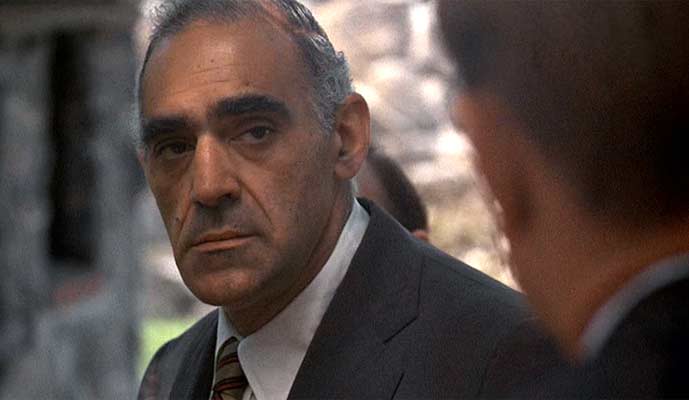
Near the end of “The Godfather,” longtime Don Corleone loyalist Sal Tessio (played by the immortal Abe Vigoda) is caught attempting to ally with a rival family in an attempt to kill the new Don, Michael Corleone. As he is taken to the car for his final ride, Tessio turns to consiglieri Tom Hagen and says…

“Tell Mike it was only business. I always liked him.”

Ah. It wasn’t personal, you see, this attempted assassination. That makes it all right.

Continue reading

Comment of the Day: “Ethics Alarms Encore: ‘Aesop’s Unethical and Misleading Fable: The North Wind and the Sun”

AESOPSFABLNever let it be said that we aren’t eclectic on Ethics Alarms! Today’s Comment of the Day is a thoughtful response to my objections to Aesop’s “The North Wind and the Sun,” a 2011 post that I republished this week in fascination over how it continues to draw traffic. The thread here and on the original has touched on many diverse topics, including theology; commenter Rich (in CT), however, just submitted the most interesting analysis yet.

Here is his Comment of the Day on the post, Ethics Alarms Encore: “Aesop’s Unethical and Misleading Fable: The North Wind and the Sun:

”The comparison of God and Satan in Job to the Sun and Wind is an apt comparison, because the fable relies on “divine privilege”. An exercise of divine privilege should not be taken as an example of behavior that non-divine entities should emulate. Rather, they are external parameters that set up a hypothetical environment to illustrate the lesson of the story.

I specifically say “lesson”, because the objective of the story need not be a superficial “moral”. The “moral” that was selected here was a lazy plot device by an author who attempted to pigeon-hole the fable into his limited definition of a fable. While the particular moral in the version you share is useless, the fable perhaps might better illustrate both the use of strategic thinking and well as illustrate the role of moral luck in one’s success. A more apt “moral”, if any, might be to be clever, but acknowledge the limit of cleverness.

Ethical behavior never takes place in a vacuum, but must balance certain principles with the current circumstances. In the fable, an arbitrary task is selected, and the two actors use the tools at their disposal to attempt to achieve the task. The wind has two tools: blow hard or soft; the sun has analogous tools: beat hard or soft. Given the task, arbitrarily set up as a competition, only one had tools that could creatively solve the task.

The tale here thus illustrates a few important principles that are of value to a child; creative use of ones tools can lead to success, and that not everyone has a every tool available. A non-lazy author might use the fable to teach the value of cooperation, pooling a group’s tools to complete a task.

The particular task is irrelevant, and is set up as an exercise of divine privilege. Mere mortals have no right to manipulate the weather, but the fable’s embodiment of the solar rays and moving air manipulate these elements in an ethically neutral manner. The selection of a mere mortal as a target of task, might be to lead the reader indirectly, through empathy, to the conclusion that some circumstances are arbitrary and beyond one’s control. The objective might be to teach humility, that one is never entirely responsible for one’s success, no matter how clever one might be.

I thus agree that the particular version of the fable shared is unethical. This is, however, the result of a lazy author. The premise, if used wisely, is ethically neutral; Aesop, or some other interpreter, could use the premise of the story to teach a valuable lesson if so desired.


Ethics Alarms Encore: “Aesop’s Unethical and Misleading Fable: The North Wind and the Sun”

north-wind-and-the-sun-story-oil-painting

[ I vowed that the next time I got a comment on this post, I would publish it again. It hails from four years ago, when  Ethics Alarms got a quarter of the traffic it gets now. I confess that I wrote it on a whim, having been talking with my wife about how Aesop’s Fables were joining Mother Goose stories,  Edward Lear limericks and American folks song in the Discarded Bin of our culture and then stumbling upon a fable I had either never read before or forgotten about.  To my surprise the post attracted intense criticism from fans of the story—I even had to ban a commenter who got hysterical about it—and the post joined a very eclectic group of early essays here that get considerable and consistent readership every week. Apparently there are a lot of Sun-worshipers out there. Anyway, since you probably missed it the first time, here it is.]

Today, by happenstance, I heard an Aesop’s Fable that I had never encountered before recited on the radio. Like all Aesop’s Fables, at least in its modern re-telling, this one had a moral attached , and is also a statement of ethical values. Unlike most of the fables, however, it doesn’t make its case. It is, in fact, an intellectually dishonest, indeed an unethical, fable.

It is called “The North Wind and the Sun,” and in most sources reads like this:

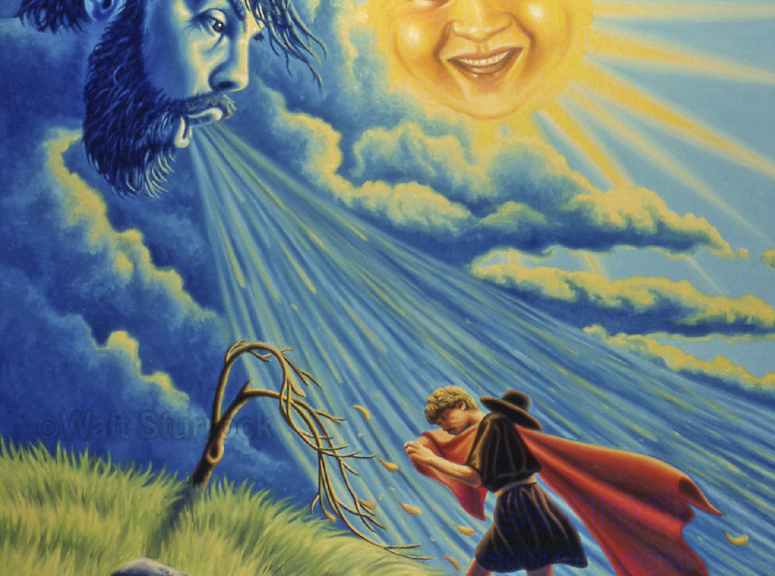
“The North Wind and the Sun disputed as to which was the most powerful, and agreed that he should be declared the victor who could first strip a wayfaring man of his clothes. The North Wind first tried his power and blew with all his might, but the keener his blasts, the closer the Traveler wrapped his cloak around him, until at last, resigning all hope of victory, the Wind called upon the Sun to see what he could do. The Sun suddenly shone out with all his warmth. The Traveler no sooner felt his genial rays than he took off one garment after another, and at last, fairly overcome with heat, undressed and bathed in a stream that lay in his path.”

The moral of the fable is variously stated as “Persuasion is better than Force” , or “Gentleness and kind persuasion win where force and bluster fail.”

The fable proves neither. In reality, it is a vivid example of dishonest argument, using euphemisms and false characterizations to “prove” a proposition that an advocate is biased toward from the outset. Continue reading

Ethics Dunce and Unethical Facebook Post of the Month: Elizabeth Lauten, Spokeswoman for Rep. Stephen Fincher (R-Tennessee)

Elizabeth Lauten, communications director for Republican Congressman Stephen Fincher, decided that she is authorized to give parental advice to First Offspring Sasha (13) and Malia (16) Obama. She was deeply troubled by the young ladies looking bored in photographs she saw online, so she posted this jaw-dropper on Facebook:

Facebook lecture

Wow. What a Thanksgiving feast of unethical features! Let’s see: Continue reading

Ethics Dunce: “Girls” Creator/Actress Lena Dunham

Dunham

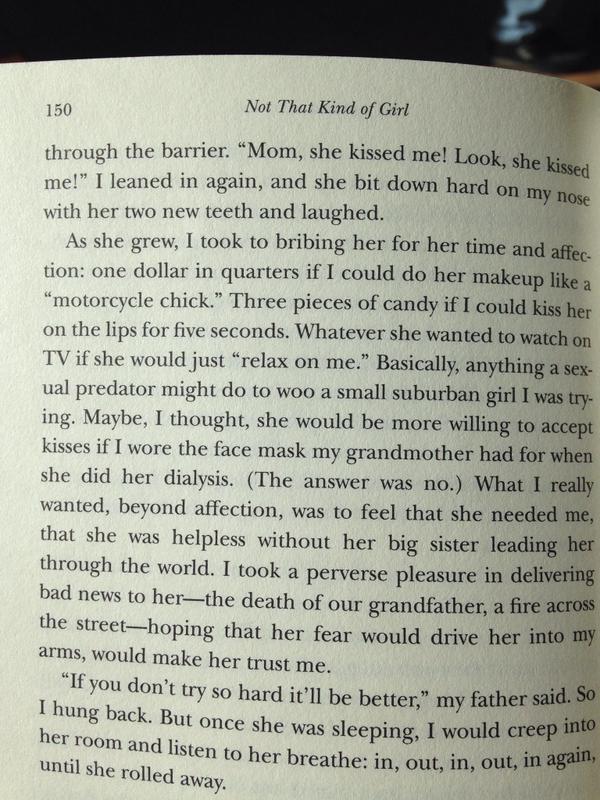
Lena Dunham, creator and star of the inexplicably critically acclaimed HBO series “Girls,” has written a memoir, “Not That Kind of Girl.” Here are ten inquiries regarding its most controversial passages, like the one above,  and the reaction to them:

1. What does one say about a Hollywood figure who puts a passage like this in her memoirs, writing about her relationship with her sister, who was six years younger…

“As she grew, I took to bribing her for her time and affection: one dollar in quarters if I could do her makeup like a “motorcycle chick.” Three pieces of candy if I could kiss her on the lips for five seconds. Whatever she wanted to watch on TV if she would just “relax on me.” Basically, anything a sexual predator might do to woo a small suburban girl I was trying.”

2. Or this…

“I shared a bed with my sister, Grace, until I was seventeen years old. She was afraid to sleep alone and would begin asking me around 5:00 P.M. every day whether she could sleep with me. I put on a big show of saying no, taking pleasure in watching her beg and sulk, but eventually I always relented. Her sticky, muscly little body thrashed beside me every night as I read Anne Sexton, watched reruns of SNL, sometimes even as I slipped my hand into my underwear to figure some stuff out.”

3. Or, most famously, this...

“Do we all have uteruses?” I asked my mother when I was seven.

“Yes,” she told me. “We’re born with them, and with all our eggs, but they start out very small. And they aren’t ready to make babies until we’re older.” I look at my sister, now a slim, tough one-year-old, and at her tiny belly. I imagined her eggs inside her, like the sack of spider eggs in Charlotte’s Web, and her uterus, the size of a thimble.

“Does her vagina look like mine?”

“I guess so,” my mother said. “Just smaller.”

One day, as I sat in our driveway in Long Island playing with blocks and buckets, my curiosity got the best of me. Grace was sitting up, babbling and smiling, and I leaned down between her legs and carefully spread open her vagina. She didn’t resist and when I saw what was inside I shrieked.

My mother came running. “Mama, Mama! Grace has something in there!”

My mother didn’t bother asking why I had opened Grace’s vagina. This was within the spectrum of things I did. She just got on her knees and looked for herself. It quickly became apparent that Grace had stuffed six or seven pebbles in there. My mother removed them patiently while Grace cackled, thrilled that her prank had been a success.

?

I say that that the Hollywood darling apparently used her little sister as a sex toy for at least a decade, was never stopped or admonished for doing so by remarkably negligent parents, and has grown to adulthood without recognizing that there is anything wrong with her conduct.

The first passage not only treads on the borders of incest, but also leaves the uncomfortable question of what else she did to her sister that emulated a sexual predator. The second is profoundly creepy, and the third describes what, if true, is abuse of an infant in terms designed to sound erotic. As blogger Ann Althouse points out, does anyone believe that an infant would stuff pebbles in herself “as a prank,”or that a compos mentis parent wouldn’t immediately assume that the older girl had done it to the younger girl? At best, Dunham is lying, and doesn’r realize that her lie puts her and her family in a terrible light.

4. What can we conclude about the character of a celebrity who proposes such conduct as harmless fun, apparently unaware that it violates standards of fairness, respect and caring, to be emulated and embraced by her readers and anyone whom they have influence over, including their own children, as a legitimate cultural norm? I conclude that her values are seriously and perhaps clinically warped. and that the more critics point this out, the safer everyone is, present and future. Lena Dunham is an ethics corrupter. Continue reading