Comment of the Day: “Unethical Blog Post of the Week: ‘But What About Caylee?”’

As comments, accusations and retorts featuring the Ethics Alarms All-Stars were flying around on the blog in reaction to the Casey Anthony verdict and my reaction to some of those reactions (here, here, here, and here), Lianne Best came through with an  especially measured take, one that was immediately cheered by other commenters.

There is nothing wrong with feeling deeply, and emotions are important; after all, Mr. Spock had limitations as a leader. When emotion rather than analysis drives public opinion, however, there is a risk of real harm: those attempting objective analysis may be vilified, marginalized or ignored, and rash, reckless decisions and consequences can result.  (I could, but won’t, argue that the 2008 presidential election was a classic case in point.)  Lianne cuts to the real issue deftly. Here is her Comment of the Day:

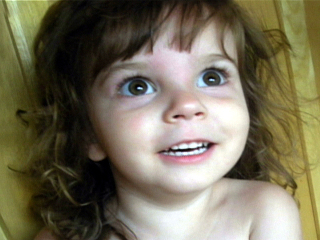
“I too often find myself embroiled in emotional opinion, with no basis in facts. It’s easy here: an adorable and completely innocent, dependent little girl was killed. Virtually every human, particularly parents, want to see that vindicated, justice found and brought. That somehow makes it better. But you know what? It doesn’t make it better to go racing off on just a blazing gut reaction, not when people’s lives are affected by our lack of thought and analysis. I was a juror in a kidnapping and murder trial. It was an immensely difficult two weeks, and the decision was agonizing. Luckily, it was also popular; it would have been awful to suffer through loud, manic public criticism of our reasoned decision on top of the process … loud, manic public criticism by people who weren’t there, who knew less (or at least differently) than we did. We have a jury system for a reason, 12 people found Casey Anthony not guilty (13 if you count the alternate juror) and we have to trust them.

“Personally, I appreciate Jack’s cooler head prevailing when my mother’s heart is shrieking.”

Marcia Clark, Exploiting the Anthony Verdict for Her Own Sake

Marcia Clark. OK, this really isn't Marcia, but the real picture of her doesn't look like her either.

Marcia Clark’s article on the Casey Anthony verdict is so tainted with obvious conflicts of interest that it should have been rejected by The Daily Beast…or rather would be rejected by any website more selective and less shameless than the Daily Beast. This would be any fair site that does not deal in over-the-top opinion as a matter of course.

Marcia, like her colleague Chris Darden, is a rather tragic figure these days. The former lead prosecutor in the O.J. case is struggling to make it as a pundit, freshly botoxed and rendered almost unrecognizable so as to be fetching in those close-ups. After she sold the inevitable cash-in book about the Trial of the Century, she has wandered in the C-List celebrity wilderness, and will soon join Newt Gingrich and William Shatner as a celebrity novelist. She will be remembered, quite correctly, as the prosecutor who botched the O.J. murder trial, even if we give Darden an assist for the gloves debacle. (Why cable news shows insist on recycling failures as experts is an enduring mystery, the mystery being “how can the producers look themselves in the mirror after choosing recognizable flops over less well-known but more accomplished authorities?”)

But Clark apparently saw an opportunity in the Casey Anthony verdict to rehabilitate her tarnished reputation, and grabbed it. The result is “Worse Than O.J.!”, a new low in self-serving analysis. Continue reading

Unethical Blog Post of the Week: “But What About Caylee?”

Sad but true: the trial's purpose was not to find justice for Caylee.

If I responded to even one out of a hundred ethically muddled, logically addled posts by the hoard of bloggers in cyberspace, I’d have time for nothing else. Now and then, however, I am directed to a post that typifies the kind of free-floating, fact-starved gut sentiment that rots public discourse in America and that helps keeps the public confused and panicked.

In this case, I was directed to the post by the blogger herself, who managed to annoy me by accusing my post on the Casey Anthony jury of being callous to the victim in the case, two-year old Callie. I re-read my post; there wasn’t anything callous toward the child in any way. Puzzled, I went to the blogger’s page, a blog by someone who calls herself wittybizgal, and called Wittybizgal. Sure enough, there it was: an anguished lament about the verdict in the Casey Anthony trial entitled, “But What About Callie?”

The post is frightening, because I am certain that this kind of non-reasoning is epidemic in the United States, nourished by touchy-feely bloggers, pundits and columnists and made possible by the ingrained habit of having opinions without knowledge. Since their opinions are not supported by facts or reasoning, they can’t be debated. If you aren’t persuaded, you’re just mean, that’s all. That’s no way to decide what is right and wrong, but it certainly a popular way. Here is wittybizgal’s argument, one fallacious step at a time: Continue reading

Comment of the Day: “The Barefoot Contessa and the Compassion Bullies…”

Today’s Comment of the Day needs some background. The first comment regarding yesterday’s controversial post “The Barefoot Contessa and the Compassion Bullies…”, asserting the right of a celebrity to decline a sick child’s request, was by reader Nancy Simpson, who wrote…

“Obviously we have different beliefs about what constitutes “ethics”. The first duty of all persons in a civilized society is to care for the children. My ethics say that for the optimum function of society, we care for children unless what they ask for will cause physical or emotional harm to them.

“Short of confinement in a leprosy ward, this woman has no excuse for her unkindness to a child. If the “too busy” excuse is true, then she is just greedy. No law against being greedy, is there? She has no duty to be concerned with anything other than her money.

“The other place we have ethical differences is that it against my ethics to criticize control and blame a sick child’s mother. Talk about hit below the belt. Shame on you.

“Celebrities are not mandated to give back–they may bite the hand that feeds them any time they like. And I decide who gets my hard earned money, and it will not be her or Food Network.

“I don’t pay people who hurt children.’

I was, I admit, rather severe with Nancy, writing in response…

“No, Nancy, you are completely wrong. Obviously we do have a different understanding or ethics, because you have very little and you also didn’t really read or think about the post. If a stranger walks in your home and demands that you care for her child, are you ethically required to do it? What gives “Make A Wish” or Enzo, his mother or anyone the right to finger this one woman because he happens to watch her show and put her in the position of either having to make a major effort to please him—not cure him, not actually make him well, but just give him a good time—at the threat of being condemned by self-righteous uninvolved bystanders like you? Ridiculous.

“Maybe she had a brother with the same disease and spent years in therapy trying to conquer the depression his death caused…and the prospect of getting close with Enzo risks her long term mental health. Does her refusal pass your approval process then, or is she obligated to harm herself because a stranger’s child has a “wish”? How can you judge her actions when you have no idea what motivates her? Granting these things is usually a PR bonanza….I doubt her motivations are crass at all.

“Maybe she is especially emotional around sick children. You have no basis to criticize her. She is not Enzo’s slave, she is not his doctor, she is not his plaything. She has a right to say “no.” There is a difference between exemplary ethics, and ethics. It would be great if she decided to grant his request, but it is not unethical not to. I know—you don’t understand. Well, you can revel in your ignorance without telling me that I don’t understand.

“I DO have basis to criticize Enzo’s mother, and I hereby throw your silly “shame!” through your window.

“She set out to harm a woman who owed her nothing. She sicced the internet on someone for pure revenge. I sympathize with her, but her actions were unarguably wrong. If you think certain classes of people like “mothers of sick children” get special passes to act badly and harm others, go start a Cindy Sheehan fan club—you don’t have a clue what ethics are.

‘You know what rationalizations and excuses are, however.”

Now, today, new reader Yao added a very provocative Comment of the Day: Continue reading

Comment of the Day: “The Barefoot Contessa and the Compassion Bullies…”

Commenter Marlene Cohn has some well-reasoned insight on the issue of a celebrity’s obligation to comply with a sick child’s wishes. Here is her comment on The Barefoot Contessa and the Compassion Bullies: an Ethics Drama:

“I enjoy a bit of celebrity gossip just as much as anyone, and always find internet reactions to perceived celebrity slights to be fascinating. Having been on the internet far longer than the hoards willing to throw around the dreaded “c” word, I’ve been able to see a true shift in what people generally expect of others. Continue reading

The Barefoot Contessa and the Compassion Bullies: An Ethics Drama

Monster?

A boy named Enzo Pereda, now 6, was diagnosed with acute lymphoblastic leukemia in 2009. The Make-A-Wish Foundation asked him what his wish would be, and he said he wanted to meet the Food Network’s Ina Garten, the “Barefoot Contessa,” and watch her cook from his bed. Enzo’s wish was relayed to Garten through the Foundation, but she declined, saying that her schedule was too busy with a book tour. Enzo opted to wait. The request was made again this year, and Garten’s refusal was final and unconditional. Enzo’s mother, who has catalogued his illness in a blog called “Angels for Enzo,” was furious, writing: Continue reading

Unethical Crime Victim of the Month: Kamofie & Co.

Next time, Lindsay, pick a classier store to rob.

Lindsay Lohan, in addition to having stunningly bad judgment, multiple addictions, lousy parents, sycophantic friends, and an army of paid enablers, also has rotten luck. When she walked out of a jewelry store wearing a $2,500 necklace, she picked an ethically dubious enterprise, Kamofie & Co., that may have  grossly over-priced the necklace, turning the shoplifting into grand theft. But that’s just the beginning.

Lohan, who is on probation and facing jail time for the incident, was caught on a surveillance tape in January as she strolled out of the store, with the unpurchased jewelry around her neck. Some establishments, recognizing the alleged thief as someone who is famous, troubled, and in need of some kindness, would have privately contacted the actress, accepted her (probably) false excuse that the act was inadvertent, and allowed her to return the item with involving the police.

Not Kamofie, however, which apparently saw the incident as an opportunity to make itself a household word. Continue reading

Comment of the Day: “Ethics Quote of the Week: Blogger Jeff Jarvis”

Karl Penny calls me to task here for yielding to another commenter’s premise (but not his conclusion from it) that celebrities lead more interesting lives than their typical fans. Since “interesting” has various meanings—in Charlie Sheen’s case, the ironic Chinese definition (as in “may you live in interesting times”) comes to mind, and I could argue that celebrities by definition lead lives that their fans find more interesting than their own, hence the fact that they are celebrities. Nonetheless, Karl’s point is critical, and I thank him for making it so eloquently. And Karl’s would have been the Comment of the Day even if he hadn’t mentioned my dad—but it didn’t hurt. Here is Karl on “Ethics Quote of the Week: Blogger Jeff Jarvis”:

“Now, Jack: “Nobody denies that rich stars have more interesting lives than their fans,…” Nobody? Hey, what am I? Chopped liver? But, seriously I do deny that celebrities lead more interesting lives than the rest of us. In my experience—and these days, I hear a lot from others about the details of their lives—everyone has a story to tell. Indeed, they have a narrative, and one that is way more interesting, and far more uplifting, than those of the celebrities whose stories are broadcast at us. Continue reading

Where We Miss Morality: The Unmarried Mothers Disaster

USA Today included an editorial yesterday about the explosion of births to unmarried mothers in America that has exacerbated many societal problems. It’s a stunning story : in 1960,  the figure was 5.3%; by 1970, in the teeth of the cultural upheaval launched in the late 60’s, it had  more than doubled to 10.7%.   In 2009, 41% of children born in the USA were born to unmarried mothers,  including a frightening 73% of non-Hispanic black children.  The editorial suggested that reversing the trend is a priority, but was short on ideas for how to address it. Notably absent was the method of social control that had served the United States well since 1776, and had been effective world-wide since the institution of marriage: calling it wrong. Continue reading

Ethics Hero Emeritus: Sparky Anderson (1934-2010)

Maybe I shouldn’t call someone an Ethics Hero for behaving like all normal, considerate people ought to behave. Maybe that sets the bar too low. Still, when I learned of the recent death of Sparky Anderson, the Hall of Fame baseball manager who won World Series titles with both the Tigers and the Reds, I remembered an indelible personal incident that forever defined my impression of him. Continue reading