The Case of the Excessively Flexible Lawyer

A Louisville lawyer named Keith Kamenish wants to defend Dion Neal, a drug dealer, against a murder-for-hire charge.  A police informant wearing a wire recorded a hit man as he said  that he was paid by Neal to kill a competitor for him. “I put 36 slugs in that nigger’s face and stood on his head,” the independent contractor boasted, according to a transcript of the conversation filed in court. “The whole head collapsed!”

Nice.

The government is trying to get Kamenish kicked off the case, and here is why: the guy whose head collapsed, LaJuante “B.B.” Jackson, was a Kamenish client at the time of his murder. Jackson was shot just four weeks after Kamenish got Jackson released on bond on a state drug charge; the lawyer’s blood- stained business card was found in Jackson’s wallet. Continue reading


Marcia Clark, Exploiting the Anthony Verdict for Her Own Sake

Marcia Clark. OK, this really isn't Marcia, but the real picture of her doesn't look like her either.

Marcia Clark’s article on the Casey Anthony verdict is so tainted with obvious conflicts of interest that it should have been rejected by The Daily Beast…or rather would be rejected by any website more selective and less shameless than the Daily Beast. This would be any fair site that does not deal in over-the-top opinion as a matter of course.

Marcia, like her colleague Chris Darden, is a rather tragic figure these days. The former lead prosecutor in the O.J. case is struggling to make it as a pundit, freshly botoxed and rendered almost unrecognizable so as to be fetching in those close-ups. After she sold the inevitable cash-in book about the Trial of the Century, she has wandered in the C-List celebrity wilderness, and will soon join Newt Gingrich and William Shatner as a celebrity novelist. She will be remembered, quite correctly, as the prosecutor who botched the O.J. murder trial, even if we give Darden an assist for the gloves debacle. (Why cable news shows insist on recycling failures as experts is an enduring mystery, the mystery being “how can the producers look themselves in the mirror after choosing recognizable flops over less well-known but more accomplished authorities?”)

But Clark apparently saw an opportunity in the Casey Anthony verdict to rehabilitate her tarnished reputation, and grabbed it. The result is “Worse Than O.J.!”, a new low in self-serving analysis. Continue reading

The Supreme Court Saves An Ethics Principle

Mayor Quimby is honest about being corrupt. Isn't that good enough?

Rescuing the states’ power to insist on more ethical conduct from their elected legislators, The U.S. Supreme Court ruled Monday that there was no Constitutional prohibition on state rules against legislators voting on issues in which they have a private, personal interests.

The unanimous decision upheld a Nevada ethics law that governs when lawmakers recuse themselves from voting on official business because they might have conflicts of interest. The challenge to the  law came from Michael Carrigan, a conflicted city council member from the Sparks, Nev., who was reprimanded by the state ethics commission after he voted  on a casino proposal though his campaign manager had been hired as a consultant to the project.

The law prohibits a public official from voting on an issue when a “reasonable person” would suspect a conflict because of financial ties or the interest of a spouse or family member. This is the essence of “the appearance of impropriety.” It also includes “any other commitment or relationship that is substantially similar” to those spelled out.  Carrigan had argued that the Nevada’s law was overly broad and that he should be able to vote on the project, so long as he disclosed his relationship with the consultant.

Ah, disclosure! Continue reading

Today’s Ethics Quiz: How Do You React To Congressional Insider Trading?


Gekko for Congress. He has what It takes...Insider trading experience!

An  study in the journal Business and Politics last week reported that the investments of members of the House of Representatives outperformed those of the average investor by 55 basis points per month, or 6 percent annually. It concluded that lawmakers are taking advantage of inside information to make significant profits, engaging in conduct that would send a Gordon Gekko or Martha Stewart to jail.

“We find strong evidence that members of the House have some type of non-public information which they use for personal gain,” the four researchers who authored  “Abnormal Returns From the Common Stock Investments of Members of the U.S. House of Representatives” wrote. Continue reading

Ethics Quote of the Week: Salon Columnist Joan Walsh

Apparently I'm the pigeon in the lower left box.

“No one can be given credit for speaking from genuine moral or political conviction anymore; everyone can be dismissed or derided with a nod to their personal background. This may be the logical end of identity politics, where ultimately we’re each locked inside whatever little box we check, tiny caucuses of one, and common ground is impossible.”

—-Joan Walsh in Salon, bemoaning the accelerating tendency in public debate to discredit all beliefs, assertions and opinions, no matter how sincere or well-supported, as the product of bias and narrow self-interest.

Her comment could not be better timed, from my point of view. How tired I am of having readers demonstrate the trend Walsh describes by reflexively attributing every post I write as being proof of bias and a pre-existing agenda. If I criticize an atheist, I am a religious zealot; if I find fault with Obama, I must be a racist; if I point out that a production of “The Mikado” doesn’t really call for Sarah Palin to be beheaded, I’m a Left-winger. The problem is, unfortunately, that many prominent positions in the public square and blogosphere are driven by agendas and biases. It is so common that the concepts of independent judgement, an open mind and objectivity seem quaint and unrealistic.

I don’t know how to combat the problem, which is as serious as Walsh suggests. Recognizing it is a start.

Appearance of Impropriety II: “Here’s Approval For That Deal You Wanted…What? Sure I’d Like to Work for You! Wow, I Never Saw THAT Coming!”

What's there to be suspicious about?

Meredith Attwell Baker, a member of the Federal Communications Commission who voted to approve Comcast’s takeover of NBC Universal in January, is leaving to  become senior vice president of government affairs for ….Comcast-owned NBC Universal.

Hey, why are you so suspicious, you jaded cynic, you? Comcast says it did not begin discussions with Baker about a possible job until after the takeover had her seal of approval. So it’s all on the up and up! Right? Right?

Okay, let’s say we believe that, since doing otherwise would amount to bribery. It doesn’t matter, and I don’t care. Taking a major job with  a company whose back you scratched with a favorable ruling as a government regulator looks terrible, promotes public distrust, erodes faith in regulatory structures, and is unethical. There are other jobs in the world for people with Baker’s credentials; she doesn’t have to take one that makes the U.S.  government’s business regulatory apparatus look like it’s fixed.

A condition of any regulator’s employment with a federal agency should be a pledge that he or she will never accept a paid position for a company that has benefited from the regulator’s rulings…not in a year, not in a decade, not ever.

Legal Ethics Train Wreck on “The Good Wife”

Oh, Alicia, Alicia...what have they done to you?

The CBS legal drama “The Good Wife” continues to show the seamy side of big firm legal practice, with heroine Alicia Florrick’s firm, Lockhart, Gardner and Bond, its adversaries, and even Good Alicia herself violating legal ethics rules with abandon, and at an accelerating rate, based on recent episodes. There is nothing wrong with this as entertainment, as long as the Rules themselves are not being misrepresented (they aren’t), the misconduct isn’t being presented as ethical (it isn’t, though it is sometimes hard to tell), and viewers don’t get the idea that this is how most law firms behave. Unfortunately, like most legal shows, “The Good Wife” fails in this important realm. I work with many large law firms, and they are all very aware on the ethical lines, bold or fuzzy, that they must not cross, and take their obligations seriously.

The most recent episode of “The Good Wife,” entitled “Getting Off” included a full-fledged ethics train wreck sparked by the firm’s habitually unethical adversary, the fecund Patti Nyholm. In the middle of representing the defendant hospital in a lawsuit brought by a Lockhart, Gardner and Bond, Nyholm is fired by her firm and removed from the case. With a twinkle in her eye, she approaches none other than the Lockhart firm to represent her in a multi-million dollar lawsuit against her former firm for discrimination and wrongful termination, on the theory that it fired her because she was pregnant. Continue reading

Comment of the Day: “The Ethicists, Backing Judge Walker and Gay Marriage, At An Unacceptable Price”

The motion to vacate Judge Walker’s ruling on Proposition 8 has been filed, you can read it here. Since the original post, I have detected some cracks in the formerly near-united front of legal ethicists and journalists deriding Walker’s critics. Some of them are finally, grudgingly, admitting that the Judge might not have handled his potential conflict so well after all, and that the motion is not a frivolous, anti-gay outrage as they originally labelled it.  The most rickety of the rationalizations put forth on Walker’s behalf, advanced by some his most respected defenders, is that he had no obligation to reveal his own sexual orientation by disclosing his domestic arrangement because of its intimate and private nature. Yet the judge voluntarily disclosed it after his decision was in the books, raising a rebuttable presumption that his original silence was to avoid suggestions of conflict, not out of a desire for privacy.

First time commenter Jada adds her Comment of the Day to the discussion: Continue reading

The Ethicists, Backing Judge Walker and Gay Marriage, At An Unacceptable Price

"Oh, all right...as long as we like the decision."

Thanks to the Judge Walker controversy, now have proof that the best legal ethicists in the nation are human. I suppose that’s something.

My colleagues in the legal ethics field are arguing—decreeing, really— that Judge Vaughn Walker’s decade-long same-sex relationship didn’t need to be disclosed before he ruled against Proposition 8 (California’s voter-approved gay marriage ban) because, they say, it created no reasonable doubts about his impartiality. Coincidentally, they also really, really like his decision. But then, so do I. Continue reading

Ethics Hero: Attorney Paul Clement

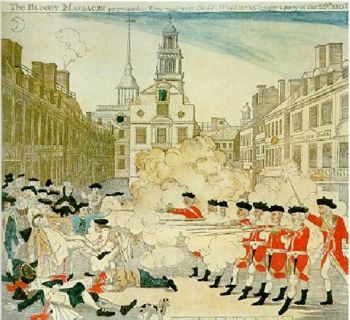
John Adams defended the guys in red, and Paul Clement understands why.

Law firm King & Spalding announced Monday that it would no longer represent congressional Republicans regarding the constitutionality of the Defense of Marriage Act (DOMA), the controversial 1996 legislation that defines marriage as being only between a man and a woman.. In response, the firm’s chief appellate lawyer, Paul Clement, who was handling the case, resigned from the firm.

In February, the Obama administration announced that its Justice Department would refuse to defend DOMA in a number of lawsuits, an unusual, controversial and troubling decision. It doesn’t take a lot of imagination to conceive of other federal laws another administration might decide to render dead letters by non-defense despite being duly passed by the people’s representatives. A government has an obligation to duly execute its laws or repeal them. The policy of the Administration regarding DOMA raised issues of governmental integrity quite separate from the provisions of the law itself. Continue reading