Ethics Observations On Georgetown Law Center’s Scalia Foofarah

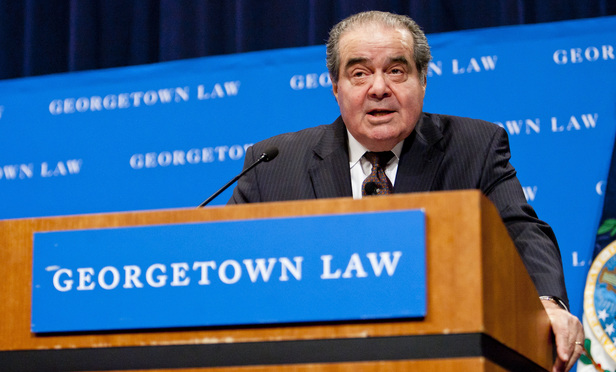
Scalia-Georgetown

I am a Georgetown University Law Center grad, as well as a former administrator there. I also know and have personal relationships with several members of the faculty. None of this especially informs my ethical analysis of the community argument there that arose from a rather innocuous official expression of respect and mourning in the wake of Justice Scalia’s death, but if anyone wonders why I’m posting about this rather than many other ethics issues nipping at my heels, that’s part of the reason. The other reason is that this academic dust-up raises interesting ethics issues, and has received national publicity.

Observations on the tale as it has unfolded:

1.  Georgetown Law Center issued a press release mourning the death of Antonin Scalia, including a statement from Dean William M. Treanor that read:

““Scalia was a giant in the history of the law, a brilliant jurist whose opinions and scholarship profoundly transformed the law. Like countless academics, I learned a great deal from his opinions and his scholarship. In the history of the Court, few Justices have had such influence on the way in which the law is understood. On a personal level, I am deeply grateful for his remarkably generous involvement with our community, including his frequent appearances in classes and his memorable lecture to our first year students this past November. The justice offered first-year students his insights and guidance, and he stayed with the students long after the lecture was over. He cared passionately about the profession, about the law and about the future, and the students who were fortunate enough to hear him will never forget the experience. We will all miss him.”

[Note: In the original post, I missed the first line, and kept missing it. Don’t ask me why. The text has been finally, after a couple botched attempts, been revised to include it.]

Is there anything inappropriate about the dean’s statement? Not in my view. This is nothing but a traditional expression of professional respect on behalf a prominent institutional member of the legal community. There is nothing in the statement, save for the last sentence, that anyone could argue is untrue. Countless academics, as well as Scalia’s more liberal colleagues, did learn “a great deal from his opinions and his scholarship.” He was an influential and significant figure on the Court. Scalia was generous with his time and passion as a teacher, and by all accounts he was a good one.

The opening statement,  “Scalia was a giant in the history of the law, a brilliant jurist whose opinions and scholarship profoundly transformed the law,”  seems to be what rankled Scalia critics. It shouldn’t have. At worst it is standard memorial puffery. But calling Scalia a giant “ in the history of the law” seems fair whether you agree with his jurisprudence or not: he is certainly among the 20 or so most quoted, most debated, and most provocative justices. The rest shouldn’t be troubling to anyone who isn’t suffering from Scalia-phobia. A Justice can be brilliant and transformational while being wrong.

None of the reports of the controversy ignited by this standard issue sentiment mention it, but Georgetown Law Center isn’t on the Georgetown campus. It has its own campus that is a 15 minute walk from the Supreme Court. Law students regularly attend oral arguments; I did: it was one of the great advantages of studying law there. More than any law school, the Law Center has good reason to feel a special affinity to the Court and all its justices.

2.  What about the last sentence? Is it appropriate for Treaner to speak for the law school community and say that “We will all miss him”? He was reasonable and fair to assume that.  Unfortunately, in today’s vicious partisan divide where opinions and sincere positions reached after thought and research are too often treated as proof of consort with Satan, and ion which even lawyers, who are trained not to take legal arguments personally, are frequently unable to respect a colleague for a well-reasoned argument that they may still think is completely wrong, it was not a safe assumption. Pillory the dean, then, for giving all members of his community the benefit of the doubt, and assuming they are capable of grace, compassion, fairness, professional respect and civility.

It’s still not unethical to assume one’s colleagues have some class.

3. They all don’t, unfortunately. Law Center professors Gary Peller and Mike Seidman (I know Mike, never met Gary) then used the Campus Broadcast system, usually used for event announcements, invitations and policy changes, to send a message  to all members of the student body titled, “Responses to Dean Treanor’s Press Release Regarding Justice Scalia.”  Peller’s statement reads,

Like Mike Seidman, I also was put-off by the invocation of the “Georgetown Community” in the press release that Dean Treanor issued Saturday. I imagine many other faculty, students and staff, particularly people of color, women and sexual minorities, cringed at headline and at the unmitigated praise with which the press release described a jurist that many of us believe was a defender of privilege, oppression and bigotry, one whose intellectual positions were not brilliant but simplistic and formalistic….That ‘community’ would never have claimed that our entire community mourns the loss of J. Scalia, nor contributed to his mystification without regard for the harm and hurt he inflicted.”

This was partisan grandstanding of the worst kind. The professors, of course, have a right to proclaim their opinions to the student body any time they want to, but their complaint here was petty and mean-spirited. It also models behavior that is poisonous both to the legal profession and the culture as a whole. The are saying, in essence, “We don’t mourn him, we won’t miss him, and we’re glad to be rid of him, because his legal theories aren’t our legal theories, and we are on the side of the angels while he was an uncaring villain.” Such a message accomplishes nothing positive, and much that is destructive. The professors engaged in demonizing, when their profession and their duty is not to denigrate but reason. If they really think they can prove that Scalia was a defender of privilege, oppression and bigotry, they can make that case in a scholarly paper: I doubt that they can. Scalia often defended the rights to engage in conduct that he did not personally support, as well as some he did: the sloppy rhetoric of Seidman and Peller echoes the legally ignorant who accuse criminal defense attorneys of defending robbery and murder. Continue reading →

Ethics Dunce: Matt Drudge

SAG

Matt Drudge, on his Drudge Report,  posted the above photo of Susan Sarandon with the caption, “SAG.”

Nice.

The link was to this story, a really stupid one, about criticism the 69-year old actress is receiving for dressing this way to deliver an award at the Screen Actors Guild Awards.

The Drudge Report, I must note, is the favorite, go-to source for political news for conservative pundits.

The gag is per se nasty, ageist, misogynist, and creepy. Sarandon is roundly hated by conservatives for being an outspoken feminist and supporter of liberal causes. The “joke” is an ad hominem attack and a despicable cheap shot. Somewhere, someplace there might be someone who has standing to make fun of Susan Sarandon’s looks, but I don’t know of any. By the way, here is Matt Drudge:

Drudge

One can debate the tastefulness of her attire, but Sarandon, as always, looks smashing.

Rush Limbaugh And The Right: Still Cheerfully Unethical After All These Years

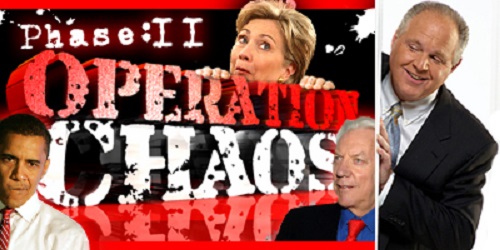
OperationChaosII

Yesterday, the grand Pooh-Bah of conservative talk radio chirpily announced that he might “have another installment of Operation Chaos before the Democrat primaries are all said and done.”  If your brain cells have lived that long, you may recall Operation Chaos I, when in March of 2008 Rush directed his zombie followers to vote in Democratic primaries for Hillary Clinton, who was then, as now, sliding fast. The idea was to stop  Barack Obama from clinching Democratic nomination early, and to maximize the chance of a messy Democratic nominating convention. Rush claims that his dastardly plan “worked”: Clinton won the Ohio and Texas primaries with large pluralities from rural, as in conservative counties, presumably full of Ditto-heads. On the other hand, Obama still won the nomination easily, then the election, and the United States was stuck with an incompetent, arrogant leader for eight years.

If that’s what Rush calls a successful plot, I hope we never see one of his unsuccessful ones.

But here he is again, considering the same tactic, though this time the idea is to have conservatives vote for an incompetent socialist, Bernie Sanders, whom none of them would even consider voting for in a real election even if someone was pulling their fingernails out with pliers. This is, as before, unethical in many ways, and it is particularly revolting to read the likes of Instapundit and Newsbusters cheering Rush on. “At the very least this could help make the Democrat primaries more fun to watch as they stretch on and on and….. ” smirks P.J. Gladney, at the latter.

Conservatives are nomore ethical than progressives, it’s just that their lack of ethics expresses itself in different ways.

Operation Chaos and its threatened sequel could only be devised by someone who thought Richard Nixon’s dirty tricks (which included the treasonous dirty trick of sabotaging LBJ’s Viet Nam War peace talks) were a scream, and could only be applauded by conservatives whose love for democracy just applied when it favors them. Rush’s steaming pile of depraved Machiavellianism is not worth my composing a new brief against it: I did a good job the first time. Here, in part, is what I wrote about Operation Chaos, while gagging in disgust, in 2008. It still stands. I’ll just substitute Bernie for Hillary. I don’t have to change anything else except a verb and pronoun here and there: Continue reading →

Now THIS Is Ethical Estoppel…

Daily News CruzNow and then you may read here that someone is “ethically estopped” from making an argument that otherwise would be valid. The term derives from the legal concept of estoppel, the principle that precludes a person from asserting in a legal proceeding something contrary to what is implied by a previous action or statement of that person or by a previous pertinent judicial determination.

If you want an example of how I apply estoppel in an ethics rather than a legal context, look no further than New York Governor Andrew Cuomo, who decided to grandstand over Ted Cruz’s cheap shot about Donald Trump’s “New York values.” Cuomo puffed himself up with indignation, and after Cruz defined New York values as “socially liberal, pro-abortion, pro-gay marriage,  and focus around money and the media.” Cuomo demanded that Cruz apologize, saying…

“I’m always open to give him an education on what New York values are all about. And if he had any class, he would apologize to the people of New York. Not that I believe they need it or they want it. But if he had any class, he would apologize.”

Cruz was wrong to make such a statement, but Cuomo eliminated himself from the huge pool of Americans who were entitled to call for his apology, since two years ago, Cuomo himself declared the same dichotomy Cruz was asserting, and even more unethically.Then he said, of conservative Republicans,

Continue reading →

Ethics Dunce: United Airlines

airplane 1There’s got to be an explanation for this other than the one the creates paranoia and dread. But what is it?

Canadian conservative commentator  Mark Steyn, a funny, bright and eclectic author—I learned about him first be reading his book on the decline of Broadway musicals—was flying on United when he discovered that his website, steynonline.com is on a United Airlines blacklist that blocks passengers from accessing the site on the airline’s in-flight WiFi system.

It really was called a blacklist by the airline. Steyn tweeted United during the flight for an explanation. Someone at American had the wit to tweet to Steyn, still airborne, that they wouldn’t block his site.

What’s going on here?

I know that porn sites are blocked by airlines, but conservative blogs and websites? No, it’s not a First Amendment issue, it’s a “Who the hell do you think you are?” issue. Content censorship by an airline? Steyn wants his WiFi fee back, but imagine if hotels, airports and Starbucks adopted this form of private censorship. I’m assuming/hoping that this was a stupid mistake and just incompetence, since incompetence is what United is best at. Yet so far, if the airline has an explanation, it hasn’t been publicized.

Unethical Quote of the Week: Rosie O’Donnell

rosie-odonnell

“I’d like to take my period blood I no longer have and write, ‘you’re all assholes.’ I’d like to smear it all over some people’s faces.”

—-Former actress, occasional comic and former talk show host  Rosie O’Donnell, extemporizing on her hatred of anti-abortion advocates and conservatives on Jenny Hutt on SiriusXM’s radio program “Just Jenny.”

This kind of vituperative and hate-infected comment poisons public discourse, polarizes society  and harms the nation by not only making a functioning democracy nearly impossible but making living in one ugly. Continue reading →

Debate Ethics: Megyn Kelly’s Challenging Donald Trump For His Uncivil Rhetoric Was Not Only Fair, It Was Necessary

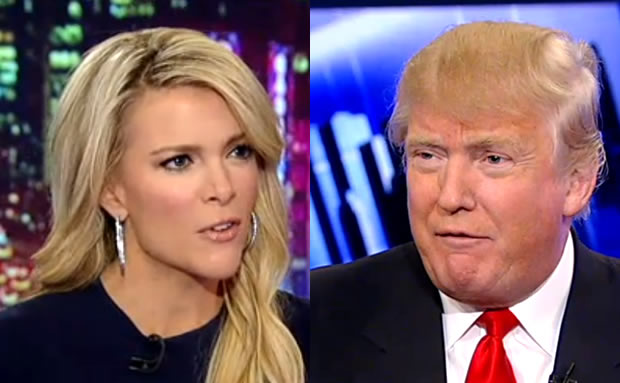
Trump and Kelly

It sometimes takes episodes like the hard right’s reaction to the Republican candidates’ debate Thursday night to remind me how ethically-challenged some—a lot, too many— of these people are. Why does this keep surprising me?

I honestly didn’t see it coming: one conservative pundit after another has criticized Megyn Kelly for challenging Donald Trump regarding his repeated episodes of using vulgar, crude, and uncivil language to denigrate women. In case you don’t recall, here was the exchange:

Kelly: One of the things people love about you is you speak your mind and you don’t use a politician’s filter However, that is not without its downsides, in particular, when it comes to women. You’ve called women you don’t like fat pigs, dogs, slobs, and disgusting animals.

Trump: Only Rosie O’Donnell.

Kelly: For the record, it was well beyond Rosie. You once told a contestant on ‘Celebrity Apprentice’ it would be a pretty picture to see her on her knees. Does that sound to you like the temperament of a man we should elect as president?

Instapundit understudy Elizabeth Price Foley called the question “silliness.” Examining the ethical values of a potential President, and civility is a cornerstone of them, is not “silly.”

Lindsay Graham, who apparently has decided that he should say anything, even stupid things, to keep his name in the news, defended Trump, telling the media that

“At the end of the day, ask the man a question that explains his position and his solutions rather than a ten-minute question that describes him as the biggest bastard on the planet.”

No, Trump’s own conduct and rhetoric describe him as one of the biggest bastards on the planet. He was given a chance to explain why reasonable people shouldn’t think they disqualify him to be President. After all, they do. Continue reading →

Playing Dangerous Cognitive Dissonance Games With U.S. The Supreme Court

The cognitive dissonance scale, now being used to weaken a crucial U.S. institution for political gain.

The cognitive dissonance scale, now being used to weaken a crucial U.S. institution for political gain.

Of all government institutions, the U.S. Supreme Court has traditionally only trailed the Presidency in public trust and esteem. There are several good reasons for this. One is that being appointed for life, the Justices are presumed to be less subject to the personal and political agendas that make the positions of politicians suspect. Another is that the Court has often taken heroic stances that made the United States a better nation and more just culture. A third is that unlike elected political offices, that of a judge requires an education and technical expertise that the average citizen does not possess. The Justices are traditionally accorded the deference given to experts. Perhaps the most important reason we trust the Court is because we need to do so. It was made the third branch to protect the Constitution against violations of core rights, as well as to be an objective mediator when the other branches, or states, or courts, reach an impasse. Of the many ingenious devices the Founders put in place, the U.S. Supreme Court is one of the wisest.

That the Court is accorded inherent respect and trust is essential to the stability of our government. What the Court says, goes, and the culture and society, including the most furious dissenters in political parties and interest groups, must follow a ruling and constrain its efforts within those boundaries. There have been times when the Court recognized that its unique credibility obligated it to intercede in dangerous conflicts that might otherwise escalate to social unrest or worse. The 2000 Presidential election was a potentially dangerous situation because the result in Florida rested on a margin of error that the available technology was incapable of resolving with certainty.  Unlike the similarly dubious results in the 1960 election, the initial losing candidate and his party decided to plunge the nation into an electoral morass, in this case one complicated by politicized state courts, vague local statutes, confusing ballots, partisan media reports and varying standards of what constituted a vote, with the rotten cherry on top being a rare situation (it had happened only three times before)  in which a popular vote loser was  the apparent electoral vote winner. The Supreme Court stepped up and stopped it from spinning out of control, in essence declaring a winner. It was a courageous and responsible act, one that many (including me) predicted, and though it came at a high cost, one that exemplified why the Court’s public acceptance must be high—so it has some room to fall when it has to take a controversial stand.

This crisis was not the beginning of the effort by parties and activists to discredit the Court by impugning its motives and undermining the public’s trust, but it caused a permanent escalation. It was when the insinuation that a Justices nominated by Republican Presidents (or Democratic ones, depending on who’s leading the chorus of critics) see their job as bolstering that party’s policies and interests became routine. Continue reading →

Let’s Take The “Deranged And Unethical Ideologues” Test!

keep-calm-it-s-only-a-test-2

Recognizing insanity shouldn’t be that difficult, or impeded by political orientation. Yet as the Rachel Dolezal fiasco proves, it can be. (Now that we know that she previously claimed to be discriminated against because she was white, and heard her tell Matt Lauer that a black man was her father because she thought of him as her father, will all the loyal left culture warriors who chose to die on that silly hill after I warned them that they would regret it learn anything? I doubt it.)

Now, in the interest of improving everyone’s non-partisan wacko-detection and rejection skills, I offer these two examples, one from the left, and one from the right. If either seems reasonable to you, you flunk.

First, from the right, we have… Continue reading →

Missouri’s Unethical Food Stamps Bill

Sometimes you just need a good lobster. I'm from Boston. Trust me on this.

Sometimes you just need a good lobster. I’m from Boston. Trust me on this.

Years ago, my wise and wonderful first year Contracts professor at Georgetown Law Center, the late Richard Alan Gordon, made a permanent impact on my conscience with a spontaneous rant. He was discussing a case involving a welfare recipient who had been sued by a Washington department store for failing to keep up with installment payments on a Hi-Fi system. The court voided the contract, saying that it was unconscionable for the store to intentionally create incentives for poor people to spend public assistance money on “non-essentials” like music systems. (I wish I remembered the name of the case, but then I only got a C+ in the course.)

As the students nodded their heads in agreement with the opinion, Professor Gordon cut them short and thundered (I am copying from faded old notes: Dick’s rants were always eloquent and memorable, and I began reconstructing them after class for posterity):

“Outrageous! Who are you, or a court, or a government, or any authority to tell another human being that feeding his body is more important than feeding his soul? Music is “non-essential”? I suppose that means that literature, culture, inspiration, wisdom, knowledge…or a moment of joy, the thrill of discovery, experiencing a concert, admiring a great work of art, or sharing an intimate and timeless moment with the love of your life is “non-essential” too! Neither the law nor any court nor a government authority has a right to dictate what is essential to any human being, whether he is receiving public assistance or not. Being poor imposes its own cruel restrictions on liberty and autonomy. Imposing more still is both an abuse of power and a violation of basic human rights. This is an assault on human dignity.”

Continue reading →