The Inconvenient Truth About The Second Amendment and Freedom: The Deaths Are Worth It

carl-with-a-gun-The shocking murder-suicide of of the Kansas City Chiefs’ Jovan Belcher has once again unleashed the predictable rants against America’s “culture of guns” and renewed calls for tougher firearms laws. Yes, reasonable restrictions on firearms sales make sense, and the ready availability of guns to the unhinged, criminal and crazy in so many communities is indefensible. Nevertheless, the cries for the banning of hand-guns that follow these periodic and inevitable tragedies are essentially attacks on core national values, and they need to be recognized as such, because the day America decides that its citizens should not have access to guns will also be the day that its core liberties will be in serious peril.

Here is Kansas City sportswriter Jason Whitlock, in the wake of Belcher’s demise:

“Our current gun culture ensures that more and more domestic disputes will end in the ultimate tragedy and that more convenience-store confrontations over loud music coming from a car will leave more teenage boys bloodied and dead. Handguns do not enhance our safety. They exacerbate our flaws, tempt us to escalate arguments, and bait us into embracing confrontation rather than avoiding it… If Jovan Belcher didn’t possess a gun, he and Kasandra Perkins would both be alive today.”

I don’t disagree with a single word of this. Yet everything Whitlock writes about guns can be also said about individual freedom itself. Continue reading

TV Ethics, Viewed From A Sickbed

This isn’t how I look. This guy looks BETTER than I look…

[ As regular readers here might have guessed, I am ill, and have been since Thanksgiving. I can barely read, can’t really research, and whatever appears below was composed in 10 minute increments with hours or days in between. I’m hoping to be catching up very soon. Thank you for your patience]

What do you do when any movement or exertion makes you cough your guts out, when you can’t sleep but have to rest, when your brain is so blurry from viruses and medication that you can’t even compose a blog post for three days? (Sorry.) If you are me, and I hope for your sake that you aren’t, you watch TV.

I got one jolt of legal ethics horror that I hadn’t remembered re-watching Kevin Costner’s “The Untouchables,” directed by Brian DePalma. In the movie’s climax, Al Capone’s trial on income tax evasion has come to a crisis point, as Elliot Ness (Costner) realizes that the jury has been bribed to acquit him. Despite documentation of that fact, the corrupt judge tells Costner that the trial will proceed, whereupon Costner extorts him to prompt “a change of heart.” Now the judge shocks the courtroom by announcing that he is trading juries with another trial next door. The new, un-bribed twelve will decide Capone’s fate.

This is, of course, beyond ridiculous. Adversary attorneys must be able to choose a jury in voir dire, where each potential juror is questioned. Trading juries just invalidates two trials. Even if they could trade juries, which they couldn’t, the Capone trial would obviously have to start all over again since the new jury wouldn’t know what was going on.

None of this occurs to Al Capone’s panicky lawyer, however, who, realizing that the jig is up, announces that “we” are changing “our” plea to “guilty.” Chaos reigns. Capone (Robert DeNiro) punches his lawyer in the face, and I don’t blame him one bit.  A lawyer can’t plead guilty against the wishes of his client! The judge couldn’t accept such a plea, and Capone wouldn’t be bound by it. This would be an embarrassing distortion of the justice system in a Warner Brothers cartoon, but for a movie based on historical figures and events to sink so low is unforgivable. (“Carrie” aside, Brian DePalma was a hack.) Continue reading

Ethics Hero: Kent Anthony Clemens, Bank Robber

With bank robbers, the bank alarms go off, but the ethics alarms don’t. This is the exception.

Proving that it’s never too late to do the right thing (well, almost never), Kent Anthony Clemens successfully robbed a bank in a small North Dakota town and escaped to Topeka, Kansas, where he gave much of the money to his sister. Then he felt bad about it and called 911, telling the police to come and arrest him.

Admittedly, this is a case in which the ethics alarms sounded a bit late, but they sounded nonetheless. The temptation is to minimize the virtue of Clemens’ conduct in turning himself in, because it just speeded up the inevitable, but that may not be the case. The news story notes that Williston, like many towns in North Dakota that have been victimized by vastly increased crime in the wake of the state’s oil boom, is strapped for law enforcement personnel and overwhelmed with unsolved cases. The amount Clemens stole wasn’t much ($700), and it’s not unlikely that he would have gotten away with his heist. But there he was when police arrived in response to his call, sitting on his front porch wearing the same outfit that surveillance cameras showed him in when he knocked over the Gates City Bank. Continue reading

New York’s Stop and Frisk Ethical Dilemma

The problem with racial profiling is that it is wrong and unfair, but it works.

Crime rates, especially gun-related killings, have dropped precipitously in New York City since Mayor Bloomberg approved an aggressive “stop and frisk” policy.  Stop and frisk, where police are allowed to stop, question and pat down an individual whom the officer has reasonable suspicion may be involved in the commission of a crime, was approved by the Supreme Court long ago. The rub is that, as documented by the ACLU, New York cops seem to automatically find blacks (54%) and Hispanics (31%)  suspicious, as they account for 85% of those stopped. Bloomberg is under fire to ease up on the program, which he says demonstrably saves lives, even though the vast majority of those stopped and frisked are innocent. Bloomberg, using statistics derived from pre-policy shooting deaths and the numbers of illegal guns the frisks have discovered, told the press that 5,600 New Yorkers live today because of police suspicions. Continue reading

In Brooklyn, Another Nightmare Prosecution

Prosecutors intentionally robbed Darrell Dula of a year out of his life. What should happen to them?

We continue Unethical Prosecutors Week with this jaw-dropping horror story from Brooklyn, New York.

In June 0f 2011, the accusations of a 22-year-old prostitute led to Damien Crooks and Jamali Brockett being arrested on charges of forcing the woman  into prostitution when she was a 13-year-old girl, and then raping, assaulting and sexually trafficking her for the next 8 years. She also accused  Jawara Brockett and Darrell Dula of raping her. They were also arrested and charged.

The day after she fingered Brockett and Dula, however, the 22-year-old prostitute confessed to detectives that she concocted the accusations against them.  “I once again asked [her] if she was raped,” a detective wrote in a police report after the interview. “She told me ‘no’…”   Then she signed a recantation.

Never mind. Even though they knew a conviction would be impossible after the alleged victim and accuser had recanted her own account, prosecutors continued to pursue the case. Continue reading

Comment of the Day on “Comment of the Day: “Distracted Driving, Pot, and “The Great Debate””

Michael, whom I believe leads the field in 2011 Ethics Alarms Comments of the Day, just weighed in with an epic comment to Neill Franklin’s Comment of the Day from the lively distracted driving/marijuana post.  It restores some balance to what has been largely an Ethics Alarms vs. NORML mugging: I knew there had to be someone out there who agrees with me on the governments ethical obligation to keep drugs from further infecting American society. Here is Michael’s Comment of the Day on both Neill’s COTD and Distracted Driving, Pot, and “The Great Debate”:

“I was just a little horrified by Mr. Franklin’s comment, especially considering the source. I live in a neighborhood rife with drugs and the effects to me are evident. The effects that I see are different from those Mr. Franklin seems to care about, however. I see the wasted lives and wasted generations. If you look at the children around here, you see a generation that grew up without parents, without guidance, and without hope. They have never known adults who worked or who cared about their kids. They only know adults who are on drugs. These adults don’t play with their kids, don’t teach them. They don’t provide food, clothing, or reliable shelter and they subject their children to every form of abuse. These kids have no hope because they haven’t seen anyone like them live any other way. To escape this nightmare existence, they too turn to drugs and the cycle continues. I can’t understand how someone can advocate validating this behavior by legalizing drugs. I understand the self-serving legalization argument of the idle college student drug user and the people who somehow have lucked into good paying jobs that are easy enough to do while high, but I don’t respect them. Continue reading

Comment of the Day: “Distracted Driving, Pot, and “The Great Debate””

The drug legalization advocates attacked en masse regarding my post about the faulty opposition of the Right to measures prohibiting cell phone use while driving and the Left to anti-marijuana legislation. The passionate pot advocates shattered the previous Ethics Alarms record for comment volume; to read the threads, one would think I am the last remaining citizen who supports drug laws. I more than fulfilled my obligation to respond to as many of the comments as possible, and there were many articulate and well-informed advocates.  I was waiting for a worthy Comment of the Day from the debate, one that didn’t rely on one of the four fallacious arguments that will drive me to drugs if I have to read them much more. Neill Franklin, a first time commenter, came through.

Here is his Comment of the Day, on Distracted Driving, Pot, and “The Great Debate”:

“Well, we can discuss all of the philosophies, intent of the law and compare oranges to apples all day and night, but here’s the bottom line from a practical, what’s happening in the streets, our neighborhoods, cities, neighboring countries and to our kids, point of view. No speculation here…all facts. Continue reading

The Great Chicken Sandwich Caper, Safeway and the Duty to Think

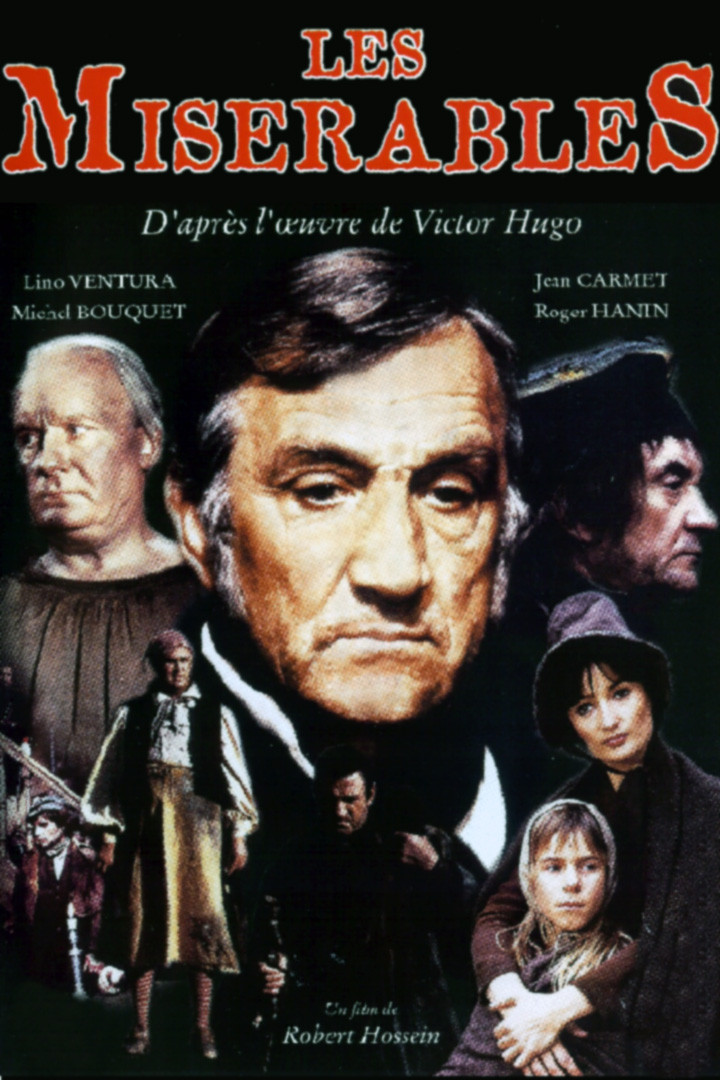
In the updated American version, Gene Valjean steals two chicken sandwiches for his starving and pregnant wife, and he is hounded by the relentless Safeway manager, Fred Javert.

[ Update (11/2/2011): Safeway has dropped the charges stemming from this incident, and rescinded its one year ban of the Leszczynskis. None of the commentary on the story is affected by this development. The damage is done, including to Safeway’s image. The fact that the grocery chain decided not to do any more damage, and took a week to decide it, is not anything to admire.]

Periodically Ethics Alarms breaks into a debate over whether prosecutorial discretion is fair and just. When appropriate, it is fair and just, and here is an example of the kind of injustice that occurs when the law is enforced without concern for proportion, intent, or common sense.

The villain in this case was not a prosecutor, however, but a Safeway manager.

Nicole Leszczynski, who is 30-weeks pregnant, her husband Marcin, and daughter Zophia were shopping at a Hawaii Safeway where they bought about $50 worth of groceries. During their shopping, Nicole began feeling faint, and ate two chicken sandwiches, a deal at only $5.  The couple forgot about  the sandwiches when they checked out their other items, however. (Full disclosure: I’ve done this. With a banana.) The store detained them and refused to accept payment. Then the store manager called the police, and they were placed under arrest for larceny.

In accordance with police policy when both parents are arrested, 3-year-old Zophia was taken by Child Protective Services, and not returned to the Leszczynskis until the next day. Continue reading

Ethics Quote Of The Day: Allahpundit

"Hide! The Vice-President says that if the jobs bill doesn't pass, we might be raped!!!"

“The very first question at the next Solyndra hearing should be, “How many rapes could Democrats have prevented by giving that $535 million to cops instead?”

“Hot Air” blogger Allahpundit, marking the below-the-belt tactics of Vice President Joe Biden, who angrily suggested that Republicans who voted against the President’s jobs bill would be responsible for rapes and murders because of the resulting inadequate numbers of police.

Biden’s fear-mongering is beyond demogoguery, whatever the virtues of the President’s bill. States make budgetary decisions, and if a state’s priorities in funding didn’t include sufficient police personnel to prevent rapes and murders, the state is accountable, not Congressional Republicans (and Democrats) who don’t like the President’s bill. Meanwhile, the jobs bill seeks $5 billion for cops (and firefighters) and $30 billion for teachers. Is Obama willing to risk more rapes by not putting more money into law enforcement and less into teacher’s unions?  Continue reading

Ethics Quiz: “The Video Vigilante” of Oklahoma City

The Video Vigilante

Brian Bates, or “The Video Vigilante,” has spent 15 years exposing and documenting street prostitution in Oklahoma City. He lurks around an area of south Oklahoma City known for frequent prostitution, waits for a prostitute to get into the car of a customer and follows it to their destination. Then, videotape engaged, he opens the driver’s side door and shouts, “You’re busted, buddy!”

Then he places the video on YouTube’s John TV channel, Bates’ website, JohnTV.com, or his Facebook page or Twitter feed. He sometimes send the links to the guilty men’s spouses. Sometimes, knowing this, his prey beg for mercy, which is never forthcoming.

A two-part Ethics Quiz:

1. Is this admirable behavior? Ethical behavior? Continue reading