The New York Times Legal Expert Doesn’t Understand The Constitution

Well that’s a kick in the head! Actually, the expert in question is Linda Greenhouse, the Supreme Court reporter for The Times from 1978 to 2008 and once a regular participant in those Sunday Morning network “round tables” when a talk show wanted to pretend it had a balanced and non-partisan array. Greenhouse is a strongly left-biased Democrat legal analyst, often a dishonest one, and her latest column for the Times proves again that it is propaganda and woke advocacy, not legal enlightenment, that she serves.

Once again, I wish “A Friend,” formerly our resident Times apologist, was still allowed here so I could read his tortured defense of the paper for printing this sinister crap.

Do read “Will the Supreme Court Toss Out a Gun Law Meant to Protect Women?” I wouldn’t bother to quote it if the Times didn’t make you pay for the privilege of rolling your eyes, but I will, a bit. The headline says it all, though, and by “all” I mean anti-rights, anti-due process totalitarian cant. You know, Democratic Party/progressive/ “Do Something!” stuff.

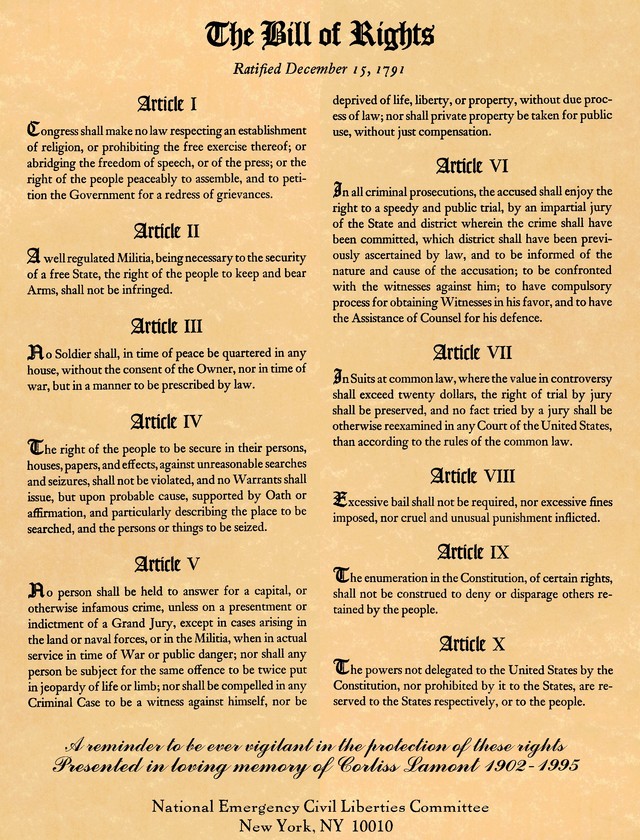
If the Constitution contains an enumerated right in its Bill of Rights, the fact that a law directly violating that right may, in the eyes of some, have some beneficial effects is irrelevant unless there is a massive, existential justification for an exception. Otherwise, the law is unconstitutional. Current progressives and Democrats don’t believe that, or rather, object to the principle. The believe that if speech “hurts” someone by making them feel bad, expresses taboo opinions or makes a sanctified group member feel “unsafe,” laws blocking or punishing that speech shouldn’t be seen as a First Amendment violation, though, in fact, they are. If the right to a fair trial has to be ignored to make sure that a cop whose knee inadvertently triggered nationwide riots and DEI craziness ends up in prison for life, well, reasons the Left, you gotta break some eggs to make a metaphorical omelette, the eggs being the Bill of Rights.

The United States Court of Appeals for the Fifth Circuit, following SCOTUS’s long-delayed and essential 2022 ruling in Bruen that the Second Amendment means what it says and is about the human right to bear arms and not militias, declared a federal law unconstitutional that prohibited a person subject to a court-issued restraining order for domestic violence from owning a gun. It was and is obviously the right decision except to anti-gun zealots who believe in pre-crime laws, red flag laws, and anything along the slippery slope to outright Second Amendment repeal. The Supreme Court is obviously going to uphold the Fifth Circuit, because its ruling was correct. The only question is whether any of the three far-left ladies on the Court will have the integrity to follow the law. I have some hope for Justice Kagan.

But to read Greenhouse, one would think, and by “one” I mean a typical American who doesn’t read SCOTUS opinions, couldn’t name five of the first ten Amendments and doesn’t comprehend what the Supreme Court’s job is, that the fact that an invalid law has good intentions should be sufficient reason to let it stand. (I doubt the law at issue even had good intentions.)

What the law allows in domestic abuse restraining orders is for judges to issue them solely on the testimony of the complainant, and that act will ban an individual from exercising his right to bear arms. Evidentiary standards are minimal; judges are inclined to grant requests for restraining orders because if there is violence against a complainant after the judge finds no cause—moral luck lurks! —the judge is going to be crucified. The other party doesn’t have a right to be present at the hearing, so the result of the law struck down would be that individuals could lose a core enumerated right without due process of law, based solely on the word of an adverse party.
Continue reading

“Attention Must Be Paid”: The Vanishing BYU Racial Slur Saga [Updated]

Ethics Alarms mentioned this nauseating but significant story briefly last week, here. Obviously it warrants more consideration, depressing though the conclusions might be.

At an August 26 volleyball match, match on Aug. 26, Duke volleyball player Rachel Richardson’s claimed that she and her African American team mates targeted with repeated racial slurs from a crowd of more than 5,500 people the the Brigham Young University arena in Provo, Utah.  Richardson’s  godmother, Lesa Pamplin, was not at the match but still told the media that someone yelled “nigger” every single time Rachel was serving. Her father, Marvin Richardson, told The New York Times that the slur was repeatedly yelled from the stands at his daughter.

Well, they said it happened, so it must be true.

Moving with unseemly speed, BYU authorities fingered a fan pointed out by Richardson as the racist culprit and announced that he would be banned from Cougars’ sporting events evermore. Duke’s athletics director Nina King quickly said that her players “should always have the opportunity to compete in an inclusive, anti-racist environment which promotes equality and fair play.” University of South Carolina coach Dawn Staley, racing to grandstand, canceled all her team’s games against BYU, since its fans are obviously racists.

“I’m disgusted that this behavior is happening and deeply saddened if others didn’t step up to stop it,” Utah’s Republican Governor Spencer Cox tweeted on August 27 without know what happened. “As a society we have to do more to create an atmosphere where racist assholes like this never feel comfortable attacking others. ESPN resident race-baiter Stephen Smith was in high dudgeon. “I’m saying BYU- you did it!” Smith said on the air. “By allowing this to happen and not addressing expeditiously, not addressing it with a level of quickness and speed that you should’ve addressed this with.”

They banned the alleged racist before the game was over—how much faster could BYU have been?

Mike Freeman, the race and inequality editor for the sports section at USA Today, wrote a column on August 27 in which he called Richardson a “hero” and demanded an investigation. “What needs to happen next is a full investigation by BYU. If the school simply tries to move on with nothing but a statement that simply isn’t acceptable,” he wrote. “They need to interview players and coaches and the question consistently needs to be asked: why wasn’t the game stopped?”

Oopsie! They had the investigation, and found no evidence whatsoever that anyone was shouting racial slurs in the stands. Video showed that the fan BYU banned wasn’t shouting anything when Richardson was serving. Gee, the school said, we’re sorry for calling you a racist! Come back and cheer for us any time!

Continue reading

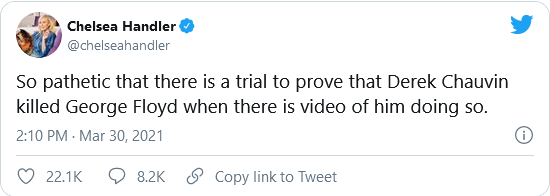
Res Ipsa Loquitur: The Unethical Tweet Of The Week

The res ipsa loquitur part is that anyone who would write this, publish this, say this or think this is ignorant, irreponsible. and an idiot, by definition.

What the tweet doesn’t tell you is…

Continue reading

Ethics Quote Of The Month (Yes, It’s More Impeachment Analysis, And I’m Sick Of It Too, But This Is Important): Professor Jonathan Turley

Shredding-the-Constitution

..Even with acquittal all but ensured, there was no room for constitutional niceties like free speech or due process. There was only one issue — the same one that has driven our media and politics for four years: Trump. Through that time, some of us have objected that extreme legal interpretations and biased coverage destroy our legal and journalistic values.

—-George Washington University Law School professor Jonathan Turley, constitutional law expert, on the conduct of the Democrats before and during the just-completed second Trump impeachment trial.

This statement, as well as the rest of his article for The Hill yesterday, was not only astute (though Turley’s observations should have been obvious) but personally welcome, in part because it tracked exactly with what I have been writing here for four years, but  in no small part because I was almost finished with a post making the same points. For Turley to make them is, of course, better, since a lot more people, though not nearly enough, pay attention to what he says. It was especially welcome because not one but two friends (among others) had made fatuous and indefensible assertions about the impeachment in the past two days, inspiring me to start that now redundant post.

My theme was going to be about how their now completely unhinged, Ahab-like mania to destroy the former President had led them to deny the importance of what once were accepted by liberals and conservatives alike—but especially liberals before their rebranding as “progressives”—as crucial, indispensable, core American values relating to personal liberty and government interference with it. The rationalizations employed in this scary process are stunning.

Prime among them as been 2020’s rationalization of the year: “It isn’t what it is,” #64. As I noted in the previous post, a Facebook friend (whom I strongly suspect was one of the self-exiled progressive Ethics Alarms commenters) wrote on the platform to the usual acclaim of  “likes” and “loves” that the 57 Senators who voted for this corrupt impeachment were voting “for democracy.” They were in fact doing the opposite, and in many ways, as Turley’s article explains (though again, it should be obvious.) Then, in a discussion with a more rational friend, another lawyer, about how the House impeachment had deliberately bypassed due process, I was told that there is no right of due process in an impeachment proceeding, nor should the prohibition of ex post facto laws and bills of attainder apply. Here was a lawyer making technical arguments against ethics. “Legally, due process only applies to life, liberty, and property,” she lectured. “A job is none of those.”

I could rebut that, but the point is that both the Declaration and the Constitution mark out basic values of our society, not just laws, but ethical values. “Due process” means fairness, and this lawyer, an alleged progressive, was arguing that the government doesn’t have to be fair while depriving the public of an elected official and that elected official of his job, and that individual of his ability to seek that job or another one. This is what hate and arrogance have done to the Left.

Continue reading

Here’s Another Unethical Trend To Dread As Progressives Grab The Reins: “Trauma-Informed Justice”

TIJ

Trauma-informed justice, also called “victim-centered” justice, is becoming the cool new thing as woke anti-civil rights activists seek to get around due process and the presumption of innocence when it suits their agenda. The technique involves an interview methodology where the police prioritize empathy for accusers, who are automatically presumed to be victims. The methodology is especially favored for allegations of sexual abuse and domestic violence, where the accusers are overwhelmingly female: this a “believe all victims as long as they are wo,men” anti-male approach that has its roots in the feminist movement. The methodology was refined by Russell Strand, U.S. Military Police School, who offered the Forensic Experiential Trauma Interview (FETI) as a way to question presumed victims without making them relive an assault.

The theory dictates that police conduct investigations following three principles:

Continue reading

Ethics Train Wreck Déjà Vu In Kenosha

Now THIS is “blood on their hands!

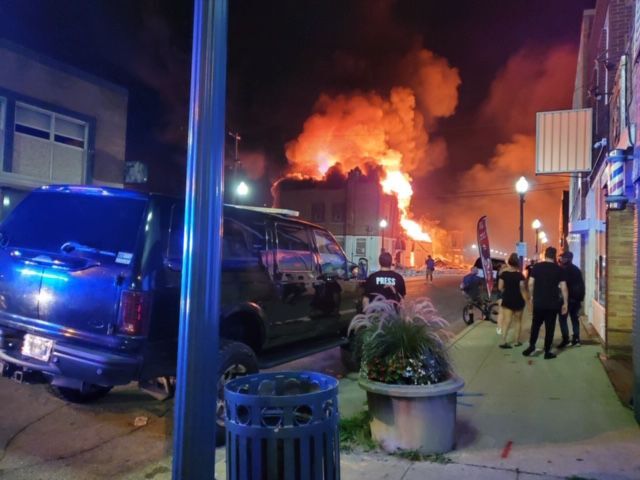
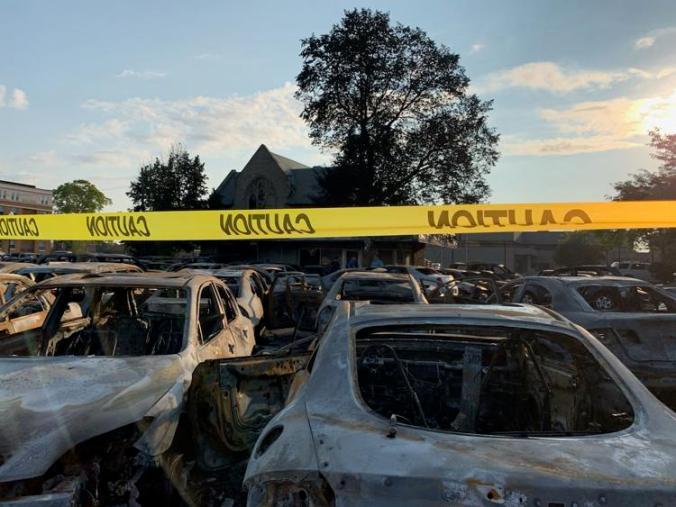
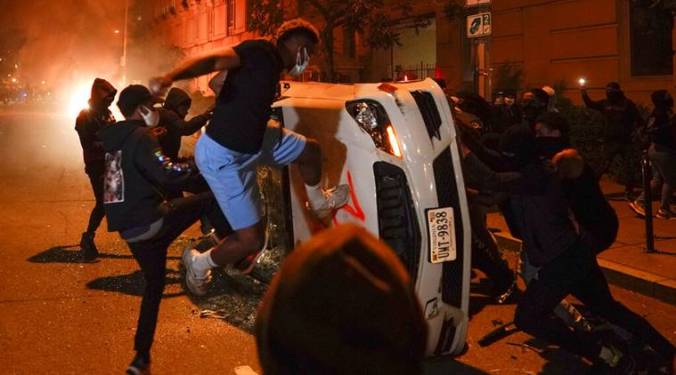
Three people were shot overnight in Kenosha, Wisconsin in  the third straight night of “mostly peaceful protests,” aka “rioting and looting” in response to a police shooting which may have been completely justified. Two of last night’s shooting victims died. Meanwhile, the mobs damaged and burned buildings and businesses around the city. Here’s a car lot torched by the “peaceful protesters”:

As we have seen with the George Floyd mob rule and before that, the riots in Atlanta (over the similarly ambiguous Wendy’s shooting), Ferguson (Mike Brown) and Baltimore (Freddie Gray), this damage to innocent people and their businesses is being “justified”—in truth, nothing could justify it—as a reaction to racism and police brutality when neither have been demonstrated by an investigation. But as we have seen, Facts Don’t Matter, and due process for cops doesn’t exist. Eager to disrupt society and seize power as supine politicians snivel, opportunistic revolutionaries along with some well-meaning but misguided activists, are savaging a community and causing far more damage than the original incident, based on supposition, bias, and raw emotion.

Other than the rioters themselves, these are the responsible individuals and organizations: Continue reading

Sunday Ethics Reflections, 6/28/2020: For The Defense….

Greetings from the Ethics Alarms bunker…

1. I’m current reflecting on a personal and professional ethics conflict. A colleague and long-time professional competitor—I would never call him a friend—has been ousted from his leadership position in the very successful organization he founded as a result of unproven allegations of sexual harassment and assault. It was a “believe all victims” situation, as well as what feels like a successful coordinated effort to “get” someone who had accumulated a lot of enemies, resentment and envy in a notoriously nasty industry once his power was waning.

On one hand, I feel like I should reach out to him and offer my guidance and support (as an ethicist and sexual harassment trainer, not a lawyer, and gratis, of course). On the other, I am pretty certain that he is guilty of at least some of what has been alleged, based on confidential accounts I have recently heard from reliable sources. Ethically, however, his ousting (it appears that he was given the option of “retiring”) lacked due process and fairness, and the organization was guided by public relations motives rather than legal or ethical ones.

Whose side should I be on?

2. Stop making me defend Facebook! As if there wasn’t enough to worry about, the aggressive pandering mode of corporations right now is being exploited by would-be censors of political speech. Facebook CEO Mark Zuckerberg announced updated election policies and stricter “hate speech” rules in response to employee protests and pressure from activists, whose transparent objective is to silence or constrict any political views antithetical progressive positions and goals. In a message last week, Zuckerberg  outlined plans to police disinformation relating to voting and elections, to flag certain content that risked triggering violence (I wonder what  that standard is like today?) and concluded,

Continue reading

Applying The Ethics Alarms 12 Question Protest Ethics Checklist To The George Floyd Freak-Out, And A Thirteenth Question

Of course, when a protest turns into violence, arson, rioting and looting, that protest has lost any claim to ethical legitimacy. Let’s (mostly)ignore that Woolly Mammoth in the room, however, to try to assess the George Floyd protests from as positive a perspective as possible.

Here’s the checklist:

1. Is this protest just and necessary?

Outside of the locale where the incident took place, the protests were neither just nor necessary. They were only necessary in Minneapolis if there was a real chance that the police involved would not be held accountable. There was no reason to assume that in the brief time before the mobs gathered and the chants began.

2. Is the primary motive for the protest unclear, personal, selfish, too broad, or narrow?

As in most such cases, the primary motive was and is incoherent. “Expressing outrage”  is by definition too broad to be productive. “Justice” does not mean what the protesters seem to think it does.

3. Is the means of protest appropriate to the objective?

No, if the objectives are a fair trial and due process under the criminal justice system, which it should be. If anything, the protests undermine those objectives.

4. Is there a significant chance that it will achieve an ethical objective or contribute to doing so? Continue reading

Saturday Morning Ethics, 5/30/2020: Burn, Baby, Burn Nostalgia

1. Bulletin for Gov. Walz: Derek Chauvin has civil rights too, you irresponsible fool. I have just watched Minnesota’s Governor repeatedly refer to George Floyd’s “murder.” An elected public official cannot and must not do that. If he wants to guarantee that a fair trial in the case becomes impossible, this is the way to do it. There has been no trial, and however horrible the video of Floyd’s  death may be, Chauvin and the other officers have the right to the presumption of innocence. Now a St. Paul’s mayor is at the podium calling for Chauvin to be held “accountable.” Well, he’s under arrest and will face trial, and for now, that’s about it.  All of this outrage porn and virtue-signaling now enables the rioters by pretending that there is anything productive to be done but to wait for the justice system to play out. Continue reading

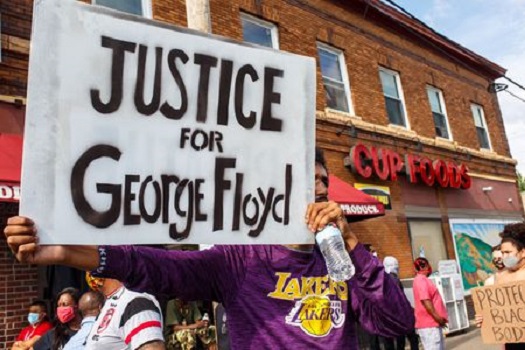
What Is “Justice For George Floyd”?

There is no justice for George Floyd. The cries for such a result raise a straw man. Floyd is dead, and shouldn’t be dead. There is no remedy for that, and our system promises none. In the criminal justice system, the role of what would be the plaintiff in a civil proceeding is taken by the State, or “the People.” Justice is sought by society, to validate the system of the rule of law, and to ensure the safety and integrity of society and civilization.

Whether or not the officers responsible for George Floyd’s death—and absent the revelation of some  miraculous intervening cause that nobody suspected, like Floyd being bitten by an escaped  Black Mamba while the police officer was kneeling on his neck, there is no reasonable argument that the officers were not responsible for his death—are convicted and punished to anyone’s satisfaction is not the measure of “justice” in this case. The measure of justice is whether due process is followed, whether the officers are fairly tried and competently defended, whether their prosecution obeys the rules of evidence and follows the law in all other respects, whether a competent and fairly vetted jury evaluates the evidence presented and delivers a verdict consistent with that evidence, following a trial overseen by an impartial judge, who then declares a fair punishment in light of the verdict. That is all our system can achieve. Whether all citizens, or any citizens at all, like or approve of the final outcome is irrelevant, and has nothing whatsoever to do with “justice for George Floyd.” The system seeks justice in a broader sense. Continue reading