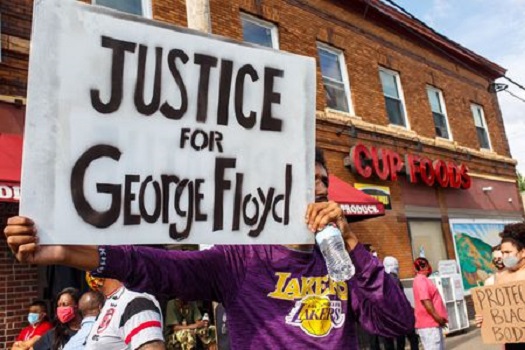
There is no justice for George Floyd. The cries for such a result raise a straw man. Floyd is dead, and shouldn’t be dead. There is no remedy for that, and our system promises none. In the criminal justice system, the role of what would be the plaintiff in a civil proceeding is taken by the State, or “the People.” Justice is sought by society, to validate the system of the rule of law, and to ensure the safety and integrity of society and civilization.
Whether or not the officers responsible for George Floyd’s death—and absent the revelation of some miraculous intervening cause that nobody suspected, like Floyd being bitten by an escaped Black Mamba while the police officer was kneeling on his neck, there is no reasonable argument that the officers were not responsible for his death—are convicted and punished to anyone’s satisfaction is not the measure of “justice” in this case. The measure of justice is whether due process is followed, whether the officers are fairly tried and competently defended, whether their prosecution obeys the rules of evidence and follows the law in all other respects, whether a competent and fairly vetted jury evaluates the evidence presented and delivers a verdict consistent with that evidence, following a trial overseen by an impartial judge, who then declares a fair punishment in light of the verdict. That is all our system can achieve. Whether all citizens, or any citizens at all, like or approve of the final outcome is irrelevant, and has nothing whatsoever to do with “justice for George Floyd.” The system seeks justice in a broader sense. Continue reading