Morning Ethics Warm-Up, 1/30/18: The State Of The Union Stinks Edition

Good Morning, everyone!

1 Well, it’s good to know you have kept an open mind…New York Times Trump-Hater Michelle Goldberg, who has written for just about every left and far left website and publication imaginable,  on today’s Times editorial page:

“No matter how well Trump delivers the lines in his State of the Union — announced theme: “Building a safe, strong and proud America” — he will not become presidential. There will be no turning of corners or uniting the country. At best, Trump will succeed in impersonating a minimally competent leader for roughly the length of an episode of “The Apprentice.”

Has any major newspaper, prior to a President’s first State of the Union message, given prominence to such an unfair and disrespectful bit of hate-punditry? I doubt it very much.

2. ‘Where have you gone, Pres’dent Gerald Ford, our nation turns its lonely eyes to you…woowoowooThe only President to begin his State of the Union negatively was President Gerald Ford, in 1975: I must say to you that the state of the Union is not good.” He was right, and courageous, to do so, and President Trump would be right and courageous to do so now, though for different reasons. Ford was speaking of the economy, but economies get better. The State of the Union is also not good when it is being torn apart by hyper-partisan warfare, and both parties are attempting to increase the divisions among citizens while exploiting them. Of course, the current President, who has some useful skills Gerald Ford lacked, but not a flea’s nose’s portion of his character, would never dream of using his time in the national spotlight for anything less than an orgy of self-congratulation. Continue reading
Salon Asks: “When Is A Leak Ethical?” NEVER. That’s When.

Ethically challenged left-wing website Salon somehow found an ethically challenged law professor, Cassandra Burke Robertson, to justify the leaks in the Trump Administration. Robertson,  despite being a Distinguished Research Scholar and the Director of the Center for Professional Ethics at Case Western Reserve Law School, advocates unethical and sanctionable conduct in a jaw-dropping post, “When is a leak ethical?

Here, professor, I’ll fix your misleading and dishonest article for you: It’s NEVER ethical to leak.

Never.

She begins by noting “I am a scholar of legal ethics who has studied ethical decision-making in the political sphere.” Wow, that’s amazing….since she apparently is hopelessly confused about both, or just pandering to Salon’s pro-“resistance” readers.

Robertson writes:

“Undoubtedly, leaking classified information violates the law. For some individuals, such as lawyers, leaking unclassified but still confidential information may also violate the rules of professional conduct.”

1. It is always unethical to break the law, unless one is engaging in civil disobedience and willing to accept the consequences of that legal breach. By definition, leakers do not do this, but act anonymously. Thus leakers of classified information, lawyers or not, are always unethical, as well as criminal.

2. Lawyers may not reveal confidences of their clients, except in specified circumstances.  Here is D.C. ‘s rule (my bolding): Continue reading

It’s Sexual Harassment Day!

biden-harassment

Unfortunately, it will be a while before I get to the next ethics topic. Accompanied by the ProEthics acting troupe, The Ethical Arts Players, I’ll be running not just one but two harassment awareness and avoidance trainings today. Avoiding harassing conduct is only applied ethics after all; it should be easy, but it isn’t.

I’ll be talking about some high profile cases that have been discussed here: the Trump-Billy Bush video, naturally; Ellen Degeneris’s cute sexual harassment of Jake Gyllenhaal on television that nobody complained about because…she’s Ellen! ; and the most relevant of all for the group I’ll be talking to, made up of scientists and academics, this story.

Sexual harassers come in many varieties, and this reminds me that I need to write more about the topic. Here are 15 types that have been identified in the wild so far, but hybrids and mutants are also out there:

  1. The Power Player: A “quid pro quo” harasser: the boss.
  2. The Counselor: Exploiting mentor relationships, abusing tryst
  3. The Leader of the Pack: Leading group embarrassment or marginalization
  4. The Serial Harasser: The Intentional and shameless abuser. With all that has gone on in the law and public eye, they are still out there in force.
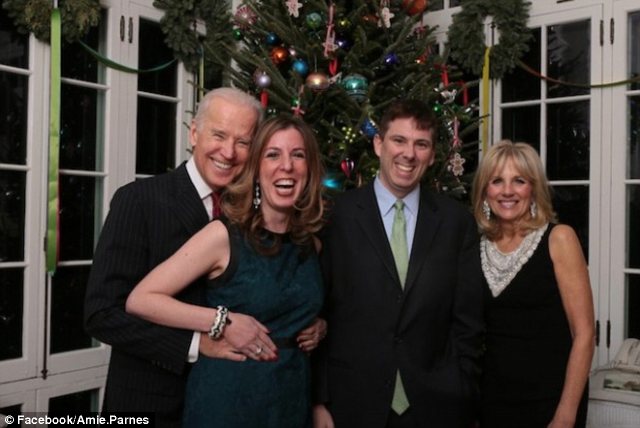
  5. The Groper: Hands and Eyes. Yes, that’s Joe Biden…
  6. The Opportunist: Awaiting their chances, and ready to pounce on the trusting, vulnerable and needy
  7. The Bully : Sexual harassment as punishment, manipulation or just for sadistic fun
  8. The Confidante: Building trust to abuse it, that Platonic friend who’s not really platonic.
  9. The Pest: Polite, but not taking “no” for an answer
  10. The Sympathetic Harasser – Exploiting a crisis
  11. The Gallant: Misusing compliment and manners to marginalize, the kind of harassment women often don’t notice. (Barack Obama is one.)
  12. The Nerd: Socially inept individuals who desire the attentions of their targets, and who often don’t see that they do not reciprocate these feelings.
  13. The Stalker: Watching, trailing, bothering, tracking. The most dangerous harasser.
  14. The Blunderer : An accidental or clueless harasser
  15. The Star: The open harasser who’s status prevents him from being called one, or called to account.


The Unethical Ethicist And Yale: If Bill Cosby Were A Famous Ethicist, He’d Be Prof. Thomas Pogge

The Accuser and the Ethicist

The Accuser and the Ethicist

Here is the short version:

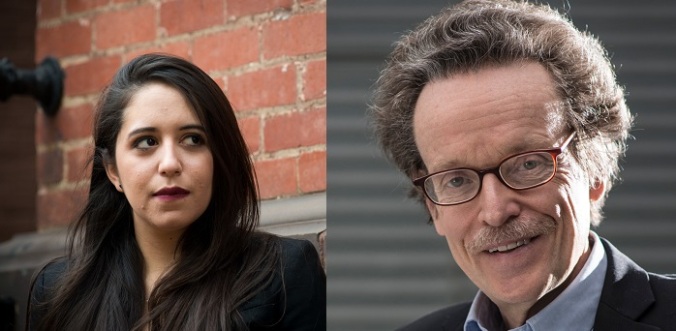
Yale’s Thomas Pogge is a world famous Yale professor of philosophy and ethics who is especially renowned for condemning the terrible human rights effects caused by disparity of resources between rich countries and poor ones. His books, lectures and a well-recieved TED talk argue that the power imbalance between rich countries and poor countries is so great that poor countries cannot reasonably be said to “consent” to agreements between them. Pogge has also accumulated many credible accusations of exploiting, harassing, and taking sexual liberties with his female students in multiple institutions. In the case that has led to this contrast becoming public, Yale offered a female accuser, a Yale graduate named Fernanda Lopez Aguilar, $2000 in exchange for ending the matter and keeping the story out of the news media.

The long version is here. Because the publisher is BuzzFeed, which is not widely regarded as a sterling source of trustworthy journalism (to say the least), the detailed and apparently well-researched report will be easy for Pogge and Yale to ignore and shrug off. However, other publications, including the Yale Daily News, have investigated the work of author Kaitie J.M. Baker, and so far it has held up to scrutiny.

Pogge has responded, less than convincingly, I would say, to the Lopez Aguilar allegations here. I say unconvincingly because he does not address the previous accusations made against him at Columbia University, and if there is one common characteristic of sexual harassers and abusers that stands out above all others, it is that they are habitual and repeat offenders. Anyone who has spent any time in academia (like me) is well aware that the culture permitting professors, especially male professors, to use the student body and bodies as a sexual perk of the job is widespread and only weakly restrained, if at all. Does that prove that Pogge is one of the professors who partakes in the lusty opportunities presented to him as an object of trust and admiration? No. There is, however a lot of smoke surrounding him, and the smoke has been issuing for a long time.

Yale’s institutional conduct is more than smoke. Yale appears to be another example of a trusted institution deciding that it is preferable to cover up the possible, likely or proven misconduct of a valuable employee than to risk damaging the reputation of that institution, or alienating the loyalties of other employees, by addressing it openly and decisively. I’m sure you can name other infamous examples of this phenomenon, broadly covered by the rationalizations “The King’s Pass” and “The Saint’s Excuse” on the Rationalizations List. Among the most infamous of these are the Catholic Church’s decades, perhaps centuries-long enabling of child sexual predators in the priesthood, the Watergate cover-up by the White House, and Penn State’s failure to stop a known child predator from using the school’s football program and its campus as a base of operations. Yale’s particular variety of this unethical choice is an especially unsavory one, closer to the Joe Paterno/ Sandusky and “Spotlight”scandals, because it intentionally  places future innocent victims at risk of harm.

I accept that there is a possibility that Pogee is an impeccable  professional and as pure as the driven snow, and thus himself a victim of a smear, though this seems unlikely. What I am more interested in now is to address the questions asked in the BuzzFeed piece, which relate to how we should regard unethical ethicists as well as other prominent figures who defy, in their actions, the wisdom they are celebrated for dispensing to others—the Bill Cosbys of the world.

I have some additional questions of my own, but for now I will restrict myself now to those posed in the article. Continue reading

The Unlikely Ethics Dunce, And Why Nobody Pays Attention To Ethicists And I Don’t Blame Them

Wait, how can the nation's most famous ethicist be an Ethics Dunce? It's not easy...

Wait, how can the nation’s most famous ethicist be an Ethics Dunce? It’s not easy…

Ethicists have managed to make ethics nearly invisible in our cultural debates, and nearly useless as a decision-making tool, when it ought to be the most useful tool of all. They accomplished this over centuries of work, making the discipline of ethics abstruse, elitist, abstract, and worse of all, boring. Nobody should be bored with ethics, hence my statement, “Ethics isn’t boring, ethicists are.” Once ethics was pigeon-holed in the realm of philosophy, however (it belongs with “crucial life skills” and “critical thinking”) and philosophy became associated with scholarship, advanced degrees and academia, the jig was up.

The problem is that academic ethicists teach and write about abstract ethics, and life is not abstract. Their quest is for one formula to determine right from wrong, and life and human beings are more complicated than any one formula can encompass. When I started this blog, I got a lot of grad students writing me who demanded to know whether I was a Utilitarian,  Kantian Deontologist, a follower of Natural Law Ethics,  a Virtue Ethicist or a devotee of Stakeholder theory. My answer was “all of the above and none of them.” All of these and more are useful tools of analysis, but none work all the time, and the amount of words loaded into jargon to explain and debate the nuances of any of them render them all useless except for  writing scholarly papers.

The ethics that the public learns, as a result, are what pop culture and society teach them, and most of that isn’t ethics at all. For example, in the cable series “The Affair,” a well-educated older man was advising a young woman, the mistress in the affair, about how to think about the illicit relationship that broke up he lover’s marriage. Wise and thoughtful, he described his own adulterous affair, and then said, “What you did wasn’t wrong. You didn’t kill anybody. You didn’t break any laws.  Don’t be so hard on yourself.”  There is no ethics in that statement. Itis just employs two popular and facile rationalizations (#4. Marion Barry’s Misdirection, or “If it isn’t illegal, it’s ethical,” and #22, the worst of all, #22. The Comparative Virtue Excuse: “There are worse things.”) with another lurking but unspoken one, the Cheater’s Special, #23. Woody’s Excuse: “The heart wants what the heart wants,’ underlying the whole scene.

That’s ethics, I would guess, to about 90% of the population. Scary. This is, however, where ethicists have taken us. They could be so important to the culture, if they would get their heads out of their asinine models and explain ethical principles that are relevant to real lives in a manner that doesn’t make normal people become hostile to the subject.

This brings us to Peter Singer, Princeton’s acclaimed professor of bioethics who has been called the most influential ethicist alive. It is admittedly faint praise, but probably correct. Continue reading

Professor Schwitzgebel Concludes That Ethicists Aren’t Very Ethical—Luckily, According To Him I’m Not An Ethicist, So I Don’t Take It Personally

Greek phil

Eric Schwitzgebel is professor of philosophy at University of California, Riverside, as well as an author and a blogger. His essay “Cheeseburger Ethics” immediately caught my attention, as his thesis is one that I have embraced myself, occasionally here: ethicists are not especially ethical.

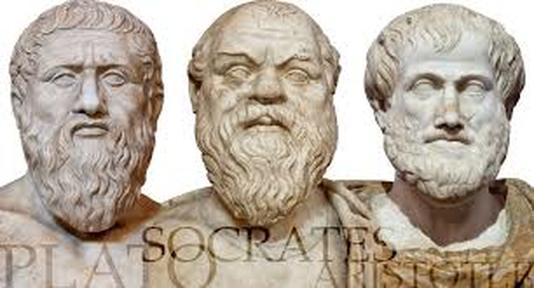
The essay is thought-provoking. He’s a philosophy professor and an academic, so naturally he views his own, isolated, rarified species of ethicist as the only kind. In announcing the results of his “series of empirical  studies” on the ethics of ethicists, Professor Schwitzgebel announces, “…by ‘ethicist’, I mean a professor of philosophy who specialises in teaching and researching ethics.” Got it, prof. I, in contrast, am the kind of ethicist typically denounced on other blogs as a “self-proclaimed” I don’t regard myself as an academic, my degrees are in American government and law, and my specialty is leadership and the role of character in developing it. My job isn’t to teach half-interested students about the abstract thoughts of dead Greeks and Germans; my job is to make professionals, elected officials and others understand what being ethical in their jobs and life means, how to distinguish wrong from right, and how to use proven tools  to solve difficult ethical problems they will face in the real world. I get paid for it too.

My audiences hate ethics, usually because of the people who Prof. Schwitzgebel has decided are the “real” ethicists. They have made ethics obscure, abstract and gnaw-off-your-oot boring for centuries, with the result that the mere word “ethics” sends the average American into a snooze. I have had corporate clients ask me to teach ethics without using the word “ethics.” The most common evaluation I read are from participants who write that they dreaded my seminar and were shocked that they were engaged, interested, entertained, amused…and learned something useful and occasionally inspiring.

Is it ethical to reduce the public’s interest in and respect for the very subject—a vital one– you have chosen to specialize in and teach, often because you have lousy speaking and teaching skills? Why yes, I’d call that very unethical. So I agree with Schwitzgebel’s assessment of his colleagues. Continue reading

Ethics Alarms Awards Update: Let Us Not Forget “The Most Unethical University Of 2014,” and The Most Unethical Ethicist Who Helped Make It That Way

The unethical ethicist.

The unethical ethicist.

I finally completed the 6th Annual Ethics Alarms Awards for the Worst of Ethics yesterday, longer and more nauseating than its five predecessors, and also, as I realized when I awoke with a jolt at dawn this morning, more incomplete.

Somehow, I managed to omit two important and prominent awards that were in my notes but managed to elude me when I was preparing the final version. Here they are: I’ll be adding both to the official awards posts today:

Most Unethical University and Worst Academic Scandal of the Year:

The University of North Carolina and its incredible fake courses scheme that for 18 years between 1993 and 2011 allowed more than 3,100 students, 47.6 percent of them athletes, to enrolled in and receive credit for  classes that did not exist.

Least Ethical Ethicist

Prof. Jeanette M. Boxill, a philosophy professor and senior lecturer on ethics  who ran the University of North Carolina’s Parr Center for Ethics, and who somehow decided it was ethical to steer U.N.C.  into fake classes to help them maintain their eligibility with the National Collegiate Athletic Association, and actively worked to cover up the scam. Among other aspect of her participation, Boxill  helped players write papers, which the official university report on the conspiracy characterized as stepping across the line of permissible conduct.

Ya think??

The Chronicle of Education article about Boxill’s participation suggests that she rationalized helping the athletes graduate as “the ethics of care,” and a colleague says that she may have “often let her heart guide her.” Her heart guided her to allow students to acquire a degree that misrepresented their academic work to the world, and to perpetuate and further corrupt the already corrupt system of college athletics? Wow. For an ethics professor, she had a remarkably ignorant and unethical heart. She has,blessedly, been fired, and is appealing the decision.

I wonder on what grounds? I don’t think even The Saint’s Excuse (Rationalization #13 on the Ethics Alarms List) applies to her conduct.

The Ethicist, the Farkel Family, and the Perils of “Maybe”

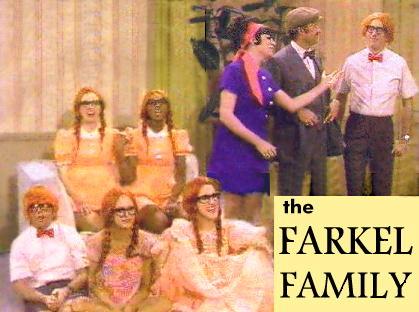
This photo is completely relevant to this post, but if you are under 50, you probably haven't a clue why. Pity. See below for an explanation.*

One of the reasons I started the Ethics Scoreboard, and continued with Ethics Alarms, was my frustration with the ethics profession’s reluctance to render useful opinions on complex ethical problems…unless, of course, the ethicist was being paid for them. Instead, ethicists are prone to issue obtuse and jargon-filled discussions allowing for every possible eventuality and interpretation, usually concluding with vague, equivocal pablum that allows the ethicist to avoid criticism and accountability. The result of this craven preference for “maybe” as the answer to every dilemma is that ethics are rarely included in public discourse or media coverage, as it solidifies its reputation for being technical, ambiguous, and pointless.

A perfect example of the reticence to make a clear choice occurs in this week’s installment of “The Ethicist,” the New York Times Magazine’s ethics column. An understandably anonymous inquirer writes that he unknowingly fathered a child with a married woman in his neighborhood, who raised the child as the offspring of her and her husband.  The mother asked the biological dad to have no contact with the girl, and he has complied. Now he asks, “Does she have a right to know her true parentage upon reaching adulthood? Sooner? Over the objection of the mother? Only when the husband dies? Who can make these decisions and when?” Continue reading

Fairness Dilemma:When Should Past Misdeeds Affect Present Trust?

The Shirley Sherrod case raises a broader ethical question that surfaces frequently, both in current events and in private life. When, if ever, is it fair to lower one’s opinion and level of trust in an individual’s character based on events that occurred long ago?

In Sherrod’s case, an twenty-four year old incident she cited in a speech before the N.A.A.C.P. as a lesson in how not to behave got her fired from her job at the U.S.D.A., condemned by the N.A.A.C.P., and called a racist by conservative news commentators. This is an easy call: her instance of racial anger and bias should not be held against her for several reasons: Continue reading

The Ethics of Unethical Ethics Teachers

An essay by lawyers Joel Cohen and Katherine A. Helm begins with this story:

Noted ethics philosopher and Nobel Laureate Bertrand Russell once was questioned by the Harvard Board of Governors about having an extramarital affair with a student. When faced with the hypocrisy of being an ethics professor engaged in immoral conduct, Russell argued his private affairs had nothing to do with his professional duties. “But you are a Professor of Ethics!” maintained one of the board members. “I was [also] a Professor of Geometry at Cambridge,” Russell rejoined, but “they never asked me why I was not a triangle.”‘

The authors use the anecdote to explore the issue of whether proven ethics miscreants like Eliot Spitzer, Rod Blagojevich and disbarred class action lawyer William Lerach ought to be lecturing, speaking, or otherwise being listened to in regard to their opinions and advice on ethics. After all, acting teachers are often indifferent actors, and the best baseball managers weren’t much as players. Why should ethics be any different?  Continue reading