A Harsh Lesson We Must Learn From Atlanta’s Teachers

There isn’t much enlightening to say about the unfolding Atlanta teacher cheating scandal, but its implications must be faced, as difficult as that is.

Georgia Gov. Nathan Deal revealed this week that award-winning gains by Atlanta students were based on widespread cheating by teachers and principals. The Georgia Bureau of Investigation identified 178 teachers and principals – 82 of whom have confessed – in the biggest cheating scandal in US history. Not the first one, however; there have been a lot of them recently, across the country. The media is pointing to the U.S. education system’s increasing dependence on standardized tests as “the problem.”

I see: the testing made them do it. Continue reading

Comment of the Day: “New Jersey Lottery Ethics…”

Tom Fuller, who can be perceptive when he isn’t peppering us with the quotations of others (all right, even sometimes when he is) makes a useful distinction in the Comment of the Day, on today’s post about the New Jersey Lottery:

“Don’t get me wrong. I’m no fan of government-sponsored lotteries, and I share all of the concerns about them mentioned above. But a facile slogan like “lotteries are a tax on people who don’t understand math” is, like most facile slogans, too simplistic a way of making the arguments. There are plenty of psychological and economic reasons why even people who understand the math buy lottery tickets that are, quite literally, bad bets. There is lots of research on this; one of the better articles is now 21 years old, but is still cited as a good, brief, and comprehensible overview.”  [You can read it here.]

“Every gamble is a losing bet in the long run; otherwise it wouldn’t be a gamble. The trouble with state-run lotteries is not so much that they exploit those who “don’t get it”; they exploit anyone, even a mathematical genius, who is drawn towards what society generally regards as undesirable actities, thereby sending the same mixed messages as taxes on tobacco and alcohol.”

New Jersey Lottery Ethics…Well, Not Exactly

New Jersey has taken the live drawings for the state lottery off of television and placed it on the internet. Many regular lottery players are upset about this, it seems.

“I like to see them pull it so they don’t have the chance to switch it,” said one eighty-year-old player. “Older people don’t trust the system. We know what happens.” She doesn’t own a computer, nor do her friends, and they all say they won’t play the lottery again until they can watch the drawings on their televisions. Indeed, the New Jersey Lottery is getting many such complaints, and expected them.

Why?

Because the people most likely to play the lottery are poor, badly educated, ill-informed, dumb, or all of the above, that’s why. Continue reading

Fick Sighting in Prince George’s County

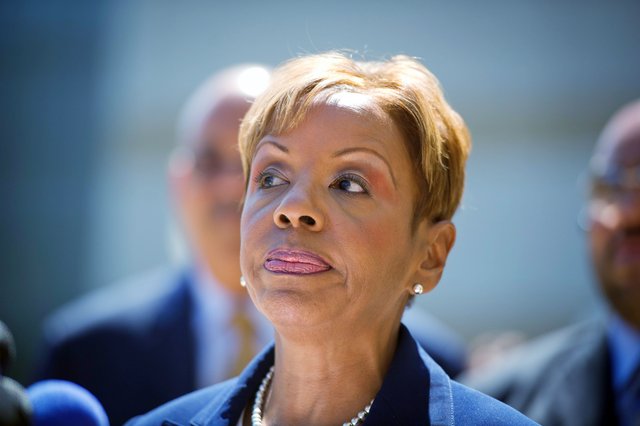
Leslie Johnson, fick.

Ethics Alarms recently coined the useful term fick to describe the especially shameless individual who violates society’s ethical norms openly, publicly and flagrantly, without remorse or apology. It takes a certain kind of anti-social arrogance to be a true fick, with the gold standard established by Michigan lottery winner Leroy Fick, a millionaire who happily continues to collect food stamps because of a statutory loophole despite howls of indignation from his neighbors in one of the most fiscally-challenged states in the nation.  Other ficks who have come to light include Hugh Heffner despicable ex-fiance Crystal Harris, who plotted to humiliate him at the altar to launch a reality show. Of course, there is  longstanding Octo-fick Nadya Suleman, and celebrity fick Charlie Sheen.

Now lucky Prince George’s County in Maryland has a bona fide fick of its own.  Continue reading

Ethics Quote of the Era: Thomas Jefferson and the Continental Congress of 1776

“We hold these truths to be self-evident, that all men are created equal, that they are endowed by their Creator with certain unalienable Rights, that among these are Life, Liberty and the pursuit of Happiness.–That to secure these rights, Governments are instituted among Men, deriving their just powers from the consent of the governed, –That whenever any Form of Government becomes destructive of these ends, it is the Right of the People to alter or to abolish it, and to institute new Government, laying its foundation on such principles and organizing its powers in such form, as to them shall seem most likely to effect their Safety and Happiness.”

—-The Declaration of Independence, authored by Thomas Jefferson, edited, ratified and signed by him,  Button Gwinnett, Lyman Hall, George Walton, William Hooper, Joseph Hewes, John Penn, Edward Rutledge, Thomas Heyward, Jr., Thomas Lynch, Jr., Arthur Middleton, John Hancock, Samuel Chase William Paca, Thomas Stone, Charles Carroll, George Wythe, Richard Henry Lee, Benjamin Harrison Thomas Nelson, Jr., Francis Lightfoot Lee, Carter Braxton, Robert Morris, Benjamin Rush, Benjamin Franklin, John Morton, George Clymer, James Smith, George Taylor, James Wilson, George Ross, Caesar Rodney, George Read, Thomas McKean, William Floyd, Philip Livingston, Francis Lewis, Lewis Morris, Richard Stockton, John Witherspoon, Francis Hopkinson, John Hart, Abraham Clark, Josiah Bartlett, William Whipple, Samuel Adams, John Adams, Robert Treat Paine, Elbridge Gerry, Stephen Hopkin,  William Ellery, Roger Sherman, Samuel Huntington, William Williams, Oliver Wolcott
Matthew Thornton.

Ethics Heroes all.

Thank you, guys.

(You can read the entire document that changed the world…undeniably for the better…here.)

Custer, Gettysburg, and the Seven Enabling Virtues

Sometimes the Enabling Virtues will save an army, and sometimes they’ll get you killed.

July 3, 1863 was the date of Pickett’s Charge, when Confederate General Robert E. Lee ordered a desperate Napoleonic advance against the Union line at Gettysburg in what has come to be a cautionary tale in human bravery and military hubris. The same day marked the zenith of the career of George Armstrong Custer, the head-strong, dashing cavalry officer who would later achieve both martyrdom and infamy as the unwitting architect of the massacre known as Custer’s Last Stand.

Custer’s heroics on the decisive final day of the Battle of Gettysburg teach their own lessons, historical and ethical. Since the East Calvary Field battle has been thoroughly overshadowed by the tragedy of Pickett’s Charge, it is little known and seldom mentioned. Yet the truth is that the battle, the war, and the United States as we know it may well have been saved that day by none other than undisciplined, reckless George Armstrong Custer. Continue reading

Comment of the Day: “The Washington Post Flunks Integrity, Conflicts, and Trustworthiness”

I do want to hold the line on featuring Comments of the Day that I think exemplify awful ethical reasoning, as opposed to those that are provocative and enlightening, to a minimum. This one, however, is too rich to ignore. It is the defense of an apparent journalist for the ethics-busting behavior of the Washington Post in the recent Jose Antonio Vargas incident using a dizzying array of alibis and rationalizations, including “they’re better than most,” “people don’t care,” “you have to cheat to stay in business,” “they are better than the alternative,” and others. It also resorts to the time-honored “who are you to judge?” and “you couldn’t do a better job.”

If this is typical of how journalists view their profession’s ethical obligations—and I think it is—the comment explains a lot. You can read my lin-by-line response after the original post. Here is the Comment of the Day, by okonheim: Continue reading

More Than a Fool: Bachmann, John Quincy Adams, and Wikipedia

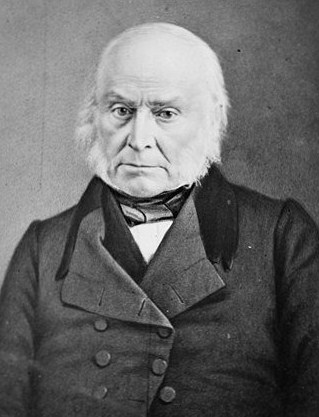
John Quincy Adams, Sixth President, slavery foe, and time-traveling Founding Father

I will strive a bit longer to avoid concluding that Michele Bachmann is as irresponsible, dishonest and dangerous as I strongly suspect that she is, though my determination may not last the time it takes to write this post. I won’t wait any longer to conclude that she is a fool.

In one short week since the controversy erupted over Fox News anchor Chris Wallace daring to ask her on the air, “Are you a flake?” and her subsequent botching of both her answer and the question’s fevered aftermath, she has stumbled into two flaky episodes. One—her mixing up Western movie star icon John Wayne with serial child killer John Wayne Gacy—was at least funny. The other, far less forgivable—her claim that the Founding Fathers “worked tirelessly until slavery was no more in the United States”—has signature significance. Continue reading

Ethics Quote of the Week: “Ethics Bob” Stone

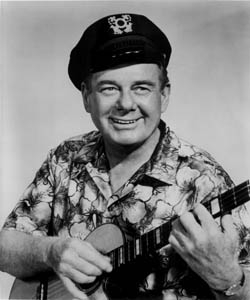
Is Joe Scarborough the new Arthur Godfrey, as in "nice guy" revealed as "unethical creep"?

“It’s always upsetting when one of your heroes turns out to be an unethical creep.”

Ethicist and business ethics professor Bob Stone on his blog “Ethics Bob,” expressing his disappointment in the conduct of MSNBC talk show host Joe Scarborough, who persuaded guest and colleague Mark Halperin to “go for it” when Halperin suggested that his description of President Obama’s press conference was not appropriate for public broadcast, and then did nothing to accept responsibility for the uproar when Halperin referred to Obama as “kind of a dick.” Halperin was suspended indefinitely by MSNBC, following a complaint from the White House.

Bob had expressed hope, in a comment to the Ethics Alarms criticism of Scarborough’s role in the incident, that Scarborough would do the right thing by the next day. He did not. And Bob is correct: this is proof positive that Scarborough is an unethical, cowardly creep.

What should “Morning Joe” have done? Several things: Continue reading

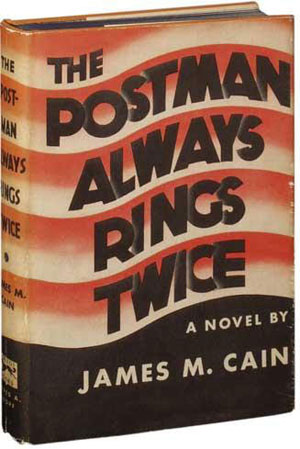
Strauss-Kahn and His Accuser, Victims of The Postman

The accuser of Dominique Strauss-Kahn, the former IMF head who has been devastated by her sensational rape charge, now admits that parts of her original account of the incident and an earlier accusation of rape she made to seek asylum in the U.S. were false.

The Altantic’s Megan McArdle sums up the Ethics Train Wreck thusly:

“There are two possibilities here, neither of them good:

1) A woman with an unsavory past, who has done desperate things to get out of terrible economic conditions, was raped by a prominent figure, and he’s going to get away with it because of her history.
2) A serial cad had consensual sex with a chambermaid, and she attempted to destroy him with a false rape allegation for personal gain. And because of the presumption that women don’t lie about rape, she has succeeded in destroying him . . . though not so much in the personal gain part. To quote Ray Donovan, ‘Where do I go to get my reputation back?'” Continue reading