Sunday Ethics Warm-Up, 3/22/2020: Fighting The Good Fight Against The Virus That Ate Ethics

Gmph!

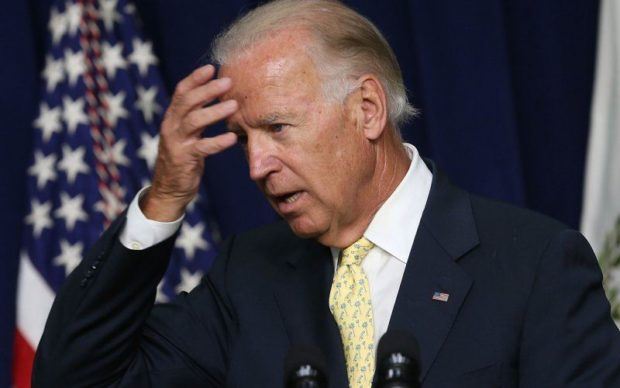
(That’s what “Good morning!” sounds like when you’re wearing a mask. At least when you’re wearing my mask: we couldn’t find any of the regular kind, so the best I can do is my “Zombie Werewolf” mask (the above picture is the closest I could find). My wife swears she’ll divorce me if i wear it outside…)

1. Undermine the leader, at all costs. Despite growing evidence that non-deranged Americans are, as they usually do, rallying behind their elected leader in a national crisis (because it is only sensible and patriotic to do so), the mainstream media, all-in as it has been since November 2016 in its effort to damage faith and trust in the President and assist the Democratic party in regaining power, continues to follow the game plan.

For example, in today’s Sunday Times, we have the headline “In This Crisis, U.S. Sheds Its Role As Global Leader,” complaining that even as it promises billions of dollars in aid to Americans as they are trapped at home and locked out of their jobs, businesses, and income, the U.S. should be financing the response to the Wuhan virus around the world. (The next critical piece will be about how the President allowed the debt to explode.) On the front page, we have the mocking headline (over an article by perpetual anti-Trump reporter Maggie Haberman, “Trump Is Faced With Crisis Too Big for Big Talk.” The news in  page 11 story is apparently Republican hypocrisy: “GOP, Once United Against Social Programs, Mobilizes to Push for Cash Relief,” as if urgent, once in a century emergency measures constitute a change in philosophy rather than responsible and responsive leadership. On the op-ed pages we get this despicable headline: “America, Not Trump, Will Save America,” continuing the theme of Democratic rejection and denial of the fact that the President is America, and they work together, or they don’t work. This is, of course, necessary preparation for the mews media’s future narrative that if (when) the United States emerges from the current crisis strong and vital, it will be in spite of the President’s efforts, not because of them. These people are willing to weaken our community when it i most important that we be united, because they believe that destroying the Trump Presidency is the prime directive.

These are terrible, unethical people, not because of what they believe, but because of what they are doing, and have been doing. Continue reading

Ethics Train Wreck Analysis: The Richard Jewell Case

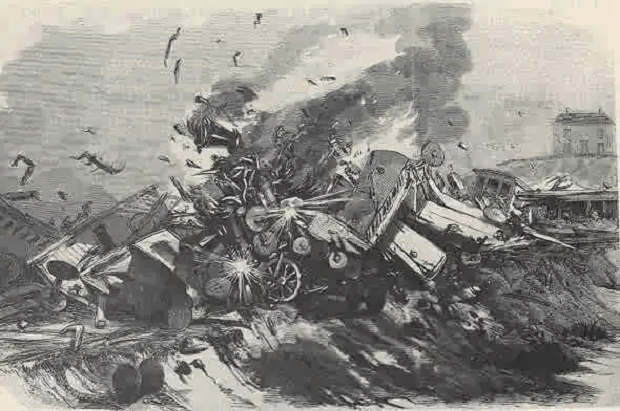
“Richard Jewell,” Clint Eastwood’s excellent but much maligned film about a historical episode with many ethics twists and turns, is extremely accurate and fair in all respects, except for the glaring exception of the screenwriter  Billy Ray’s representation that reporter Kathy Scruggs obtained the information that Jewell was under suspicion by the FBI in exchange for one night stand with the agency’s lead investigator. This was the point where the Richard Jewell Ethics Train Wreck of 1996 acquired a car containing the 2019 movie “Richard Jewell.”

Let’s look at those other cars.

I. Jewell

Jewell was a socially awkward, lonely, obese man who lived with his mother. He was in many ways a stereotypical misfit with low  self-esteem, who developed ambitions about becoming a law enforcement officer, a job that would would provide him with the respect and power that he lacked and wanted. The film begins with Jewell’s stint as an office supply clerk in a small public law firm, where he becomes friends with attorney Watson Bryant. Jewell quits to pursue his dream of becoming a law enforcement officer, and Bryant, in saying good-bye, asks his friend to promise that if he ever acquires the authority he seeks, he won’t become a jerk, and abuse it.

This was a real life conversation. Bryant recognized that Jewell was a border-line Asperger’s sufferer, whether or not he knew the name or the clinical condition, and exactly the kind of personality who should never be given a shield and a gun.

Jewell took a job as a campus security officer at Piedmont College, and rapidly realized Watson Bryant’s worst fears by reacting to his authority by abusing it, being over-zealous and generating an unusual number of complaints from students. Jewell was fired, but the need for security personnel at the upcoming Atlanta Olympics gave Jewell another chance at some authority at least. He probably shouldn’t have had such a chance. Jewell was not a man who should have been in the security field or the law enforcement field; his judgment was poor, and his emotional problems made him a bad risk.

Thus the conditions for the ethics train wreck were put in place. It was up to moral luck whether hiring Richard Jewell would turn out to be a disaster, or a  fortunate near miss. Instead, it turned out to be something else entirely, a classic example of a bad decision having a good result—at least for a while.

2. The Bomb

In the early morning of July 27, 1996, Jewell, now working in Atlanta’s Centennial Park as part of the Summer Olympics security force, noticed an abandoned backpack by a bench. Over-zealous, officious and a fanatic about following procedure, Jewell insisted on reporting the pack as a “suspicious package,” despite the chiding of his colleagues, who wanted to take it to Lost and Found. If, as was overwhelmingly likely, the backpack had been just a backpack, Jewell probably would have been mocked. But again moral luck took a hand. He was right. It was a bomb. Jewell and other officers began clearing the area, and the bomb went off, killing one victim, Alice Hawthorne, and wounding many, still  far less serious damage than what might have occurred had Jewell not been so scrupulous in his discharge of his duties.

3. The Hero, the Scapegoats, and the Tip
Continue reading

How I Boarded The “Richard Jewell” Ethics Train Wreck

It is unusual to see an ethics train wreck continue to  roll along to the extent that it affects the movie about the ethics train wreck, but that was what happened with the Richard Jewell saga. Remember the definition of an ethics train wreck: an episode in which virtually everyone who becomes involved in it, however tangentially, becomes entangled in ethics mistakes and misconduct. The  “Richard Jewell” Ethics Train Wreck (or the Richard Jewell Ethics Train Wreck) even yanked me on board.

I’ve already written about the film, directed by Clint Eastwood and a 2019 holiday bomb (no pun intended). My focus then was on the single unethical feature of the screenplay, its unfair portrayal of the real-life Atlanta-Constitution reporter, the late Kathy Scruggs, who broke the FBI leak that the security guard who had become a national celebrity by detecting the deadly pipe bomb that had exploded at the 1996 Atlanta Olympics  was suspected of making the bomb himself. Though film reviewers usually register few rejections when films smear the deceased in pursuit of a more compelling narrative, “Richard Jewell’s” claim that Scruggs traded sex for the leak walked into the #MeToo buzzsaw, and on that basis alone, Clint’s movie was trashed  by reviewers and pundits alike.

Me Too, and I hadn’t seen it. I wrote in part,

I strongly doubt the average viewer passed on the film because it may have been unfair to a dead reporter. Who had the genius idea that releasing a film about the press’s abuse of a strange, sad, fat man played by an unknown actor would be a Christmas season hit? I had no interest in seeing the movie, and I’m an admirer of Eastwood and will cheer on any further proof of how rotten our journalism has become, but why pay to see the news media falsely try to destroy a security guard in 1996 when the same institution has been trying to destroy the President of the United States for three years?… So the news media was incompetent and vicious to Richard Jewell? That’s supposed to get me to the movie theater?

Nevertheless, let me be clear: I hate what the movie did to Kathy Scruggs, just as I detest it every time an individuals can’t defend themselves are lied about in a movie, misleading audiences and scarring their reputations….

Unless Eastwood had strong evidence that the reporter was trading sex for information, he should not have used her name. He owes the Scruggs family an apology, and I’m glad his movie is tanking.

Gee, the seats on the “Richard Jewell” Ethics Train Wreck are so comfy, and the fare on the snack car is excellent! Continue reading

No, There’s Nothing Unethical About Performing Holograms Of Dead Singers…

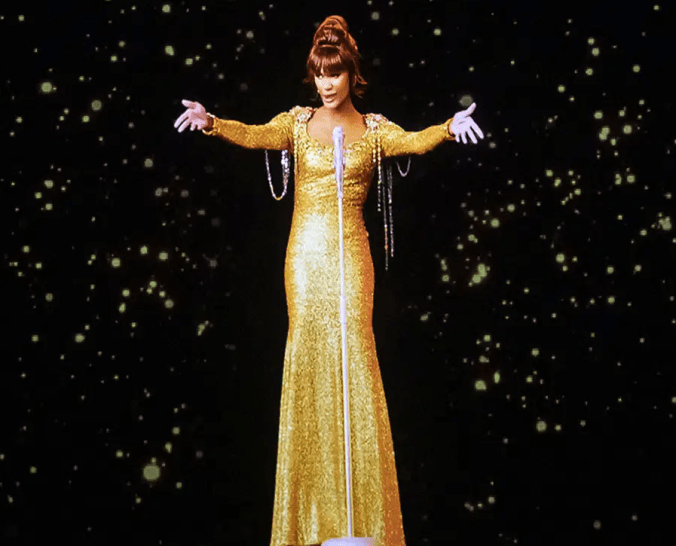
…as long as they don’t materially misrepresent the performer or the performance. They may be icky, but they aren’t unethical. This is in ethical contrast with the Ethics Alarms position on zombie performers in films, as examined here several times, most recently upon the unveiling of zombie James Dean.

The issue has arisen because a holograph of Whitney Houston, mercifully in a form before her physical and vocal decline due to drug abuse, is touring the country. Here’s a review of one of the performances; Zombie Whitney will make her debut in the US soon. Big plus: she doesn’t have to worry about the Wuhan virus, just holograms of the Wuhan virus. Fans have been less than ecstatic, as much because of the quality of the image as the ickiness of the concept. Here’s part of one review: Continue reading

“This Is Chris. Like So Many Journalists, He Suffers From Crippling Trump Derangement Syndrome, And Researchers Are Desperately Searching For The Cure. Won’t You Help?”

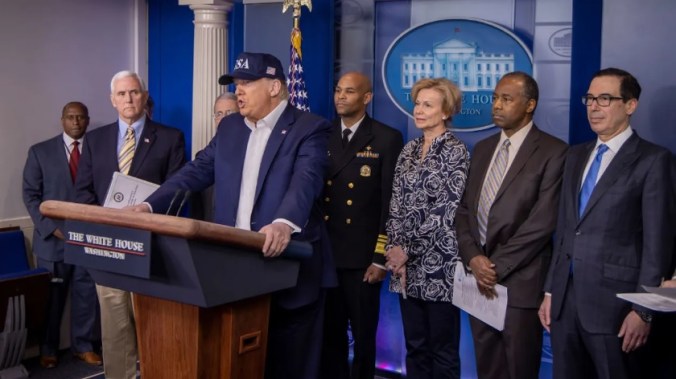
President  Trump addressed the nation once again  this morning on the latest developments with the Wuhan virus pandemic. At the White House briefing,   the President brought the public up to date on additional measures the federal government is taking to minimize the illness’s spread. He also said that he had taken a COVID-19 test himself after being near to at least one individual who tested positive for the illness. Ann Althouse, who tries mightily to be fair to Trump, opined that the conference was “quite good…in content and tone.” I saw the video, and agree: it was certainly the best of his briefings on the virus so far.

But you see, Los Angeles Time White House reporter  Chris Megerian couldn’t report that the President was clear, and that matters seemed as well in hand as possible. Like—what’s your guess, 90%? 95%?  99%?— of journalists in the mainstream media, Megarian entered the room presuming that the President would fall short, and was determined to find something in his words or demeanor that his readers would view in a negative light, with his professional assistance, of course. So what did he find?

This… Continue reading

No, It’s Not “Cheating” Or Unfair For The DNC To Keep Tulsi Gabbard Out Of Upcoming Debates.

The conservative media is trolling the Democrats over their likely exclusion of Hawaii Rep. Tulsi Gabbard from the upcoming Democratic candidates debates. They say that since Gabbard won a single delegate in the primary election in American Samoa (for heaven’s sake), this should get her an invitation to the next televised debate under the rules set out by the DNC. (I haven’t checked the rules, so I’m assuming they are being accurately represented. Since I don’t believe it matters what the rules say, I’m not going to take the time to check.)

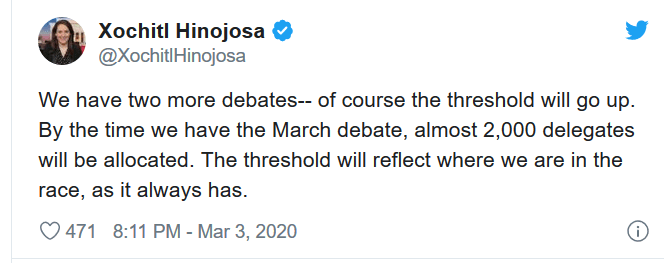
DNC communications director Xochitl Hinojosa squished Tulsi’s hopes with this tweet:

Continue reading

“Thank God It’s Friday!” Ethics Amen, 2/28/2020: Will Women Give Up Sports? Does Joe Biden Know What “Arrest” Means? Do Kids Really Think Sitting In The Car Is Fun?, And Other Important Questions…

Amen to THAT…

1. Conservatism and nostalgia gone nuts...In the category of posts I don’t understand at all, right-ward blogger/pundit Megan Fox put up something called “8 Fun (and Possibly Dangerous) Activities Enjoyed by Past Generations That Today’s Kids Will Never Experience.” She said in her introduction of the paean to the good ol’ days, “Children are more coddled and protected than ever in 2019. For kids, it’s oppressive. I know mine listen to my stories of summers full of freedom and independence, running around the neighborhood all day until dark, with wide-eyed envy. These days, kids are hardly free to do anything we could back in generations past.”

But look what she chose…

  • “Play all day with no adult supervision, roaming neighborhoods and friends’ houses until dark”

We let out son do this, and I would do it today. There’s nothing stopping you. I’d strongly suggest waiting until the child is at least 10, though.

  • Ride in cars without seatbelts.

I don’t see how anyone can be nostalgic about something that got kids killed, abd what was so much fun about riding without seat belts anyway?

  • “The joy of phone calls” 

Okay, texting is more popular. But I see kids on the phone all the time (A school is almost next to our house.). If a kid really thinks phoning is a “joy,’ nothing is stopping her.

  • ” Lawn darts, rusty slides, dangerous park equipment”

Says Fox,

“At our neighborhood park, the slide was so high that it would make your stomach drop half way up the ladder…..  Nobody’s mommy came with them to the park. It was a sanctuary…Parks have been sanitized and de-riskified with padded ground and plastic, twisty slides that are so slow it seems pointless to even use them….Everything is super safe, and yet everyone’s mother is hovering. It makes no sense.”

There’s also a park just like the one she described within view of our house, yes, with moms (actually nannies) all around. The kids there seem to be having a lot of fun anyway.  All I remember from our local playground was coming home injured, sometimes badly. The only time I was ever beat up as a child was at that playground, because there were no adults around. What fun!

  • Hanging out at the mall in packs of 11- to 15-year-olds

Good riddance.

  • Buying cigarettes for a family member

What? Why is this  on the list?

  • Sitting in the car for up to an hour while Mom grocery shops

This is also a “What?” My parents never did that to us, and I don’t know why any responsible parent would. “Oh yes, we all did this,” says Fox.  “Back when I was a kid it was completely normal to have a parking lot full of kids in cars waiting for parents. No one thought this was a crime or weird at all. And we loved it!” She must be from Mars.

  • Babysitting

Babysitting was (and still is) a way to make money. Anyone who thought it was “fun” was weird.

Posts like this are among the reasons why conservatives have a bad reputation. Continue reading

Oh-oh…Ethics Quote Of The Week: Joe Biden

“My name’s Joe Biden, I’m a Democratic candidate for the United States senate—if you like what you see, help out, if not, vote for the other Biden”

Democratic candidate and gaffe grandmaster Joe Biden, speaking today, before tonight’s South Carolina debate,  to a South Carolina campaign crowd.

It isn’t that Biden’s statement has anything to do with ethics, whatever he was saying.  It’s that his bizarre pronouncement raises an immediate ethics issue. If we were playing “Ethics Password,” the announcer would say in hushed tones, “The password is fairness.” What is fair to Biden here, and how can I get past my biases to decide? I have believed for more than a decade that Biden is an idiot-savant with surprising political skills; I don’t believe you can say ridiculous and nonsensical things as often as he has for so long and not be inherently untrustworthy and more than a little addled. I also have found his demeanor, appearance and increasing tendency to speak in  gibberish of late evidence of precipitously declining faculties from a height that was never all that impressive to begin with.

And yet I am in favor of  giving any politician, disk jockey or improv comic the benefit of the doubt, because I know the perils of speaking extemporaneously from first-hand experience. Thus the question is, how eager should we be to shrug off this latest jaw-dropper from Biden as the natural and forgivable result of flying around the country and its inevitable “If this is Tuesday, it must be Saginaw” confusion? Is it just a particularly egregious example of wacky old Joe being wacky old Joe, and thus an occurrence where the Julie Principle is in play, or, in the worst case, is this latest head-scratcher so close to the former VP showing up nude with a duck on his head that an intervention is called for?

Help me out here.


Introducing Rationalization 38B: Excessive Accountability, or “He’s Suffered Enough.”

This is a new 38B, requiring the old one, Joe Biden’s Inoculation or “I don’t deny that I do this!”, to be relabeled 38C. I was tempted to call it “The Lost Rationalization,” because while Ethics Alarms has frequently rejected the argument that he, she or they have “suffered enough,” and even called it a rationalization, it never made its way onto the Rationalizations List.

“He’s suffered enough” is a very close relative of #38 A.“Mercy For Miscreants”:

The theory behind this sub-rationalization is that it is only fair to assign a criticism quota to groups and individuals: at a certain point, no more criticism is allowed, because nobody should have to be criticized that much. It is so darn mean to keep heaping abuse on someone, even if they deserve it.

But while 38 A focuses on criticism, 38 B is about limiting punishment. The “he’s suffered enough” rationalization has arisen most notably in the tragic cases where a parent has negligently allowed an infant or small child to perish in a locked car. Local prosecution of such individuals is strikingly inconsistent, and when no legal consequences follow, the justification is usually Rationalization 38 B.

What I wrote the first time I analyzed these cases, in the 2010 post  Ethics, Punishment and the Dead Child in the Back Seat thatI also quoted extensively here, encompassed a thorough description of the rationalization. (I also re-posted yet another essay on this topic from 2014 just last July).

Upon checking, I discovered that in yet another post from 2012, I referred to “he’s suffered enough” as a common rationalization without putting it in the list. Reviewing that post and the earlier one, I have arrived at this description of the latest rationalization. Continue reading

Comment Of The Day: “Ethics Quiz: Plot E”

The quiz about the American military cemetery of shame in France provoked many varying opinions, none more eloquently expressed than this Comment of the Day by JutGory.

I only post quizzes when I am at least somewhat unsure of the ethics call. My position in the post was in response to the blogger’s argument in favor of giving the graves headstones, which I felt was unpersuasive. I’m not sure Jut has changed my mind, but his points are much, much better.

Here is JutGory’s Comment of the Day on the post, “Ethics Quiz: Plot E”: Continue reading