Regarding Felicity Huffman’s Slap-On-The-Wrist

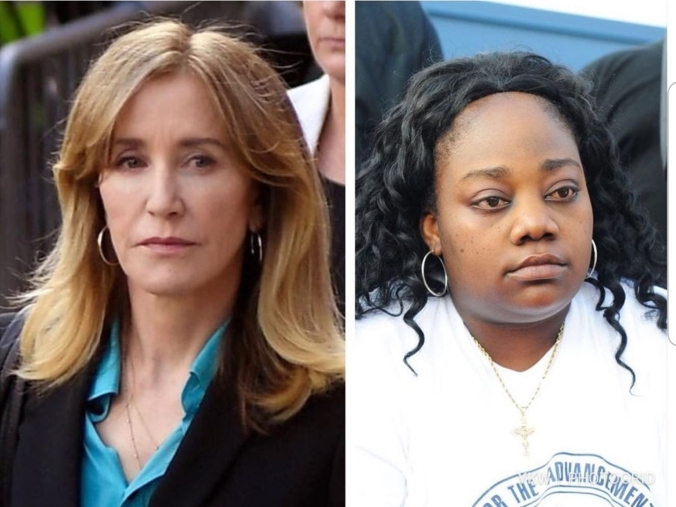
Before actress Felicity Huffman was sentenced for her participation in the rigged college admissions scandal, also known as “Varsity Blues”, the leftist website Salon had already pronounced her treatment by the justice system as racist. It said in part,

Back in 2011 Tanya McDowell was homeless and living in her van. She wanted her five-year-old son to receive a quality education, so she enrolled him in Brookside Elementary of the Norwalk School District. He was later kicked out due to a residency issue, so he transferred to Bridgeport schools.

Police investigated McDowell and charged her with fraud. A year later she pleaded guilty to first-degree larceny and conspiracy to commit first-degree larceny; for these offenses, she received a five-year sentence. Before McDowell started serving it out, she was charged with selling narcotics to an undercover police officer, an offense that killed her community support. McDowell was ultimately given 12 years, to be suspended after she served five, and followed by five years of probation; the narcotic sentence to run concurrently with a five-year sentence she had already received in the Norwalk school case. All of this story, from the over-policing of this mother to the severity of her sentence, along with everything she did, was obviously driven by poverty, which remains synonymous with “guilty” in our lopsided system of so-called justice.

On the other hand, you have a person like Felicity Huffman, who enjoys the many privileges that come with being a rich “Desperate Housewives” star…and having the resources to expose her daughter to educational advantages that McDowell may not have even been able to dream of: tutoring, unlimited books, technology, a safe learning environment, and even an SAT specialist who helps struggling kids obtain high scores. …[T]he actress was arrested in March on mail fraud and conspiracy charges as an outcome of the FBI’s Operation Varsity Blues investigation, and pleaded guilty to mail fraud, after paying $15,000 to allegedly rig her daughter’s SAT scores. Huffman is scheduled to be sentenced in Boston on Friday — for one month in prison, if the federal prosecutors’ recommendation is followed. Huffman’s attorneys have instead asked for a year’s probation, plus community service and a $20,000 fine.

Let’s begin with the fact that this is unethical and dishonest advocacy. Searching for an admittedly terrible prosecution from eight years ago  to contrast with Huffman’s case is contrived racism. The fact that the mother was later legitimately charged with selling narcotics renders the comparison a stretch at best.  In the absence of sufficient numbers of cases across the country to make a valid generalization, Salon’s assumptions are just cheap muckraking.

Stipulated: charging McDowell with larceny for trying to sneak her child into a better school district was a cruel and unethical prosecution; charging her with fraud and seeking a significant punishment was not. The idea was to discourage similar deceptions, no matter how well-intentioned they were.  That is a valid law enforcement objective, and an important one.

What Huffman’s attorneys proposed as appropriate punishment was irrelevant to Salon’s thesis. Their job is to get the actress as light a sentence as possible, and if possible, no sentence at all. We are not told what McDowell’s attorney’s argued on her behalf, because it is also irrelevant, but, I suspect, it was omitted because their recommendations were not that different from those of Huffman’s case. Continue reading

Let’s Play “Desperate, Gallant, Or Offensive!” Today’s Contestant: Actor William H. Macy

Welcome, Ethics Alarms readers! It’s time for that exciting game show, “Desperate, Gallant, Or Offensive!,” where the audience judges whether its celebrity contestants have stayed within ethical boundaries!

Today’s contestant is celebrated actor William H. Macy, not to be confused with Bill Macy, who played Bea Arthur’s long-suffering husband on “Maude.” William H is one of the most honored and respected, not to mention versatile American actors. He has won two Emmy Awards, four Screen Actors Guild Awards, and an Academy Award nomination for Best Supporting Actor for his memorable performance in Fargo.” Since 2011, he has played Frank Gallagher, the main character in the Showtime adaptation of the British television series “Shameless.”  Most relevant now, however, is his 22 year marriage to actress Felicity Huffman, who is about to be sentenced for her participation in the so-called “Varsity Blues” college admission scandal.

Ready to play? All right! Here is what loving husband William wrote to the judge preparing to sentence Huffman: Continue reading

When Absolutism Must Prevail: “Choice Of Evils”

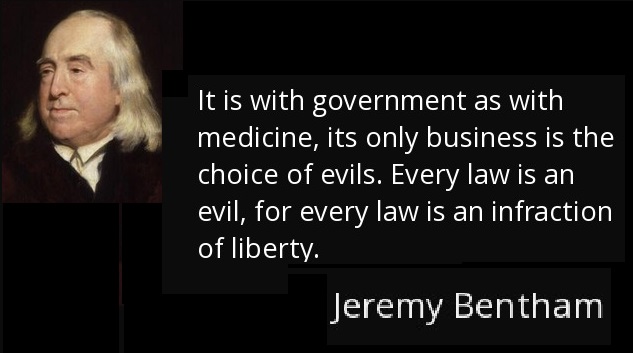
“Choice of Evils,” taken from the utilitarian philospher Jeremy Bentham’s (1748-1832)  famous quote above, is an ethically rich “Law and Order” episode from 2006 that I recent watched again. Assistant DA Jack McCoy decides to prosecute a mother for murder after she admits to shooting her homeless, psychopath son. Her defense: she did it to protect the community, or, in cruder terms, he needed killing. She had met his girlfriend who was pregnant,  and told her that her son would eventually kill her and the baby if she didn’t get away.

The mother explained that her first husband and the dead man’s father is in prison for murder, and like his son. lacked empathy or a conscience. She related how her son displayed all the traits of a psychopath growing up, such as torturing and killing animals. In sympathy for her plight, McCoy offered the mother a manslaughter plea and short prison time, but she turned the deal down, adamant that she hd done nothing wrong.  She was then charged with second-degree murder (that’s also generous, since the killing was premeditated), and the trial began.

The problem of how to deal with “bad seeds” is a  societal dilemma of long standing, and one without a satisfactory solution. It is easy to sympathize with the mother’s plight, but a society that approves of preemptive executions when an individual  seems likely to harm someone before he or she actually does is on a fast track to chaos; it’s not even a slippery slope. Once again, the seductive appeal of pre-crime measures has to be resisted decisively, or individual rights and justice mean nothing.

Does society have to wait until a loudly ticking time bomb goes off? If it’s a human time bomb, absolutely, and no exceptions. Sometimes, that metaphorical bomb turns out to be a dud, and every human being has the same right to be judged on the harm, if any, he or she actually does rather than the harm some feel they are certain to do.

In the episode, it is discovered mid-trial that the son had in fact murdered a man, which his mother did not know at the time she murdered him. McCoy argued to the judge that this was irrelevant to the case and likely to mislead the jury. He was correct. The mother’s act was exactly as illegal and intolerable whether her son was a likely killer or a proven one. The discovered homicide is an example of moral luck: it changes how the mother’s act is perceived, but doesn’t change the ethical analysis at all.

In the end, the jury votes guilty, and sends the mother to prison for 25 years. This is because she admits on the stand that her current husband had threatened to leave her if her son moved back into their home, which he announced he would soon do. Thus the preemptive murder began to look less like an altruistic act to spare society, and more like one for the mother’s personal benefit.

Again, it shouldn’t have mattered. Killing a human being based on probabilities and presumed future harm to society can never be deemed just or tolerable.

Never.

The Cherokee Nation Believes That It Should Have A Representative In Congress. (It Should)

…as long as it isn’t Elizabeth Warren, of course.

Citing treaties with the U.S. government signed in the 18th and 19th centuries, the new elected chief the Cherokee Nation is insisting that the tribe get a delegate to Congress for the first time in history.

“These treaties are sacred. They mean something. There’s no expiration date on them,” said Chuck Hoskin Jr., chief of the Cherokee Nation. What I’m asking is for the government of the United States to keep its word.”

You mean, unlike with all those other treaties the U.S. signed with Native American tribes? What’s this? Have you no respect for precedent, man?

Charles Gourd, the director of the Cherokee National Historical Society, told the news media that he and others had wondered  why no Cherokee Nation delegate had ever been seated in Congress despite assurances to that effect. He can’t be serious! If a delegate were finally seated, he and others might then wonder why that provision of a treaty was honored while so many others were breached or ignored at will.

The right for the Cherokee to send a “deputy” to represent them in the United States Congress was first assured by the Treaty of Hopewell of 1785, which defined Cherokee borders and promised certain protections in return. The right to send a “delegate”  to the House of Representatives was specified affirmed in the 1835 Treaty of New Echota. The House has several nonvoting delegates,  representing Puerto Rico, the District of Columbia, Guam, American Samoa, the Northern Mariana Islands and the United States Virgin Islands. Continue reading

Sad Saturday Ethics Distraction, 8/24/2019: The Let Sean Spicer Make A Fool of Himself If He Wants To Edition

I hope you are feeling much happier than I am today.

I just returned from a memorial gathering for a very dear friend’s wife of 37 years, who died suddenly, painfully, and based on what I have heard, unnecessarily at the end of July. One positive take-away from the event: People really aren’t so bad. My friend was stunned and touched beyond measure by the turn-out, with nearly 200 people attending just to say good-bye to her and express their love and support for him. Some traveled great distances,  interrupted vacations, or made it despite illness and handicaps.  I saw friends, former colleagues and acquaintances that had been out of this region for decades, but all it took was an email informing them that their friend, who  is one of those rare people who is always there to render help and support, now needed their support himself.

Gee, those endings of “It’s A Wonderful Life” and “Easter Parade” aren’t as corny as I thought...

1. What a surprise! Only 35% of those polled support impeaching a President who has done nothing impeachable! Choose: Either the Democrats and the resistance have been lying about there being real and substantive high crimes and misdemeanors in order to sabotage the elected President, or there are such offenses, and they don’t have the guts to do their Constitutional duty and act to remove a President who is the existential threat to the nation they have claimed he is since, uh, before he was sworn in, somehow.

The same poll says that 57% would prefer someone else as President. That number is astoundingly low. The Someone Else dude is terrific! What a great President he’d be; I can’t fathom why he’s never made it! I know I sure wish he was President;  I’ve wished he were President ever since Ike left the White House.

Today’s quote from a “someone else” who I would rather set my face on fire than see have any power whatsoever: Bernie Sanders, who, while bloviating that “Climate change is an existential threat to the entire country and the entire world and we must be extraordinarily aggressive,” proposed an impossible, bankrupting, irresponsible 16 trillion dollar plan to “fix” what he doesn’t personally understand, couldn’t explain with a gun to his head, cannot say with certainty how it can be addressed effectively, and could be stumped by a cross examination by any climate change skeptic with a science degree. Bernie doesn’t even understand political science, and that was his college major. Proposing spending trillions of dollars on something you don’t understand is unethical. Isn’t that obvious? Continue reading

A Futile Call For Fairness And Integrity From Senator McConnell

I know this is a waste of time and words, but here goes nothin’…

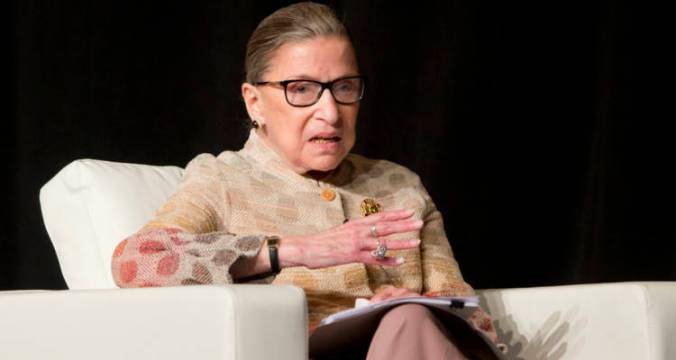
Yesterday we got the news that Justice Ruth Bader Ginsberg, 86 and already being treated for enough maladies to kill a normal human being  half her age, has pancreatic cancer. Treatment is going well, we are told, and Ginsberg isn’t even cutting back on her schedule.

Nonetheless, the proverbial writing is on the wall. Sheer will only can accomplish so much. If I participated in “dead pools,” Justice Ginsberg would be at the top of my list, even ahead of soon to be 103-year-old Kirk Douglas. Though she is apparently determined to hang on to her SCOTUS seat if it means that she will finish her tenure in a box that signals “yes” and “no” like  poor Captain Pike in that “Star Trek” episode, I would be stunned if there isn’t a vacancy on the court in the near future. That will mean that President Trump will have an opportunity to appoint a conservative justice to replace the most liberal voice on the current court, a result that will spark panic from the Left and delirious joy from the Right. If this happens after January, 2020, it will also create an integrity test for Mitch McConnell.

That is, it should.

When Antonin Scalia died on February 16, 2016, President Obama appointed moderate liberal judge Merrick Garland to replace him. McConnell, however, the GOP Senate Majority Leader, announced that the Senate would not consider the nomination, debate it, or vote on it. He concocted a rule that when a Supreme Court vacancy occurs in the last year of a Presidential term, it should not be filled until after the November Presidential election. The supposed justification for this was that SenatorJ oe Biden had once made a similar suggestion. Basing any policy or rationale on what Joe Biden says is like using the spontaneous utterances of Tourettes sufferers as life guidance, but never mind: Mitch was gambling that a SCOTUS vacancy would bring more Republicans to the polls than Democrats, and that the Garland nomination would eventually be moot.

The gambit was legal but unethical, but then, that’s Mitch. It was also stupid: Garland was no Scalia, but he was far more moderate than some of Obama’s other options, and if Hillary Clinton had won, as looked like a sure thing in January, she was likely to nominate a far more extreme progressive judge. But in the manner that has hooked suckers and created gambling addicts for centuries, Mitch’s long-shot bet paid off. Trump won; Neil Gorsuch replaced Scalia, and Merrick Garland joined Samual Tilden in the “What If?” Hall of Fame.

If RBG leaves the Court or this vale of tears in 2020, however, Mitch should find himself hoisted by his own petard. By his own words, that new opening on the Court should not be filled by President Trump’s choice unless Trump  is re-elected in November; the public should have the opportunity to include the composition of the Supreme in their calculations regarding who to vote for. So declareth Mitchi n 2016, as progressives and Democrats screamed and ripped their garments,

Having created a principle and a precedent, Senator McConnell should stick to it. The problem wasn’t that his theory in 2016 was indefensible in theory–it is.  The problem just that it was disingenuous. Mitch wasn’t interested in fairness or democracy, just expedient politics. Thus it comes as no surprise that McConnell has told his party members that if there is a Supreme Court vacancy, he will move to confirm a conservative nominee so fast it will break the sound barrier.

He should not, however. Doing so may be good old fashioned hard-ball politics, but it will also be a lost opportunity to start repairing a broken legislative branch that McConnell played a major part in breaking. Such a cynical reversal of his own stated “principles” will also make the public less trusting than they already are of the motives, honesty and integrity, not just of Mitch, but of the their elected officials and government. Our democracy can’t take much more distrust and cyncism. Democracy breathes trust.

Who knows? Maybe Mitch will hit the jackpot a second time. Maybe the delay will backfire, with more outraged Democrats being attracted to the polls than activated conservatives. Nevertheless, Mitch McConnell has an ethical obligation to treat the next SCOTUS vacancy during the final year of a Presidential term exactly like he did the last one, in the name of integrity, fairness, process, consistency, trust, and the health of our Constitutional system.

Sexual Harassment, Cancellation Culture, Anonymous Accusers, And Placido Domingo

A report last week revealed that nine women accuse towering opera figure Placido Domingo of sexual harassment.  None of the accusations have been investiaged or substantiated, and only one of them isn’t anonymous. Yet two American institutions, the Philadelphia Orchestra and the San Francisco Opera, immediately canceled their upcoming concerts with him, giving the now-familiar “safe environments” explanation. None of. Domingo’s many upcoming scheduled performances in Europe were canceled, however, as sponsors took what the New York Times calls  “a wait-and-see approach,” or what used to be known in this country as “Let’s not punish someone based on unsubstantiated  accusations alone.” Or fairness. Due process. The Golden Rule.

There are countervailing factors pulling every which way. As I understand it, #MeToo  and “Time’s Up” insists that female accusers must be believed, unless the accused is the black, Democratic Party’s Lieutenant Governor of Virginia, or the harassment is caught on camera repeatedly, as in the case of the Democratic Party front-runner for President. In the arts, these allegations have had mixed effect. Conductor James Levine has not performed in public since he was fired by the Metropolitan Opera last year after accusations of sexually abusive and harassing conduct were substantiated in an investigation, but when Pixar chief and creative muse John Lasseter was fired for being a serial hugger (rather like that Democratic Party front-runner) he was rapidly snapped up by a rival studio that gave him as much power and more money. Go figure.

There is the anonymous factor: it is my long held position that an anonymous accusation relating to the workplace should be regarded as no accusation at all, meaning that there has been one allegation of sexual harassment against Domingo. An accused individual cannot address claims when he doesn’t know their source or facts. I have been the target of false anonymous accusations—not of harassment—in my career, and as a manager in various businesses and associations, I told staff that unless they were willing to go on the record with an accusation of wrongdoing, I didn’t want to hear it. It is too easy to destroy careers and reputations with false accusations with no accountability attached.

The other issue is the multiple accusation factor. In sexual abuse and harassment, there are no one-time offenders unless there has been a massive miscommunication. The typical scenario is that a single accusation triggers several, often many, more with near identical facts. This is why I did not believe Anita Hill and Dr. Blasey-Ford, and why I did believe Bill Cosby’s many accusers.

Timing is also important. Ancient accusations of sexual misconduct—I would say anything more than five years old is dubious—arriving after memories have faded, evidence has vanished and seemingly timed to do maximum damage to the accused should be treated with skepticism and a presumption of  bad will, especially when the accused is a public figure.

And yet… Continue reading

Ethics Quiz: The Firing Of Officer Daniel Pantaleo

The New York Police Department has finally fired Daniel Pantaleo, the officer shown on video with his arm bent around the neck of 43-year-old Eric Garner just before Garner died  after being tackled by five officers.  A departmental disciplinary judge recommended the action, and Pantaleo was suspended from duty pending further review.

“In this case the unintended consequence of Mr. Garner’s death must have a consequence of its own,” said O’Neill. “It is clear that Daniel Pantaleo can no longer effectively serve as a New York City police officer.” He also added, “If I was still a cop, I’d probably be mad at me.”

The Commissioner kept digging. Continue reading

Ethics Quiz (And Poll): The Cop And The KKK Application

Either our nation is committed to the principles of freedom of thought, speech, expression and association,  or it is not.

With that preface, here is the kind of gray area, bizarre fact pattern controversy that puts ethical analysis to the test.

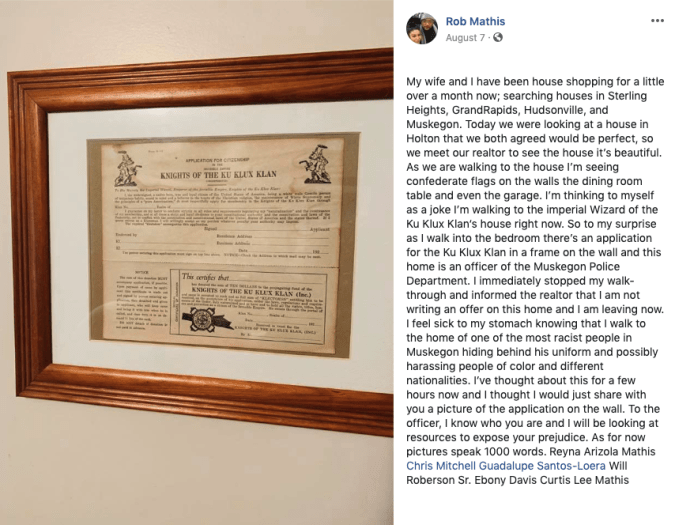
In the Muskegon County (Michigan) town of Holton, African-American  Rob Mathias, accompanied by his wife and children, was walking through the home of Charles Anderson, a local police officer, with the intent of possibly purchasing it.  Then he saw a framed Klu Klux Klan application hanging on a wall, as well as several Confederate flags. He and his family immediately left the property.

Later he posted a photograph of the KKK application on Facebook, (above) explaining later that he felt it was something the public had a right to know about, especially if the officer had a history of questionable interactions with African Americans.  Mathias wrote that Anderson “was one of the most racist people” in the community and “hiding behind his uniform.” The post was also personal and threatening, concluding with “I know who you are and will be looking for resources to expose your prejudice.”

The Facebook post triggered an internal investigation of Anderson, and he was placed on administrative leave. “We do take this sort of issue, seriously, and we are working hard to understand if/how this may impact his ability to safely and fairly police our community,” Muskegon City Manager Frank Peterson reporters. Muskegon County NAACP President Eric Hood piled on, saying, “We want a thorough investigation to be sure that when he goes out there and puts on that uniform and performs his duties as an officer that he’s being fair and impartial.”

“I’m still disgusted by it. I’m hurt,” said Mathias “You can’t serve your community and be a racist. You can’t. There are people of all different colors, of all different nationalities … out there that you have to serve and protect. You can’t just protect one group of people.”

 Rachel Anderson, the officer’s wife, told reporters that her husband is not and never was a KKK member. She said he was a collector, and called the uproar a misunderstanding.

Mathias’ wife said in rebuttal,

“I like antiques, but I collect things that I represent. You can go in my basement, we have Detroit Lions, Red Wings, Michigan stuff, everything we associate ourselves with.So why would you collect something you don’t associate with yourself?” 

Your Ethics Alarms Ethics Quiz of the Day is…

Has this situation been handled fairly, responsibly and ethically? Continue reading

Every Day Ethics: The Case Of The Missing Pancakes

These are the ethics conundrums that drive me nuts.

After a very hard week, a large, late-arriving check from a client relieved our intermittent cash flow anxiety (“This is the life we have chosen!”—Hyman Roth), so we decided to indulge ourselves with a carry-out feast from the best Chinese restaurant in the area, the  Peking Gourmet Inn, famous for its Peking Duck and President George H.W. Bush’s frequent visits during his White House residency. I’d say it’s one of the three best Chinese restaurants I’ve ever had the pleasure to dine at, though it would be hard to top a little place we discovered in London, with this caveat: the Peking Gourmet egg rolls with garlic sauce are the best egg rolls I can imagine, and no, even that miraculous place in Kensington couldn’t match them.

But I digress. It’s a longish drive to the restaurant, and the food isn’t cheap: our order of a whole duck, Salt and Pepper Shrimp ( another specialty), and two orders each of egg rolls and (for my son, who loves them) steamed pork dumplings came to $115. The pungent smell of the shrimp nearly drove me mad on the way home; no wonder those DoorDash drivers eat the food so often. When I arrived home, drooling, everything was perfect, as usual, except for some pangs because we missed the ritual of tossing fortune cookies to Rugby, our recently departed and still deeply mourned Jack Russell Terrier. Rugby would circle excitedly awaiting his treat, which I would toss high in the air. He would pounce on the cookies, rip open the wrappers, and eat delicate things with gusto, pausing only to spit out the fortunes. Continue reading