Justice vs. Process: The Case Of The Final, Mandatory, Unjust Sentence

African American in Prison

A full panel of the U.S. Court of Appeals for the 4th Circuit, fifteen judges in all, heard arguments this week  regarding whether they have the power to do anything about Raymond Surratt Jr.’s mandatory life sentence, which just about everybody—-the sentencing judge, Surratt’s defense lawyers and government prosecutors—agrees is unjust.

Until the Surratt case, no federal appellate court has faced the question of  whether a court it has a route to correcting a mistake of its own making when the error is as severe as a mandatory life sentence. The North Carolina father of two is incarcerated at a federal facility in Virginia for a 2005 cocaine conviction. If Surratt were sentenced today, he would face a mandatory minimum penalty of only ten years in prison. If he had been sentenced under current laws in 2005 rather than the laws then in effect, he would be out of jail by now.

Surratt pleaded guilty in 2005 to conspiring to distribute at least 50 grams of cocaine in western North Carolina. The judge said he had no choice under sentencing guidelines other than  to give him a mandatory life sentence because of Surratt’s earlier drug convictions. The judge called the penalty “undeserved and unjust.”

The conviction and sentence were upheld after Surratt’s  appeals. Now he has no appeals left. But in 2011, the 4th Circuit, which includes North Carolina, overruled past practice, meaning that it held that prior convictions as in Surratt’s case should not trigger a mandatory life term.

Now, I know that non-lawyers react to this by thinking, “So what’s the problem? Let him out!” That’s in line with the reaction they have when they hear about a defense lawyer who knows his mad-dog killer defendant is guilty of a heinous, bloody crime (“So tell the judge!”). However, the law can’t be changed on the fly, and the fact that a result may be obviously wrong doesn’t change the importance of addressing it within existing procedures, rules and laws. In this case, no more appeals means no more appeals.

The Surratt case involves the important judicial principle of finality. Prof. Steven H. Goldblatt, who runs Georgetown Law Center’s  appellate litigation clinic, told the court that finality is of vital importance to the legal system. Agreeing, a majority of the Fourth Circuit panel said last year that… Continue reading

The Great Texas Warrant Roundup

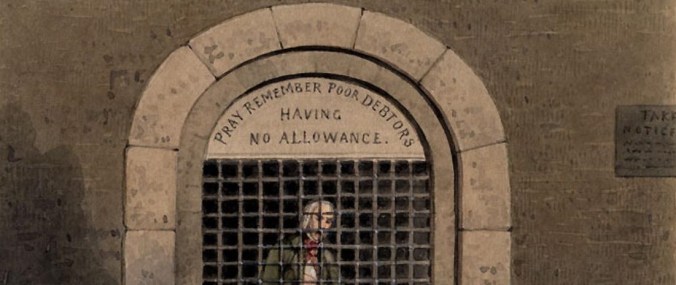
debtors prisons

If the news media did their job, somebody would have asked Ted Cruz about this by now.Something like, “Senator, what is your position on the growing use of debtors prisons in your state and other states around the U.S.?”

On March 5th, Texas commenced what is known as the Great Texas Warrant Roundup, an annual statewide collaboration of courts and law enforcement agencies to squeeze payment of overdue fines and fees from Texans. The Texans targeted are overwhelmingly poor citizens who have outstanding warrants for unpaid traffic tickets, many of which were dubious, the product of aggressive policing to meet budget quotas. The carrot is an amnesty period that precedes the “roundup;” the stick is the threat of arrest and jail for those who can’t pay.

In Texas, a ticket for failing to signal a lane change—a favorite way to start the process of bleeding vulnerable citizens to cover city and county budget shortfalls— will cost about $66. That’s just the beginning, though.  Texas adds $103 in court costs, a public defender fee,  a fee to put you on a payment plan if you can’t pay,  and the always versatile “administrative fee.” Writes the ACLU: “For people who are too poor to pay their tickets, that $66 fine can grow to over $500.”

Once the victim can’t pay the collective fines,Texas will suspend renewal of the driver’s license, adding the License Renewal Suspension Fee, another $30.  Now it’s illegal to drive to the work, and without work, it will be impossible to support a family and pay bills. Faced with that dilemma, many citizens drive anyway, and get eventually get pulled over, leading to more tickets, fines, fees…and more debt. Continue reading

Ethics Lessons And Ethics Dunces: The Two Young Men Who Knocked On My Door

missionaries-men-mormon2I was exhausted yesterday after five hours teaching lawyers and accountants about ethics when there was a knock at my door. I could see through the window that the visitors were two young men wearing nametags, holding clipboards, forms and brochures, and I was in no mood for a sales pitch or to being asked to help some Mormons travel to Tangiers. I opened the door prepared to give them the bum’s rush.

They were good, though. Their pitch involved a free estimate and a discount for replacing our home’s casement windows. It was a local business using recent college grads, they explained. I explained in return, curtly, that I wasn’t interested, but they persisted, being personable and low key all the while. I decided that I admired their persistence and interpersonal skills—it helped that my dog liked them–and ultimately I agreed to let them give me an estimate on roof repairs, as our roof had sprung some small leaks and we might even need a new one.

They called their office as I listened and scheduled a free assessment and estimate for today at 10 AM. I gave them my phone numbers. I took their cards. Though I was exhausted and had planned on giving them less than five minutes of my time, I ended up talking to the two for twenty minutes. I felt good about it too: they were just starting out in the workplace jungle, and had done an excellent job. They were personable, professional, and determined, spoke well and had a pleasant demeanor. One was black, the other Hispanic. I thought they had earned some positive reinforcement.

Well, it’s 11: 22 AM the next day, and they haven’t shown up, and haven’t called. When they do, I’m going to tell them that they blew it: I’m not trusting a company that can’t keep its first appointment. I don’t know why they missed their promised time, and I don’t care. The key factor is that they missed it. Continue reading

Ethics Verdict: The Republicans Should Vote On (And Approve) Judge Merrick Garland

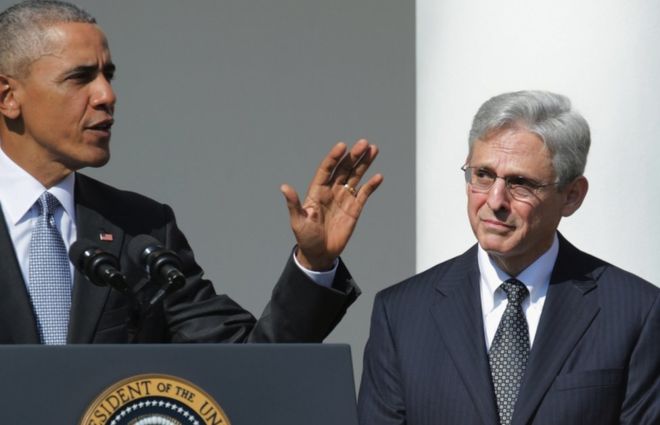
Merrick Garland

For Senate Republicans, holding hearings on President Obama’s qualified and moderate nomination for the Supreme Court is both the ethical course and the politically smart course. It is also in the best interests of the nation.

In fact, the Byzantine political maneuverings by the President and the Republican leadership, by turns petty and ingenious, have handed Republicans a political chess victory, if only they are smart enough, responsible enough, and patriotic enough to grab it. Naturally, they aren’t.

It is infuriating, and all citizens should be infuriated.

A brief review of how we got to this point of looming GOP disgrace is in order:

  • Justice Scalia died, removing a towering conservative force from the Court. This meant that almost any replacement, and definitely one named by Obama, would make the Supreme Court more liberal than it has been in many years.
  • Seizing on the opportunity to make the election a referendum on the composition of the Court (which is was going to be anyway), Mich McConnell announced that no nominee named by Obama, an outgoing POTUS less than a year from leaving office, would be considered by the Senate.
  • Democrats and their allies in the punditry predictably pronounced this to be a breach of Senate duty. Embarrassingly, records surfaced of  Joe Biden asserting the same basic principle that McConnell was arguing for, when Bush was the President. Biden, I must duly note, is an idiot, but he’s still the current Vice President. Then again, all Biden has to do is say now, “I was wrong.” As he frequently is.
  • Though many predicted that Obama would name a transsexual, disabled black Jewish Latino judge with Socialist leanings to maximize the opportunity to politicize the process, he did the opposite. He named a qualified jurist.
  • The judge he named, Merrick Garland, is a white, veteran 63-year-old judge with a distinguished record, nothing flamboyant or controversial, who is as close to a non-ideological, non-partisan moderate as any Democratic President is likely to appoint from now until the stars turn cold.

Now, if Senate Republicans were interested in doing what is in the best interests of the nation—that is,  filling the Supreme Court vacancy as soon as possible, giving proper deference to a responsible and reasonable nomination by the President, avoiding a nasty and divisive partisan fight, and ensuring that the next Supreme Court Justice won’t be an intractable leftist firebrand determined to gut the Constitution or another “wise Latina” mediocrity who will pollute the record with touchy-feely ramblings—they would leap on this opportunity and unanimously confirm Garland, saying publicly that they reconsidered McConnell’s declaration in the interest of restoring the integrity of the nomination process and returning to the time before Democrats politicized the process beyond reason in the Bork hearings, giving the President his choice, regardless of philosophical bent, when the nominee is qualified, dignified, experienced and trustworthy. like Judge Garland Continue reading

Ethic Quiz: “Springtime For Hitler” Ethics

And speaking of Donald Trump…

In South Orangetown, New York, the school superintendent stepped in and cut the swastikas from Tappan Zee High School’s student production of “The Producers” less than a week before the production. Of course, the Mel Brooks musical satire based on his film “The Producers” employs swastikas on Nazi flags and armbands during its famous campy “Springtime For Hitler” number and at other points in the show. Before someone posted a picture of the swastikas on the stage on a Facebook page, this aspect of “The Producers” had somehow escaped the attention of school administrators.

Some parents were shocked, and complained. After checking out the stage, the superintendent cut the costume details and set dressing.“There is no context in a public high school where a swastika is appropriate,” South Orangetown Superintendent Bob Pritchard told CBS. Pritchard consulted with local rabbis before making his decision.

Rabbis, of course, would be a natural audience for “The Producers.” (Reports that the rabbis suggested a production of “Fiddler on the Roof” instead have not been confirmed.)

Your spring-is-in-the-air Ethics Alarms Ethics Quiz of the Day is…

Is this example of school censorship of the performing arts fair, responsible and ethical?

Continue reading

Obviously, Democratic Base Demonstrators Are Planning To Disrupt July’s Republican National Convention In Cleveland. Here Are Seven Ethical Mandates To Prevent It…

1. Integrity, Citizenship and Responsibility: President Obama should begin speaking, now, about the integrity of the democratic process, the duty of all Americans to respect the opinions of others, and the civic obligation to allow elections to be peaceful and fair. he should also stop sowing partisan animus, and seeking to divide the nation for the Democratic Party ‘s advantage.

2. Responsibility and Competence: The Republican Party should tell Donald Trump that he has disgraced the party’s values, that he will no longer be considered as a candidate, and that he can do his worst. (Just for fun, it should challenge Democrats to be equally responsible and disqualify Hillary Clinton for conspiring to foil the Freedom of Information Act, which is pretty obviously what the private server was all about.)

3.  Responsibility: The GOP should move the convention out of Cleveland. It may already be too late, but it needs to do this, and should have done so the second the Tamir Rice shooting occurred. Holding a national convention in that city is inviting violence. My recommendation: move it to Honolulu, so demonstrators will have to spend a fortune to get there, while placing it in Obama’s home state, bring the division he has sought and nourished into his back yard. Continue reading

Post-Debate Ethics, The Final Question: Will The GOP Be Unethical If It Rejects Trump?

Republican_Party

When I first planned this post, I had seen only one column that argued that the GOP could not fairly refuse to nominate Donald Trump if he comes to the convention having won the most primary contests and delegates. Since then, I have read many more, as well as statements from various Republican leaders to that effect.

All of them are very, very wrong.

In the law, we look at this as a “who is the client?” question. To whom does the Republican Party owe its primary loyalties? What is the party’s purpose, and how does it best accomplish it? The answers to these question dictate its actions regarding Donald Trump’s fate.

Neither the election process nor the nominating process involve direct democracy. If the only purpose was to determine which candidate the citizens who consider themselves Republicans want to have on the ticket, a national primary would do the trick, and the party would barely be anything but a bystander. That is not the objective, however. The objective is to identify the most qualified and competent individual who represents the values of the Republican Party, and who has, in the judgment of professionals whose job is to discern such things, the best chance of winning, and to present him (or her) to the American public for their judgment, in order to maximize the likelihood of a fit and admirable citizen undertaking the awesome responsibility of leading the United States of America, and ensuring the success and survival of the nation, as well as the vital principles it represents to the world.

In the pursuit of this objective, the Republican Party has many stakeholders..itself, to begin with.  As a public institution, the party’s survival depends on the public perception that it is performing its duty competently and with the dignity and transparency such a role requires. Another group of stakeholders are its citizen members, who joined the party, contribute to it, volunteer their time, and give the benefit of many doubts to the party’s candidates in the polling booth. These citizens expect the party not to embarrass them, at a minimum, and ideally to actually accomplish some of the goals and policy measures the party’s principles support.

Non-Republicans are also stakeholders. If the parties do not do perform their duties with seriousness, diligence and skill, then the citizens will be faced with poor choices and unsatisfactory alternatives  on election day.

Ultimately, the Republican Party, like the Democratic Party, must regard its most important stakeholder as the United States of America. The President is both the symbol of the nation abroad and the embodiment of its hopes, ideals, history and continuity domestically. If the parties choose their candidates irresponsibly, then the nation itself is at risk. And as history has shown again and again, the world needs a vibrant and thriving United States of America. The planet itself has a stake in how well the Republican Party does its duty.

In the priority of Republican Party stakeholders, or “clients,” the candidates themselves are at the very bottom of the list. They exist to serve the party’s needs and responsibilities, not the other way around. True, they invest their time, money and passion in the task of proving themselves worthy of nomination, and they have a right to expect that the process they are engaged in will be consistent, reasonable and fair. They must understand, however, that the process, in the end, is not about them, but about fulfilling the responsibility of finding a worthy candidate for the office of President of the United States.

In a process that was designed to identify worthy candidates, Donald Trump has proven beyond a shadow of a doubt that he is unworthy. He had, in fact, proven that long, long ago, and the GOP’s leaders were foolish to allow him to run for the party’s nomination. It provides me some rueful amusement to read Senator Lindsay Graham’s comments yesterday that the GOP should have kicked him out of the party. Why, yes, Senator, I pointed that out more than six months ago, and it was obvious then.

Since that time, Trump has provided myriad justifications for declaring him persona non grata. The first time he engaged in name-calling and vulgarity, he should have been given an ultimatum. His personal attack on Megyn Kelly was sufficient to remove him; his conduct regarding the handicapped reporter, towards John McCain and prisoners of war; his attacks on George W. Bush and Mitt Romney, threatening to sue Ted Cruz—on and on, you know the litany. The party has an obligation not to present as its standard bearer a candidate who does not embrace and cannot be trusted to support its values, ideals and principles, and Trump has made it inarguable that he does not.

Moreover, the evidence of his lack of fitness to be President accumulates daily, and at an accelerating rate: Continue reading

The Zoe Saldana-Nina Simone Controversy

I have been following this story for some time with a mixture of amusement and horror; satisfaction too, I suppose, as it is nice to see that black grievance-mongers are equally irrational when the imagined offender is black rather than white. There is integrity in this, after the irrationality of it all.

Nina Simone’s tribute website calls her a “classically trained pianist who evolved into a chart-topping chanteuse and committed civil rights activist.” As a white kid growing up in the Sixties, I missed Simone almost entirely: she wasn’t a regular guest on TV variety shows.  In college, I encountered aficionados who referred to her as brilliant, and I tried to appreciate her song stylings. She was one of those singers that  I could understand why she was famous and exceptional without wanting to listen to her for pleasure. At the time I regarded Simone as a cult singer, but that was unfair; she was obviously more important than that. I was also unaware of her considerable significance in the civil rights

Three years ago, Zoe Saldana was cast as Nina Simone in “Nina”, a major Hollywood film about the singer’s life, replacing singer Mary J. Blige, who was originally cast but dropped out. Immediately, the choice of Saldana, a rising black actress of Dominican and Puerto Rican parents best known for her work as Uhura on the “Star Trek” reboots, “Avatar,” and “Guardians of the Galaxy”, was attacked. She wasn’t a singer, isn’t a “true” African-American and doesn’t resemble Simone sufficiently, the critics said.

All of these accusations are ridiculous on their face. Most biopics about famous singers, though not all, star actors rather than vocalists: all singing is dubbed in after the film anyway. When, in the history of drama, has there been a rule that the performer’s ethnicity had to match the role he or she was playing? I wrote about the foolishness of this issue most recently here. What matters isn’t that Yul Brenner wasn’t really a Thai, what matters is that he was fantastic at playing the King of Siam. Continue reading

Ethics Quiz: Free The Tampon.Com

share-not-equal“Tampons and pads should be treated just like toilet paper — they’re the equivalent,” argues Nancy Kramer. She has started Free the Tampons, a campaign to make feminine products accessible in all restrooms. “Menstruation is a normal bodily function, and it should be treated like that.”

This apparently is a new front in fighting the war on women. It’s one more piece of overhead to be passed on to the public, of course.  Are tampons really like toilet paper? Funny, I thought women used toilet paper too. I also thought public hygiene and health laws made toilet paper mandatory because rest rooms in public places are mandatory, and a rest room without tp isn’t worth much. Hard to cram those rolls into a purse, too.

But I’m getting ahead of myself. Your Ethics Alarms Ethics Quiz of the Day is…

Is it unethical for restrooms not to supply free tampons and pads?

Continue reading

Ethics Dunce: Marcia Clark

Bill Buckner's error: he didn't kill anyone, but to many Red Sox fan, this was worse.

Bill Buckner’s error: he didn’t kill anyone, but to many Red Sox fan, this was worse.

“I did not want [Simpson] to try on the evidence gloves. I never did,” failed O.J. prosecutor Marcia Clark tells”Dateline NBC” in a TV special airing this week. “That was [Darden’s] call. … I was miserable from the moment that Chris said, ‘No, I’m doing this.’ And I never expected anything good to come of it.”

Unbelievable. How petty, unfair and low of Clark at this late date to start trying to blame others on the prosecuting team for losing a murder case that should have been won! It is decades later, the story is part of U.S. legal, racial and cultural lore, and everyone has known that Darden was tricked into the bloody gloves trap by Johnnie Cochran for almost all of that time. There is no justification for Clark to turn on her colleague now. Continue reading