Wells Fargo Ethics: The Unethical Demagoguery Of Elizabeth Warren

warren

Senator Elizabeth Warren (D-Mass), picks her adversaries so well that she gains popularity and unearned credibility through the power of cognitive dissonance. Listen closely, however, and you will hear the ranting of a class-biased demagogue.

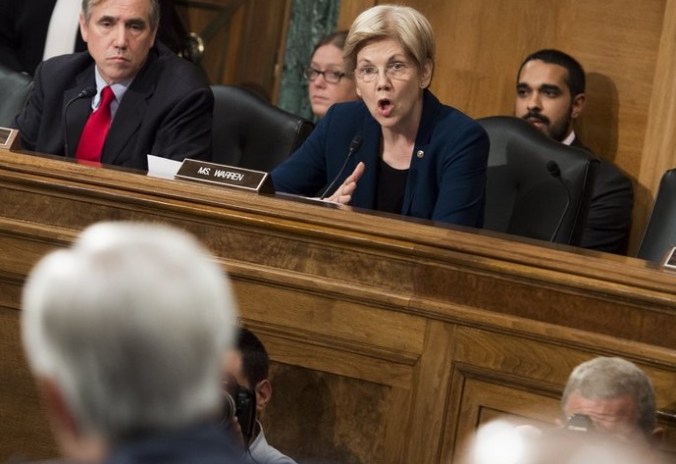
Joining in on the bipartisan and well-deserved roasting of Wells Fargo CEO John Stumpf before the Senate Banking Committee hearing this week, Warren accused Stumpf of profiting from the mass scam in which over 5000 bank employees signed up customers for services they hadn’t requested, without their knowledge. The bank collected fees for these accounts, cards and services, and the employees got bonuses.

He probably did profit, since the bank did more business and his stock holdings increased in value. Was he aware of the scam, or even behind it? There is no evidence of that yet. Warren also said he should resign. She’s sure right about that. He is accountable as the CEO, and he failed his duty of oversight. It is, as Warren said, typical and wrong that all the firing so far have avoided the executive suites.

But Warren seems to be oddly unaware of her double standard regarding management and leadership accountability. The standards that she was railing at Stumpf for not meeting should also apply to Barack Obama’s accountability for a corrupt IRS, a rogue NSA, a drunk Secret Service, a politically-biased Justice Department, a horrifically incompetent Office of Personnel Management, a criminally negligent VA, and, of course, a technically-challenged State Department that was operated as cash-cow for its Secretary’s personal foundation.  Elizabeth Warren’s application of standards are driven by class bias and partisanship, not conduct or principle. She has enables an administration that has avoided assigning accountability or accepting it for multiple fiascos. The most recent? From Fox News:
Continue reading


Someone Explain To Me, Please, Why Anyone Should Trust Wells Fargo With Their Money Ever Again?

Federal regulators announced today that  Wells Fargo employees secretly created millions of unauthorized bank and credit card accounts without their customers requesting them or being informed, knowing since 2011.  Employees even created phony PIN numbers and fake email addresses to enroll customers in online banking services, the CFPB said.The stealth accounts allowed the bank to charge millions in illicit fees,  while Wells Fargo employees boosted their sales figures and earned bonuses. Wells Fargo told CNNMoney that it had fired a staggering 5,300 employees over the last few years as they discovered the misconduct—but they didn’t tell customers what had been going on. .An investigation revealed that bank employees opened over 1.5 million unauthorized deposit accounts.

The scamster employees moved funds from customers’ legitimate accounts into newly-created ones without their knowledge or consent, regulators say. Then the victims were  charged for insufficient funds or overdraft fees when  there wasn’t enough money in their original accounts. Wells Fargo hustlers also submitted applications for 565,443 credit card accounts without their customers’ consent.

In response, the feds have hit Wells Fargo with the largest penalty since the Consumer Financial Protection Bureau began was founded in 201, ironically right around the timeWells Fargo started cheating its customer.. The bank agreed to pay $185 million in fines, along with $5 million to refund customers.

I don’t care how much the bank pays, or even if I get some of it (The Marshalls banked there, but as soon as I get home, that’s going to end.) I don’t care of I have to keep the nest egg in an old sock. I’m not trusting these people. The managers are inept or corrupt, and the lower employees are poorly trained and supervised, as well as crooks. This is a bank. The management has high fiduciary duties. It breached all of them. Continue reading

Have A Happy Thanksgiving Everyone, And Don’t Forget To Review The Ethics Alarms Complete “It’s A Wonderful Life” Ethics Guide Before The Annual TV Screening!

It’s right here!

Ethics Heroes: Five Democratic Economists

Senator Warren, who is always right.

Senator Warren, who is always right.

Senator Elizabeth Warren (D-Mass)  was annoyed that Robert Litan, a nonresident and unpaid economics fellow at the reliably liberal Washington think tank, the Brookings Institute, dared to author a study critical of financial advisor regulations being pushed by Warren and the White House. Thus she sent a letter to Brookings last week, challenging the independence of the study and the integrity of Litan, since the study was, as Litan states up front, “supported by the Capital Group, one of the largest mutual fund asset managers in the United States.”

Warren called the report “highly compensated and editorially compromised work on behalf of an industry player seeking a specific conclusion.”

You know, unlike the various donors to Warren’s political war chest, who are not trying to buy specific policies and votes from her.

Literally hours after receiving the letter, Brookings, knowing which side of the bread its butter was on, dutifully forced Litan to resign.

The issue isn’t whether the policy Warren wants is a good one or not; personally, I tend to agree with Warren on the need for the regulation, which would make 401(k) and 403(b) advisors as well as other compensation-related retirement plan advisors be subject to fiduciary duties. the issue is Warren’s embrace of the increasingly popular tactic from the Left of dealing with adversaries by silencing them. Continue reading

KABOOM! The University of Houston Is Paying Matthew McConaughey $135,000 To Give A Commencement Speech

head blowsThis isn’t just your usual, run-of-the-head Kaboom! where my brains go everywhere after a story makes my head explode. This is an angry Kaboom! where I kick my brain chunks around in disgust before the clean-up.

There is no possible excuse for this. The University is taxpayer funded, and if I lived in Houston, I’d be picketing graduation. The University announced in January that the 2013 Academy award-winner was speaking but avoided revealing his fee, until the persistent  the Houston Chronicle got the word on March 31. The paper said that the Celebrity Talent agency tried to block  the Chronicle’s Freedom of Information requests, arguing “that if UH tells the public how much it plans to pay McConaughey, a ‘reporter or someone’ might create ‘unfair negatives online.’ Yes, I think that was a reasonable assumption.

Scattered thoughts as I clean up the mess: Continue reading

The Phenom, The Agent And The Cubbies: 2015’s First Baseball Ethics Controversy

No, I don’t count Pete Rose.

Kris Bryant, whose day will come.

Kris Bryant, whose day will come.

The lesson of the Kris Bryant dispute is that sometimes the result that seems the least fair is also the right one. Bryant, in case you don’t follow baseball or do not live in Chicago, is the hot Chicago Cubs minor leaguer—what used to be called a “phenom” in the old days—who will not be playing third base for the Cubs when the season opens despite everyone’s agreement that he is not just ready for National League, but ready to star in it. Last week, the young man was assigned  to  the Cubs’ Triple-A Iowa farm team.  Cubs fans are upset. Sports pundits are outraged. Bryant’s agent is furious.

What’s going on here?

A lot.

The MLB  collective bargaining agreement, negotiated and signed by both baseball management and the players union, gives teams control over players for six years before a player can enter free agency and sell his talents to the highest bidder. Thus most young players earn a small percentage of their true market value initially, and, if they are good, hit the jackpot after that. (The average salary in Major League Baseball is $4 million a year). There is a catch, however—and an unavoidable loophole. A full season is defined as 172 days, though the season is 180 days. If a young player is left off the roster until there are fewer than 172 days remaining in the regular season, that season doesn’t count as one of the six years; a player can’t become a free agent mid-season six years later. Before the demise of the reserve system that bound a player to one team until the team released or traded him, there was no reason not to promote a promising minor league star to the big team the second it looked like he was ready. Now, there is a big reason: delaying those few games will give the team an extra year of control, since under the rule, 6 years and 171 games is still just six years. That means an extra year of the player at bargain compensation, and possibly an extra year of the player, since he can fly the coop once the clock has run.

This is not a new issue: players and agents have been complaining about teams doing this for years, but the rules allow it. Since the rules allow it, and since the monetary and competitive benefits of waiting those extra nine days can be huge, there is nothing unfair or unethical about a team taking advantage of the provision. Indeed, it would be irresponsible and a breach of management’s fiduciary duties not to save millions and ensure the extra year of a star’s services. What, then, has made Bryant’s case so contentious?

It’s the Cubs, that’s what. Continue reading

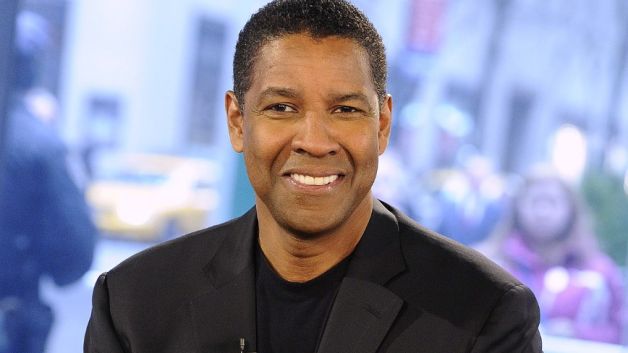
Ethics FYI To Hollywood, Pundits And Al Sharpton: There Is Nothing Racist–Or Unethical—About The Hacked Denzel Washington Memo

denzel-washington

Does anybody even bother to think about what racism is any more before accusing people of it? Do journalists think about the circumstances before they parrot knee-jerk accusations of racism from the likes of Sharpton and others? Based on the evidence of reaction to the infamous memo from a Sony honcho regarding the performance of Denzel Washington pictures abroad, apparently not.

Everywhere, this screed by an unnamed Sony executive is being called “shocking,” “unbelievable,” and, of course “racist.” It is nothing of the kind. In a scenario that reeks of the surreal Samuel L. Jackson fiasco where Ethics Alarms was virtually alone in noting that Jackson’s on-air accusation that a white TV host had confused him with fellow black star Lawrence Fishburne because “all blacks look the same to him” was unfair and completely meritless, the news media is just running with a demonstrably false accusation.

Here are the relevant portions of the e-mail exchange based on what has been reported in the media:

“I am not saying The Equalizer should not have been made or that African American actors should not have been used (I personally think Denzel is the best actor of his generation.) [But] Casting him is saying we’re ok with a double if the picture works. He’s reliable at the domestic [box office], safe, but has not had a huge success in years. I believe…the non event pictures, extra ‘bets’ should have a large inherent upside… Here there isn’t a large inherent upside….I believe that the international motion picture audience is racist – in general, pictures with an African-American lead don’t play well overseas…Sony sometimes seems to disregard that a picture must work well internationally to both maximize returns and reduce risk, especially pics with decent size budgets.”

Let’s examine this “unbelievable” e-mail, line by line and then as a whole, for ethical misconduct and incipient racism:

“I am not saying The Equalizer should not have been made or that African American actors should not have been used (I personally think Denzel is the best actor of his generation.)”

No problem there, right?

“[But] Casting him is saying we’re ok with a double if the picture works.”

The baseball analogy, a “double” over a “home run,” is a conclusion based on Washington’s films’ grosses and hard facts, not racism. It is a legitimate opinion, and one that in a business context must be made as a matter of fiduciary duty. Foriegn box office is about half (or more) of a typical film’s profit. If a star isn’t as popular in foreign markets as in the U.S., then metaphorically speaking, a “home run” is more difficult, and maybe impossible. Continue reading

Reminder: It’s A Wonderful Ethics Movie!

It's_a_Wonderful_Life

I’m watching “It’s A Wonderful Life,” Frank Capra’s ultimate ethics movie. Don’t forget to review its ethics dilemmas, conflicts and conundrums with the handy

Ethics Alarms Complete “It’s A Wonderful Life” Ethics Guide.

To Get Your Christmas Ethics Off To The Right Start…

its-a-wonderful-life-collage-73136

…the Complete Ethics Alarms “It’s A Wonderful Life” Ethics Guide is here.

Just in case you forgot!

The Complete “It’s A Wonderful Life” Ethics Guide [UPDATED]

 Frank Capra’s 1946 masterpiece “It’s A Wonderful Life” is one of the great ethics movies of all time, perhaps the ethics movie of all time. In 2011 I prepared a guide through its complex ethics thicket. The post was divided into three separate posts, and I eventually combined them s0 readers can have the pleasure, if one can call it that, of watching the film like I do: having ethics arguments the whole way through. And now, here is your guide. Additions are welcome and encouraged.

1. “If It’s About Ethics, God Must Be Involved”

The movie begins in heaven, represented by twinkling stars. There is no way around this, as divine intervention is at the core of the fantasy. Heaven and angels were big in Hollywood in the Forties. Nevertheless, the framing of the tale advances the anti-ethical idea, central to many religions, that good behavior on earth will be rewarded in the hereafter, bolstering the theory that without God and eternal rewards, doing good is pointless.

We are introduced to George Bailey, who, we are told, is in trouble and has prayed for help. He’s going to get it, too, or at least the heavenly authorities will make the effort. They are assigning an Angel 2nd Class, Clarence Oddbody, to the job. He is, we learn later, something of a second rate angel as well as a 2nd Class one, so it is interesting that whether or not George is in fact saved will be entrusted to less than heaven’s best. Some lack of commitment, there—then again, George says he’s “not a praying man.” This will teach him—sub-par service!

2. Extra Credit for Moral Luck Continue reading