Memorial Ethics, Part Two: The Betrayal of 9-11 Donors

Where's the money going? Sometimes the charity has no idea.

A decade later after the attack on the Twin Towers, an Associated Press investigation has revealed wide-spread incompetence, dishonesty and waste among the many 9-11 memorial charities set up in the wake of the tragedy.

“There are those that spent huge sums on themselves, those that cannot account for the money they received, those that have few results to show for their spending and those that have yet to file required income tax returns. Yet many of the charities continue to raise money in the name of Sept. 11,” reports the AP. Among the fiascos recounted in the report:

  •   An Arizona-based charity raised $713,000 for a 9/11 memorial quilt that was supposed to be big enough to cover 25 football fields. Instead, there are only several hundred decorated sheets packed in boxes at a storage unit. One-third of the money raised went to the charity’s founder and relatives, according to tax records and interviews. Charity founder Kevin Held spent more than $170,000 of the donated money on travel since 2004, seldom traveling without his two Alaskan malamute dogs. Continue reading

Phony Online Lesbian Ethics

Lesbian blogger Paula Brooks

When the media and internet were buzzing about the shocking discovery that the celebrated blogger “A Gay Girl in Damascus” was really “A Straight American Man in Scotland” who had fooled all his readers and followers through the lie-machine called the Internet, one of those who expressed shock and criticism of the hoax was Paula Brooks, the deaf lesbian editor of the popular lesbian news blog, Lez Get Real. When a man who said he was Brooks’ father told Washington Post reporters who called to interview the blogger that they could only speak to her through him because of her hearing disability, the reporters did some checking. Son of a gun: Paula’s “father” was really Paula, who was really Bill Graber, a straight, married, former construction worker.

Observations: Continue reading

What America Has Learned From Sarah Palin

Thanks for the enlightenment, Sarah!

When Ethics Alarms last left Sarah Palin, she had delivered a description of Paul Revere’s famous ride on the evening of the 18th of April in 1775 that would have earned her an F in speech class and, at best, an Incomplete in American History.  Incredibly, however, Palin and her indomitable supporters have tried to turn the tables on her critics, aided by several history pedants, by claiming that her collage of words and thoughts was really a sophisticated account of Paul’s evening that her historically ignorant critics failed to appreciate.

Uh huh. Let’s revisit her statement, shall we? She said:

“[Revere] warned the British that they weren’t going to be taking away our arms, by ringing those bells and making sure as he was riding his horse through town to send those warning shots and bells that we were going to be secure and we were going to be free.”

This was, by any standard, an eccentric representation of Paul Revere’s ride, and a spectacularly inarticulate one. In assessing whether Palin’s statement can, by any stretch of the imagination, be said to indicate that she either said what she meant to say or has the vaguest idea of what Revere’s ride was all about, we answer these questions: Continue reading

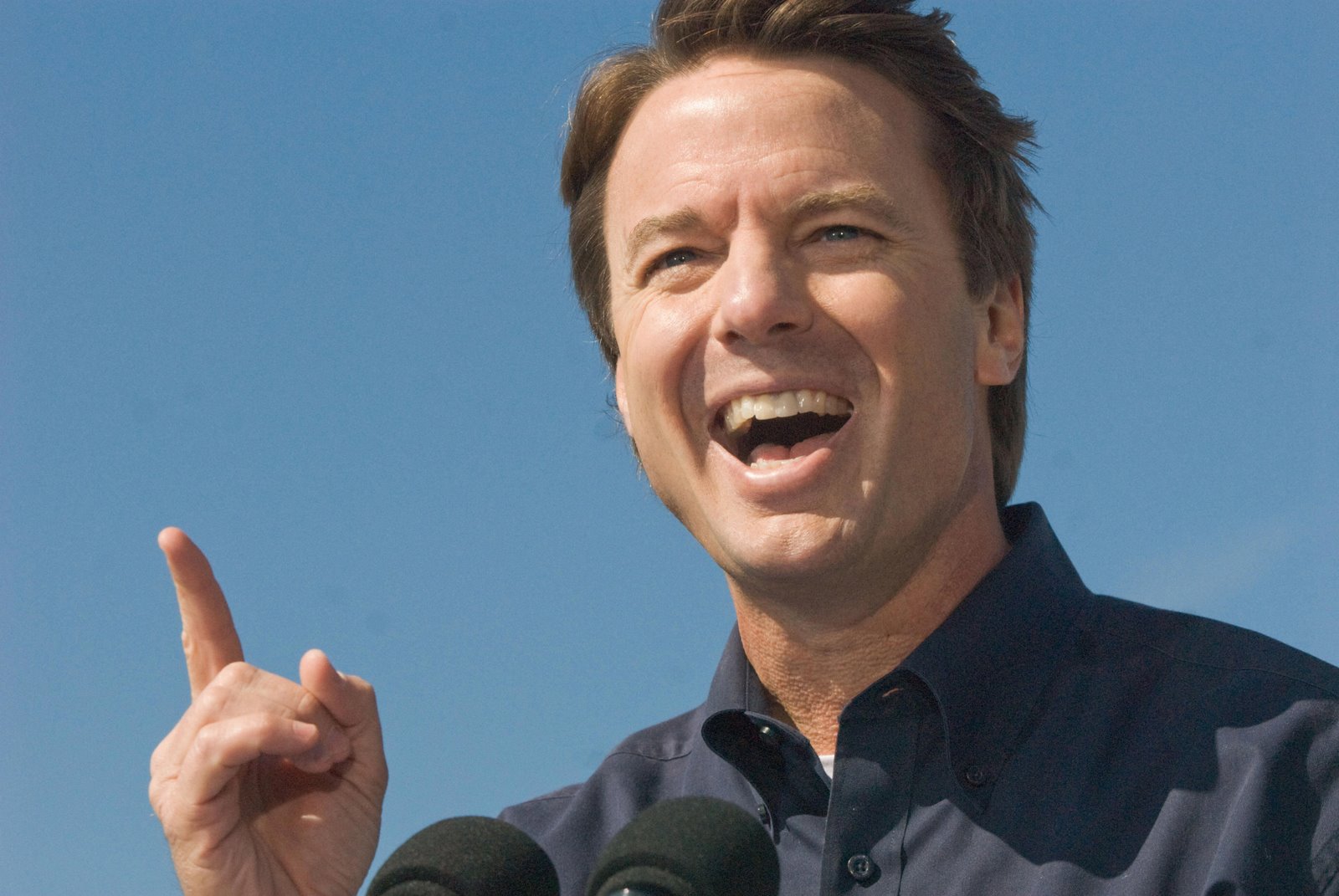
The John Edwards Indictment

Cornell law professor Michael Dorf makes my heart leap in admiration by bucking the popular trend—especially among Democrats and soft-hearted media types who 1) only like seeing Republicans and conservatives get in trouble for sex scandals and 2) think Edwards “has suffered enough” —of arguing that the prosecution of John Edwards for campaign fundraising violations is based on a weak legal case. On his blog, Prof. Dorf  argues persuasively to the contrary:

“At its core, the indictment alleges that Edwards knowingly: 1) in violation of federal campaign finance law, accepted money well in excess of the individual campaign contribution limits; 2) spent that money to hide his extramarital affair with Rielle Hunter; and 3) in violation of federal campaign finance law, failed to disclose either the donations or the expenditures….

“…The real question with respect to the government’s point number 1) is whether the hundreds of thousands of dollars were given to Edwards ” for the purpose of influencing any election for Federal office.”  Subject to a whole lot of irrelevant exceptions, that’s the statutory definition of a “campaign contribution.”  It is nearly inconceivable that the money for hiding the Hunter affair was not “for the purpose of influencing” the 2008 Presidential primary.  What other possible purpose could it have served? Continue reading

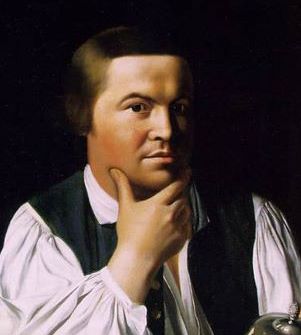
False Leaders, GOP Division, Part I : Sarah Palin on Paul Revere’s Ride

"What the HELL did she just say about me?"

“He who warned, uh, the … the British that they weren’t gonna be takin’ away our arms, uh, by ringin’ those bells and, um, by makin’ sure that as he’s ridin’ his horse through town to send those warnin’ shots and bells that, uh, we were gonna be secure and we were gonna be free … and we were gonna be armed.”

—-Sarah Palin, recounting the famous ride of Paul Revere during her bus tour.

I can’t criticize Herman Cain for mixing up the Constitution and the Declaration of Independence, as well as score Michele Bachman for putting the “Shot Heard Round the World” in New Hampshire, and neglect to express my disgust at Sarah Palin’s inability to tell a story that every grade schooler should be able to recite by heart. Yes, I admit to being something of a Paul Revere fan, but I also am not touring the country on the pretense that I am reminding Americans of their legacy and values.

This is classic Palin, repeating her slovenly modus operandi on display from the moment she was thrust into the national spotlight. She fakes almost everything she does. She is glib and charismatic, and no dummy (though she does some stunningly dumb things). She has many of the most important traits of successful leadership, except indispensable basics like diligence, integrity, and respect for her constituents’ intelligence. Being a leader also takes dedication, hard work and attention to details: you can’t fake and jive your way through on charm and passion alone. Continue reading

Ethics Dunces: Joe Klein and Chris Matthews

John Edwards agrees with Chris Matthews

Journalist Joe Klein has been a candidate for an Ethics Dunce award for a long time, because he has been ethically suspect or worse for a long time. His defining integrity moment came when he lied about his authorship of the Bill Clinton roman-a-clef, “Primary Colors.” Since that time, Klein has gradually evolved into a shamelessly biased and ethically muddled political commentator from the left. Too bad. He’s a perceptive guy and a wonderful writer, but he makes his living now shooting from the hip, so we seldom get the benefit of his best qualities.

It was inevitable that the Chris Matthews Show would allow Klein’s ethical blindness to reach full flower.  Matthews has been on his own journey of self-diminishment since MSNBC decided to become the anti-Fox; where once he could be counted on to treat the issues of the day fairly and avoid partisan cheerleading, the Obama years have seen him abandon any effort at objectivity or even-handedness. Matthews’ Sunday morning panel show now eschews ideological balance and has Matthews posing questions to a rotating group of reliable conservative-bashers, with an occasional straight journalist mixed in who at least pretends to be neutral.  On Sunday, Matthews asked his panel about the appropriateness of the Justice Department’s prosecution of uber-cad John Edwards for violations of the federal election laws. It’s not a bad question, and reasonable people can disagree about the answer. The charges against Edwards stem from solicitation of large cash gifts from two long-time friends and supporters while he was simultaneously running for president and trying to cover up the existence of his love-child with Rielle Hunter and the adulterous affair that spawned her.  The money was given directly to Hunter, raising a legal question as to whether it was really a campaign contribution at all. Continue reading

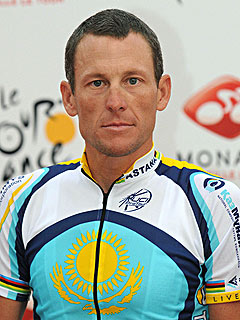
No Excuses and No Mercy For Lance Armstrong

Sorry, Lance…good guys don’t cheat.

Back when Barry Bonds was still playing baseball, a sportswriter mused about why it was that everyone assumed  Bonds was a performance-enhancing drug cheater despite his protestations to the contrary, while most Americans and sports journalists brushed away similar allegations regarding Lance Armstrong. Both competed in sports with acknowledged steroid abuse problems; indeed, the problem in bicycle racing was presumed to be more pervasive than in baseball. (A few years later, with the banning of multiple Tour winners, the presumption became a certainty.) Both athletes had improbable late career improvements in their performance to reach previously unimaginable dominance in their respective sports. Both had to explain or deflect multiple credible accusations of cheating and circumstantial evidence that suggested that they were doping. Both claimed they had never failed drug tests, and there were good reasons to doubt the denials.

So why was Bonds a villain by consensus and Lance an untouchable hero? The sportswriter explored many theories (Apologies: I cannot locate the article. If someone can, please send it), among them the greater popularity of baseball over cycling, Bond’s startling physical transformation into a behemoth while Armstrong remained cyclist-sinewy,  Armstrong’s inspiring story as a cancer survivor, Armstrong’s philanthropic work,and the fact that Bonds, unlike Armstrong, was black. The biggest difference, however, and to the writer the key one, was that Armstrong acted the role of a hero, while Bonds refused to. Armstrong was friendly and accommodating, while Bonds was angry, intimidating and antagonistic. Armstrong seemed like someone who played by the rules, and who lived his ethical values. Bonds seemed like a rebel, one who wouldn’t hesitate to break the rules for his own benefit. In short, the public wanted Armstrong to be the hero he seemed to be, so they ignored the evidence linking him to performance-enhancing drugs.

After last Sunday, the disparate public perception of Bonds and Armstrong, always illogical, became unsustainable. Continue reading

The Great Norwalk Kindergarten Heist

The Tanya McDonald controversy

A homeless woman is facing 20 years in prison if she is convicted of stealing over $15,000 of Norwalk, Conn. taxpayer funds. The details of her crime are controversial: she lied about her residence to get her child into what she believed was a better school system, but one that, as non-resident, she was not entitled to use. The details also create a tangled mess of law, justice, ethics, fairness, compassion, public policy, finances, class and education.

Let’s try to unravel it, shall we? Continue reading

Unethical Quote of the Week: Adam Dachis

“All posts that belong to the Dark Side are going to feature some ideas that might be a little evil or at least require some flexible ethics. Some things will be downright horrible, and you should not do them, but are either for your information or simply for the point of interest (and will be noted as such). Your judgment and actions are your own, so think before you do anything you read here and only use your dark side for good.”

Adam Dachis, ethics corrupter, in the “Dark Side Disclaimer” that accompanies his column on the website Lifehacker, called “Secrets from the Dark Side.”

His current “Secrets from the Dark Side” column is entitled “How to Lie, Cheat, and Steal Your Way to a Perfect Flight,” which is an accurate description of its contents. Some of Dachis’s “tips” (scams? cheats?) are interesting, some are humorous, and all (well, maybe with one exception) are unethical. Dachis, for his part, doesn’t have the guts to advocate outright the conduct that he is explicitly promoting, nor does he condemn it. As his ethically incoherent ( “Only use your dark side for good”) disclaimer demonstrates, he thinks ethics is a game of some sort, and that being a “little evil” is cute, or trivial, or something.

A true ethics corrupter, Dachis wants to avoid personal accountability for the unethical acts of his readers spurred entirely by his post, while at the same time getting credit for his cleverness. This is the Richard Nixon approach to ethical corruption, planting seeds and disclaiming responsibility for the crop, telling followers, “We could do that, but it would be wrong.” Wink, wink.

Yechhh.

Facebook, Truth Trap: The Saga of the Belly Dancing Invalid

Just imagine how she could dance if she weren't disabled!

Facebook is beginning to reveal itself as a kind of truth trap for the unethical. It is infinitely more difficult to live a lie when you give the world a window into your life via social media. The choice may be between undiscovered fraud protected by social isolation, and blogging candor resulting in unpleasant justice. Indeed, not being on Facebook may create suspicions that some individuals are hiding misconduct. And they just might be, for if they become active on Facebook, the Truth Trap is waiting.

Take the Saga of the Belly Dancing Invalid.

Dorothy McGurk was stripped of a divorce settlement she had forced out of her ex-husband three years ago, when a court ruled that her Facebook entries proved she wasn’t unable to work as she had claimed. Continue reading