friends
Ethics Dunce And Awful Human Being: Thomas Frieden’s #MeToo Victim…And Also, “KABOOM!”
Like “Advice Goddess” blogger Amy Alkon, when I heard that Dr. Thomas Frieden, Obama’s former head of the CDC, had been arrested for sexual assault, I just assumed that he was one more prominent serial predator who has used his power to abuse women in the workplace, and a pretty serious one, if he ended up in cuffs. After all, nobody has arrested Matt Lauer or Charlie Rose.
Then I read the whole story, and my head exploded. But not because of what Frieden had allegedly done.
A 55-year-old woman, so far unidentified in the media (I want that woman’s name) came forward to the police in July and said that Dr. Frieden squeezed her buttocks without her permission nine months earlier, on October 20, 2017. She told investigators the incident occurred as she was leaving a gathering at Dr. Frieden’s residence in Brooklyn Heights. She said Dr. Frieden groped her while their spouses weren’t looking, and he later apologized, citing personal problems.. Dr. Frieden says the woman is a long-time friend and acquaintance of more than thirty years.
Got that? Almost a year earlier, at a party, a male friend squeezed her butt. He apologized. She waited all this time, and then humiliated him professionally and publicly by having him arrested.
How can this conduct possibly be excused, and I mean hers. His conduct was wrong—I have never groped a woman’s ass or any other part of her body without clear consent in my life, indeed I have heard complaints that I don’t grope enough— and it was technically civil battery, but far, far from criminal. Having the man arrested is nothing less than a hateful, cruel, vindictive abuse of him, his family and the justice system.
We are told that this women—I want her name!—is a New York artist who has been a vocal #MeToo activist since the Harvey Weinstein Ethics Train Wreck started rolling and squishing, and has been creating artwork related to the movement. She also wrote an article in an online publication describing that single grope, from a friend, at a party, as the moment she was transformed from activist to victim. Ah! Then treating an old friend this way is completely justified!
No, it’s not. She’s not just an ethics dunce, she’s an asshole. Alkon–who gets the Ethics Alarms Pointer for this one— calls the grope, which is not sexual harassment, not occurring in the workplace or between superior and inferior, and not creating a hostile work environment, Continue reading
Comment Of The Day: “Ethics Quiz: ‘NCIS’ Ethics”
[ Again I am awash in Comments of the Day. There’s no question about it: the comments here are getting better, and more commenters are participating. There are also more comments being made to posts than ever before. 2017, despite a 10% drop in traffic from 2016, set a record for comments. This blog was always designed to be an interactive online colloquy on ethics. More views, links and shares would be nice, but I’ll take more and better comments over volume any day. You all are doing a terrific job. I may have to make “Comment of the Day” a daily rather than an occasional feature. That would be progress.]
The latest Ethics Quiz was about this week’s “NCIS” episode in which the federal agency’s director got all misty eyed and proud to learn that his daughter had accepted the blame (and the charges) for her friend’s shoplifting because her friend was 18 (and a habitual shoplifter) and the offense would end her dream of college. Ethics Alarms readers were asked whether this was a responsible ethics message for Mark Harmon’s long-running procedural to send, especially to any children watching.
The quiz attracted uniformly excellent responses (my take is here).
Here is Greg’s Comment of the Day on the post, Ethics Quiz: “NCIS” Ethics:
I would say that the daughter acted foolishly and the father acted unethically.
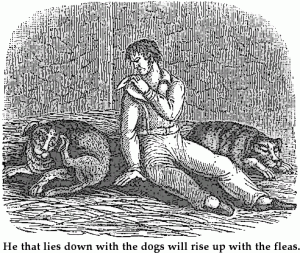
The father has a duty to teach and protect his children, which he utterly failed to fulfill in this case. His daughter is showing disastrously poor judgment, placing her future seriously at risk, and he needed to set her straight. He should have lectured her on the enduring truth of the adage, “Lie down with dogs, rise up with fleas.” She should not be spending any time at all with an incorrigible thief. This other girl is big trouble. She has already gotten the daughter arrested once and if the daughter continues to hang out with her, the odds are high that she will do it again. The lesson that the daughter should have learned from this incident is that she needs to shun the company of this supposed friend. Instead, the incident has bound them together even more closely. Continue reading
Ethics Quote Of The Week: Sarah Silverman
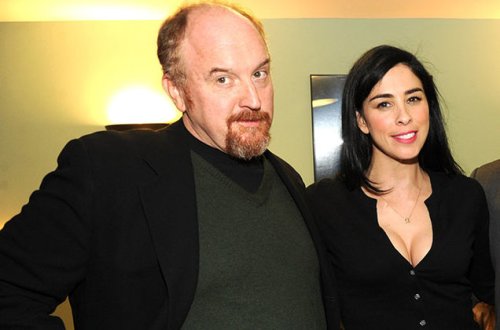
“I love Louie, but Louie did these things. Both of those statements are true. So, I just keep asking myself, can you love someone who did bad things? Can you still love them? I can mull that over later, certainly, because the only people that matter right now are the victims. They are victims, and they’re victims because of something he did.”
—Comedian Sarah Silverman, speaking of her friend and fellow comic Louis C.K., whose career is in freefall after revelations by five women that he masturbated in front of them.
I hope Sarah doesn’t have to ponder her question too hard, because the answer should be obvious.
Of course you can love someone who did bad things. Everyone of us has, and probably does. Good people do bad things. Loving and lovable people do bad things, even terrible things. Being loved is one of the crucial life experiences that makes people better.
There are limits, of course. Still, at the root of Silverman’s question is the narrow intolerance and self-righteousness that are polarizing and fracturing our society. I find it ominous that she would ask the question.
Morning Ethics Warm-up: 8/16/17
GOOD MORNING!
1. I’m heading to Boston and Fenway Park in a few hours to meet with two of my high school classmates and together pay our respects to the 1967 Boston Red Sox, the spiritual beginning of Red Sox Nation, and a group of men, then barely more than boys, who had as profound an effect on my life and view of it as anything I have ever experienced.
It’s the 50th Anniversary of that amazing team and the heart-stopping pennant race it won against all odds, in a four team race that came down to the final game of the regular season. I mean heart-stopping literally: the team wasn’t called “The Cardiac Kids” for nothing. TWO of my father’s colleagues at the Boston Five Savings Bank died of heart attacks while attending Red Sox games, during one of the 9th inning desperation rallies for which the team was famous. The only reason I didn’t perish in like fashion is because I was just 16 years old.
Why was this team, and that summer 50 years ago, so important to me? I don’t have time or space to answer that question well, and you’d probably wonder what I was babbling on about anyway. A 2017 film by Major League Baseball called “The Impossible Dream” does a fair job of explaining it, but it’s too short to do the job right.
I had listened to, watched or attended every Boston Red Sox game for five years, as the team lost and lost. From those bad teams, followed weakly by the city in those days, in a crumbling old park that seemed destined to be abandoned and torn down, I learned that winning wasn’t everything, that loyalty wasn’t easy, that Hemingway was right, and that baseball was about courage, humility, perseverance, doing your job every day, sacrifice, and hope, as well as usually losing at the end. That summer of 1967 taught me that hope is worth the effort even though hope is usually dashed by the ice water of reality, that you should never give up, that miracles do happen, and that nothing is as wonderful as when a community is united in a single, inspirational goal, no matter what that goal might be…and that you should never be afraid to give everything you have in pursuit of a mission, even when it is likely that you will fail.
I learned difficult, discouraging lessons, too. When an errant pitch hit Red Sox right-fielder Tony Conigliaro in the face on August 18, 1967, it was the beginning of a lesson that revealed its tragic last chapter 23 years later. That one taught me that life is horribly, frightening unpredictable, and that we envy others at our peril. It taught me that we need to do what we can to accomplish as much good as we can as quickly as we can, because we may lose our chance forever at any moment.
Tony C, as he was and is known as, was a beautiful, charismatic, local kid, the idol of Boston’s huge Italian-American community, in his fourth season with his home town team at the age of 22. He dated movie stars; he recorded pop songs; he had a natural flair of the dramatic, and was destined for the Hall of Fame. One pitch took it all away. Although he had two comebacks and played two full seasons facing major league fastballs with a hole in his retina and his field of vision, Tony was never the same. After his final attempt to keep playing failed at the age of 30, he became a broadcaster, and at 37 was seemingly on the way to stardom again in 1982 when he suffered a massive, inexplicable heart attack—Tony did not smoke, and had no family history of heart problems– that left him brain damaged until his death in 1990.
As Henry Wiggin, the star pitcher protagonist of the novel, play and movie “Bang the Drum Slowly” observes as he reflects on the death of his catcher and roommate, everyone is dying, and we have to remember to be good to each other. But it’s so hard. Ethics is hard. The ethics alarms ring faintly when we are about the task of living, or not at all…
At the end of the story, the narrator, the best friend of the catcher (but not really that close a friend) recalls how quickly everyone on the baseball team went back to their selfish ways after their teammate went home to die Even the narrator, who was the leader of the effort to make the catcher feel loved and appreciated in his last days, ruefully recalls his own failing. The catcher had asked him a favor, just to send him a World Series program (the team won the pennant after he had become too ill to play), and he had forgotten to mail it until it was too late. How hard would it have been, the narrator rebukes himself, to just put it in an envelope and mail it? Why are we like that, he wonders?
1967 was the beginning of my exploration of that mystery too.
So I am going to Boston for the 30 minute ceremony. I can’t even stay for the game; I have a seminar to teach tomorrow morning, and the last flight out of Logan is at 9 PM. There will probably be just a small contingent from the Cardiac Kids: most of them are dead now, or too infirm even to walk onto the field. But Yaz will be there, and Gentleman Jim Lonborg; Rico Petrocelli, Mike Andrews, and maybe even Hawk Harrelson and Reggie Smith. I will be there to say thank-you, that’s all.
And to show that I remember. Continue reading
Ethics Quote Of The Day: Charlotte Hogg, Ex-Bank of England COO
“However, I recognise that being sorry is not enough. We, as public servants, should not merely meet but exceed the standards we expect of others. Failure to do so risks undermining the public’s trust in us, something we cannot let happen. Furthermore, my integrity has, I believe, never been questioned throughout my career. I cannot allow that to change now. I am therefore resigning from my position. I will, of course, work with you through any transition.”
—-The Bank of England’s chief operating officer and incoming Deputy Governor for Markets and Banking, Charlotte Hogg, in her letter of resignation over criticism regarding a possible conflict of interest and her failure to report it.
Charlotte Hogg, a senior Bank of England official who had been named a deputy governor, resigned this week after a Parliament committee found that she had failed to disclose a potential conflict of interest: her brother held a senior position at Barclay’s during her time at the central bank. Hogg insisted that she never breached her duties or passed along any confidential information to her brother, but she had helped draft an industry ethics code of conduct policy required a disclosure of such conflicts. This creates doubts about her integrity, judgment competence, as well as the appearance of impropriety.
The Parliamentary committee recently issued a report finding that Ms. Hogg’s professional competence “short of the very high standards” required to be deputy governor, adding that her failure to disclose her brother’s role was a “serious error of judgment.”
This is one of my favorite kinds of conflicts, because it may be only appearances at stake. What if, as is often the case (sadly), Hogg and her brother are estranged? What if she doesn’t speak to him? What if they hate each other? Never mind: the public, not knowing this, will suspect that she might use her position to favor him or his bank, so disclosure is crucial to maintaining public trust. Not disclosing, in contrast, raises suspicions. Why didn’t she let everyone know about her brother? What was she hiding? Continue reading
A Presidential “Othering” Ethics Puzzle: What IS This Statement? Misleading? Ignorant? Biased?
In a column today, Washington Post political columnist Chris Cillizza writes,
“The simple fact is that Trump has never had real friends in the sense you or I think of the term. The relationship world of Trump has long been split into two groups: (1) his family and (2) people who work for him. And people who work for you are rarely your actual friends.”
This was written in the context of an article titled “The very peculiar isolation of Donald Trump.”
What’s going on here? It is definitely one more “othering” exercise from the news media, part of a concerted effort to avoid “normalizing” this President so that tactics previously regarded as unthinkable, undemocratic and unAmerican will be accepted by the public when they are used against him. The message is that this President is strange, weird. He’s not like us. He’s a monster. Today, for example, MSNBC’s Katy Tur insinuated that the President might be planning to start murdering journalists, asking a guest.
“As we know, there’s, since 2000, been a couple dozen suspicious deaths of journalists in Russia who came out against the government there.Donald Trump has made no secret about going after journalists and his distaste for any news that doesn’t agree with him here. Do you find that this is a dangerous path he is heading down?”
I was struck by Cillizza’s column because the topic is one of several upon which I wrote my honors thesis in American government. (If you are in Cambridge, Mass., you can find a copy in Widener Library.) Cillizza’s statement made me realize, for the first time, really: “Ah! There’s at least one aspect of his personality that is typical of American Presidents!” I studied exactly that aspect of Presidential biographies to test my thesis that the U.S. Presidency attracted a specific character type, and the type was not “normal” by the public standards. Continue reading
The 8th Annual Ethics Alarms Awards: The Worst of Ethics 2016: The Last Of The Worst
Ethics Alarms wraps up the Worst in 2016 Ethics with the usual education and journalism breaches, Ethics Dunce of the Year, and more delights for the sadistic…
Unethical Government Fiasco Of The Year
The Flint, Michigan water crisis. A failure of competence, diligence, responsibility and honesty, compounded by bureaucrats, elected officials, the city of Detroit, Michigan Governor Rick Snyder and the EPA made people sick and cost billions.
Good job, everybody!
Scam of the Year
Sen.Ted Cruz’s fake “official” mailer before the Iowa Caucus. Cruz’s campaign sent out mailers labeled in all capital letters, “ELECTION ALERT,” “VOTER VIOLATION,” “PUBLIC RECORD,” and “FURTHER ACTION NEEDED.” On the other side, the mailer said, in red letters at the top, “VOTING VIOLATION.” The text read:
You are receiving this election notice because of low expected voter turnout in your area. Your individual voting history as well as your neighbors’ are public record. Their scores are published below, and many of them will see your score as well. CAUCUS ON MONDAY TO IMPROVE YOUR SCORE and please encourage your neighbors to caucus as well. A follow-up notice may be issued following Monday’s caucuses.
This is why Trump’s nickname for Cruz, “Lyin’ Ted,” was crude but accurate.
Ethics Dunces Of The Year
All the social media users and others who ended Facebook friendships, genuine friendships and relationship over the 2016 election. Haven’t they ever seen “It’s A Wonderful Life”? Morons. Shame on all of them.
Weenies of the Year
The college students who demanded that exams be cancelled, therapists be available, safe spaces be found, puppies be summoned and cry-ins be organized because the awful candidate they supported in the Presidential election lost, as candidates often do.
How embarrassing.
Unethical University Of The Year
Liberty University. This is the most competitive of categories, with all the schools that railroaded male students based on questionable sexual assault claims while quailing in fear of the Dept. of Education’s “Dear Colleague Letter,” and all the schools that signaled that the results of a simple election justified PTSD treatment for their shattered charges, as well as making it clear to any students who dared to tilt Republican that they were persona non grata. Nonetheless, Liberty University takes the prize with its unique combination of greed, hypocrisy, and warped values. From the Ethics Alarms post:
Last week, with great fanfare, Liberty hired Ian McCaw as its new athletic director. “My vision for Liberty is to position it as a pre-eminent Christian athletic program in America,” McCaw said during a news conference.
This is his first paying assignment since May, when he left his job as the athletic director at Baylor, also a Christian university. His departure was made essential after a thorough investigation that found that those overseeing Baylor’s football team as well as the management of the athletic department—that is, McCaw— had been informed of multiple gang rapes and sexual assault by team members and had ignored it, as any good football-loving Christian would….especially when a star was involved.


One of the many things I deeply resent about the “resistance”/Democratic Party/ progressive/mainstream media assault on the President, elections, our democracy and the connective tissue that has held the United States together—aside from such minor inconveniences as the likely permanent damage it has done to society and the viability of the American experiment—is how it has rendered so many familial, personal and professional relationships unsustainable after one party or the other has fallen prey to Stage 5 Trump Derangement.
Commenter Greg has chronicled an experience that too many will find familiar. Here is his Comment of the Day on #1 in the post, “Morning Ethics Warm-Up, 5/29/2019: “It Depends On What The Meaning Of _____ Is” Edition.”