The Rest Of The Story: The Cop Who Shot Rayshard Brooks Is Reinstated, But Atlanta’s Disgrace And The Stench Of Presumed Racism Lingers On

14vid-brooks-4-cover-final-superJumbo

Way back in June of 2020, I watched this fiasco develop. Rayshard Brooks, a black man who was arrested by police for being drunk (35% over the legal limit) and passed out in his car, blocking a Wendy’s drive-up lane, was shot and killed in a subsequent confrontation with police in Atlanta. A mostly peaceful protest of BLM types ensued, with the Wendy’s being set on fire, since it was all Wendy’s fault. The Atlanta Chief of Police quickly resigned, the coward. Atlanta’s race-baiting mayor Keisha Lance Bottoms then pronounced the police officer who fired the fatal shots, Garrett Rolfe, guilty before knowing what happened—of course she did— and demanded that he be terminated with no investigation and no due process.

I wrote at the time,

“Last night’s incident began about 10:30 p.m. outside a Wendy’s  on University Avenue. Wendy’s employees called the police after receiving a complaint about a man asleep in his vehicle in the Drive-in line, which forced other customers to go around his car to get their food at the window. 

Responding to the call was the police’s first mistake. They should have asked if the man was black, and upon receiving an answer in the affirmative, should have told Wendy’s, “Sorry, you’re on your own.  We’d deal with it if the guy was white, but we can’t afford any situation these where a black guy might get gets hurt. Let him sleep it off. ‘Bye!” I’m completely serious. Any police department that isn’t under standing orders to let black lawbreakers at any level  just go about their anti-social, illegal business without police intervention is asking for a disaster.

The sleeping man, Atlanta resident Rayshard Brooks, was roused by the police and given a field sobriety test. He was drunk. After failing the test… Brooks was told that he was being taken into custody. NOOOOO! The odds were that he would resist, and this is how so many of these encounters go out of control. Again, the police should have just let him go.

Continue reading

May The Fourth Ethics Warm-Up: The Derby, Booing Mitt, And Other Pastimes…

Besides the terrible pun, May the 4th has great ethical significance in U.S. history. The children of the Sixties have the date seared into their memories as the 1970 tipping point in the Vietnam war protests. Twenty-eight young and badly trained National Guardsmen fired their weapons at a group of anti-war demonstrators on the Kent State University campus. Four students were killed, eight were wounded, and one was permanently paralyzed. The tragedy didn’t make the war any more or less wrong, but it massively shifted sympathies to students, protesters, and the one-time punchline of the previous few years, hippies. Future U.S. activists learned the lesson of Kent State well: if you can goad the opposition into violence, it is a victory for the cause, just and reasonable or not. This makes no sense, of course, other than being the ideal use of the cognitive dissonance scale

But Kent State doesn’t came close to the impact of the Haymarket Square Riot in Chicago, Illinois on this date in 1886. A bomb was thrown at a squad of police attempting to break up a peaceful labor rally that was getting rowdy. The police responded to the bomb by wildly shooting into the crowd, killing more than a dozen people and injuring hundreds. The episode had wide-reaching effects in labor, law and politics, galvanizing the union movement, leading to great political courage by some politicians (like Illinois Governor John Peter Altgeld, who pardoned three arrested activists who hadn’t been executed or died in 1893) and craven expediency by others.

The episode was also the major catalyst in bring a small-time lawyer named Clarence Darrow to Chicago, and inspiring him to be a labor lawyer.

1. More on Brandon Mitchell, the Chauvin juror who couldn’t keep his mouth shut. The photo of Mitchell wearing a Black Lives Matter T-shirt at a protest in Washington D.C. last August…

…has some legal experts…and me…wondering if the chances of the Chauvin verdict being overturned just got a whole lot better. “I’d never been to D.C.,” Mitchell humina-huminaed about his reasons for attending the event. “The opportunity to go to D.C., the opportunity to be around thousands and thousands of Black people; I just thought it was a good opportunity to be a part of something.”

Part of what, exactly, sir?

Brandon also says he doesn’t recall wearing such a shirt. That’s not encouraging regarding his honesty, is it?

Meanwhile, in the story about the latest development in the George Floyd Ethics Train Wreck, the AP writes,

A photo, posted on social media, shows Brandon Mitchell, who is Black, attending the Aug. 28 event to commemorate Martin Luther King Jr.’s “I Have a Dream” speech during the 1963 March on Washington. Floyd’s brother and sister, Philonise and Bridgett Floyd, and relatives of others who have been shot by police addressed the crowd.

Others who have been shot by the police? Floyd was shot too? I did not know that!

Continue reading

This Is Not The Statement Of A Juror In A “Fair Trial” [Updated]

This is the first crack in the dam, and there will be more. I was certain this was coming.

Brandon Mitchell, a black, 31-year-old high school basketball coach on the jury that convicted Derk Chauvin, spoke to the Wall Street Journal saying that “staying anonymous wouldn’t help push for change.” If he wants Chauivin to say convicted, he should have kept quiet. From the interview (WSJ has a paywall—sorry):

Mitchell said he was pulled over for no reason by Minneapolis police dozens of times in his early 20s, usually driving his mother’s aging Chrysler Sebring. He said he has always told his players to follow the checklist his mother gave him during these encounters. Take your hat off; announce what you’re doing; be polite; do what you’re told.

Then Mitchell tells the Journal that serving on the jury made him see it was wrong that a person should be so afraid that a police officer could do them harm that they needed to change their behavior, adding,

“That’s also part of the reason why I’m speaking up now because that is a narrative that is horrible…So somebody follows directions or not, they don’t deserve to die. That’s completely ridiculous.”

THEN Mitchell says he “related” to Floyd, saying,

“I just related to it too much.Being big, you know, former athlete and all these things—it just, it really just hit home… It just felt like something that easily could have been me or anybody else that I know.”

Good thinking there, Coach! And America, welcome to the jury system.

Rueful observations in random order:

Continue reading

Sunday Morning Ethics Warm-Up, 4/25/21: “Genocide,” Crisis” And “Honeymoon”

John-Tenniel-Humpty-Dumpty

The good news is that I’m back at the keyboard, though at a ridiculous hour. The bad news is that I’m here because I’m out of pain-killers, and my mouth is killing me. [UPDATE: I started this post at 3 am, couldn’t continue, and now it’s after noon. I’m clearly a weenie. I’m pretty sure my father endured worse pain than I am dealing with all through his life and repeatedly after his foot got blown up in the war, and he never complained once…]

Yesterday marks a great moment in ethics, and my plan was to mention it on time. On that date, April 24 in 1863, Francis Lieber, a Prussian immigrant whose three sons served in the Civil War, created what became General Orders No. 100. Reflecting his many writings on the topic, it was a code of conduct for Federal soldiers and officers when dealing with Confederate prisoners and civilians. The code was subsequently borrowed or adapted by many European nations, including influencing the Geneva Convention. Unique when it was written, Lieber’s code was the product of a committee of four generals and Lieber, who were tasked by Union General Halleck to draft rules of ethical combat. The the 157 articles established regulations and standards for the treatment of prisoners, exchanges, flags of truce, and much more. The document was written almost entirely by Lieber, and there was nothing like it.

1. President Biden does the ethical thing that President after President didn’t have the guts to do…He finally authorized referring to the Ottoman Empire’s Armenian genocide as “genocide.”

Good. Any President since 1916 (that’s Woodrow Wilson through Trump) could have made official the historical reality, but keeping our Turkish allies happy by enabling their long denial was deemed more pragmatic. Of course what the Ottoman Empire did to its Armenians was genocide. An estimated 800,000 to 1.2 million Armenian men, women, children, elderly and ill Armenians were marched to the Syrian desert in 1915 and 1916, with many thousands killed on the way. There they were placed in concentration camps. After another wave of massacres in 1916, only 200,000 of those deported survived. Many of these were forcibly converted to Islam and integrated into Muslim households. Still more massacres and ethnic cleansings of Armenian survivors were carried out by the Turkish nationalist movement after World War I. Naturally, the Armenians’ property was confiscated in the process. The genocide reduced the Armenian population of the Ottoman Empire by an estimated 90%

2. And yet, ironically, the same administration refuses to use the word “crisis” to describe the current illegal immigration mess at the Mexican border, a crisis entirely created by Biden’s implicit invitation to aliens to break our laws and eventually benefit from doing so. Thus Politico, part of the Left’s propaganda and disinformation apparatus, sent out a memo to staff telling them not to use the term “crisis,” and to “avoid referring to the present situation as a crisis, although we may quote others using that language while providing context. While the sharp increase in the arrival of unaccompanied minors is a problem for border officials, a political challenge for the Biden administration and a dire situation for many migrants who make the journey, it does not fit the dictionary definition of a crisis. If using the word ‘crisis,’ we need to ask of what and to whom.”

The situation indeed fits the dictionary definition of “crisis.” Politico also doesn’t seem to be troubled at all that it and every other news source referred to a similar but far less massive wave of children showing up at the border when Trump was President as a “crisis.”

Continue reading

Comment Of The Day: “Ethics Observations On The Shooting Death Of Peyton Ham”

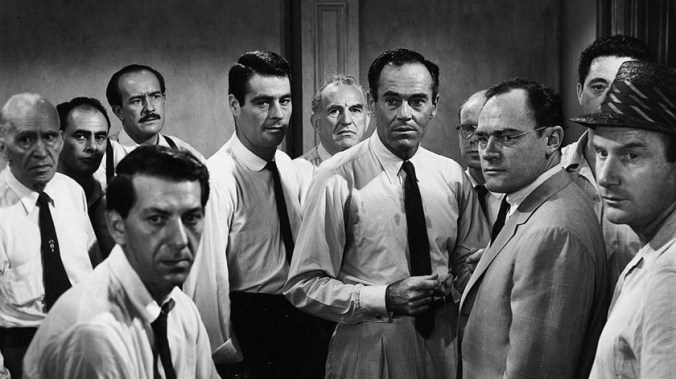
Steve-O-in NJ has stepped into a temporary (I hope) vacuum of ambitious comments to monopolize the COTD field. Steve is a lot more pessimistic than I am, and prone to Jeremiads (THE END IS NEAR!) but he also is willing to make observations that most are reticent to put into print. A few of you out there hang out on my Facebook page, where my alleged friends had a meltdown over a repeat of my musings here about whether Juror 8 in “12 Angry Men” would have bothered fighting for reasonable doubt in the trial of a defendant whom he thought was probably guilty if he knew that a not guilty verdict would trigger violent riots. How dare anyone suggest that there was reasonable doubt in the Chauvin trial? How dare anyone imply that the trial wasn’t fair!

Steve-O’s point about police being in an impossible position still applies to Derek Chauvin, cruel and untrustworthy cop that he undoubtedly was. Usually that impossible position girds police from conviction in all but the most egregious examples of police misconduct, as in the case of Michael Slager. I think the public’s acknowledgement of the dilemma is appropriate and generally ethical, but it is ready-made for accusations of racism when the victim is black.

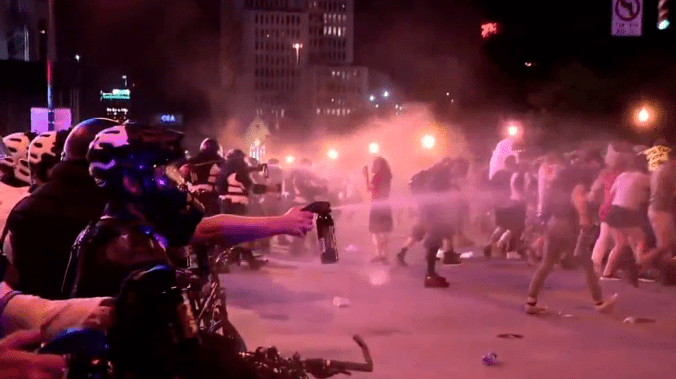
Back to the post that sparked Steve’s COTD, “Ethics Observations On The Shooting Death Of Peyton Ham”, there has been no news coverage of Ham’s death for a week. He was 16, just like the girl shot in the act of trying to stab another teen in Columbus, Ohio, but nobody in Congress or anywhere else is arguing that his youth demanded restraint by police. The reason is that Peyton Ham was a white male, and Ma’Khia Bryant was a black female. The police were supposed to understand that different standards applied. (The photo above is of the Columbus riots in response to the girl’s shooting. Somehow I can’t locate any similar photos of the protests of Ham’s death.)

Here is Steve-O-in-NJ’s Comment of the Day:

Policing in the United States is fast becoming a lose-lose proposition and a job fewer and fewer people are going to want. If you take action, you are considered a thug, a bully, and automatically a racist. If you take no action, you are either lazy or dead from the neck up and need to be fired. We’ve been over this half a dozen times since the death of George Floyd. Policing is by nature a dangerous and demanding job. Policing by nature sometimes requires split-second decisions which have a tiny margin for error and possibly grievous consequences if gotten wrong. Policing is not just about crossing schoolkids, directing traffic, getting lost children home, making reports of fender benders, and once in a while giving out a ticket to someone driving a little too fast or parked in a place clearly marked “no parking.”

Even in the safest small towns in America there are always going to be domestic violence calls, holdups, drunk and disorderly conduct, kids getting into drugs, or the mentally ill who do crazy things that endanger themselves or others. Like it or not, a big part of policing involves making unwilling individuals comply with lawful orders necessary to keep order. Sometimes there is no way to make that happen but to use force. Using force isn’t pretty. It’s not pretty to slam a violent husband or boyfriend down on the kitchen table and cuff him before he hits the woman in his life again. It’s not pretty to cuff a drug-addled, emaciated streetwalker who you’ve told to move along for the umpteenth time and been met with a torrent of profanity each time. It’s not pretty to throw a reeking homeless person who’s been harassing shoppers into the back of a police cruiser to take him somewhere where he can (hopefully) get the help he needs. And no, it’s not pretty to arrest some dreadlocked thug who’s spent his whole life doing nothing but commit crimes when he commits yet another one. It’s also not pretty when a hapless wife or girlfriend gets a broken jaw or a spiral fracture of the arm from a partner who she “just wouldn’t listen to.”

It’s not pretty when a family can’t walk down the street without seeing some skeletal prostitute shooting up. It’s not pretty when everyone has to avoid the block that “Crazy Joe” has claimed as his own. It’s not pretty when DeShawn, out of prison barely a week, sticks up a bodega with a gun or hits somebody over the head because he has no money and few prospects.

Continue reading

Who Is Surprised To Hear That “Propaganda Causes People To Grossly Overstate Police Killings of Blacks”?

Who? Well, probably your friends on social media who think you’re a racist because you point out that Black Lives Matter is spreading lies and hate.

I read with interest this feature yesterday in my New York Times: “Few Charges, Fewer Convictions: The Chauvin Trial and the History of Police Violence.”

It covered two full pages—you know, it was important—and was pure propaganda: deliberately misleading, contoured to make a political argument under the guise of news analysis. I classify the reporters, Aidan Gardiner and Rebecca Halleck, as ethics villains, along with whatever editor gave a green light to publish this deliberate deceit.

It begins,

For many observers, the trial of Derek Chauvin, the former Minneapolis police officer charged in George Floyd’s death, has felt like the culmination of years of outrage and grief over police killings of Black people in America. Video of the arrest that led to Mr. Floyd’s death inspired demonstrations that touched every corner of the country last summer, with protesters demanding justice for Mr. Floyd.

The Times reviewed dozens of similar cases in which encounters between Black people and police ended fatally. Though many cases prompted public outrage, that did not always translate to criminal indictments. In some cases, police officers were shown to have responded lawfully. In others, charges were dropped or plea agreements were reached. Some have resulted in civil settlements. But very few have resulted in convictions at trial.

These cases offer valuable points of comparison about what issues — video evidence, drug use, whether the person who died was armed — proved decisive in each outcome and what consequences, if any, officers faced. Even as the trial has unfolded, several events, including the killing of Daunte Wright just a few miles from Minneapolis, have provided a grim reminder that Mr. Floyd’s death is one in a decades-long history of fatal encounters.

Then we get a list of cases where blacks died as a result of police action. The facts of the cases are summarized briefly, often leaving out important facts. We are told, for example, the Eric Garner was “confronted” by police but not that he resisted arrest, nor that he weighed over 300 pounds. The Times reporters don’t deem it significant that Mike Brown tried to take away the officer’s gun, or that he was shot while charging the cop. In the case of Tamir Rice, the Cleveland 12-year-old shot while playing with a realistic toy gun that had its red tip removed, the article says that “a 911 caller reported seeing a person with a gun but said that it was ‘probably fake’ and that the person was ‘probably a juvenile,'” but does not add the crucial detail that these statements were not relayed to the officer.

I know most of the cases mentioned in the piece; for those I do not, I assume that I am being similarly misled. The Times isn’t reporting or doing legitimate analysis; this is advocacy, and unethical advocacy. Facts that would undermine the political agenda of the reporters, and by extension, the Times, are omitted. That is lying by omission.

Continue reading

Ethics Reflections And Questions On The Chauvin Verdict, Part 2

Part 1 is here. As I expected, there was a lot of dubious as well as perceptive commentary after the verdict, and some related events with ethics implications.

1. I’d comment on this, but Ann doesn’t allow comments any more...The only note Althouse had on the verdict was a detached, “I’m sure that is an immense relief to many, many people.” Not to me. I’m not relieved when the justice system allows itself to be dictated to by mobs. Nor am I relieved when racial significance is illicitly attached to a non-racial episode so activists can lie about it.

2. The reason why there was no reason to be “relieved” arrived quickly, in the form of the Democrat reaction to the police shooting of 15-year-old Ma’Khia Bryant in Columbus, Ohio. Body camera footage showed Ma’Khia charging at another young woman apparently preparing to stab her with a knife. Attorney Ben Crump, looking for the next black family he can represent and the next white police officer he can demonize in the press, referred to Ma’Khia as “unarmed” in a tweet. “Squad” member Ayanna Pressley tweeted, “Black girls deserve girlhood — uninterrupted. Black girls deserve to grow up and become women” —apparently even if they kill other black girls on the way to growing up. Senator Sherrod Brown disgracefully tweeted, “While the verdict was being read in the Derek Chauvin trial, Columbus police shot and killed a sixteen-year-old girl. Her name was Ma’Khia Bryant. She should be alive right now.”

Naturally, BLM protests erupted in Columbus. When Ethics Alarms says “Facts Don’t Matter,” I’m not being cute. The push to brand virtually any law enforcement action against black lawbreakers as racist and an example of police misconduct will gather power with each perceived victory. The effort to bully elected officials and juries into discarding due process and sound policy to accomplish this will not stop or weaken until enough Americans have the courage to brave accusations of racism and say “Enough.”

Continue reading

Unethical Quote Of The Month (And A Candidate For Ugliest Statement By An Elected Official For All Eternity): Speaker Of The House Nancy Pelosi (D-CA)

“Thank you George Floyd for sacrificing your life for justice. For being there to call out to your mom — how heartbreaking was that? — to call out for your mom, ‘I can’t breathe.’” But because of you and because of thousands, millions of people around the world who came out for justice, your name will always be synonymous with justice.”

Nancy Pelosi, apparently trying to kill as many people as possible by making their heads explode.

I know I promised to save all of today’s Derek Chauvin verdict-related notes for Part 2 of this morning’s post, but the sheer awfulness of Pelosi’s words, the astounding tone-deafness, the massive stupidity it must require to think for a millisecond that such a sentiment is anything but revolting, and the ick!–yecchh!–gag!–ACK!–pitui! pandering and shamelessness a human being would have to possess to vomit up such a statement demands a free-standing rebuke.

Those flames are for you, Nancy.

Apparently enough people on the “Let’s hang Derek Chauvin from a sour apples tree!” side of the matter were similarly horrified by Pelosi’s latest that we cannot say that her quote fairly stands for the moral, ethical and intellectual rot of the entire Democratic Party and progressive movement. That’s small mitigation. This woman has been leading the Democrats forever (or it seems that way), and such a sentiment is signature significance. If you think something like this, never mind say it out loud, never mind say if for for public consumption, you are not qualified to hold public office. For years we have seen public figures, professionals and celebrities cancelled for less. Much less.

And if you’re capable of saying something this stupid, you’re not qualified to eat with anything sharper than a spoon.

To begin with the obvious, it isn’t a sacrifice when someone has no choice in what happens to him or her. Way, way down the scale of those who cannot be thanked for a sacrifice are those who are victims of crimes or the negligent acts of others.

Continue reading

Ethics Reflections And Questions On The Chauvin Verdict, Part I

I haven’t read much commentary on yesterday’s verdict yet. I’m assuming that I’ll have more observations later in the day.

1. Ultimately, it appears that the jury just decided that it wasn’t worth it to acquit Derek Chauvin even if there was reasonable doubt. That’s sad, but the calculation can be defended on utilitarian grounds, meaning that, ironically, the arguably unethical decision to discard the law, individual rights, a fair trial and the integrity of the justice system might have been an ethical decision because it will cause less harm in the long and short run. In other words, it can be defended as a decision in which ethics won and the law lost.

I’m not saying that I would defend it that way, but I acknowledge the argument as respectable.

2. It is important to remember that cases where verdicts were based on emotion, human nature, and sociopolitical dynamics rather than the evidence and strict adherence to the law have occurred periodically, and will continue to do so.

The Nuremberg Trials were travesties from a legal standpoint, and the verdicts “ethical” only in the sense that a formal, solemn statement that some conduct is so heinous that civilization has an obligation to reject it was deemed more important than such niceties as avoiding hypocrisy or respecting the law’s aversion to ex-post facto legal penalties. The trial of the alleged conspirators to murder Lincoln was as rigged as a trial can be. This isn’t an “it happens all the time” excuse for the Chauvin trial, but a reminder that the Chauvin case isn’t the cataclysmic scar on the justice system that many will claim it is.

Continue reading

As The Chauvin Jury Finds The Defendant Guilty As They Were Ordered To Do, The President And Rep. Waters Deny That They Said What They Said

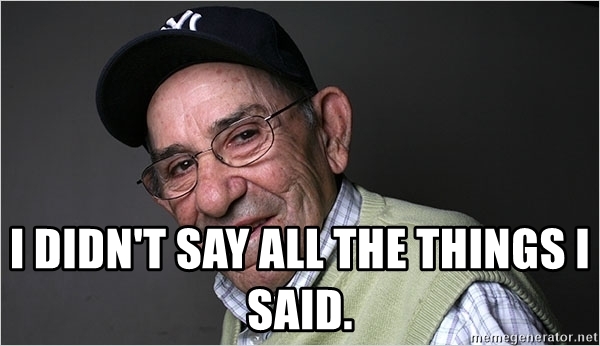
But when Yogi Berra denied that he said what he said, it was funny..

In Minneapolis, the jury found Derek Chauvin guilty of unintentional second-degree murder, third-degree murder, and second-degree manslaughter in his role in the death of George Floyd on May 25, 2020.

It would be a defensible verdict if he had received a fair trial, and the jury didn’t fear that they would spark national riots, property destruction and death if they found reasonable doubt. It would have been more defensible if the otherwise competent judge hadn’t botched his obligation to sequester the jury when another Minnesota police officer shot a black man, and riots did occur, with more on the horizon.

It is not a fair trial when a nationally known Congresswoman and the President of the United States publicly declare that, in the words of the Congresswoman, a defendant is “guilty, guilty guilty!”

So now, after polluting the trial and the verdict, both the President and the Congresswoman are engaging in a wretched display of “I didn’t really say what I obviously said and meant to say.”

Yogi Berra this ain’t.

First, here’s Maxine’s hilarious “translation” of what she meant when she told some potential rioters, ““We’ve got to stay in the streets, and we’ve got to demand justice,” Waters said. “I am hopeful that we will get a verdict that says, ‘guilty, guilty, guilty,’ and if we don’t, we cannot go away. We’ve got to get more confrontational. We’ve got to make sure that they know that we mean business.”

“I wanted to be there kind of as Auntie Maxine, to show them that not only do I love them and I support them, but they can count on me to be there with them at this terrible time in all of our lives,” Waters said in her own defense. But she is not their aunt. She is an elected official of the United States of America, and is sworn to uphold the Constitution, which means, among other things, not using her position to urge members of the public to break the law, and not using her influence to deny an American citizen a fair trial.

In another interview, she tried rationalizations instead of masquerade:

Continue reading