Thanks, Everyone, For A Successful, Lively, Enlightening 2013!

Ethics Alarms ends 2013 with close to 300,000 more page views than 2012, and this was it best month ever, with a full 25% more activity than the previous high. Thanks to everyone who read, lurked, linked, objected, weighed in and contributed. The Best and Worst in Ethics for the year will be posted here soon, so be on the look-out.

And good night, tgt, wherever you are…

Happy New Year, Everyone!

In Search Of Ethical Pop Songs

It was around this time last year that Ethics Alarms expanded its list of the top Hollywood movies with ethical lessons and themes to 25. (You can find the complete collection here, here, here and here.) I am researching a similar list for popular songs, and this task is far more difficult. Most pop songs, if they have a story at all, convey unethical lessons and cautionary tales: exemplary ethics are not, apparently, the stuff hits are made of.

I am soliciting nominations. To get you started, here are two on my list, both oldies. The first is “Ringo,” one of those talking songs like Jimmy Dean’s “Big John” (also a candidate for the list), performed by Pa Cartwright himself, Lorne Greene. The ethical values shown in this Western tale are kindness, reciprocity, loyalty, and gratitude:

My second nomination is one of several sound-alike hits from Gary Puckett and the Union Gap. In this song, Gary illustrates an understanding of Restraint Bias—none of us is as resistant to temptation as we would like to believe. The song is about responsibility. (I don’t think Roman Polanski was a fan of the Union Gap).

I await your playlists.

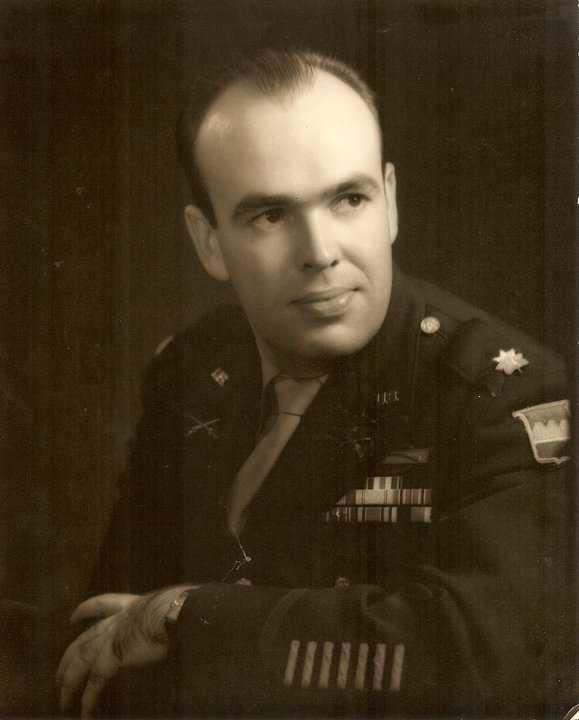
Ethics Heroes: The Mourners of Harold Jellicoe Percival

It’s a simple story.

Thanks Dad. Thanks, Harold. Oh, shut up. Justin!

Thanks Dad. Thanks, Harold. Oh, shut up. Justin!

From the Los Angeles Times:

When Harold Jellicoe Percival died last month, the British World War II veteran’s obituary mentioned that he had no close family to attend his funeral. But after the obituary went viral, hundreds of people showed up to honor him Monday. Percival, who served as a member of the Royal Air Force’s Bomber Command, died on Oct. 25 at the age of 99. His obituary requested that “any service personnel who can attend his funeral service would be appreciated.” It spread across social media brought it to the attention of service members and veterans organizations in Britain, They, in turn, rallied people to attend his funeral and honor his memory on Armistice Day.

There were reportedly 100 mourners in the church, and another 400 standing outside.

The ethical virtues demonstrated here are respect, gratitude, kindness, and citizenship. Somebody please explain this to Salon’s clueless, obnoxious, ungrateful and ethically, historically, logically and rhetorically-challenged writer Justin Doolittle, who argues that there is no reason to thank veterans for doing the dirty work of democracy and putting their lives on the line to protect his. Continue reading

And I Tip Mine To You

October 2013, as of today, has brought the most traffic and the most visitors to Ethics Alarms of any month since the blog debuted four years ago.

Thank you to all those who have stopped by, read, considered, commented, argued and helped make this—apparently–an interesting, thought-provoking and occasionally enlightening place to land and delve into the dynamic, elusive, essential and infuriating field of ethics. Thanks also for tolerating my quirks, typos, obsessions, errors, temper, excesses, failures, and typos. Also my biases. I’m working on them.

Thanks, everyone.

Now back to work.

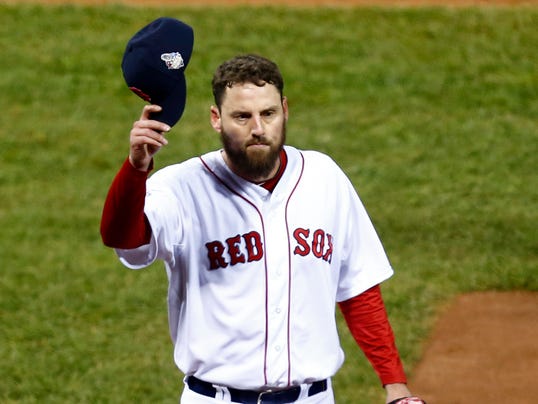
World Series Ethics: He Tipped His Cap

What would Ted Williams have done? We know the answer to THAT question...

What would Ted Williams have done? We know the answer to THAT question…

The Boston Red Sox won the World Series last night, making me happy. Something else happened too.

Some background is in order. The great Ted Williams used to give Boston baseball fans the biggest hat tip in baseball as they cheered him after a home run. This was when he was first known as “the Kid’ and indeed was one, as his Hall of Fame trajectory was obvious from the moment he stepped on a major league field in 1939 at the tender age of 19. Gradually but rapidly, a vicious local press and some ugly incidents in response to a few jackasses in the stands caused the Kid to sour on the admission-paying mortals who booed him when he struck out, and he decided to ignore their cheers, refusing to extend the traditional courtesy of a hat tip to the fans as he rounded the bases after a home run—which, since he was Ted Williams, happened frequently. Williams  spent his whole career in the city of Boston playing before those fans who offended him in his twenties, but right up to and after his final home run, which he hit, famously, in his last at bat, the Red Sox fans got no hat tip from Ted. He rounded the bases the final time as they cheered themselves hoarse, and never looked up or acknowledged their praise. Screw ’em.

That was Red Sox pitcher John Lackey’s attitude toward the current generation of Fenway fans, for similar reasons. He had been signed to a rich, long-term contract in 2010 to be a Red Sox mound ace, but arrived in Boston with his arm deteriorating and his abilities diminished. 2010 was a disappointing season for Lackey and 2011 was worse, as he pitched in pain for a team that was short of hurlers. The 2011 Red Sox became infamous for their late-season collapse and underachieving starting pitchers, and no one on that team was jeered on the field or savaged in the call-in sports shows like John Lackey. He missed the entire next Red Sox season recovering from arm surgery after the 2011 collapse, and thus missed the 2012 debacle that was even worse. In 2013, however, Lackey returned with a renewed right arm, a fit body and a fierce determination to finally live up to the big contract. He did, too. He pitched well all season, and became a key factor in the Boston charge to the World Series, as they rose from last place in their division in 2012 to first.

In 2013, Lackey received nothing but cheers from the surprised and grateful Boston fans. Nevertheless, he adamantly maintained the Kid’s attitude—“Screw ’em”—all season long. As he walked into to the Red Sox dugout after being relieved in another fine pitching performance and the Boston fans saluted him, Lackey refused to reciprocate with the traditional hat tip, all season long and through the play-offs. The fans were fickle hypocrites, and their loyalty conditional. They booed him when he was valiantly pitching hurt and embarrassed in 2011, and he wasn’t going to forget it. They were going to get snubbed like they deserved, and that was the way it was going to be.

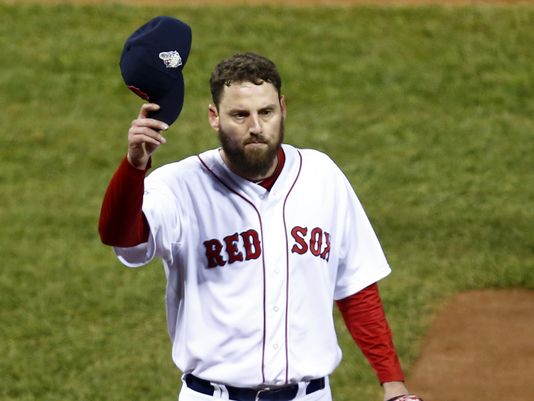
Last night the Boston Red Sox won their third World Series in the last ten years. It was the first time the home team fans had been able to witness the deciding game since 1918 (as the Fox announcers informed the presumably senile audience over and over and over again), and John Lackey was the pitching star for the home town team. The night was a love fest for Boston baseball fans, as they cheered every move of their frequently star-crossed and quirky team, and no Red Sox player was cheered more loudly than John Lackey, as he walked off the field for the final time in 2013 in the 7th inning, with his team safely ahead by five runs. They stood and applauded and chanted his name, as he moved deliberately to the Boston dugout, head down, grim, just like Ted on that gray day in 1960 when he hit homer number 521.

Then he tipped his cap.

It was a small thing, the smallest really, only a gesture and for most players, most of the time, an automatic one…except that it symbolized the ethical virtues of grace, forgiveness, gratitude, humility and fairness. This memorable, wonderful night for the Boston Red Sox and the grand old city it represents—my home town– was no time to let bitterness and resentment prevail. Unlike Ted Williams (who wouldn’t make his peace with Boston fans until years later, when he returned as an opposition manager), John Lackey found the strength and decency to let it go.

It was, as I said, a small thing. But it took character, and it was the right thing to do.

______________________________
Graphic: USA Today
The Ethics of Cheering Alex Rodriguez

Poor Alex Rodriguez and his wife...

Poor, downtrodden, Alex Rodriguez and his wife…

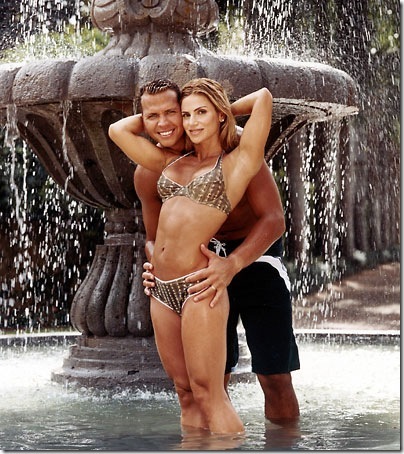
Baseball’s most embarrassing super-star, the steroid cheat Alex Rodriguez, in playing for the New York Yankees while appealing his long suspension by Major League baseball. As he is unquestionably a repeat liar and a serial violator of the game’s rules against PED’s (performance enhancing drugs), as he signed a contract, in part generated by the results of his cheating, that will both enrich him by millions and handicap his team competitively while conferring few, if any benefits, as he would qualify, by most objective standards, as the antithesis of a sports hero, the fact that Arod, as he is called, still was cheered by a vocal minority in Yankee Stadium when he made his season debut this week is intriguing. What does this mean? Can it be ethical to cheer Rodriquez now?

These are deceptively complex and difficult questions. The threshold  issue is whether cheering or jeering any sports figure, or any public figure at all, is an act with ethical content rather than just a communication of an opinion. Is it conduct, or just “words”? I think, in the context of the Rodriquez situation, a sound argument can be made that it is conduct. Registering group approval or disapproval of prominent conduct by someone of status and influence is a crucial societal function in setting standards, registering disapproval, and prompting shame, regret, apology and reform—none of which, so far at least, seem to register with Arod.

That is pretty clearly what the boos convey, but what about the cheers? If the boos are ethical—they are if the disapproval is proportionate, rational, fair, and just—then are the cheers automatically unethical? Not necessarily. Here are some of the things those cheers could be expressing: Continue reading

“Ghosting” Is Unethical

I don't care if you are dead, Marley; when you leave my party, say good-bye.

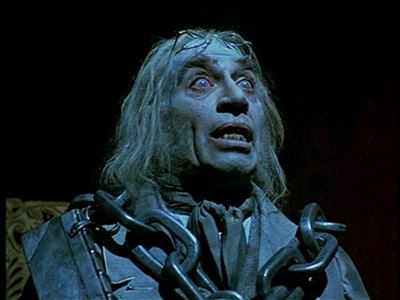
I don’t care if you are dead, Marley; when you leave my party, say good-bye.

Slate contributor Seth Stevenson has an interesting justification for being rude: good manners are too much trouble.

This is the way the world ends, as T.S. Elliot would say.

Stevenson argues that instead of saying goodbye and thank-you to one’s host at a party, the best way to exit is “the Irish good-bye,” or in its non-ethnic stereotype form (Irish guests are presumed too drunk to say good-bye, you see), “ghosting.” “Yes, I know,” he writes. “You’re going to tell me it’s rude to leave without saying goodbye. This moral judgment is implicit in the culturally derogatory nicknames ghosting has been burdened with over the centuries.” That sentence is signature significance for me: Stevenson is an unethical jerk. I get comments and e-mails all the time accusing Ethics Alarms of “moralizing” or being “sanctimonious” when I write that obviously unethical conduct is obviously unethical. That’s because unethical people who do unethical things feel much better about themselves if nobody calls them on it, so they can maintain, as one recent commenter did here who was, I’m proud to say, chased away by the rest of you (and me) with torches and pitchforks, that ethics is “100% subjective”—Translation: “If I want to do it, it’s ethical.”

That’s essentially Stevenson’s reasoning, too.  “Is it really so bad to bounce without fanfare?,” he asks. Continue reading

Dear Sincerely Shallow: “It’s True, You’re Horrible. Show Your Fiancé Your Letter, And Go Pimp Yourself Out Like Anna Nicole.”

This could be you, SS!

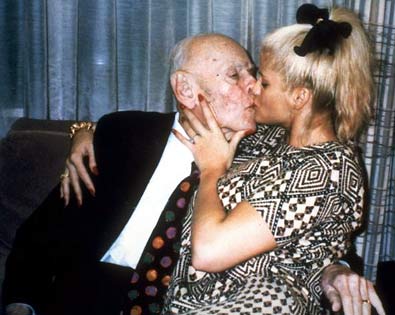
This could be you, “Sincerely Shallow” ! Go for it!

Emily Yoffe is Slate’s stunt advice columnist, who in her “Dear Prudence” column answers questions reminiscent of the freak-show howlers they used to concoct for the “Penthouse Forum” (or so I’ve heard.) Sometimes Emily’s advice has me convinced she is the consort of Pazuzu, and other times her advice is measured and wise. This time, she sided with the demon, and I’m about finished with her.

Here is the query sent by “Sincerely Shallow” in its entirety. I’m sure it’s viral by now:

Dear Prudence,
I’m recently engaged to the most honest, thoughtful, and loving man I’ve ever met. He has supported me through many hard times, including losing my job and being assaulted. Here’s the but about him: He makes no money. He has ambitions, and he’s smart, but will likely only bring a middle-class income at best. I have an OK job and I’m self-sufficient. Now here’s the but about me: I’m really, really pretty. My whole life people have told me I could get any man I want, meaning a rich man, and are shocked that I’m engaged to my fiancé, nice though he is. I’ve never dated a rich man, but it does make me curious. So part of me thinks I’m squandering my good looks on this poor man, and the other part of me thinks that I’m so shallow that I don’t even deserve him or anyone else. Am I a fool for thinking that a poor man can make me happy, or an idiot for believing a sexist fantasy?

You can read “Prudence’s” annoying answer here, which concludes with this: Continue reading

Ethics Hero: Indianapolis Big Tipper, “Miss Jo”

Big Tip

It has been a rotten week in every way. My good friend and mentor, legal ethics expert/ attorney/ professor/performer David Austern died, leaving me with memories of how much he meant to my life, and how inadequately I thanked him. My son has been off on his first extended road trip without us, giving his mother and I a preview of how much we will miss him as he prepares to leave the nest. And, of course, I simultaneously watched our government fulfill my most pessimistic predictions as it appeared to fairly shamelessly embrace lies and abuse of power as legitimate tools of governance, and lost  respect for many, many people I had once thought better of for not only excusing the inexcusable, but embracing a looming threat to democracy.

Depressing, discouraging, frightening, and rotten through and through.

I need a break.

I need hope.

Thank you, Miss Jo, whoever you are. Continue reading

The Florist, The Gay Wedding And The Slippery, Slippery Slope

OK, she's a jerk. But is it ethical to say she can't be a jerk? Isn't America about having the right to be a jerk?

OK, she’s a jerk. But is it ethical to say she can’t be a jerk? Isn’t America about having the right to be a jerk?

Arlene’s Flowers & Gifts proprietor Barronelle Stutzman had been selling flowers to Robert Ingersoll and his partner, Curt Freed, his partner, for a decade, but drew a line in the sand when they wanted her business to supply the floral arrangements for their same-sex marriage. She refused, citing her relationship with God. This week, Washington State Attorney General Bob Ferguson filed a consumer protection lawsuit against  Stutzman, drawing a line of his own.

There are legal and ethical issues mixed up here like gazpacho, and some of them are not difficult. For example, whether Stutzman should have the legal right to do so or not, her decision to reject and stigmatize long-time customers is indefensible ethically. It is cruel, unfair, ungrateful and disrespectful. They were good enough to profit from for ten years, but not good enough to accommodate at the most important time of their lives? Such conduct earns a massive ethics “Yechh.”  Continue reading