Ethics Quiz: Elizabeth Warren’s Native American Ancestry

Remember that old Cher song, “1/32 Breed”?

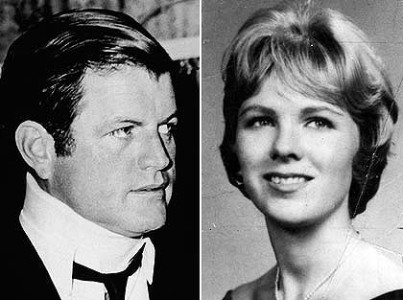
If Scott Brown wins re-election as a Republican Senator from Massachusetts this fall, he will go on record as one of the luckiest political candidates since, well, Barack Obama. Brown won an upset victory in the special election in 2009 (any time a Republican wins in my home state, it’s an upset) in part because his inept Democratic opponent, Martha Coakley, showed herself to be unforgivably ignorant on the one topic most state residents really care about—the Boston Red Sox. Now he has the latest contender for his job, Harvard professor Elizabeth Warren, on the ropes because of her own self-inflicted wound, Warren’s dubious claim of minority status as a Native American between 1986 and 1995.

Warren listed herself as part Native American in the Association of American Law Schools desk book, she says, in the hope of meeting others in her field with similar backgrounds. She did not, she insists, do so to gain any professional edge. Yet in 1992 she was hired to teach at Harvard, and when she became a permanent faculty member in 1995, Warren dropped the minority claim from her profile in the directory. Harvard, meanwhile, began counting Warren as a Native American in its diversity statistics, just as her previous employers had at the University of Texas and the University of Pennsylvania. Whatever her intent may have been, a former chair of the AALS confirms that minority listings in the organization’s directory were used in hiring decisions by members.“In the old days before the internet, you’d pull out the AALS directory and look up people. There are schools that if they were looking for a minority faculty member, would go to that list and might say, ‘I didn’t know Elizabeth Warren was a minority, ” George Mason University Law professor David Bernstein, a former chairman of the American Association of Law Schools, has told reporters. Continue reading

Perplexing Oxymoron of the Month: the Unethical Ethics Fellow

You may want to fine tune that ethics program, guys....

From news reports: “A former Harvard University fellow studying ethics has been charged with hacking into the computer network at the Massachusetts Institute of Technology  to steal more than five million academic articles….Aaron Swartz, 24, was indicted on six counts including wire fraud and faces up to 35 years in prison and a million dollar fine if convicted.”

What?

Questions abound:

What do they teach in Harvard ethics classes?

What kind of grades did Swartz get?

Does this prove that the course of study was junk, or does it prove that he was studying the right subject, since he obviously has a lot to learn?

Is it reasonable to say, “Imagine how unethical he would have been if he wasn’t an Ethics fellow”?

Does this prove that one can be an Ethics Fellow and an Unethical Fellow at the same time?

Should an Ethics Fellow who proves himself to be unethical  be allowed to cite his credentials as an ethics fellow?

If those who can’t do, teach, is he still qualified to teach ethics?

Finally, if becoming an Ethics Fellow at Harvard can’t be relied upon to set the “stealing 5 million academic articles is wrong” alarm, what’s the point?

How the Lack of Ethics Cripples Democracy, Reason #2: Corporate Executive Greed


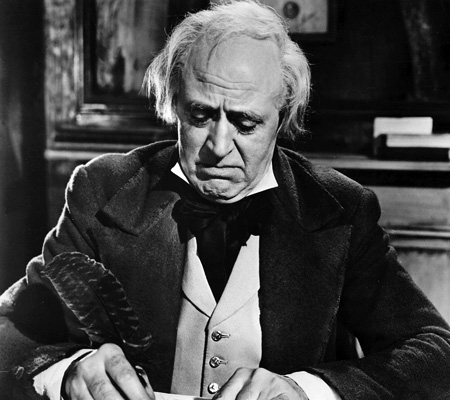
"Let's see...that's one schilling for Cratchet, 280 for me..."

The average compensation for chief executives of the 500 largest U.S. corporations is going up again.

According to Governance Metrics International, the average compensation for the CEOs, including salary, bonus and benefits plus the exercise of stock options, the vesting of stock grants and retirement benefits, was just under $12 million in 2010, up 18 percent from 2009. As Washington Post business writer Steve Pearlstein observes in his column this week, if you believe this is justified by market forces and common sense, “then you must also believe two things: First, that none of these guys would do the same job for a nickel less. Second, that the value of the chief executive went up 18 percent last year while the value of average workers in their companies changed very little.”  “And,” concludes Pearlstein, “if you believe that, you are a fool and an ideal candidate for an open seat on an S&P company board of directors.” Continue reading

Girl Talk and Bigotry Ethics: Celebrating One-Way Gender Bias on ABC

Christiane Amanpour just led a jaw-dropping roundtable discussion on her ABC Sunday morning talk show, “This Week with Christiane Amanpour,”as three female guest commentators ( Torie Clarke, the former assistant secretary of defense for public affairs in the Bush administration: Cecilia Attias, the former first lady of France and founder of Cecilia Attias Foundation for Women, and ABC’s Claire Shipman)
and Christiane discussed how the convergence of  Former IMF director Dominique Strauss-Kahn’s attempted rape charges and Rep. Anthony Weiner’s travails has created a possible tipping point, in which the nation will finally come to the realization of a fact that these women have known all along: women are just plain better than men when it comes to leadership, management, decision-making, and conflict resolution.

The sweeping generalities, stereotyping, and flat pronouncements of male inferiority were unrestrained. Continue reading

Worst Ethics Column of the Month: Michelle Goldberg’s “The Lara Logan Media Wars”

There’s nothing so pointless as complaining about a phenomenon that is logical, natural, useful and just, on the grounds that it’s so darn mean. Nevertheless, that is the gist of a Daily Beast column by Michelle Goldberg, another in the increasingly ethics-challenged stable of journalists being assembled at Tina Brown’s slick website.

Ruing the fate that befell journalist Nir Rosen after he not only ridiculed the horrendous attack on ABC reporter Lara Logan by an Egyptian mob, but implied that as a ‘war-monger” she deserved it, Goldberg wrote…

“…it indicated that Rosen has deep, unexamined problems with women, particularly women who are his more-celebrated competitors. But it was also appalling to realize that this brief, ugly outburst was going to eclipse an often-heroic career. The media’s modern panopticon has an awful way of reducing us all to the worst thing we’ve ever done…Again and again, we see people who make one mistake either forced out of their jobs or held up for brutal public excoriation. But the more we live in public, the more we need to develop some sort of mercy for those who briefly let the dark parts of themselves slip out, particularly when they’re truly sorry afterward.”

Ah, yes, the old “one mistake” plea! Continue reading

Study: Doing Good Makes You Stronger…Unfortunately, So Does Doing Wrong

New research from Harvard University suggests that exemplary ethical conduct may increase an individual’s willpower and physical endurance. Research subjects who performed good deeds or who only imagined helping others excelled over others of similar physical strength in a subsequent task of physical endurance presented by behavioral scientists.

This is good news: the boost in self-esteem, certitude and commitment created by the decision to do something noble and good helps enable us to actually do it, if it is physically challenging. The bad news seems to be that the same holds for people who have made up their minds to do something particularly dastardly, according to the same data. Continue reading

Ethics, Ethics, Everywhere…

Stories with ethical implications are popping up everywhere, in many fields. I’m running hard to keep up; if you want to join the race, here are some recent developments and notes:

  • A prominent Harvard professor and respected researcher just retracted a major paper and has been put on leave, as an investigation showed irregularities in his methods and results. “This retraction creates a quandary for those of us in the field about whether other results are to be trusted as well, especially since there are other papers currently being reconsidered by other journals as well,’’ wrote one scientist. “If scientists can’t trust published papers, the whole process breaks down.’’
  • A Wisconsin lawyer bought a farm from his own client in a bankruptcy matter, a classic conflict of interest. The lawyer’s defense was amusing: since his license had been suspended, he no longer had a fiduciary duty to his now former client. The court canceled the sale. The story is on the Legal Profession Blog.

Unethical Pundit of the Week: The Daily Beast’s Dana Goldstein

I try not to consider political punditry unethical, except when the opinion rendered is unusually dishonest, misleading, uncivil, or unfair. Unfortunately, the current ideological blood sport fostered and nurtured by such outlets as Fox New, MSNBC, the Daily Kos and Breitbart, and carried on by such commentators as Ann Coulter and Frank Rich, make it increasing difficult to follow my own guideline. Occasionally there pieces so outrageously unfair that they make me angry, and those are ethically perilous: emotion is not conducive to balanced analysis. Usually I pass. The recent screed of Dana Goldstein on The Daily Beast, however, has to be condemned.

I just hope I can get through the process of explaining what without becoming furious.

It is entitled “Is Jan Brewer Anti-Immigrant Because She Didn’t Go to College?,” earning an ethics red flag right off the bat for intentionally equating Arizona’s anti-illegal immigration law with being “anti-immigrant,” which it is not.  Continue reading

Ethics Quote of the Week

“For many African-Americans, these facts can be difficult to accept. Excuses run the gamut, from ‘Africans didn’t know how harsh slavery in America was’ and ‘Slavery in Africa was, by comparison, humane’ or, in a bizarre version of ‘The devil made me do it,’ “Africans were driven to this only by the unprecedented profits offered by greedy European countries.”

Henry Louis Gates, in his New York Times op-ed, “Ending the Slavery Blame-Game,” confronting the complicity of Africans in American slavery by selling their own people to slave-traders.

Harvard professor Gates, a respected authority on race in America despite his problems with the Cambridge police, has made an admirable effort to take the issue of reparations out of the context of racial guilt-mongering and forcing advocates to deal with facts rather than emotion. The fair starting point for discussions, Gates points out, is that the ancestors of white and black Americans profited from slavery.

Does this rule out any fair and coherent allocation of slave reparations, which were conceptually problematical already? Probably, and if so, we should move on to more productive debates. Gates is brave and responsible for shining light on a genuinely “inconvenient truth.”