Ethics Observations On An Ugly–But Entertaining!—GOP Debate

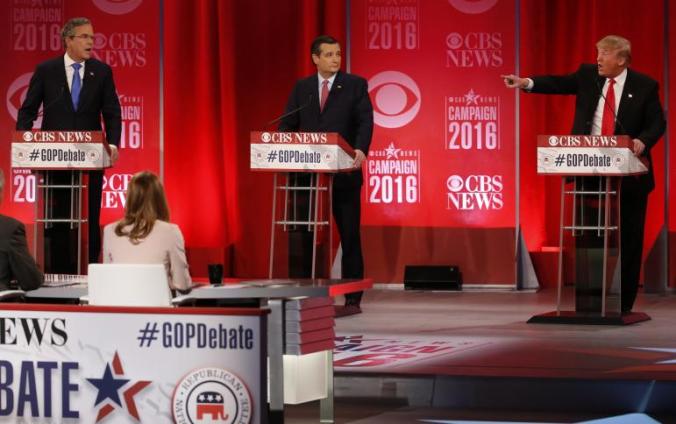
CBS debate

I knew this time would come, and it came the same week for both parties: I’m getting sick of the debates, and it’s harder and harder to find new illumination and conclusions with each one. For some reason, however—the effect of the unsettling news of Justice Scalia’s sudden death. perhaps?—last night’s Republican debate (transcript here) was nastier and more personal than any of the debates this cycle, and Charles Krauthammer may be correct that that it was the most ugly Presidential candidates debate ever.

Observations:

1. This was 100% the fault of Donald Trump. I keep reading that the Republicans should be embarrassed—-what control does the party have over Trump? He’s in the race, and that means that he will drag down the conduct in the race. Arguing with him is like arguing with a 12-year-old—I was reminded of Erma Bombeck’s line that it is impossible to argue with a six-year-old without sounding like a six-year-old. Sometimes I think all the debaters should agree to turn their backs on Trump when he’s ranting, like all the jurors do in “Twelve Angry Men” when the racist finally lets it all out.

I wrote months ago that Republicans should have told Trump he wasn’t a Republican and thus wasn’t welcome in the debates, the nomination race or the party. They had neither the foresight, principles nor guts to do that, and now they are stuck with him polluting the debates and the race, engaging in the equivalent of belching and farting, as the juveniles supporting him cheer and snicker. Good job, everybody.

2. That was excellent, fair, competent moderation by John Dickerson. You know the debate has been a mess when the moderator is the star.

3. I have really come to resent Ben Carson’s sleepy, arrogant, useless statements and observations, wasting precious time, blathering platitudes, appealing only to those ignorant souls, like him, who really think the most challenging and consequential job on Earth should be handed to a proud amateur. In that respect, he is the most unethical individual on the stage. Continue reading

Tales Of The Unethical: A Client Hacks, His Lawyer Cheats, And HIS Lawyer Spins

hackedWhat a mess.

Missouri lawyer Joel Eisenstein saw two documents illicitly obtained by his client: a payroll document for the client’s wife and a list of direct examination questions prepared by his client’s wife’s attorney for an upcoming divorce trial.

This kind of stuff, proprietary material that is handed over to a lawyer by someone, including a client, who received it under dubious circumstances is ethically radioactive. As the DC bar wrote in Ethics Opinion 318…

When counsel in an adversary proceeding receives a privileged document from a client or other person that may have been stolen or taken without authorization from an opposing party, Rule 1.15(b) requires the receiving counsel to refrain from reviewing and using the document if: 1) its privileged status is readily apparent on its face; 2) receiving counsel knows that the document came from someone who was not authorized to disclose it; and 3) receiving counsel does not have a reasonable basis to conclude that the opposing party waived the attorney-client privilege with respect to such document. Receiving counsel may violate the provisions of Rule 8.4(c) by reviewing and using the document in an adversary proceeding under such circumstances and should either return the document to opposing counsel or make inquiry of opposing counsel about its status prior to determining what course of action to take. Continue reading

Jumbo Alert, As An Integrity And Corruption Check For Pundits, Journalists, And All Your Hillary Clinton-Defending Friends Looms

Jumbo film

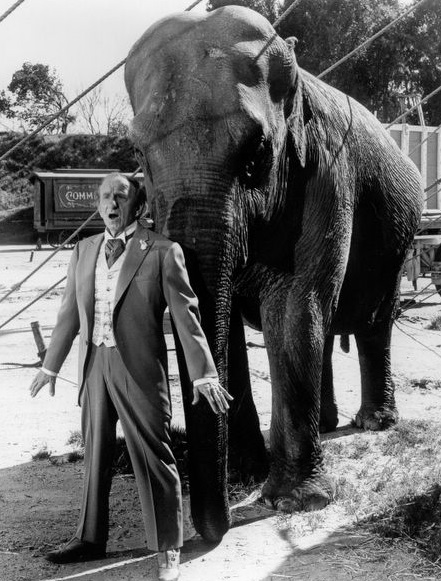
The real test of when someone will lie to your face is when they will insist that their former, perhaps bias-supported but still sincerely-held position is still valid after all justifications for it have vanished. This is Jumbo territory, the point where Jimmy Durante, giant elephant in tow, shrugged to the accusing sheriff in front of him and said, “Elephant? What elephant?” That, however, was a joke. This is tragic.

Many of us knew we would reach this point long ago, of course. As many, including me, have documented since the New York Times first broke the story of how Hillary Clinton had defied policy, best practices, competent national security management, technology common sense and perhaps the law by receiving and sending her official State Department e-mail on a home-brewed server. First she said there was nothing improper about doing this, then she said she had received no classified information, then she said she had received no material marked classified. She trotted out rationalizations: “everybody did it,” “other Secretaries of State did it,” “don’t sweat the small stuff,” ultimately adding a rationalization to the list, “It wasn’t the best choice.”

Those of us who have followed the pattern of Clinton scandals over the years knew that her camp was running out of smoke when it defaulted to the old “vast right wing conspiracy” diversion that worked so well—for a while—during the Monica Mess. The facts have been pretty clear for a while now, to anyone with the honesty and fairness to acknowledge them. Hillary Clinton, for her own convenience (as she has said) and to keep her communications out of the view of Congress, the public, political adversaries and law enforcement as she mixed personal business, politics and influence peddling with her official duties, willfully endangered US security and even the lives of intelligence personnel by handling official communications in an insecure manner.

The FBI has been investigating all of this—not her, her campaign keeps reminding us, just the e-mails!—and the State Department, which has been acting as a partisan ally when it’s duty is to the American people, finally was forced by a judge to review and turn over the e-mails involved, other than the ones Clinton had destroyed by her lawyer (nothing suspicious or irregular about that). With each new batch revealed, more e-mails that contained classified information have been found. Former Defense Secretary and CIA director William Gates said this week that Russia, China and Iran, among other foreign nations, probably hacked Clinton’s e-mails, “given the fact that the Pentagon acknowledges that they get attacked about 100,000 times a day.” Meanwhile, State has identified over 1,200 emails that it deems classified were sent over Hillary’s private server, making her first denials ridiculous, and her ultimate denials an admission of gross negligence and stupidity, even if they were true. The Secretary of State didn’t discern that any of 1200 e-mails contained information requiring care and confidentiality? This is the “I’m not corrupt, I’m stupid” defense, which is one no Presidential candidate ought to be allowed to get away with, especially one being extolled by the current President for her alleged competence and experience.

Now the walls, and the facts, are closing in. Yesterday, the Obama administration confirmed for the first time that Hillary Clinton’s home server contained closely guarded government secrets, and announced that 22 emails that containing material requiring one of the highest levels of classification were so sensitive that they could not be released.  Is that clear? These are communications that were on an insecure server, vulnerable to hacking, that Clinton saw, and either didn’t recognize as such—she’s not that stupid—or didn’t care enough to start being responsible. With such e-mails, it doesn’t matter if they are marked: they are self-marking: big, loud, throbbing documents that any Secretary of State, even Secretary Gump, must know are classified because of their content.

The State Department revelation came three days before  the Iowa presidential caucuses, and, incredibly, the Clinton campaign complained about the timing! Yes, it is certainly outrageous to let voters know about the duplicity and incompetence of a candidate for President before they vote for her. This is how Clinton thinks. If that doesn’t bother you, get help.

Federal law makes it a felony for any government employee to mishandle classified information, and here comes the integrity check. With this new information, Clinton has no defense. By definition, allowing top secret information to be received and perhaps forwarded on an insecure, private server is mishandling, and illegal.  Clinton’s campaign, of course, is lying and spinning: the current tactic is to dismiss this as an inter-agency dispute over what is classified. (The Clinton-enabling Vox made bolstering this deflection the centerpiece of its “explainer”) However, when the current State Department is so sure of 22 e-mails’ top secret character that it feels it must withhold them from the public and the media, it is obvious that this was no close call, especially since State has been covering and spinning for Hillary to a disgraceful degree already.

So the facts speak: Yes, she lied. Yes, she endangered U.S. security. Yes, she willfully exposed classified documents to hacking by our enemies. Yes, she did this for her own personal and political benefit.

Yes, she broke the law, and this law ain’t jaywalking. Continue reading

Ethics Quiz: Second Thoughts About An Ethics Hero Emeritus

challenger-shuttle-disaster-crew

I periodically read random posts here from years ago, to check and see if I would make a different analysis today, and why. It almost never happens, which is good: though I may not trace all of the steps in every post, the systems, methods, models, values and priorities I use to assess various events and scenarios are established and consistent. I also check older posts when I am uncertain about a new version of an issue I have addressed before. Again, I am almost always struck by how closely my thinking then matches my approach now. I am also often struck by the fact that I don’t recall writing the earlier post at all. There are over 6000 of them, so I don’t feel too senile.

Today, however, I read this NPR story, about a previously unnamed engineer at NASA contractor Morton Thiokol who had been interviewed, with a promise of not being named, by NPR after the Challenger Space Shuttle exploded, 30 years ago. Now Bob Ebeling has finally come forward publicly, and allowed his name to be attached to his tragic story.The night before the launch, he and four other engineers had tried to stop it, because the weather was too cold—it was the coldest launch ever— and their research told them that that the rubber seals on the shuttle’s booster rockets wouldn’t function properly in the extreme temperatures. They begged for the launch to be postponed, but their supervisors and NASA overruled them.

That night, Ebeling told his wife, Darlene, “It’s going to blow up.” It did.

“I was one of the few that was really close to the situation,” Ebeling told NPR. “Had they listened to me and wait[ed] for a weather change, it might have been a completely different outcome…NASA ruled the launch. They had their mind set on going up and proving to the world they were right and they knew what they were doing. But they didn’t.”

Thirty years ago, when Ebeling didn’t want his name used or his voice recorded,  he said he feared losing his job but that,”I think the truth has to come out.” After the interview, the investigations, and the law suits, he left the company and suffered from depression and guilt that has lasted to this day. He told NPR that in 1986, as he watched that horrible video again on TV, he thought, “I could have done more. I should have done more.”

Reading and listening to the NPR story, I agreed with him. He should have done more. I was about to write a post from that perspective, when I realized I had not only written about another engineer who had tried to delay the launch, but inducted him into the Ethics Alarms Heroes Hall of Honor. His name was Roger Boisjoly, and of him I wrote in part…

Six months before the Challenger disaster, he wrote a memo to his bosses at Thiokol predicting”a catastrophe of the highest order” involving “loss of human life.” He had identified a flaw in the elastic seals at the joints of the multi-stage booster rockets: they tended to stiffen and unseal in cold weather.  NASA’s shuttle launch schedule included winter lift-offs, and Boisjoly  warned his company that send the Shuttle into space at low temperatures was too risky. On January 27, 1986, the day before the scheduled launch of the Challenger, Boisjoly and his colleague Allan J. McDonald argued for hours with NASA officials to persuade NASA to delay the launch, only to be over-ruled, first by NASA, then by Thiokol, which deferred to its client.

And the next day, on a clear and beautiful morning, the Shuttle’s rocket exploded after take-off, killing the crew of seven and mortally wounding the space program.

My ethics verdict then? This:

“Can we accurately call Roger Boisjoly an Ethics Hero, even though he didn’t stop the launch? I usually don’t like to call people heroes for doing their jobs. If Thiokol and NASA had behaved ethically, competently and rationally, we would not know anything about his memo or him. He did the right things, as his duties demanded. He alerted management to a deadly problem in plenty of time to address it. When they went forward, he argued and protested, until the decision was final. Afterwards, he told the truth to investigators, so the decision-making problems could be addressed. In his world, in that bureaucracy, this—doing his duty, doing the right thing—took courage. He knew, I am certain, that his career would suffer as a result of his actions. Yes, that makes Roger Boisjoly an ethics hero.”

If Boisjoly was a hero, then so is Ebeling, though Boisjoly spent the rest of his professional life lecturing at engineering schools around the world on ethical decision-making, trying to prevent future disasters.

So please help me resolve a Present Jack vs. Past Jack conflict, by considering this Ethics Alarms Ethics Quiz:

Are Bob Ebeling and Roger Boisjoly really heroes?

Continue reading

Considering The Fox Trump-less GOP Candidates Debate

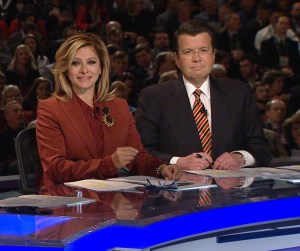
Fox moderators

1. The run-up to the debate yesterday was embarrassing to the news media, especially CNN—even Fox did not obsess as much about the man who wouldn’t be on stage in Iowa as that shameless network. Not that Fox isn’t shameless: it’s greatest shame, Bill O’Reilly, once again showed himself to be both unethical and insufferable when he had Trump on his show and begged, pleaded, and cajoled the real estate mogul to reverse his decision. “Be the bigger man,” Bill said at one point. What the hell does that mean? Bigger than who? His employers—I don’t watch Fox live any more because they are still his employers—who properly refused to let him bully Megyn Kelly out of a moderator’s chair? Megyn Kelly? No, that can’t be it. Trump is a intellectual, moral and ethical midget with delusions of grandeur: O’Reilly was just feeding his ego. Then we learned, from Trump, that O’Reilly had enticed him on the air by promising not to talk about the debate boycott. O’Reilly admitted that was true, and then blathered facetiously about milkshakes, as if lying to a guest’s face was a big joke. O’Reilly is one of the deplorable people—most of his supporters, famous and not, are also in this category—who are so devoid of principles themselves that they make Donald Trump look admirable by comparison.

2. I wish I could say that Megyn Kelly was impeccable last night, but she wasn’t. She had a big chip on her shoulder, and mentioned Trump in the very first question, with a pre-composed, gaggy phrasing about “the  elephant not in the room”—lame witticisms were the theme of the night. That made the first question about her, and journalists are ethically obligated not to inject themselves into the story. No moderator should have mentioned Trump, but Kelly particularly. For the rest of the night she was aggressively adversarial, acting as if she was an undercover moderator from CNBC.

3. If there were any lingering doubts about what an arrogant jerk Ted Cruz is, his performance last night ought to have obliterated them. He reminds me of nothing so much as than the cocky high school nerd who thinks that because he’s elected class President, people really like him, but in truth he is socially hopeless. As a stage director and occasional humor writer, I cannot imagine a more pathetic attempt at a joke than his “I’m a maniac. Everyone on this stage is stupid, fat, and ugly. And Ben Carson, you’re a terrible surgeon. Now that we’ve gotten the Donald Trump part out of the way (rim shot!) . . .” bit. His timing was terrible, and because the thing went on long after everyone knew what the punchline would be, nobody but a shill or an idiot would laugh at it. Cruz got even worse, talking past his limit, whining about the moderators siccing everyone else on him (though they were), trying to change the rules, and sounding like Bill Clinton as he tried to explain away what were his obvious flip-flops on immigration.

I noticed that as the camera panned the debaters dispersing after the debate, nobody spoke to Cruz or even looked at him, while the others were smiling and being collegial to one another. No wonder. Continue reading

Eleven Ethics Observations On The Fox GOP Presidential Debate In South Carolina

The moderators...

The moderators…

1. Last night’s Fox News debate was the most ethical,  and generally the best of them all so far, in either party.

2. Rand Paul’s boycott of the so-called “undercard” debate reveals his arrogant nature. Chris Christie was demoted for one round, didn’t complain, participated, did well, and came back to the main event. Rand thinks he’s more qualified to be President  than Carly Fiorina, Mike Huckabee and Rick Santorum. Well, then, show us. Paul, in one complaint, proudly pointed to the fact that he’s the only GOP candidate who wants to legalize drugs and return the U.S. to isolationism as the world burns.  Yes, and this is why you’re not on the main stage, Senator. This is called “answering your own question.”

3. A group of Paul supporters started chanting his name at one point, causing Neil Cavuto to pause and look bemused. Oddly, Donald Trump did not command that their coats be confiscated.

4. Early on, both Bush and Marco Rubio pointed out—since the news media is still trying to soft-peddle it—that Hillary Clinton’s legal problems are serious, and that her lies about her e-mail and Benghazi should disqualify her for national leadership. Good. Continue reading

By Popular Demand: Welcome Ethics Alarms Rationalizations #55, “We’re Better Than This!” and #56, “Think of the Children!”

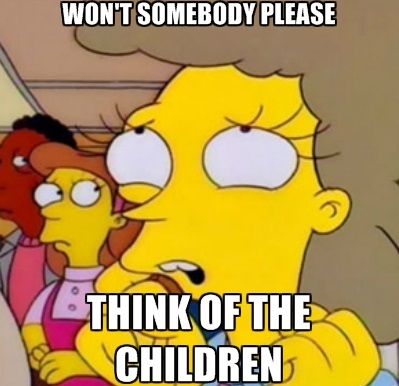
Think of the Children

About a week ago, I asked readers whether “We’re better than this!,” at the time being wielded like a club by Democrats to counter various Republican proposals to control, limit or cease the immigration of Muslims into the U.S., was a true rationalization that deserved inclusion on The List. The response suggested that most of you felt it was, and upon reading the responses, I agree. A rationalization is an invalid and dishonest argument used to advocate or defend questionable conduct. “We’re better than this!” fits that description, and thus I officially dub it Ethics Alarms Rationalization Rationalization#55, “The Idealist’s Delusion,” or “We’re/ You’re Better Than This.”

Like the other rationalizations, “The Idealist’s Delusion” may sometimes be fair and true, but it is still an unethical argument if there is nothing more substantive to back it up. Think of it as the reverse of  #14. Self-validating Virtue, in which unethical conduct supposedly becomes ethical because the person doing it is deemed—usually by himself— incapable of wrongdoing. Rationalization #55 uses presumed virtue to claim that a potential actor is too good to do something…without ever making the case that the considered conduct is really wrong or unwise.  #55 is a pretty neat trick, when you think about it: it simultaneously appeals to an individual or organization’s self-esteem while unilaterally declaring an objective, motive or methods demeaning. This relieves the advocate for avoiding the conduct in question of the requirement to make the case with more than vague declarations of principle. If #55 is effective, it can only be because those persuaded never engaged in critical thinking, asking and answering such crucial questions as what are the benefits of this proposed action, who will it benefit, what ethical principles does it follow or violate, and are the intended results worth the cost? The Idealist’s Delusion is a cynical tool to bypass ethical decision-making by assuming the result, and using ego and guilt to stifle objective analysis. As I wrote in the earlier post.

When “We are better than this” is followed by “because..’ and more substantive points, I have no objection to it, although “we should be better than this” is fairer. It can begin an analysis, but is not an analysis itself. However, when it is used as a substitute for analysis, it is pure rationalization.

I am also finally adding “Think of the Children!” to the list, as Rationalization #56, The Universal Trump. Continue reading

Now THIS Is Sportsmanship! Bravo, Tennis Pro Jack Sock, Ethics Hero

Even for tennis, this was exemplary sportsmanship.

Kansas City’s Jack Sock was playing hard-serving Lleyton Hewitt in the Hopman Cup in Perth, Australia. Hewitt, trailing 4-5 in the first set, smashed a serve past Sock that the linesman  called out.  Sock shocked Hewett and everyone else when he said to his opponent, “That was in, if you want to challenge.”  The crowd laughed; the umpire looked bemused, and Hewitt paused for a few seconds, then indeed challenged the call. Sure enough, the computer and camera showed that the serve was good, giving Hewett the point. He went on  from there to win that set and eventually the match.

I’m sure that Sock will consider his Ethics Alarms honor more than sufficient compensation. He seems like that kind of guy.

_________________________

Pointer: tgt

The Seventh Annual Ethics Alarms Awards: The Best of Ethics 2015, Part I

Sweet Briar montage

Welcome to the Seventh Annual Ethics Alarms Awards, our blog’s retrospective of the best and worst in ethics over the past year, 2015.

It was a rotten year in ethics again, it’s fair to say, and Ethics Alarms, which by its nature and mission must concentrate on episodes that have lessons to convey and cautionary tales to consider probably made it seem even more rotten that it was. Even with that admission, I didn’t come close to covering the field. My scouts, who I will honor anon, sent me many more wonderfully disturbing news stories than I could post on, and there were many more beyond them. I did not write about the drug company CEO, for example, who suddenly raised the price of an anti-AIDS drug to obscene levels, in part, it seems, to keep an investment fraud scheme afloat. (He’ll get his prize anyway.)

What was really best about 2o15 on Ethics Alarms was the commentary. I always envisioned the site as a cyber-symposium where interested, articulate and analytical readers could discuss current events and issues in an ethics context. Every year since the blog was launched has brought us closer to that goal. Commenters come and go, unfortunately (I take it personally when they go, which is silly), but the quality of commentary continues to be outstanding. It is also gratifying to check posts from 2010 and see such stalwarts who check in still, like Tim Levier, Neil Dorr, Julian Hung, Michael R, and King Kool.  There are a few blogs that have as consistently substantive, passionate and informative commenters as Ethics Alarms, but not many. Very frequently the comments materially enhance and expand on the original post. That was my hope and objective. Thank you.

The Best of Ethics 2015 is going to be a bit more self-congratulatory this year, beginning with the very first category. Among other virtues, this approach has the advantage of closing the gap in volume between the Best and the Worst, which last year was depressing. I’m also going to post the awards in more installments, to help me get them out faster. With that said….

Here are the 2015 Ethics Alarms Awards

For the Best in Ethics:

Most Encouraging Sign That Enough People Pay Attention For Ethics Alarms To Occasionally Have Some Impact…

The Sweet Briar College Rescue. In March, I read the shocking story of how Sweet Briar College, a remarkable and storied all-women’s college in Virginia, had been closed by a craven and duplicitous board that never informed alums or students that such action was imminent. I responded with a tough post titled “The Sweet Briar Betrayal,” and some passionate alumnae determined to fight for the school’s survival used it to inform others about the issues involved and to build support. Through the ensuing months before the school’s ultimate reversal of the closing and the triumph of its supporters, I was honored to exchange many e-mails with Sweet Briar grads, and gratified by their insistence that Ethics Alarms played a significant role in turning the tide. You can follow the saga in my posts, here.

Ethics Heroes Of The Year

Dog Train

Eugene and Corky Bostick, Dog Train Proprietors. OK, maybe this is just my favorite Ethics Hero story of the year, about two retired seniors who decided to adopt old  dogs abandoned on their property to die, and came up with the wacky idea of giving them regular rides on a ‘dog train” of their own design.

Ethical Mayor Of The Year

Thomas F. Williams. When the Ferguson-driven attacks on police as racist killers was at its peak (though it’s not far from that peak now) the mayor of Norwood, Ohio, Thomas F. Williams, did exactly the opposite of New York Mayor Bill de Blasio in response to activist attacks on the integrity of his police department. He released a letter supporting his police department without qualification. At the time, I criticized him for his simultaneously attacking activists as “race-baiters.” In the perspective of the year past, I hereby withdraw that criticism.

Most Ethical Celebrity

Actor Tom Selleck. In a terrible year for this category, Selleck wins for bravely pushing his TV show “Blue Bloods” into politically incorrect territory, examining issues like racial profiling and police shootings with surprising even-handedness. The show also has maintained its openly Catholic, pro-religion perspective. Yes, this is a redundant award, as “Blue Bloods” is also a winner, but the alternative in this horrific year when an unethical celebrity is threatening to be a major party’s nominee for the presidency is not to give the award at all.

Most Ethical Talk Show Host

Stephen Colbert, who, while maintaining most of his progressive bias from his previous Comedy Central show as the successor to David Letterman, set a high standard of fairness and civility, notably when he admonished his knee-jerk liberal audience for booing  Senator Ted Cruz

Sportsman of the Year

CC Sabathia

New York Yankee pitcher C.C. Sabathia, who courageously checked himself into rehab for alcohol abuse just as baseball’s play-offs were beginning, saying in part,

“Being an adult means being accountable. Being a baseball player means that others look up to you. I want my kids — and others who may have become fans of mine over the years — to know that I am not too big of a man to ask for help. I want to hold my head up high, have a full heart and be the type of person again that I can be proud of. And that’s exactly what I am going to do.”

Runner-up: MLB Commissioner Rob Manfred, who dismissed the ethically-addled arguments of Pete Rose fans to reject his appeal to be have his lifetime ban for gambling lifted.  For those who wonder why football never seems to figure in this category: You’ve got to be kidding.

Ethics Movie of the Year

SpotlightTIFF2015

“Spotlight”

Runner-up: “Concussion”

Most Ethical Corporation

Tesla Motors, the anti-GM, which recalled all of its models with a particular seatbelt because one belt had failed and they couldn’t determine why. Continue reading

New Rule For 2016: Elected Officials, Politician And Presidential Candidates Will Be Accountable For What They Say, Not What They “Meant To Say”

You know that quote time machine that politicians keep using? It doesn't exist. Stop letting them act as if it does.

You know that quote time machine that politicians keep using? It doesn’t exist. Stop letting them act as if it does.

We have a growing mass of public figures in politics and government who increasingly communicate in sloppy, vague, hyperbolic and ambiguous language and assume that they can wait and see how the public reacts to it before they, their spokespersons, defenders, enablers or friendly pundits need to clarify what they “really meant.”

Well, the hell with that.

Communication precision is more crucial than ever in the new, technology-driven public media, when tweets can be circulated to millions within minutes, and on-camera statements live on YouTube forever. This habit of allowing influential figures to spout lies, nonsense , smoking gun revelations about their character and worse and then insist on a do-over when they are called on the obvious meaning of their own words must stop. Among other things, it appears to be killing the little switch in the brains of these people that is supposed to stop human beings from saying stupid things before they say them. That switch goes by the name Prudence, which  encompasses common sense, respect, responsibility, restraint, honesty in communication, and more. We should want our leaders to have that switch working perfectly. Unfortunately, most of our most prominent leaders and would-be leaders appear not to have a functioning switch at all. Continue reading