Case Study: How Institutions Like Wellesley Get That Way

In the previous post about Wellesley programming its students to oppose free speech, we learned to our horror (I presume you were horrified) what the liberal college culture is doing to the minds and values of your young.

Now comes this: an anonymous account on the website Quillette on how “standards” are created and maintained at some universities. All? We better hope not.

I was appointed by the dean of General Studies to serve as the chair for a writing hiring committee, a committee charged with hiring one full-time writing professor, who not only could teach first-year writing classes but also offerings in journalism. The committee of three met late in the fall semester to discuss the first group of candidates, before undertaking the second set of Skype interviews. I mentioned that I had received an email from one of the candidates and shared it with the committee members. After reading the email aloud, I argued that the missive effectively disqualified the candidate. The writing was riddled with awkward expression, malapropisms, misplaced punctuation, and other conceptual and formal problems. Rarely had a first-year student issued an email to me that evidenced more infelicitous prose. I asked my fellow committee members how we could possibly hire someone to teach writing who had written such an email, despite the fact that it represented only a piece of occasional writing. The candidate could not write. I also pointed back to her application letter, which was similarly awkward and error-laden. My committee colleagues argued that “we do not teach grammar” in our writing classes. Sure, I thought. And a surgeon doesn’t take vital signs or draw blood. That doesn’t mean that the surgeon wouldn’t be able to do so when required.

In the Skype interview following this discussion, a fellow committee member proceeded to attack the next job candidate, a candidate whom I respected. In fact, before the interview, this colleague, obviously enraged by my criticisms of her favorite, announced that she would ruthlessly attack the next candidate. She did exactly that, asking increasingly obtuse questions, while adopting a belligerent tone and aggressive posture from the start. That candidate, incidentally, had done fascinating scholarship on the history of U.S. journalism from the late 19th through the first half of the 20th Century. He had earned his Ph.D. from a top-ten English department, had since accrued considerable teaching experience in relevant subjects, and presented a record of noteworthy publications, including academic scholarship and journalism. He interviewed extremely well, except when he was harangued and badgered by the hostile interviewer. He should have been a finalist for the job. But he had a fatal flaw: he was a white, straight male.
Continue reading

What Wellesley College Students Consider To Be Freedom Of Speech

A recent editorial in the Wellesley College student newspaper—Wellesley, as I’m sure you know, is the alma mater of Hillary Clinton—has justly set off ethics alarms across the political spectrum. That, at least, is good news: the hostility to free thought, expression and speech that I thought had decisively corrupted one side of that spectrum apparently is not as entrenched as I thought, or at least it is being diplomatically disguised.

The editorial with the Orwellian title of  “Free Speech Is Not Violated At Wellesley ” (it would have been accurate if the headline read “We Think Free Speech Is Not Violated At Wellesley Because Wellesley Hasn’t Taught Us What Free Speech Is”), contained several month’s worth of Ethics Alarms Unethical Quotes of the Week, such as

Many members of our community, including students, alumnae and faculty, have criticized the Wellesley community for becoming an environment where free speech is not allowed or is a violated right….However, we fundamentally disagree with that characterization, and we disagree with the idea that free speech is infringed upon at Wellesley. Rather, our Wellesley community will not stand for hate speech, and will call it out when possible.

Translation: We don’t oppose free speech. We just oppose speech we disagree with.

Wellesley students are generally correct in their attempts to differentiate what is viable discourse from what is just hate speech. Wellesley is certainly not a place for racism, sexism, homophobia, Islamophobia, transphobia or any other type of discriminatory speech. Shutting down rhetoric that undermines the existence and rights of others is not a violation of free speech; it is hate speech.

By this definition, the editorial itself is hate speech. This is the kind of rhetoric that Captain Kirk used to make evil computers blow their circuits on “Star Trek.”

The founding fathers put free speech in the Constitution as a way to protect the disenfranchised and to protect individual citizens from the power of the government. The spirit of free speech is to protect the suppressed, not to protect a free-for-all where anything is acceptable, no matter how hateful and damaging.

Now we know they don’t teach American History at Wellesley as well as philosophy and logic.

We have all said problematic claims, the origins of which were ingrained in us by our discriminatory and biased society. Luckily, most of us have been taught by our peers and mentors at Wellesley in a productive way. It is vital that we encourage people to correct and learn from their mistakes rather than berate them for a lack of education they could not control.  While it is expected that these lessons will be difficult and often personal, holding difficult conversations for the sake of educating is very different from shaming on the basis of ignorance.

Wait, wasn’t this endorsement of indoctrination written by Lenin or Stalin? Surely this section should be in quotes with attribution.

This being said, if people are given the resources to learn and either continue to speak hate speech or refuse to adapt their beliefs, then hostility may be warranted.

I’m sorry, I just ran screaming from my office and momentarily lost my train of thought.

Pointing to the worst sections of the editorial fail to convey its gobsmacking intellectual flaccidity, smug certitude and hostility to the open exchange of ideas. We know where this came from, too: the  education at Wellesley. This month, six Wellesley professors who comprise the college’s Commission on Race, Ethnicity, and Equity signed a letter maintaining that Wellesley should not allow challenges to the political and social views that the campus has decreed are the correct ones, arguing that speakers who are brought to campus to encourage debate may “stifle productive debate by enabling the bullying of disempowered groups.” Continue reading

Yale’s Core Values Betrayal: The Case Of The Student’s Unnecessarily Provocative Philosophy Essay

It certainly appears as if U.S. higher education is sailing toward the shoals of ethics bankruptcy, full speed ahead. It also appears that Yale, although it’s part of a tightly bunched armada, is leading the way.

A law suit called Doe v. Yale tells a jaw-dropping tale that once would have been unbelievable, “once” meaning “before a large segment of the culture accepted the proposition that free expression and thought were undesirable unless they met certain lockstep requirements that will ease the way to a progressive utopia.” The plaintiff, a male student, claims that Yale punished him for the offense of writing a class essay that offended a female teaching assistant.

According to his lawsuit, in late 2013 a philosophy teaching assistant filed a complaint with the university’s Title IX office, complaining about a short paper “Doe” had written in the class she was helping to teach.  The essay discussed Socrates’ discussion, recounted in Plato’s “Republic,” of the three divisions of the soul and their relationship to justice. It applied the Greek philosopher’s ideas to rape, arguing that the crime was also an irrational act in which  the soul’s appetites and spirited components overwhelm its reason, which must have primacy for mankind to be moral and just.

The Title IX coordinator, an associate dean in the Graduate School of Arts and Sciences named Pamela Schirmeister, told Doe that his essay was “unnecessarily provocative.” By daring to discuss rape, he had committed an offense against the teaching assistant. He was told to have no contact with the teaching assistant, and ordered to attend sensitivity training at the university’s mental-health center—re-education and indoctrination, in other words. “Doe” was now, he was told, a “person of interest” to Yale, meaning that that the college was now going to be watching him with a grounded suspicion that he was a potential danger to the campus.

What followed, a few months later, were two dubious accusations of sexual assault by female students, both handled with the slanted, pro-accuser, due process-avoiding  approach that has become epidemic on campuses since President Obama’s Dept of Education issued its infamous “Dear Colleague” letter in April of 2011.  Ethics Alarms has discussed some of these cases and the letter, but that is not the topic before us today.

Today the topic is the suppression of free speech, thought, and expression on college campuses.  Continue reading

Dear Betsy DeVos: Can You Condemn This Pervasive Child Abuse And Anti-Gun Indoctrination In The Public Schools, Please? Thanks!

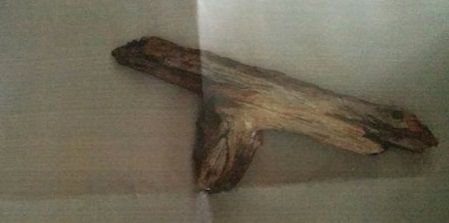
Caitlin Miller, 5, was playing with her best friends during recess at the Raeford, North Carolina school playground. Her two friends were pretending to be a king and queen, and Caitlin was in charge of protecting the kingdom. She picked up a small stick (above) and pretended to shoot imaginary intruders entering the kingdom.

The 5-year-old was sent to the principal’s office and suspended for one day for “turning a stick into a gun and threatening to shoot and kill other students,”  the school’s ridiculous assistant principal wrote in a note to Caitlin’s parents. Caitlin, says her mother, doesn’t understand why she was being punished. I don’t blame her. She may soon come to the conclusion that using one’s imagination is wrong, and that guns, even imaginary guns are evil. Or, in the alternative, she may decide that teachers and principals are fools, authority is abusive, and public school is a something to be feared and distrusted.

I would urge her toward the second conclusion rather than the  first.

The Hoke County School District issued a statement that “will not tolerate assaults, threats or harassment from any student.”

See what I mean, Caitlin? You didn’t do any of that, but you are being taught by lying, authoritarian jackasses. Continue reading

Silence U Part 2: Indoctrination At Yale, and Beyond

A new, intensely short documentary about the cultural rot underway at Yale (but not only at Yale) is worth viewing, if you have a firm grip on your skull. Yale, is, of course, the source of many U.S. leaders and opinion-makers, including Supreme Court justices and recent Presidents. As one can see from the video, it is either indoctrinating the young minds in its charge in oppressive, anti-speech and liberty ideology, or, to give a large benefit of the doubt, failing to disabuse students of toxic and anti-democratic ideas that the educational system has also seeded.

Needless to say, but I’ll say it anyway, Yale is an elite institution, a role model for others, and supposed to represent the best of higher education. Its students will take their place among the intellectual and economic elite. Nobody who has been paying attention to the logical and legal contortions being used by the supporters of “the resistance” should be surprised that our most promising students are being trained to reason like this. The question is: does it make sense for a nation to actively support an educational system that appears to have become dedicated to undermining the basic values its founding was based upon?

The former-Provost of Stanford University, John Etchemendy, recently gave a speech he called “The Threat From Within” in which he said in part.

Over the years, I have watched a growing intolerance at universities in this country – not intolerance along racial or ethnic or gender lines – there, we have made laudable progress. Rather, a kind of intellectual intolerance, a political one-sidedness, that is the antithesis of what universities should stand for. . . . We need to encourage real diversity of thought in the professoriate, and that will be even harder to achieve. It is hard for anyone to acknowledge high-quality work when that work is at odds, perhaps opposed, to one’s own deeply held beliefs. But we all need worthy opponents to challenge us in our search for truth. It is absolutely essential to the quality of our enterprise.

The problem bites when a particular ideological sect gains power, and meticulously and systematically sets out to make diversity of thought inaccessible. Professors and scholars inhospitable to progressive cant are becoming extinct on college campuses, by design, just as they are an endangered species in newsrooms and Hollywood. Over at the increasingly had-left legal website “Above the Law”—you know, the one that kept erasing my e-mail alert requests every time Ethics Alarms criticized the site; the one that employs Ellie Mystal, a black lawyer who has advocated that black jurors refuse to convict black defendants—writer Joe Patrice  mocked the concept of advocacy for “viewpoint diversity” as argued in this letter from a group of law professors: Continue reading

Ethics Hero: Notre Dame Political Science Professor Vincent Phillip Muñoz

Vincent Phillip Muñoz is the Tocqueville Associate Professor of Political Science and Concurrent Associate Professor of Law at The University of Notre Dame. Following the violent protest that prevented his announced lecture at Middlebury College earlier this month, Prof. Muñoz invited Murray to speak at the University of Notre Dame next week. This occasioned some protests and objections from students and faculty at his own college, and he responded with an essay at RealClearPolitics, writing in part…

Charles Murray is speaking at Notre Dame because I and another Political Science professor assigned his book “Coming Apart” in our classes. His visit is one of several outside lectures that are part of this semester’s Constitutional Studies offerings. My class, “Constitutional Government & Public Policy,” addresses some of the most important and divisive issues in American politics: abortion, gay marriage, religious freedom, inequality, freedom of speech, death penalty, race and the meaning of constitutional equality, immigration, euthanasia, and pornography.

 The class is designed to prompt students to think more deeply and thoughtfully about contemporary moral and political issues. I don’t assign a textbook or “neutral” readings that summarize the issues; I require students to read principled thinkers who advocate vigorously for their respective position. I want my conservative students to read smart, persuasive liberal thinkers, and I want my liberal students to read thoughtful conservatives. Educated citizens can give reasons for their beliefs and can defend intellectually the positions they hold. That requires that we understand and articulate the positions with which we disagree.

…“But Murray is controversial and will make students feel uncomfortable,” my faculty colleagues say. Don’t I know that he has been accused of being racist, anti-gay, and a white nationalist? I’m told that bringing him to campus is not fair to Notre Dame’s marginalized students.

I have no desire to inflict unwanted stress or anxiety on any member of the Notre Dame community, especially our minority students. I appreciate the concern for student well being that motivates some of the opposition to Murray’s visit. But I believe what is most harmful to students—and, to speak candidly, most patronizing—is to “protect” our students from hearing arguments and ideas they supposedly cannot handle.To study politics today requires handling controversial, difficult, and divisive topics…

The price of a real education is hearing powerful arguments that make us realize our opinions are based on untested assumptions. Only then, when we realize that we do not know as much as we think we know, can genuine learning occur.

I invited Dr. Murray to Notre Dame months ago…Given what happened at Middlebury, it would be cowardly to disinvite Murray now. Rescinding his invitation would communicate that violence works; that if you want to influence academia, sharpen your elbows, not your mind. It would tell those who engaged in violence—and those who might engage in or threaten violence—that universities will cower if you just appear intimidating. Rescinding Murray’s invitation would teach exactly the wrong lesson…

Notre Dame faculty critical of Murray have implored me to think about the larger context of what his visit means. I am. That is why I will not rescind his invitation. As a professor and program director, my job is to do what we are supposed to do at universities: pursue the truth through reasoned dialogue and discussion. Whether you find Charles Murray’s scholarship persuasive or objectionable, his visit offers an opportunity to learn. That is why I invited him to speak at Notre Dame. After Middlebury, it’s all the more important that he do so.

It is almost an insult to academia to call Prof. Muñoz ‘s statement heroic. It should be obvious. Dissenters from the position he articulates should be instantly recognizable as regrettable outliers, the opponents of academic freedom and freedom of thought, the advocates of censorship and ideological indoctrination. Yet increasingly it is this traditional view of higher education that Muñoz advocates that is under attack. Continue reading

From The “It’s No Fun Being An Ethicist” Files: I Offend Some Seminar Attendees…

mao

I facilitated a professional ethics seminar a while ago for a scholarly institution, (The locale, names and client have been changed to protect the guilty.) The discussion came around to rationalizations and my favorite on the list, #22:

22. The Comparative Virtue Excuse: “There are worse things.”

If “Everybody does it” is the Golden Rationalization, this is the bottom of the barrel. Yet amazingly, this excuse is popular in high places: witness the “Abu Ghraib was bad, but our soldiers would never cut off Nick Berg’s head” argument that was common during the height of the Iraq prisoner abuse scandal. It is true that for most ethical misconduct, there are indeed “worse things.” Lying to your boss in order to goof off at the golf course isn’t as bad as stealing a ham, and stealing a ham is nothing compared selling military secrets to North Korea. So what? We judge human conduct against ideals of good behavior that we aspire to, not by the bad behavior of others. One’s objective is to be the best human being that we can be, not to just avoid being the worst rotter anyone has ever met.

Behavior has to be assessed on its own terms, not according to some imaginary comparative scale. The fact that someone’s act is more or less ethical than yours has no effect on the ethical nature of your conduct. “There are worse things” is not an argument; it’s the desperate cry of someone who has run out of rationalizations.

In this case I did a sarcastic riff that is usually well received, about the common example of #22, “It’s not like he killed somebody”:

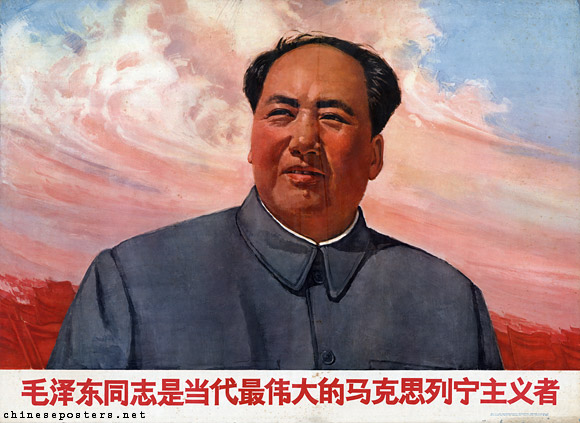
“Well, you can’t argue with that logic, can you? And if he did kill somebody, it’s not like he killed two people. And even then, that’s not as bad as being, say, a serial killer, like Son of Sam, who, when you think about it, isn’t nearly as bad as a mass murderer like Osama bin Laden. But he’s not as bad as Hitler, and even Adolf isn’t as bad as Mao, who killed about ten times more people than Hitler did. And Mao’s no so bad when you compare him to Darth Vader, who blew up Princess Leia’s whole planet…”

It made the point, and the audience laughed. Then, quite a bit later, I received an e-mail from a participant, complaing about this section. Can you guess what the complaint was?

Think about it a bit…

Time’s up!

Do you have an answer? Continue reading

From The “How Often Can Something Like This Happen In An Ethical Profession?” Files: The Art Teacher’s Meltdown

I know a lot of teachers get angry with me for my increasing certitude that they are in an unethical profession with some ethical members (like them), rather than an ethical profession with isolated unethical exceptions. This incident supports my critical views. Unless mental illness is involved, an adult doesn’t belong to a profession with well-defined standards and ethics rules and act like this.

At W.H. Adamson High School in Dallas, Texas, art students were treated to an epic meltdown by their teacher, Payal Modi, who screamed “Die!” and shot President Trump’s image on the screen with a water gun as students watched his inauguration on TV.  A student caught this on video, and Modi, who was proud of the planned display, posted it to her Instagram account.

This is more political indoctrination the classroom, which educators not today only tolerate but nurture. A teacher modelling violence toward any individual, but especially the President of The United States, in front of students, is such a stunning breach of professional ethics that no teacher should  have the idea even flicker across her mind. Payal Modi planned it.  A teacher who behaves like this cannot be trusted with students. A teacher like Modi calls into question everyone and every institution connected with her.

Adamson High School assistant principal Bobby Nevels confirmed that Modi shot the squirt gun at the TV, during class and in front of students. It is six days later. Why does she have a job? Why has the school not made a public apology? Why hasn’t the teachers’ union condemned her actions?

In eight years, no teacher did anything displaying close to this level of hostility and disrespect to President Obama. What do you think the reaction would have been by a school district if one had? Would the official position be, as Nevels’ was, “The district will not comment on personnel issues.” How about reassuring parents and the public that the district recognizes that this isn’t just a personnel issue, but an incident that calls into question the integrity of the education system and the  teaching profession? Modi is the product of an unethical culture that is rotting public education from within.

Is there a specific Teachers Code of Conduct provision, enforced and universal, that would guide a teacher not to do something this outrageous? The NEA has a Code, but there is no enforcement mechanism. There is also no prohibition against demonstrating hostility and disrespect toward public figures, or engaging in violent displays in class. Here are the provisions relevant to Modi’s meltdown: Continue reading

The 8th Annual Ethics Alarms Awards: The Worst of Ethics 2016, Part 2

pope-trump

Part II of the Worst continues with education horrors, legal outrages, the Lie of the Year, and more.

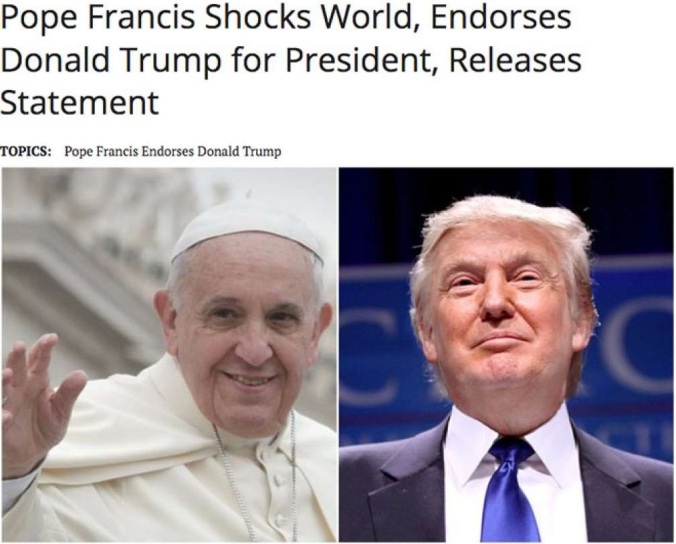
Above? That’s obviously the…

Fake News of the Year.

Now the rest..it doesn’t get any better.

Biggest KABOOM! 

exploding-head

The YMCA Slavery Recreation.  You know, even looking through this category was dangerous. I had forgotten about all these stories, which, by definition, were all horrible. This one, from February, however, had to be the winner. The YMCA Storer Camps in Jackson, Michigan included an “educational” activity called “Underground Railroad” in which black children were asked to play runaway slaves, as some teachers and camp instructors acted as slave masters, chasing them down using real horses. Once captured, the children were “auctioned off.” The principal of the school that subjected its pre-teen students to the slavery simulations rather than the other better known YMCA camp activities like nature hikes, kayaking, canoeing, horseback riding and sitting around campfires responded that he didn’t expect the uproar, since no student had ever complained before.

Most Unethical High School Discipline

Red Mountain High School  in Mesa, Arizona. On a dare from a friend, high school football player Hunter Osborn briefly flashed his naughty bits in the team photo. Nobody noticed, including the yearbook’s faculty advisor, so the photo was published in the school yearbook.  Months later, the gag was discovered. Even though the photo was so small that offending nudity was virtually invisible to the naked eye, the school had Osborn was arrested and charged with 69 counts of indecent exposure. The charges were dropped because none of the 69 “victims” pressed charges.

Most Unethical No-Tolerance Action

hazel-tweet

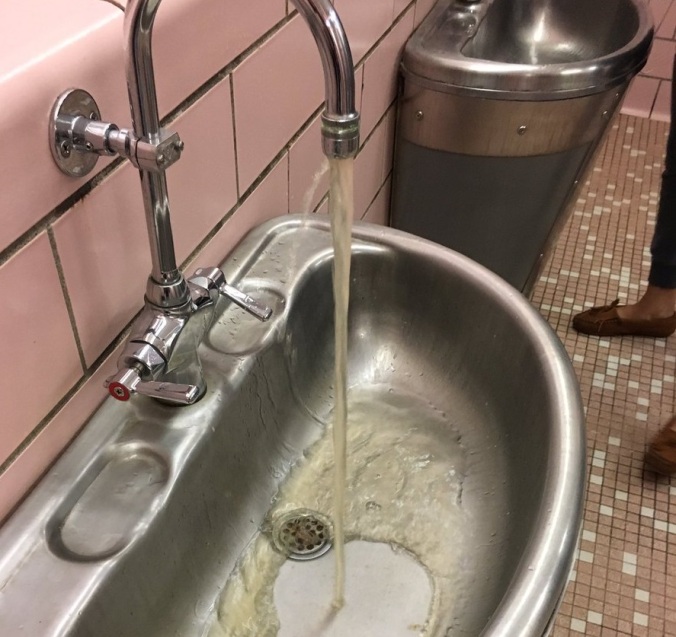
John Glenn High School in Suburban Detroit.  The offense: “Inappropriate use of electronics in the restroom.” The conduct: Hazel Juco, a 17-year-old student, went to the school’s bathroom to wash her hands. When she turned on the faucet, ugly brown water came out. She then used her cell-phone to take photos of the discolored water and posted it to Facebook and Twitter.

She was suspended, but eventually social media and the local news vindicated her. The water was polluted, and the school district admitted that Hazel was punished for doing the right thing.

Most Unethical School Teacher

(Excluding Rapists)

A Tie! 

1. Malik Leigh, a teacher in Palm Beach Lakes High School’s pre-law academy a kindergarten teacher at Captain Johnston Blakely Elementary on Bainbridge Island, Washington

Leigh’s specialty is indoctrination. Aming his exam questions last year…

“If Donald Trump becomes president of the United states, we are:

A.) Screwed

B.) Screwed

C.) Screwed

D.) Screwed behind a really YUGE wall that Mexico pays for.”

and…

“When performing an opening statement, it is best to:

A. Wink at the Judge

B. find the hottest person on the Jury and focus your words on them

C. Speak to them as if they are cordial friends.

D. Treat them like the MORONS they are.”

He was suspended.

Good.

2. “Jill Watson.” You can’t be a more unethical teacher than when you’re not a teacher at all. Or human.

Naked Teacher of the Year

Leigh Anne Arthur, In a completely warped and unfair application of the Naked Teacher Principle, school district officials in Union County demanded and received the resignation of the engineering teacher  after a student stole her phone, examined its contents and found a semi-nude selfie  intended for her husband’s enjoyment only.The student, who  warned her that “something bad was coming,” sent the images to other students through text messages and social media Arthur sued the school board for wrongful termination, but recently dropped the suit.  The student was charged with a computer crime and voyeurism. The Naked Teacher Principle holds that

A secondary school teacher or administrator (or other role model for children) who allows pictures of himself or herself to be widely publicized, as on the web, showing the teacher naked or engaging in sexually provocative poses, cannot complain when he or she is dismissed by the school as a result. The first formulation of the NTP can be found here.

This obviously does not apply to Arthur. Ironically it would apply to the incoming First Lady if she were a teacher, and arguably applies still, since the First Lady is a role model.

Double Standard Of The Year

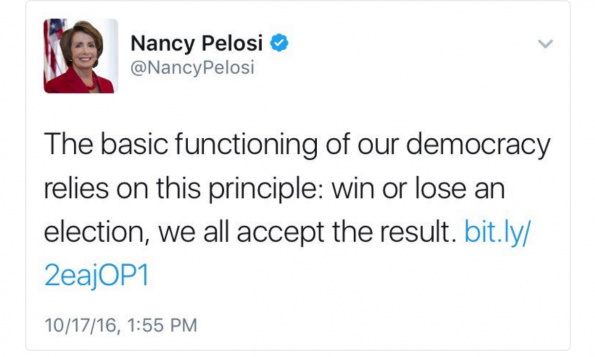
pelosi-tweet

Progressives and Democrats, who performed an immediate U-turn as soon Donald Trump won the election, and after having expressing outrage and indignation when Trump had suggested, about a month earlier, that he might not “accept the results of the election,” which he had claimed was “rigged,” immediately challenged the results of the election, and claimed it was rigged.

And they are still doing it today.

 Lie of the Year

and

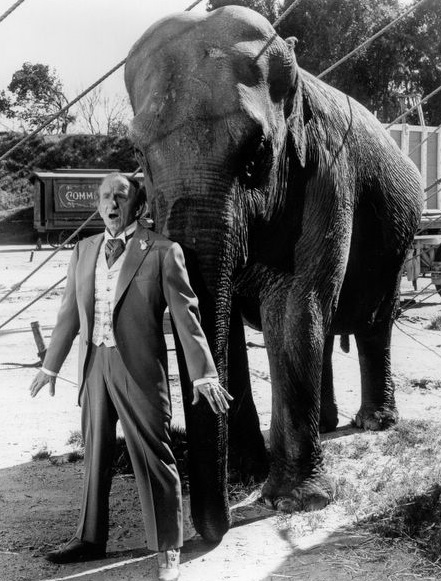
Jumbo of the Year

Jumbo film Continue reading

Are No Professions Safe From The 2016 Post Election Ethics Train Wreck? Now Even Restaurant Critics Have Gotten On Board!

circus-train-wreck

As a professional ethics specialist, I find the enthusiasm with which alleged professionals have used the election of Donald Trump to excuse their abandonment of such ethical values as fairness, responsibility, respect and citizenship deeply discouraging, and I am seriously considering becoming a beachcomber. I already knew that the journalism profession no longer could distinguish ethics from a hairy crab, so this wasn’t too surprising, nor was it too much of a shock that the New York Times has become a non-stop anti-Trump fear-fest and rant machine. Let’s see, in today’s edition alone  there is a hit piece on Trump advisor Steve Bannon called “Bannon’s Coriolanus Rewrite,” then  “Donald Trump’s Racial Ignorance,” “Where the Right Went Wrong,” (an amazing title, given the current balance of political power after Hillary’s botched campaign), “How the Truth Got Hacked,” “Is Democracy in Danger?” “Trump, the Russian Poodle,” and “Is This Collective Trauma?” The  last, I guess,  explains why mass trauma is inevitable for progressives, moderates and “Never Trump” Republicans when “the political order they long took for granted — defined by polarization, yes, but also by a commitment to basic principles of democracy and decency — is suddenly gone.”  One would almost wonder from that sentence which side of the political spectrum is calling for armed insurrection, pre-inaugural impeachment, and the overturning of the election results. The Times is also a showcase for columnists whose minds have snapped like dry branches in the wind,  causing them to leap manically onto the Trump Hysteria Express. Economist Paul Krugman has long been a hyper-partisan scold for whom fairness is alien territory, but this tweet was spectacularly vicious even for him:

“Thought: There was (rightly) a cloud of illegitimacy over Bush, dispelled (wrongly) by 9/11. Creates some interesting incentives for Trump.”

An ethical newspaper wouldn’t want someone capable of such a comment working for it.

Many broadcast journalists were stunningly unprofessional, indeed amateurish, on election night. Martha Raddatz choked up with emotion reporting Clinton’s loss; now there’s an objective reporter. Rachel Maddow described the evening as a “nightmare.”

Education has been racing journalism to the ethics barrel bottom for years, but I did not expect universities to send such intimidating messages to their students that they were expected to either be in mourning or on the verge of emotional breakdowns because the Democrats lost. Once, higher institutions of learning aimed to teach students critical thinking skills so they could make up their own minds regarding civic affairs. High school administrators and teachers also forgot their duties, and allowed students to skip school because, you know, TRUMP!!!!, and “ARRRGHHHHH!!!!”

Lawyers have lost their ethical bearings, of course, as have law professors, with perhaps the best example of the latter being the Georgetown Law Center adjunct who claims that the Constitution is unconstitutional, because following it will elect Donald Trump. My law alma mater isn’t faring too well in the train wreck: another professor, Paul Butler, argued that Supreme Court justices shouldn’t normally attack a President Elect, except when it’s Donald Trump.

Other academics have disgraced themselves. A prominent historian, for example, even resorted to making up history to provide an excuse for Democrats losing to such a horrible creature. Professor Larry Lessig of Harvard Law, who heads an ethics institute there, is encouraging electors to be “faithless,” as in “double-cross the voters who elected them.” Some ethics institute you have there, Harvard!

Artist, actors and show business professionals have debased themselves even more than usual, beginning with the Broadway cast of “Hamilton’s” breach of the Performer’s First Commandment: DON’T ABUSE THE AUDIENCE. They have even started turning on each other: Jon Voight, whose sin was that he expressed support for the man elected President, was booed at recent awards show by his fellow actors. Nice.

But as bad as this has been, I didn’t expect food critics to be corrupted. Continue reading