Oh, You Didn’t Think I Would Forget Presidents Day, Did You? [Embarrassing Gaffe Corrected]

Well, to be truthful, I almost did. The contrived holiday seldom occurs this early. Nevertheless, I’m going to recognize Presidents Day with re-posts of two essays about U.S. Presidents, neither of which were originally written for the holiday.

The first is one of my favorite mysterious tales about any President, in this case George Washington, and the second, from 2015 and re-posted five years ago, is my favorite story about any President ever.

Here they are:

Pssst! Bill Maher! The “Saved By God” Belief Has Inspired Some of Our Greatest Presidents. Shut Up.

Atheists and agnostics in the public sphere don’t have to be obnoxious, but an awful lot of them are. Their explanation for where the universe came from is no more persuasive that that of the faithful (The Big Bang? Come on.) but they just can’t restrain themselves. HBO’s Bill Maher is a prime example: along with mocking committed relationships (he hates the concept of marriage), extolling drugs and debauchery, and generally keeping his Axis of Unethical Conduct membership current, he ridicules Christianity at every opportunity.

The fact is, and it is a fact, that the United States of America had a much healthier and ethical culture before organized religion had discredited itself so thoroughly, driving whole generations away. Moral codes are especially essential for those who don’t have the time or ability to puzzle through ethics, and believing in God is the best catalyst for an ethical society that there is….and it has always been thus.

Heck, just look at what a jerk Maher is. That’s what atheism can do to you. But I digress.

My target here is more narrow. On last week’s “Real Time,” Maher sneered at the belief that God saved Donald Trump from being assassinated as stupid and “dangerous.” “People see signs because they want to see them. It’s why stalkers think Taylor Swift is blinking ‘marry me’ to them in Morse Code,” he explained. “It gets dangerous when the signs make someone think God is on their side,” Maher continued.  “Republican Congressman Mike Collins said after the shooting, ‘God spared Ronald Reagan for a reason. God spared Donald Trump for a reason. God doesn’t miss.’ Really? Tell that to John Lennon, Lincoln, JFK, RFK, and Martin Luther King. Look, the asshole who shot at Trump was cowardly, unpatriotic, selfish, vile, and weak, and he should rot in hell, but thinking that God protects your heroes but not mine? That isn’t cool either.”

How do you know, Bill, that God doesn’t protect your heroes for a very good reason? I can think of several good reasons for that, as well as for squashing you like a bug. Of course the certitude that God is responsible for anything is confirmation bias: my wife, the daughter of a Methodist minister, frequently expressed contempt for the faithful who simultaneously said that “God works in mysterious ways” and “there are no coincidences” while conveniently asserting that they had figured out those mysterious ways. But if Bill knew as much about American history, leadership and the Presidency as he should, he would know that the belief that God has saved them for a reason motivated many of America’s greatest leaders. It could have been dangerous, I suppose, but so far, that belief had been overwhelmingly beneficial to our nation. Perhaps even its salvation.

Leadership requires special character traits, the right formative experiences and a lot of luck. National leadership arises out of an individual’s conviction that they are uniquely qualified to do a better job than anyone else, accompanied by the passion, conviction and charisma necessary to convince others of their abilities. That’s why so many of our Presidents have been narcissists, true, but the anti-American trope that our leaders only seek power, wealth and personal benefits is, based on my lifelong study of history, garbage.
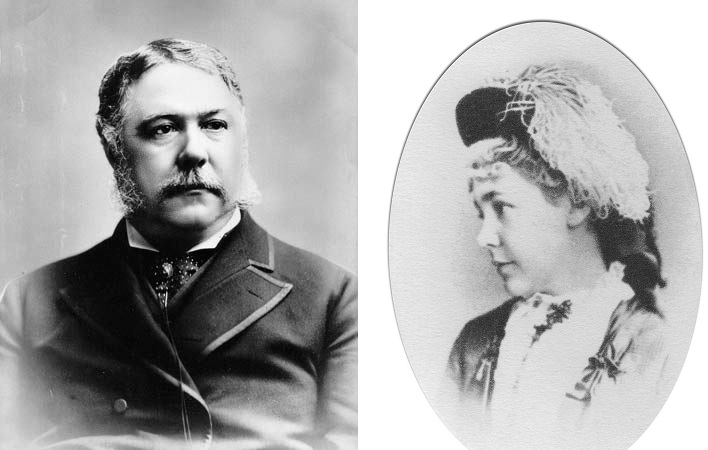
A Presidents Day Encore: “How Julia Sand Saved A President And Changed The Nation”

Chester Arthur and Julia

I’m pretty sick of U.S. Presidents and Presidential history at the moment, so for my own state of mind and perhaps yours, I’m re-posting a 2015 article about my favorite story about a President ever. Here it is…

In my overview of the U.S. presidency (the four parts are now combined on a single page under “Rule Book” above), I noted that our 21st President, Chester A. Arthur, was one of my personal favorites and an Ethics Hero. He confounded all predictions and his previous undistinguished background, not to mention a career marked  by political hackery and toadying to corrupt Republican power broker Roscoe Conkling, to rise to the challenge of the office and to effectively fight the corrupt practices that had elevated him to power. Most significantly, he established the Civil Service system, which crippled the spoils and patronage practices that made the Federal government both incompetent and a breeding ground for scandal.

I did not mention, because I did not then know, the unlikely catalyst for his conversion. Recently a good friend, knowing of my interest in Arthur, his tragic predecessor, James Garfield, and presidential assassinations sent me a copy of Destiny of the Republic, the acclaimed history of the Garfield assassination and its aftermath by Candace Millard. It’s a wonderful book, and while I knew much of the history already, I definitely did not know about Julia Sand. Her tale is amazing, and it gives me hope. If you do not know about Julia and Chester, and it is not a well-known episode, you should.

Continue reading

Ethics Quiz: The Fake Inspirational Story

1927NYYankees5

Ethics Alarms touched on this area here, when I related the example of a defense lawyer who won over the jury in the sensational Richard Scrushy fraud case with a vivid but made-up anecdote:

My favorite ethics moment is when Scrushy’s main trial lawyer, Jim Parkman, is asked about his headline-making anecdote in his opening statement, in which he quoted his grandmother as always telling him”every pancake, no matter how thin, has two sides.” “Did your grandmother really say that?” Parkman’s asked on camera. “No,” he admits after a long pause. “But she could have!”

Lying to a jury would seem to be a serious ethical violation for a lawyer, and by the wording of the rules, it should be. But every lawyer I’ve discussed Parkman’s tactic with agrees that such non-substantive lies would never result in professional discipline. (I think they should be.)

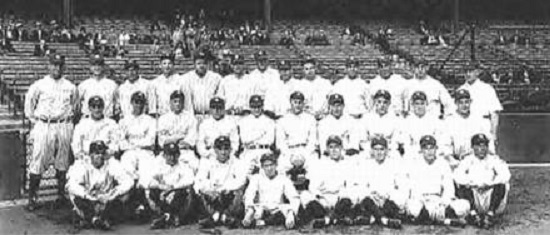
But what about inspirational stories and anecdotes that aren’t true? Does the end justify the means? Brian Childers’ story about Tommy Lasorda reminded me of another Lasorda story. Managing in the minors before becoming the third-longest tenured manager with a single team in baseball history, the ever-ebullient leader of the Spokane AAA team was faced with a dispirited squad that has lost nine straight games. Tommy bucked them up by reminding the players that the 1927 Yankees of “Murderer’s Row” fame, then and now the consensus choice as the greatest baseball team of all-time, also lost nine games straight. His team was cheered, and not only broke out of their slump, but went on a winning streak.

Asked later if it was true that the team of the Babe, the “Iron Horse” and the rest ever lost nine in a row, Lasorda answered, “Hell, I don’t know. But it turned my team around when they thought so!!”

Continue reading

“You Have No Enemies” By Charles Mackay (1814-1889)

Let’s start the week with some poetic inspiration.

The excellent Netflix series “The Crown” launched its fourth season yesterday, with Scully herself, Gillian Anderson, delivering a brilliant portrayal of “the Iron Lady,” Margaret Thatcher. At one point, Queen Elizabeth (Olivia Coleman) warns the Prime Minister that she is making enemies, and she responds by reciting from memory this poem, which I had never heard or read before.

One more thing: Since I posted the poem, it has been the most visited post of the more than 12,000 on Ethics Alarms. If you came for the poem, why not stay for the ethics? Look around, read the comment policies, check out the categories (to your right.) This isn’t the only enlightening post you’ll find here, or even the most enlightening.

You Have No Enemies

You have no enemies, you say?
Alas! my friend, the boast is poor;
He who has mingled in the fray
Of duty, that the brave endure,
Must have made foes! If you have none,
Small is the work that you have done.
You’ve hit no traitor on the hip,
You’ve dashed no cup from perjured lip,
You’ve never turned the wrong to right,
You’ve been a coward in the fight.

Mackay is not well-known in the U.S., and he was a marginal literary figure in England. But in 2019, a confidante of Thatcher’s revealed that she turned to the writings of Mackay for solace and inspiration, particularly “Enemies,” which she kept in her scrapbook.

I’d describe the poem as a simpler, more direct predecessor of Theodore’s Roosevelt’s famous “The Man in the Arena” speech. (Teddy did go on.) Mackay’s poem has the advantage of being suitable for children, who need to be taught, as do almost all of our current politicians, that popularity isn’t everything.

[Note to first time Ethics Alarms visitors: You came for the poem; why not stay for the ethics and the lively discussions? You can find out more about the blog here. Welcome!]

Movies To Keep You Happy, Inspired And Optimistic, Part II

Another boring weekend approaches, so it’s time to finish this project.

Some further clarifications on this continuing list: it’s not a list of my favorite films by any means. The criteria is, as the title above would suggest, the emotions the film leaves you with, or that well up inside your earthly vessel during the film. One reader reacted to the first list by dissing “Rocky,” but here’s the point: when I first saw that film in a stuffed theater, and the movie reached the part in the climactic fight when, after seemingly being out-boxed and outclassed by the champion Apollo Creed, Rocky sees Creed lets his guard down for an instant and , dazed and bleeding, suddenly hits him with a series of the body blows we had seen him practicing on sides of beef . The crowd in a Philly bar goes bananas, and the audience in the theater went bananas too, only louder, cheering and applauding. I’ve seen a lot of movies, and I can count on the fingers of one hand the times I’ve witnessed that kind of spontaneous eruption of excitement and elation from an audience.

I also have to explain why what anyone here knows are my four  favorite comedies don’t appear. They just don’t fit the theme, that’s all. They make me laugh, pretty much every time, but they can’t be called inspiring by any normal definition of the word.

Here’s the second half of the list:

Sea Biscuit (2003)

I’m not a horse enthusiast,nor a fan of the sport of kings, but this is a wonderful story, and mostly true.

Star Wars (1977)

Oh, all right..

Sleepless in Seattle (1993)

And so much better than the stupid movie it evokes, “An Affair To Remember.”

Angels With Dirty Faces (1938)

The only movie ever where a guy’s walk to the electric chair makes you smile..

Spartacus (1960)

Maybe my favorite story out of history ever, plus Cory Booker’s favorite scene…

The Wizard of Oz (1939)

Obligatory.

To Sir With Love (1967)

The list needs an inspirational teacher movie (and only one) so I pick this one. Lulu’s song scene makes the difference.

Bells Are Ringing (1960)

Probably the least seen or appreciated film on the list. But Judy Holiday radiates the joy of performing and the genius of a comic pro here like few others, and attention must be paid. Forget that it was her last movie…

As Good As It Gets

One of the best romantic comedies ever, and one of the strangest. Plus an incredibly cute dog… Continue reading

Movies To Keep You Happy, Inspired And Optimistic , Part I

This is a very subjective and personal list. The main requirement was that they all must be, in the final analysis, upbeat. I also have seen all of them more than once.

I left out some obvious choices that I have already devoted full posts to on Ethics Alarms, like “It’s a Wonderful Life” and “White Christmas.” Some of the films on my ethics movies list appear here, but not for the same reasons. Obviously, I encourage you to see those movies too.

Below is approximately the first half of the list. The rest will be along eventually.

Rocky (1976)

It still holds up as one of the most exhilarating sports movies of all time.

The Natural (1984)

Great score and a happy ending, unlike the novelette it was based on.

True Grit (1969)

This is the John Wayne version, with two of the go-to scenes I’ll play when I want to feel better.

E.T. (1982)

Other than the unforgivable rainbow at the end, a near perfect feel-good film.

Stand By Me (1986)

One of two Stephen King movies on the list. Does anyone not love this film?

The Shawshank Redemption (1994)

And the other King movie. has any suicide in a film been quite this satisfying?

Erin Brockavich (2000)

More or less a true story, which makes it especially inspiring.

Singin’ in the Rain (1952)

If Donald O’Connor walking up walls doesn’t get your heart pumping and your mouth smiling, nothing will. Continue reading

Comment Of The Day: “From The Ethics Alarms Archives: ‘Age and the Judge’…” And A Current Day Example.

Pretty late last night, an Ethics Alarms post about mandatory ages of retirement for judges moved JutGory to offer this remarkable Comment of the Day, a tribute to a role model in his life. Coincidentally, it now follows yesterday’s last post, about a failed role model, or perhaps someone who should have become a role model but who never did.

I’m hopping Jut’s comment over a couple of waiting COTDs because I think it’s good to start off the day with some inspiration when possible.

Here is JutGory’s Comment of the Day on the post, “From The Ethics Alarms Archives: ‘Age and the Judge,’ And A Current Day Example.”

Meet Floyd.

And, if nothing else, this is the perfect post in which to mention Floyd.

Floyd was at the top of his class at West Point.

Scwartzkopf was a plebe when Floyd graduated.

Floyd injured himself parachuting into Germany on a training exercise.

He became a lawyer and the consummate Southern Gentleman.

He told me about the time that he handled one of those big divorces and his firm submitted a one-page bill in the amount of over $500,000.00 “For Services Rendered.”

He told me about the time he was able to obtain a Writ of Ne Exeat (I had never heard of it either).

And, after a career of legal practice in Georgia, this principled conservative southern lawyer relocated to the State that Mondale Won.

He did it for two reasons: his wife and one of his kids needed a change of environment because of pollen counts, etc., and Dick.

Dick was looking for a legal partner and Floyd was looking to move north. Dick was Floyd’s exact opposite in every way. Continue reading

Saturday Ethics Warm-Up, 9/28/2019: The Search For Inspiration

I need inspiration today…

1. No, this isn’t it…The Idiot Air Traveler. At a certain point, extreme stupidity is unethical. In China, a Xiamen Airlines passenger opened the emergency exit door of the aircraft as the plane was preparing to take off because she  felt the cabin was “too stuffy” and wanted “a breath of fresh air.”  She was arrested, and the incident caused the flight to be delayed an hour. How stupid and ignorant does someone have to be to do this? Wouldn’t you say this is signature significance indicating idiocy? Would you hire someone who did this even once? Allow her to take care of your children? Trust her with sharp objects? Allow her to buy a ticket for another plane trip?

2. Nor this.. New York City intentionally violates the Constitution. It is now against the law in New York City to threaten to call  immigration authorities on someone or refer to them as an “illegal alien” when “motivated by hate.”  A 29-page directive released by City Hall’s Commission on Human Rights announces fines of up to $250,000 per offense for, among other things, “the use of certain language, including ‘illegal alien’ and ‘illegals,’ with the intent to demean, humiliate, or offend a person.”  Mocking people because of their accents or grasp of English is also a crime now in the Big Apple. So is threatening to call ICE.

“In the face of increasingly hostile national rhetoric, we will do everything in our power to make sure our treasured immigrant communities are able to live with dignity and respect, free of harassment and bias,” said Carmelyn Malalis, the agency’s commissioner.

Maybe the whole set of new regulations isn’t unconstitutional, but the ones focused on “hate speech” certainly are. The city is simply declaring its contempt for the First Amendment with this stunt.

3. I guess this is kind of inspiring...When it pays to be trans. The old Saturday Evening Post used to have a feature called “The Perfect Squelch,” regaling its readers with a witty comeback or rejoinder that left an adversary defeated and demoralized. It wouldn’t have printed this one, but I can’t imagine a better example of the genre. This is Faye Kinley… Continue reading

Morning Ethics Warm-up: 8/16/17

GOOD MORNING!

1. I’m heading to Boston and Fenway Park in a few hours to meet with two of my high school classmates and together pay our respects to the 1967 Boston Red Sox, the spiritual beginning of Red Sox Nation, and a group of men, then barely more than boys, who had as profound an effect on my life and view of it as anything I have ever experienced.

It’s the 50th Anniversary of that amazing team and the heart-stopping pennant race it won against all odds, in a four team race that came down to the final game of the regular season. I mean heart-stopping literally: the team wasn’t called “The Cardiac Kids” for nothing. TWO of my father’s colleagues at the Boston Five Savings Bank died of heart attacks while attending Red Sox games, during one of the 9th inning desperation rallies for which the team was famous. The only reason I didn’t perish in like fashion is because I was just 16 years old.

Why was this team, and that summer 50 years ago, so important to me? I don’t have time or space to answer that question well, and you’d probably wonder what I was babbling on about anyway. A 2017 film by Major League Baseball called “The Impossible Dream” does a fair job of explaining it, but it’s too short to do the job right.

I had listened to, watched or attended every Boston Red Sox game for five years, as the team lost and lost. From those bad teams, followed weakly by the city in those days, in a crumbling old park that seemed destined to be abandoned and torn down, I learned that winning wasn’t everything, that loyalty wasn’t easy, that Hemingway was right, and that baseball was about courage, humility, perseverance, doing your job every day, sacrifice, and hope, as well as usually losing at the end. That summer of 1967 taught me that hope is worth the effort even though hope is usually dashed by the ice water of reality, that you should never give up, that miracles do happen, and that nothing is as wonderful as when a community is united in a single, inspirational goal, no matter what that goal might be…and that you should never be afraid to give everything you have in pursuit of a mission, even when it is likely that you will fail.

I learned difficult, discouraging lessons, too. When an errant pitch hit Red Sox right-fielder Tony Conigliaro in the face on August 18, 1967, it was the beginning of a lesson that revealed its tragic last chapter 23 years later. That one taught me that life is horribly, frightening unpredictable, and that we envy others at our peril. It taught me that we need to do what we can to accomplish as much good as we can as quickly as we can, because we may lose our chance forever at any moment.

Tony C, as he was and is known as, was a beautiful, charismatic, local kid, the idol of Boston’s huge Italian-American community,  in his fourth season with his home town team at the age of 22. He dated movie stars; he recorded pop songs; he had a natural flair of the dramatic, and was destined for the Hall of Fame. One pitch took it all away. Although he had two comebacks and played two full seasons facing major league fastballs with a hole in his retina and his field of vision, Tony was never the same. After his final attempt to keep playing failed at the age of 30, he became a broadcaster, and at 37 was seemingly on the way to stardom again in 1982 when he suffered a massive, inexplicable heart attack—Tony  did not smoke, and had no family history of heart problems– that left him brain damaged until his death in 1990.

As Henry Wiggin, the star pitcher protagonist of the novel, play and movie “Bang the Drum Slowly” observes as he  reflects on the death of his catcher and roommate, everyone is dying, and we have to remember to be good to each other. But it’s so hard. Ethics is hard. The ethics alarms ring faintly when we are about the task of living, or not at all…

At the end of the story, the narrator, the best friend of the catcher (but not really that close a friend) recalls how quickly everyone on the baseball team went back to their selfish ways after their teammate went home to die Even the narrator, who was the leader of the effort to make the catcher feel loved and appreciated in his last days, ruefully recalls his own failing. The catcher had asked him a favor, just to send him a World Series program (the team won the pennant after he had become too ill to play), and he had forgotten to mail it until it was too late. How hard would it have been, the narrator rebukes himself, to just put it in an envelope and mail it? Why are we like that, he wonders?

1967 was the beginning of my exploration of that mystery too.

So I am going to Boston for the 30 minute ceremony. I can’t even stay for the game; I have a seminar to teach tomorrow morning, and the last flight out of Logan is at 9 PM. There will probably be just a small contingent from the Cardiac Kids: most of them are dead now, or too infirm even to walk onto the field. But Yaz will be there, and Gentleman Jim Lonborg; Rico Petrocelli, Mike Andrews, and maybe even Hawk Harrelson  and Reggie Smith. I will be there to say thank-you, that’s all.

And to show that I remember. Continue reading

Ethics Hero: Lindsey Bittorf

I regard people who contribute kidneys to near strangers as residing in a special category of Ethics Hero, in the exemplary ethics category….maybe the exemplary exemplary ethics category.  Considering Don Bedwell, the first individual I learned about who  engaged in this extraordinary act of sacrifice, kindness, and compassion,  I began my 2005 post, “There are special and rare people whose ethical instincts are so pure and keen that they can make the rest of us feel inadequate.”  Bedwell, a traveling businessman, donated his kidney to a waitress who often served him at his favorite Cleveland restaurant when he was passing through the city on business. The second altruistic organ donor was East Haven, Connecticut  Mayor April Capone Almon, who gifted one of her kidneys  to a desperate constituent she barely knew.

Wisconsin police officer Lindsey Bittorf is the most recent example of this special breed of ethics hero.  She saw a Facebook post from a local mother pleading for someone to rescue might  her  8-year-old son, Jackson Arneson, who needed a kidney. The boy’s family and friends had been tested and none were a match. Bittorf didn’t know the child or the family, but got herself tested on a whim. Doctors told her she was an unusually good match,considering that she was not related to the boy.

Last week, Bittorf  rang the doorbell at Jackson’s home to surprise his family with the good news,  ABC News reported. Jackson could have one of her healthy kidneys.The police officer told Jackson’s mom, Kristi Goll, that it was an “early Mother’s Day gift.”  That’s a bit better than flowers, you’ll have to admit. Continue reading