Rick comments on my ethics verdict regarding the most recent James O’Keefe “sting,” this one exposing a biased NPR exec and an ethically-weak NPR fundraiser: Continue reading
integrity
Why NPR’s Wrongs Don’t Make James O’Keefe Right
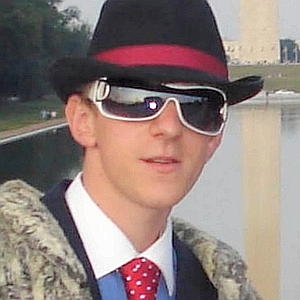
James O'Keefe, Ethics Corrupter
And the NPR Ethics Train Wreck continues…
Between union hysteria in Wisconsin, carnage in Libya, and tsunamis, the fact that James O’Keefe’s fake Muslim billionaire act exposed more NPR integrity issues was drowned out by shouting, gun shots and water. In fact, the second victim of O’Keefe’s sting may have taught us more about NPR than the first.
In the surreptitious audiotape of NPR’s continued encounters with the fake potential big bucks donor, NPR’s director of institutional giving, Betsy Liley, is heard advising the supposedly wealthy Muslim donor how the network could help “shield” his group from a government audit if it accepted the $5 million he was offering. It seems pretty clear from the tape that this was not what the sting was set up to prove: what the “Muslim donor” really wants is to get a promise from NPR that it will slant the news content the his way if the gift is big enough. Liley stood her ground on this core journalistic principle admirably—so much for the claim that George Soros bought NPR’s advocacy with his recent gift—but fell into another trap of her own making.
NPR spokeswoman Dana Davis Rehm said in a statement that Liley’s comments on the tape “regarding the possibility of making an anonymous gift that would remain invisible to tax authorities is factually inaccurate and not reflective of NPR’s gift practices. All donations—anonymous and named—are fully reported to the IRS. NPR complies with all financial, tax, and disclosure regulations.” That’s undoubtedly correct; Liley was not merely ethically wrong but also literally wrong, for what she was suggesting almost certainly couldn’t happen. However, the fact that she would say such a thing believing it could happen, or think it was acceptable if it did happen, or try to acquire a large donation by persuading a donor to believe it could happen, all point to the one conclusion: NPR’s culture is ethically compromised, and the organization’s leadership has failed to meet its obligations to create an ethical culture there. The sting is more disturbing than the earlier one that caught an outgoing NPR executive taking extreme partisan positions that belied NPR’s position that it is objective and unbiased. The comments of Ron Schiller just confirmed what many, including me, thought was already apparent in the tone of NPR’s work. I had also always assumed, however, that the place was professionally and ethically run (excepting the tendency to fire employees for expressing politically incorrect opinions on Fox News).
So this settles it, right? O’Keefe is a hero?
No, he’s not. James O’Keefe, in fact, is an ethics corrupter, an individual who weakens the public’s ethics by encouraging it to accept his dubious values. Continue reading
Most Unethical Bobblehead EVER
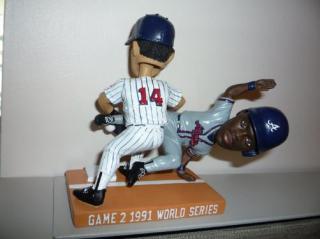
The vile bobblehead
In Game two of the 1991 World Series between the Minnesota Twins and the Altanta Braves, Brave outfielder Ron Gant singled and rounded the bag, drawing a throw to first base. He appeared to beat the throw to the bag, but the Twins’ jumbo first baseman, Kent Hrbek, wrapped his arm around Gant’s leg and lifted him off the base as he applied the tag. First base umpire Drew Coble managed to completely miss Hrbek’s illegal tactic, and called Gant out to end the inning. The Twins went on to win that game by one run, and in one of the closest Series of all time, also won the World Championship, 4 games to 3.
Hrbek’s muscling of Gant off of first base has been widely regarded as one of the most egregious examples of cheating by a player in baseball’s 130 year history. So, to commemorate the 20th anniversary of the Minnesota World Series triumph, the Twins will hold a special “1991 World Series Champs Reunion Weekend” promotion featuring members of the 1991 team at the August 5 game, and the first 10,000 fans through the gates will receive a free Kent Hrbek/Ron Gant bobblehead, depicting the infamous play. Continue reading
Comment of the Day: “Facebook Wars II”
Though not strictly an ethics comment, Mary’s theory about why school administrators are engaging in so much ethically dubious conduct is provocative and has the ring of truth. Here is her Comment of the Day, on the post “Facebook Wars II: More School Abuse of Power and Privacy“:
“A number of years ago, while extracting myself from a bad relationship, a therapist friend told me that the more healed and “normal” I became, the more outrageous and pathological my ex-partner’s behavior would be, in a psychological attempt to pull me back into the relationship.
“I sometimes think the same thing applies to social relationships and organizations. As they lose their relevancy and people withdraw and move on to new social structures, those invested in the old organizations thrash wildly to maintain an ever crumbling status quo. Continue reading
Facebook Wars II: More School Abuse of Power and Privacy
"Hello? ACLU? Anybody there?"
In January, Ethics Alarms weighed in on reports from Illinois and New York about students being disciplined by their high schools for postings on Facebook about the sexual proclivities of female students in the community. The ethics verdict: the schools were abusing their power and the students’ privacy:
“When did schools suddenly acquire disciplinary control over what students do when they aren’t at school? There is no question that the websites involved were inappropriate, disrespectful, cruel and hurtful, just as the rumors and insults included in high school graffiti were, in those glorious days before the internet. Students so abused need to complain to parents, and parents need to talk to the parents of the offending students, and if they can’t or won’t address the problem, then the courts or law enforcement may need to become involved.”
The rationale offered by the schools at the time was that the students had violated rules against cyber-bullying, that ever-vague plague, although there is no more legitimate authority for a school to decree what a student can say about another student on a personal website than there is for a school to restrict what a kid can say at the dinner table.
Naturally, when an institution exceeds the natural limit on its authority, there is nothing to keep it from even more egregious abuse. Thus two Georgia students were just suspended and one another was expelled for negative Facebook postings about a teacher. Continue reading
Liar of the Week: Mike Huckabee, as He Fails The Integrity Test

A Mike Huckabee advisor?
…and also the courage test.
Speaking unpopular truths and backing down once they prove unpopular is worse than what most politicians do, which is to avoid speaking the truth at all. In Huckabee’s case, he compounded the villainy by not only backing down, but by absurdly lying about what he had said, despite the fact that his words were recorded and his meaning was clear as a bell.
Huckabee, in case you don’t follow the remarks of former state governors under the delusion that he can they can be elected President, had criticized Oscar winner Natalie Portman’s proud single mother-to-be act, saying, Continue reading
Unethical Gall in Norfolk: The Case of the Shameless Freeloader
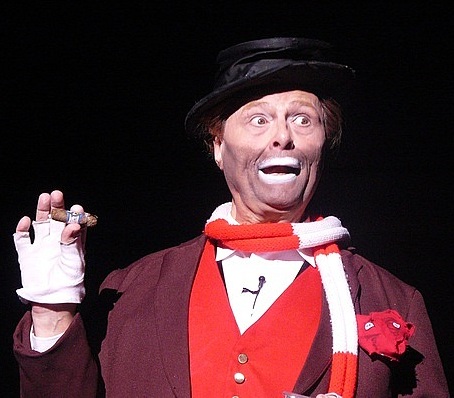
"Freddy the Freeloader": Role Model
Jill McGlone was working for the Norfolk (Virginia) Community Services Board (known as CSB—an independent agency created by the state and funded with state and federal tax dollars) as an office assistant when she was involved in an internal personnel investigation.
McGlone was put on paid leave, but her case remained in limbo, without resolution. She stayed home, and continued to collect her full $29,000/year salary and benefits—for twelve years. Continue reading
Comment of the Day: “Ethics Quote of the Week: Blogger Jeff Jarvis”
Karl Penny calls me to task here for yielding to another commenter’s premise (but not his conclusion from it) that celebrities lead more interesting lives than their typical fans. Since “interesting” has various meanings—in Charlie Sheen’s case, the ironic Chinese definition (as in “may you live in interesting times”) comes to mind, and I could argue that celebrities by definition lead lives that their fans find more interesting than their own, hence the fact that they are celebrities. Nonetheless, Karl’s point is critical, and I thank him for making it so eloquently. And Karl’s would have been the Comment of the Day even if he hadn’t mentioned my dad—but it didn’t hurt. Here is Karl on “Ethics Quote of the Week: Blogger Jeff Jarvis”:
“Now, Jack: “Nobody denies that rich stars have more interesting lives than their fans,…” Nobody? Hey, what am I? Chopped liver? But, seriously I do deny that celebrities lead more interesting lives than the rest of us. In my experience—and these days, I hear a lot from others about the details of their lives—everyone has a story to tell. Indeed, they have a narrative, and one that is way more interesting, and far more uplifting, than those of the celebrities whose stories are broadcast at us. Continue reading
United Nations Ethics

After the U.N., Plan B
Ah, the United Nations—can’t live with it, can’t live without it!
But I think it may be time for the U.S., having tried to live with a corrupt, hypocritical, impotent monument to how disastrous a one-world government would be—while supplying the lion’s share of its funding— to try living without it.
The U.N. Human Rights Council has issued a 23-page report praising the Gaddafi regime’s human-rights record. Continue reading
Oscar Ethics: Was Melissa Leo’s Campaign Wrong?
 On a difficult day, I am not up to writing about heavy ethics issues, so instead I will comment on an ethics controversy that is as inconsequential as possible—one involving the Oscars.
Melissa Leo, a front-running Best Supporting Actress nominee for her role in “The Fighter,” courted controversy by violating one of the Academy Awards’ unwritten rules: “Don’t promote yourself for an Award—it’s tacky!” Leo personally placed Hollywood trade ads showing her in full glamor mode, a sharp contrast to her character in “The Fighter.” The text simply said “Consider,’ then below that, “Melissa Leo,” and in small print off to the side, the web address http://www.melissaleo.com. She argued that she needed to promote herself because her competitors were getting the benefit of big studio publicity, while she was not. Continue reading

