The Ethics Of Judges In Love

gavel heart

When  attorney Joe Foley represented a client in a matter before Judge Scott Drazewski in early 2011, he was unaware that the married judge was involved a year-long secret romantic affair with Judge Rebecca Foley, the attorney’s wife.

Now both Illinois judges  have been disciplined by state legal ethics authorities for failing to reveal their romantic relationship and violating multiple ethics rules as a result. The ethics commission imposed a four-month unpaid suspension on Drazewski for “egregious” judicial ethics violations, and censured Judge Foley for assisting, aiding, abetting, and not reporting his violation or their affair. Continue reading

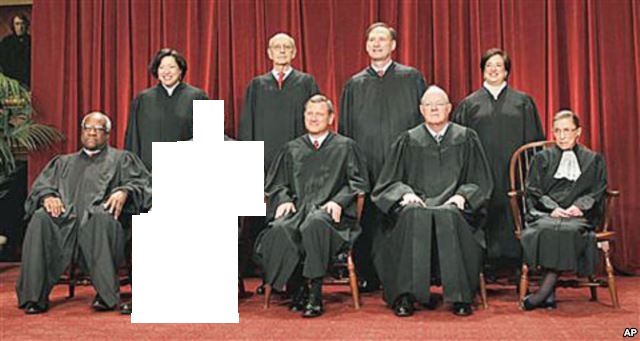
Ethics Review Of “Supreme Court Vacancy Theater”

Court vacancy

The short review would be “Yecchh.”

The reason that the earlier Ethics Alarms post about the death of Justice Scalia expressed the wish that President Obama on his own declare that he would defer the almost certainly futile appointment of a successor to the tender care of the next President was precisely because it was obvious that any other course was just going to create more ugly partisan name-calling and hypocrisy, accomplishing nothing positive and wasting a lot of energy and time. I also knew that this most divisive of POTUS’s would no more do that than he would deliver his next speech in a duck voice. Thus we have the theater, with people who should know better acting like the Republican Senate’s announcement that it would not be voting on President Obama’s nominee, should he make one, is some  kind of gross breach of duty and ethics, and people who don’t know better acting as if being one Justice short is some kind of Armageddon. Neither is true.

Nor is there any reasonably similar set of circumstances and conditions that makes the GOP’s entirely political decision, and Obama’s entirely political decision to test it, some kind of breach of precedent. There is no precedent—not with these factors in play:

A Democratic President with both Houses controlled by the Republicans

An ideologically and evenly divided Court, with the new Justice potentially having a momentous and nation-changing effect on the determination of many looming cases

An unusually partisan and ideological President who has proven unwilling and unable to seek legitimate input from the opposing party, and who, in fact, has been personally and bitterly insulting toward it

A rebellion against the “establishment” in both parties, from the extreme reaches of both parties, on the grounds that neither is extreme or combative enough

A lame duck, not especially popular President and an approaching national election that is currently being molded by unpredictable personalities and events, and is likely to be hotly contested..

The Supreme Court unusually central to the government of the country.

The vacancy on the Court being created by the death of one of the Court’s most influential, ideological and powerful members.

A degree of political division in the public not experienced since the Civil War.

These are all material factors, made more material in some cases because of the other factors. Thus accusations that the Republican have engaged in some kind of grand, historical crime against democracy is, to the extent the accusers believe it, crap, and to the extent that they don’t, ignorant. Continue reading

Thoughts On The Death Of Supreme Court Justice Antonin Scalia

chapman.0830 - 08/29/05 - A Supreme Court headed by Supreme Court Justice Antonin Scalia has questions for Chapman University Law School professor John Eastman as he and California Attorney General Bill Lockyer argue the 1905 ''Lochner v. State of New York'' case during a re-enactment Monday afternoon at Chapman University. (Credit: Mark Avery/Orange County Register/ZUMA Press)

Supreme Court Justice Antonin Scalia, the Supreme Court’s most adamant, eloquent, controversial and influential conservative jurist and one of the most important theorists in the institution’s history,  died today, unexpectedly, on a ranch near San Antonio while on a hunting holiday. He was 79.

Reflections:

1.  I had a beer with the Justice at a bar function a long, long time ago, after entertaining the assembled legal heavyweights. He was friendly, funny, and gregarious, and when I asked him if he would be on the Supreme Court for the rest of his life, he said, “God, I hope not!”

2. While everyone will be saying that this ups the ante in the Presidential race, that’s impossible. The importance of the election couldn’t be  greater. The vacancy Scalia’s death creates, unfortunately,will  increase the level of demagoguery from both parties, with the appointment of Scalia’s replacement being elevated to the equivalent of a life and death matter obliterating all other considerations. Anyone who argues that will be exposing their true status as a hack, appealing to hysterics, ignoring te ethical value of proportion. The composition of the Court is important, but it is not that important.

3. What is most important to the Court, and has been lost since Robert Bork became the first qualified judge to be blocked by pure partisan considerations despite undeniably outstanding qualifications, is to have smart, able, proven justices. Scalia was such a jurist.

4 .One of the traits of a qualified jurist is a refusal to pre-judge any issue or case before hearing arguments and knowing all the facts. Several of the current justices, including Scalia, have been sucked into the bitter partisan battles of this era and have made comments that called this trait into question. Continue reading

The Seventh Annual Ethics Alarms Awards, Part II: The Worst of Ethics 2015

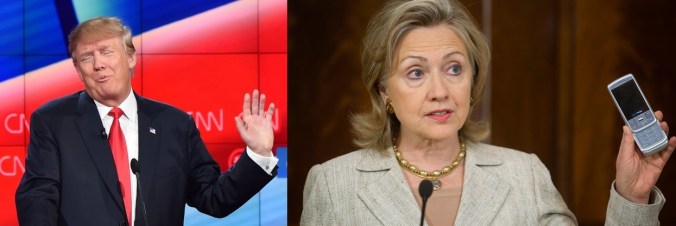
Donald and Hillary

Ethics Corrupters of the Year

(Awarded to the unethical public figure whose prominence, popularity and success most corrupts the public’s ethical values)

A Tie: Hillary Clinton and Donald Trump.  Nobody else is close.

I’m sorry that these two are so dominating the awards. They also dominated the posts last year. If they dominate the awards next year, God Save The United States of America…

Double Standard Of The Year

The deference accorded to anti-white protesters on dozens of college campuses, not just by spineless administrators but much of the news media. Similar protests, conduct and rhetoric by white students would be immediately condemned for what it would be: blatant racism.

 Lie of the Year

Hands Up! Don’t shoot! The lie was uttered in 2014, but acquired new status after the Justice Department unexpectedly and definitively determined that the evidence did not support the inflammatory myth that Mike Brown was shot dead in Ferguson while trying to surrender to Officer Wilson. Never mind: the lie is part of the manifesto of Black Lives Matter and similar groups; it is still alluded to by activists and shameless politicians; it still divides the nation and focuses hate on police departments; and it has contributed to getting police officers killed while making communities more vulnerable to crime. It may be the Lie of the Decade.

Uncivil U.S. Official of the Year

Justice Antonin Scalia, who crossed all lines of judicial restraint, collegiality and civility when he excoriated his colleague, Justice Kennedy, who was the fifth vote in the majority of SCOTUS’s ruling  that same-sex marriage was a Constitutional right no state could deny, with this comment in a footnote:

“If, even as the price to be paid for a fifth vote, I ever joined an opinion for the Court that began: ‘The Constitution promises liberty to all within its reach, a liberty that includes certain specific rights that allow persons, within a lawful realm, to define and express their identity,’ I would hide my head in a bag. The Supreme Court of the United States has descended from the disciplined legal reasoning of John Marshall and Joseph Story to the mystical aphorisms of the fortune cookie.”

——U.S. Supreme Court Justice Scalia,


The Jesse Jackson Award 

(For the Year’s Worst Amateur Diplomat)

Barack Obama.  I know, this is snarkier than I like to be in these awards, but the signature diplomatic measure of the past year, the astounding, one-sided, dangerous and Munich-like deal with Iran, could only be the product of an ideological tyro placing wishes and hopes over diplomatic responsibility, and not for the first time. For most Presidents, trading dangerous terrorists for a deserter would be nadir. History has seen many tragedies seeded by world leaders with no diplomatic skills: the disastrous Treaty of Versailles,  Potsdam, and the treaty that this one most resembles, negotiated by the hapless Neville Chamberlain. We can only hope that the worst case scenario doesn’t materialize, but if it does not, it will be moral luck.

Most Unethical Sports League

New England Patriots quarterback Tom Brady speaks at Salem State University in Salem, Massachusetts, May 7, 2015. REUTERS/Charles Krupa/Pool ORG XMIT: BKS06

The NFL, for the third year in a row. “Concussion,” Tom Brady, Deflategate, more evidence that NFL players are slowly killing themselves with brain damage, Johnny Manziel.  What a great sport pro football is.

Sports Cheat of the Year

Tom Brady, New England Patriots ball-deflating quarterback.  Brady eventually avoided punishment because the NFL botched both its investigation and its imposition of penalties, but his smirking, cynical comments about the incident made it clear that he thinks cheating is no big deal, and most of his fans agree.

Not surprisingly, Brady supports Donald Trump.

Unethical Lawyers of the Year

Law Firm Division:  Lawyers Stephen Diaco, Robert Adams and Adam Filthaut of the Florida firm Adams & Diaco were found to have “maliciously” set up the drunken-driving arrest of their opposing counsel in a  high-profile defamation trial. The plot involved a comely paralegal and a cooperative DUI cop. Last I checked, it looked like all three lawyers would be disbarred for life.

Scary Lawyer Division: California lawyer Douglas Crawford  held a can of pepper spray a yard from the face of the opposing lawyer saying, “I will pepper-spray you if you get out of hand.” Then the lawyer pointed a stun gun at Traver’s head and said, “If that doesn’t quell you, this is a flashlight that turns into a stun gun.” To show he wasn’t kidding, Crawford discharged the stun gun the startled lawyer’s face.

Hard-working Lawyer Division: Massachusetts lawyer,  Karen Andrade, was  charged with prostitution after a police investigated a report by a suspicious neighbor and  found online reviews of both the lawyer’s legal services and her escort services

Celebrity Lawyer Division: Michael Cohen,  one of Donald Trump’s lawyers, told the Daily Beast that it was legally impossible for a man to rape his wife. He was only a couple of decades and many court cases behind on his research. That piece of legal scholarship came after he had threatened the website’s staff in language usually associated with loan sharks and pimps.

Unethical Prosecutor of the Year
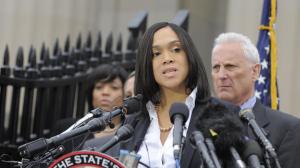
Mosby

Baltimore’s City Attorney Marilyn Mosby
Continue reading

Ethics Observations On My 2013 Ethics Observations On The “Affluenza” Sentence, Now That The Teen Sociopath Is On The Lam

Ethan Couch

Ethan Couch

You may recall the so-called “Affluenza” case of 2013, which I wrote about here.

Ethan Couch a Texas teenager from a rich family, killed four people in a drunken-driving crash (he also had no license) and crippled a friend riding with him. Instead of jail time, the 16-year-old was given probation mandating expensive counseling and treatment by a judge who found herself vilified far and wide. Now this, from his lawyers, Reagan Wynn and Scott Brown:

“We have recently learned that, for the last several days, the juvenile probation officer has been unable to make contact with Ethan or his mother with whom he has been residing.”

A video surfaced showing Couch playing beer pong, which is a violation of probation that could send him to prison. The assumption is that he had fled to avoid that result, and may have even left the country. The Washington Post reports that The FBI and U.S. Marshals Service have joined the search for Couch, who is now considered a fugitive.

So, I am asked, how do the Ethics Alarms observations on the original sentence stand now, since it is clear that the judge’s attempt to reform Ethan without locking him up has failed?

The answer is, having read what I wrote initially again, that I wouldn’t retract a word.

Here’s what I wrote, and my comments now: Continue reading

Unethical Judge Of The Month, But Not For What You May Think

ShatteredGavelShortly after the the Supreme Court’s same-sex marriage decision, Obergefell v. Hodges, Utah began placing foster children with same-sex couples. An 8-month-old girl was placed in August with Rebecca A. Peirce, 34, and April M. Hoagland, 38, who are married and live near  Salt Lake City with Peirce’s two biological children.

The couple hoped to eventually adopt the child, but during what was supposed to be a routine hearing on the foster parent arrangement the juvenile court judge, Scott Johansen, issued an order that the baby be taken from them and given to a heterosexual couple so that she could be raised in a home with heterosexual parents. As his justification, Judge Johansen said that research he had seen indicated that children  do better in heterosexual homes. The order cited the court’s “belief that research has shown that children are more emotionally and mentally stable when raised by a mother and father in the same home.” There have indeed been studies that support that position, but they have been sharply criticized by social scientists. Continue reading

“Baretta,” The Ethics of Criminal Justice, And Keeping The Sentence From The Jury

Just stay in the box, everybody...

Just stay in the box, everybody…

Florida criminal defense lawyer has made a thorough and passionate argument on his blog for letting a jury know what the sentence is likely to be if it convicts the defendant in a criminal trial. He writes in part:

Florida juries are not permitted to know the most basic truth of a case—the potential sentence. Kind of crazy, right? Citizens are not allowed to know the sentence that will result from their verdict out of fear that such information would sway the jury’s conscience toward not guilty (God forbid a jury with a conscience!). Such fears say a lot about how harsh our criminal justice system has become. Continue reading

In Alabama, A Blood Sucking Judge

Judge: 'If you don't have money, you can pay your fine in BLOOD!' Wait...WHAT?

Judge: ‘If you don’t have money, you can pay your fine in BLOOD!’ Wait…WHAT?

Not to hold you in suspense, this is unethical. In fact, it’s incredibly unethical.

In Alabama,  Perry County Circuit Judge Marvin Wiggins is prevented by Alabama law from jailing those who owe a debt to the state.t—debtors prison was abolished long ago. Wagner, however, has been recorded in his court telling indigent parties owing money  that they have the option of contributing their blood or paying up, and if they opt for neither, “he sheriff will have handcuffs waiting” for them.

The Southern Poverty Law Center has filed a judicial ethics compliant, Explained the SPLC on its website.

“Defendants in more than 500 criminal cases, which can be as minor as hunting violations, were mailed notices to appear before Wiggins on Sept. 17. Dozens showed up to pack the courtroom for a hearing on the restitution, fines, court costs and fees they still owed. When Wiggins took the bench, he offered defendants with empty pockets and full veins an option.Wiggins said to consider the option of giving blood “a discount rather than putting you in jail.” However, no one who donated blood received any “discount” on their court debt; they simply received a reprieve from being thrown in jail. Most of the people in the courtroom still owed thousands of dollars to the court – even after years of making payments, according to the complaint. Virtually every case included fees that indigent defendants had been charged to recoup money for their court-appointed counsel, the complaint states. Without speaking to the judge about their financial situation, many indigent defendants gave blood out of fear of going to jail.”

The complaint outlines several ethics violations, SPLC says, including failure to demonstrate professional competence and failure to uphold the integrity of the law. It also describes how forced blood donations violate the U.S. and Alabama constitutions. I would think that most educated American could name several of these. Due Process? No law exists making forfeiture of blood a legal penalty for anything. Cruel and usual punishment, per the 8th Amendment?
Continue reading

KABOOM! Justice Sonia Sotomayor Is A Supreme Ethics Dunce

HeadExplode3

Sonia Sotomayor is far from my favorite Supreme Court Justice, as she is the court’s most vocal advocate for pro-minority discrimination and a practitioner of touchy-feely law. Still, I assumed she had integrity, or at least my skull did,  because it exploded all over the place when it learned the truth.

Federal employment law forbids employers from having unpaid positions unless they meet stringent requirements of providing genuine educational experience to such workers while not personally (as opposed to professionally) benefiting from their services. Nevertheless, Sotomayor has used  unpaid interns as her servants —not law clerks or researchers, but servants—since 2010. Continue reading

Ethics Dunce: The Ninth Circuit Court Of Appeals

The unethical prosecutor in US v, Flores. Watch out for her!

The unethical prosecutor in State v. Flores. Watch out for her!

It’s always heartening to see a court cite the 1935 Supreme Court case of  Berger v. United States, 295 U.S. 78, (1935), famous in legal ethics circles for its ringing statement that government lawyers must understand that their obligation “in a criminal prosecution is not that it shall win . . . , but that justice shall be done.”  The principle has been extended by some judges to civil cases as well, making the point that the government in any legal dispute should be interested only in the best interests of citizens and getting the case right. It is less heartening when the cite is in a dissent, as in this case.

The Ninth Circuit, reviewing a conviction for illegal drug importation, conceded that the prosecutor crossed into unethical territory by misstating the law,misstating the defendant’s testimony, and improperly vouching for a witness. Nonetheless, the court in State v. Flores concluded that this misconduct didn’t rise to the level of “plain error,” meaning that the defendant would have been found guilty anyway:

“In sum, while the government misrepresented Flores’s testimony and misstated the law on multiple occasions, in the context of the trial as a whole, it is unlikely that the jury was misled about the law or the facts.”

That’s right: the government misrepresented facts and law, but the jury was probably not misled. Continue reading