Coincidence, Ethics Violation, Or A Playground Rhyme Come True: The Lawyer’s Burning Pants

I love this story!

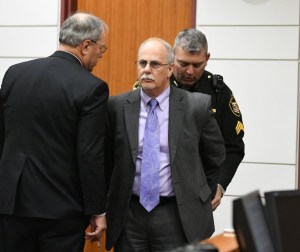
 Miami defense lawyer’ Stephen Gutierrez shocked onlookers when his pants burst into flames mid-trial as he was addressing the  jury. Gutierrez was defending a client  accused of intentionally setting his car on fire in South Miami. Yes, it was an arson case. He had just begun his closing argument when smoke started billowing from his pants pocket.

By sheer coincidence I’m sure, the lawyer was arguing that the defendant’s car spontaneously combusted—just like the lawyer’s trousers!— and was not intentionally set on fire. Observers told police that Gutierrez had been fiddling in his pocket right before his pants ignited. He ran out of the courtroom, and the jurors were ushered out as well. After  Gutierrez returned unharmed, he told the judge that  it wasn’t a staged  demonstration gone horribly wrong, but just a coincidence. A faulty battery in his e-cigarette had caused the fire.

In an arson trial.

During closing argument.

Where the defense was “spontaneous combustion.”

Okay!

Jurors convicted Gutierrez’s client of second-degree arson anyway. Miami-Dade police and prosecutors are now investigating the episode, and Miami-Dade Circuit Judge Michael Hanzman is deciding whether to hold him in contempt of court.

Comments: Continue reading

The Unethical, Depressing, Bar Complaint Against Kellyanne Conway

kellyanneThis post is one I do not want to write, and the fact that I have to write it is profoundly depressing. It requires me to criticize, indeed blow the whistle on,  professional colleagues in the fields of law and ethics, some of whom I know and admired very much, as well as fellow members of the District of Columbia Bar. Some of these colleagues are also members, like I am, in a distinguished association dedicated to the field of legal ethics. A superb book on the topic by one of the professors involved  sits in a prominent place in my office bookshelf.  I can see it right now.

Yesterday evening, I learned that a group of fifteen law professors and lawyers have filed a professional misconduct complaint against White House Counselor Kellyanne Conway, claiming that she violated the Rules of Professional Conduct for attorneys by giving false statements to the media. The fifteen signed the complaint, which was filed with the D.C. Bar’s Office of Disciplinary Counsel. When I read the names, signed on a statement printed upon the official stationery of Abbe Smith, a distinguished full time professor at my alma mater, (and where I worked in the administration for four years), Georgetown University Law Center, my heart sank. While I did not need to read the whole complaint to know it was contrived and intellectually dishonest nonsense, I did, and it fulfilled my worst fears. The anti-President Trump hysteria that has caused so many previously fair and rational citizens on the Left to behave atrociously and to betray their previously held values has officially infected lawyers in the legal ethics field. They are now riding the rails on the 2016 Post Election Ethics Train Wreck.

To be absolutely clear and unambiguous: the complaint is a political attack, and a cheap shot at the President of the United States through his staff. There is no merit to any of its contentions.

The professors claim that they were “compelled” to file the complaint because D.C. Rule of Professional Conduct 8.3 (a) requires that

“A lawyer who knows that another lawyer has committed a violation of the Rules of Professional Conduct that raises a substantial question as to that lawyer’s honesty, trustworthiness, or fitness as a lawyer in other respects, shall inform the appropriate professional authority.”

They are either addled by partisan political animus or lying, because there is no way, no way, these fifteen professors could know that, or even validly conclude it, based on what they have written in the complaint. To call their accusations against Conway a stretch is to be too kind. They are forced, exaggerated, trivial and manufactured. From what I have read in past commentary and opinions of several of them regarding other matters of lawyer misconduct, I have serious doubts about whether they believe them. I know that’s a serious charge, but I see no other explanation, other than temporary insanity.

To begin with, Kellyanne Conway is not working in a legal position in Trump’s White House. She is Counselor to the President, not White House Counsel. The President and Conway may choose, for his protection, to treat her non-legal policy advisor position as a legal representation, but the fact remains that she is not providing legal advice and services, only policy-related ones. Now, lawyers can violate D.C. Rule of Professional Conduct 8.4, Misconduct, while not engaged in the practice of law, but unless the conduct involved is criminal or displays “moral turpitude” sufficient to call into question the lawyer’s fitness to practice the likelihood of the conduct being regarded as sanctionable by the Bar is vanishingly slim.

From everything I can determines, Conway, though she is a member of the New Jersey Bar and an inactive (she needs to pay back dues and take my mandatory D.C. Bar ethics course before she can practice) member of the District Bar, has not practiced law in more than 20 years. She has been a pollster, an activist, a flack and TV personality as well as candidate  Trump’s campaign manager, but none of her professional profiles refer to her as a lawyer. The complaint alleges that Conway “engage(d) in conduct involving dishonesty, fraud, deceit, or misrepresentation” in breach of D.C. Rule of Professional Conduct 8.4 (c), and did so while not engaged in the practice of law.  In order to bring down the wrath of the Bar, such conduct must be extremely serious, criminal or bordering on it. Rule 8.3 “limits the reporting obligation to those offenses that a self–regulating profession must vigorously endeavor to prevent.” What kind of non-law-related “offenses” must “a self–regulating profession…vigorously endeavor to prevent”?  It is well established that questionable statements that an individual with a law license utters in the course of political activity and advocacy is not such conduct. Continue reading

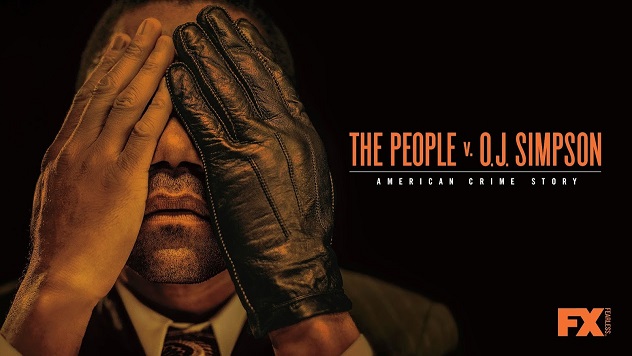
Ethics Observations Upon Viewing “The People v. O.J. Simpson: American Crime Story”

oj-show

I never got to see all ten episodes of last year’s ambitious and star-studded mini-series about the O.J. Simpson trial before this weekend. Thanks to Netflix, I was able to watch them all in two nights. I watched most of the televised trial at the time, so the program brought back a lot of bad memories.

Overall the production was excellent, and some of the casting was creepily good, especially Sarah Paulson  as Marcia Clark, Sterling K. Brown as Chris Darden, Kenneth Choi  as Judge Ito, Courtney B. Vance in a magnificent portrayal of Johnnie Cochran, Rob Morrow as
Barry Scheck,  Robert Morse, unrecognizable as Dominick Dunne, and Joseph Siravo as Fred Goldman. Unfortunately, Cuba Gooding, Jr., an excellent actor, is so unlike O.J. that it kept reminding us that this was a TV show. Nathan Lane and David Shwimmer also were unable to disappear sufficiently into their roles as F. Lee Bailey and Robert Kardashian. I couldn’t help thinking of “The Bird Cage” and “Friends.”

The script was  remarkably even-handed, and for the most part, accurate. However, there were three legal ethics howlers that require some exposition, as well as some other matters that came to mind.

1. The Defense’s Secret Redecoration of O.J.’s home.

In the episode “The Race Card,”  Johnnie Cochran was shown redecorating  O.J. Simpson’s house before the jury came for a judge-approved viewing. Pictures of half-nude models were replaced by benign photos of Simpson’s mother and children, and Cochran scattered pieces of African art around the rooms, taken from his own collection.

Could the lawyers do this? Of course not! It’s a visual lie, and an attempt to mislead the jury. Ito ordered that the heroic statute of Simpson in his back yard be covered with a sheet to avoid biasing the jury in favor of the defendant. Had the prosecution team suspected that Cochran had pulled such a stunt, as the dramatization suggested, it would have alerted the judge, a mistrial would have been likely, and Cochran as well as every lawyer involved would have faced serious bar discipline.

The question is, did this really happen as portrayed? Defense attorney Carl Douglas said in a Dateline NBC’s special THE PEOPLE vs. OJ SIMPSON: What the Jury Never Heard that it did, and that he organized the redecoration. Douglas said the intention was to make the estate look “lived-in and stand with all of its regalness so that the jurors would say ‘O.J. Simpson would not have risked all of this for this woman.'”  Douglas said that “photos of Simpson with white women were swapped out for pictures of him with black people. A Norman Rockwell painting from Johnnie Cochran’s office and a bedside photo of Simpson’s mother were placed in prominent view.”

Douglas should be suspended from the practice of law at the very least for this confession of outrageous ethics misconduct. (Cochran, who is dead, is beyond punishment.) Clark, Darden and Ito also failed their duties to justice and the public by allowing such a deception to warp the jurors’ perceptions. Continue reading

Now THIS Is An Unethical Lawyer…In Fact An Unethical ETHICS Lawyer AND A Law Professor! [UPDATED]

breaking-bad

[ My apologies: when this was first posted, I had inadvertently pasted in an excerpt from the Justice press release when I thought I had inserted a link to the complaint. The result was gibberish, and I apologize profusely. Thanks to reader Neil Dorr for alerting me. No more posts composed on my netbook while watching the O.J. miniseries, I promise.]

Today the Justice Department announced a criminal complaint  charging attorney Jack Vitayanon with conspiring to distribute 500 grams or more of methamphetamine. Incredibly, Vitayanon, who is under arrest, is an attorney with the Internal Revenue Service Office of Professional Responsibility in Washington, D.C. That’s the office that monitors IRS lawyers’ ethics. He’s also an adjunct professor at Georgetown University Law Center, where I got my law degree. I’m so proud.

Well, AMC needed a “Breaking Bad’ sequel.

The complaint says that Vitayanon conspired with others in Arizona and on Long Island to distribute methamphetamine for several years.He recently negotiated and competed the sales of distribution quantities of methamphetamine to undercover HSI special agents, and were recorded on internet-based video chats and text messages. Then the professor shipped the methamphetamine from his apartment in Washington D.C. to Long Island via Federal Express.

Vitayanon was also observed in his residence smoking methamphetamine from a glass pipe. A search of the defendant’s Washington D.C. apartment executed pursuant to a warrant led to the seizure of additional quantities of  methamphetamine, drug paraphernalia, packaging materials and drug ledgers.

In other words, they’ve got him dead to rights.

The defendant graduated from Dartmouth, got his law degree at Columbia, and received his Masters in Taxation from NYU. A lawyer cannot be admitted to any bar without a showing of reliable and honest character. The system and the profession could not have failed more miserably.

Vitayanon is the criminal, but the legal profession and the IRS allowed the rot to get into works.

____________________

Facts:Washington Post


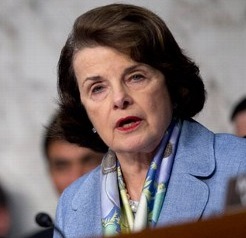
From The Sally Yates Misinformation Files: Senator Diane Feinstein, Ethics Dunce And Incompetent Elected Official Of the Month

Biased, hypocritical and ignorant is no way to go through life, Senator...

Biased, hypocritical and ignorant is no way to go through life, Senator…

Adding to the ignorance and misinformation drowning ethics comprehension regarding the Sally Yates affair, Sen. Feinstein used her questioning of Attorney General designate Jeff Sessions this morning to misrepresent the ethical duty of that office. (I don’t have a link yet, since I just watched it on C-Span.)

First, Democratic Senator Feinstein set some kind of modern political record for gall by asking Sessions for assurances that he would objectively and independently represent the justice system and the people, and not be a “political arm of the White House.” A political arm of the White House (and the Democratic Party) is exactly what Eric Holder’s and Loretta Lynch’s Justice Department were, and the Senator knows it and never raised her voice in opposition to it for eight years! The question is a fair one, but she is estopped from asking it. Indeed, for any Democratic Senator to ask that question is tantamount to deceit, suggesting that the previous Justice Department met the standard Feinstein is demanding that Sessions acknowledge.

This is the unethical double standard mindset that Democrats have been displaying since November 8.

Following that master class in hypocrisy, Feinstein lauded the justly fired Sally Yates for embodying that ideal. Feinstein is ignorant of what lawyers do and the ethical principles their profession obligates them to follow, apparently. Continue reading

More On The Unethical Sally Yates: Her Conflict Of Interest Deception

...and you shouldn't have accepted the job, either.

…and you shouldn’t have accepted the job, either.

Here is another ethics aspect of the disgraceful Sally Yates episode that the complicit news media isn’t covering: it was unethical for her to accept the job of acting Attorney General in the first place.

She had an apparent conflict of interest when she was offered the job. This is indisputable; it’s just being ignored by fawning partisans. Here is the applicable ethics rule of Yates’ bar and jurisdiction:

Rule 1.7–Conflict of Interest: General Rule

(a) A lawyer shall not advance two or more adverse positions in the same matter.

(b) Except as permitted by paragraph (c) below, a lawyer shall not represent a client with respect to a matter if:

(1) That matter involves a specific party or parties and a position to be taken by that client in that matter is adverse to a position taken or to be taken by another client in the same matter even though that client is unrepresented or represented by a different lawyer;

(2) Such representation will be or is likely to be adversely affected by representation of another client;

(3) Representation of another client will be or is likely to be adversely affected by such representation;

(4) The lawyer’s professional judgment on behalf of the client will be or reasonably may be adversely affected by the lawyer’s responsibilities to or interests in a third party or the lawyer’s own financial, business, property, or personal interests.

(c) A lawyer may represent a client with respect to a matter in the circumstances described in paragraph (b) above if

(1) Each potentially affected client provides informed consent to such representation after full disclosure of the existence and nature of the possible conflict and the possible adverse consequences of such representation; and

(2) The lawyer reasonably believes that the lawyer will be able to provide competent and diligent representation to each affected client.

(d) If a conflict not reasonably foreseeable at the outset of representation arises under paragraph (b)(1) after the representation commences, and is not waived under paragraph (c), a lawyer need not withdraw from any representation unless the conflict also arises under paragraphs (b)(2), (b)(3), or (b)(4). Continue reading

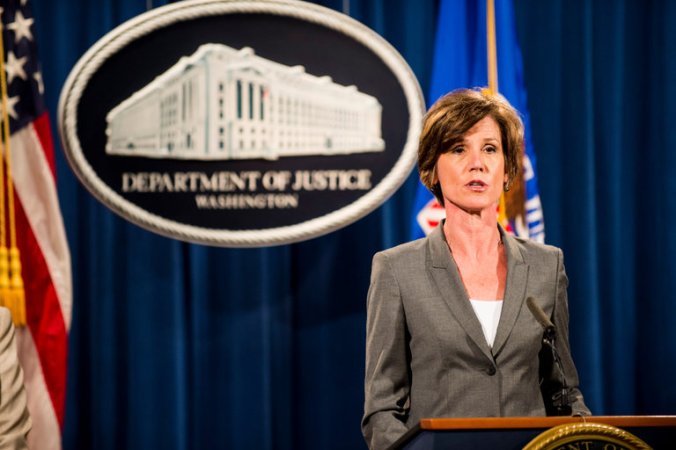
Sally Yates Is Not A Hero. Sally Yates Is An Unethical Lawyer, And “Betrayal” Is Not Too Strong A Word For Her Conduct

yates

When you read pundits, journalists, your Angry Left Facebook  friends and even a few misguided lawyer proclaiming Sally Yates a hero, trust me, they either don’t know what they are talking about, or they are have allowed bias to make them stupid.  The Justice Department’s acting Attorney General who was fired minutes ago for refusing to defend President Trump’s Executive Order regarding Middle East immigration was not acting heroically. She was acting as a partisan, political operative, and by doing so, breached her duties an attorney as well as the District of Columbia Rules of Professional Conduct.

And I do know what I am talking about.

Yates was a holdover from the Obama administration, but to an ethical lawyer, that wouldn’t have mattered. Her client hadn’t changed; it is the United States of America. Neither had her professional obligations. Her client was still the government of the United States, and she was still duty bound to defend its laws, as determined by the legislature and the executive, the President of the United States. Under the Rules of Professional Conduct of the jurisdiction in which she practices, the District of Columbia (the Rule is 1.13) Yates had but one ethical option if she determined that her client wanted to engage in conduct she deemed illegal, repugnant, or unwise. Having made her concerns known, she could resign (Rule 1.16) , and quietly. She is duty bound not to harm her client during the representation (Rule 1.3, of which the District has an especially tough version), nor make public statements, or statements she has reason to believe will be made public, that breach her duty of loyalty. In defiance of all of that, tonight Yates stated, in a letter to her department’s lawyers,

“At present, I am not convinced that the defense of the executive order is consistent with these responsibilities, nor am I convinced that the executive order is lawful.”

The only ethical conclusion of that statement is “therefore I am withdrawing.” Yates said that her decision not to defend the order included questions not only about the order’s lawfulness, but also whether it was a “wise or just” policy. That’s not her job. Lawyers are not permitted to substitute their judgement for their clients.

She was fired, and should have been. She should also be the subject of am ethics inquiry. This has nothing to do with the merits of Trump’s order. Former Harvard professor (and legal ethics prof) Alan Dershowitz, hardly a GOP flack, said tonight that Yates’ decision wasn’t legal, but political. Exactly. As a lawyer, she should have made her position clear from a legal perspective to the President, and then either followed his directive or quit. Her rogue announcement contradicted a finding by the Justice Department’s Office of Legal Counsel, which  approved the executive order “with respect to form and legality.” Nor did her outrageous grandstanding require courage. She was not going to keep her job anyway, so she decided to abuse the trust of the President to encourage partisan Trump-haters to hoot and applaud for an act of legal ethics defiance. (Ethics rules don’t apply when Donald Trump is involved, haven’t you heard?)

Yates is also a hypocrite. The Holder Justice Department, of which she was a part, defended multiple Executive Orders by President Obama that were legally dubious, and other actions as well. That Justice Department was one of the most disgracefully partisan within memory, a neat trick, since we have had a couple of decades of unethically partisan Justice Departments. Yates showed her pedigree tonight. She used her position as an attorney–the highest one there is—for her client, the United States, to undermine her client’s objectives, publicly and to her client’s detriment. The Trump administration has called this a betrayal.

That’s exactly what it is.

(More here..)

Fake Legal Résumé Ethics

fake-resume-usaWhat the legal profession will regard as conduct that calls into question a lawyer’s honesty sufficiently to disbar him is a mysterious and unpredictable area. Remember, John Edwards never received as much as a rap on the wrists for his exorbitant lying to hide the fact that he had a mistress and a love child while he was running for President in 2008. Now the Michigan Attorney Discipline Board has been affirmed in its decision to disbar lawyer Ali Zaidi for having false credentials and representations on his professional resumé.

I would expect that to send chills down many a lawyer’s spine, since professional resumés of lawyers and non-lawyers alike are so frequently loaded with puffery that it is almost an “everybody does it” ethical breach. (This is my favorite, the long-time lie of Clinton crony Bill Richardson.) Fortunately for most of them, the Rules of Professional Conduct involving honesty are narrowly interpreted to exclude all but violations of law, breaking official pledges, defaulting on loans and lying under oath, unless they involve the actual practice of law. (Lying to a judge, to a client or in a brief is career suicide.) Does a resumé fudge qualify as the unethical practice of law? Not usually: Ziadi’s must have been something special.

It was. Continue reading

Update: Astoundingly Unethical Lawyer-Hypnotist In Prison, And Disbarred.

Good.

Fine on the way to prison, where he will be hypnotized and will spend his 12-year sentence thinking he's a chicken...

Fine on the way to prison, where he will be hypnotized and will spend his 12-year sentence thinking he’s a chicken…

I hadn’t followed the story of Michael Fine since I wrote about him in 2014. This was the Sheffield, Ohio lawyer who hypnotized female clients so he could sexually molest them. When I wrote the post, two victims had been identified. The final tally was six, and there may have been more.

In September of 2015, Fine pleaded guilty to five counts of kidnapping and one count of attempted kidnapping.  He admitted to using his skill in  hypnosis to control the female clients, forcing them submit his sexual desires against their conscious will. Last week, Fine was sentenced to 12 years in prison. He had already been permanently disbarred by the Ohio Bar. Fine was not a licensed hypnotist, but needless to say, he was an unethical hypnotist too.

Judge Patricia Cosgrove told Fine at his sentencing, “At the lowest point in their lives when they came to you for help in the throes of painful divorces and custody battles, you took advantage of them. You took advantage of their trust and faith in you by sexually abusing them. You deserve to be punished.”

Ya think?

When I mentioned this case in some 2015 legal ethics seminars, many lawyers refused to believe it. I even lost a law firm client because one lawyer complained that I showed insensitivity by making a mild joke about the story, which did and does remind me of something out of a bad Adam Sandler movie.  It is the strangest example of unethical lawyering I have encountered, but I am confident that a stranger one will appear eventually.

________________________

Pointer: Fred

The 8th Annual Ethics Alarms Awards: The Worst of Ethics 2016, Part 2

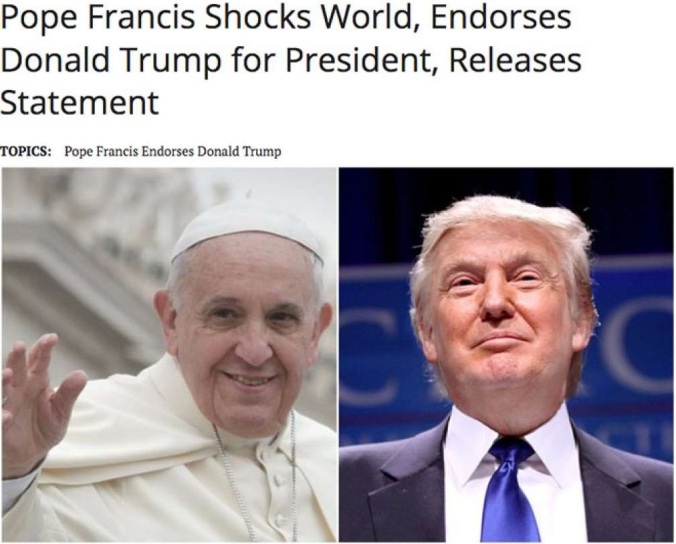
pope-trump

Part II of the Worst continues with education horrors, legal outrages, the Lie of the Year, and more.

Above? That’s obviously the…

Fake News of the Year.

Now the rest..it doesn’t get any better.

Biggest KABOOM! 
exploding-head

The YMCA Slavery Recreation.  You know, even looking through this category was dangerous. I had forgotten about all these stories, which, by definition, were all horrible. This one, from February, however, had to be the winner. The YMCA Storer Camps in Jackson, Michigan included an “educational” activity called “Underground Railroad” in which black children were asked to play runaway slaves, as some teachers and camp instructors acted as slave masters, chasing them down using real horses. Once captured, the children were “auctioned off.” The principal of the school that subjected its pre-teen students to the slavery simulations rather than the other better known YMCA camp activities like nature hikes, kayaking, canoeing, horseback riding and sitting around campfires responded that he didn’t expect the uproar, since no student had ever complained before.

Most Unethical High School Discipline

Red Mountain High School  in Mesa, Arizona. On a dare from a friend, high school football player Hunter Osborn briefly flashed his naughty bits in the team photo. Nobody noticed, including the yearbook’s faculty advisor, so the photo was published in the school yearbook.  Months later, the gag was discovered. Even though the photo was so small that offending nudity was virtually invisible to the naked eye, the school had Osborn was arrested and charged with 69 counts of indecent exposure. The charges were dropped because none of the 69 “victims” pressed charges.

Most Unethical No-Tolerance Action
hazel-tweet

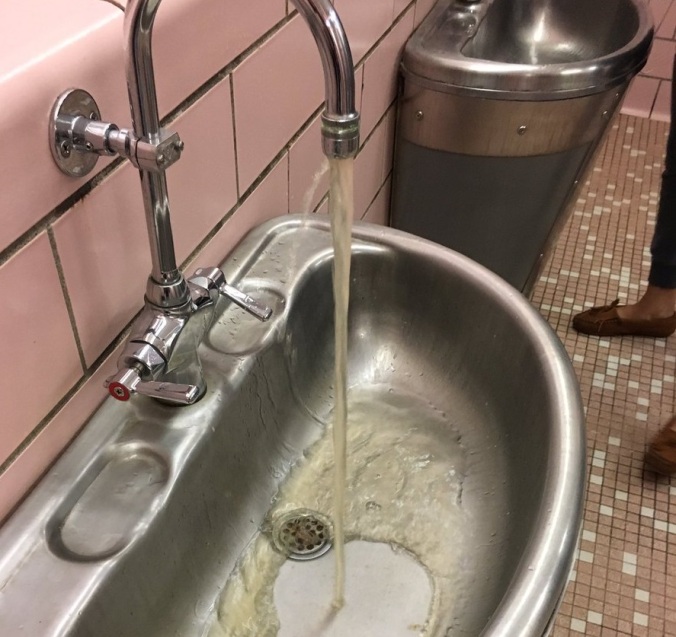
John Glenn High School in Suburban Detroit.  The offense: “Inappropriate use of electronics in the restroom.” The conduct: Hazel Juco, a 17-year-old student, went to the school’s bathroom to wash her hands. When she turned on the faucet, ugly brown water came out. She then used her cell-phone to take photos of the discolored water and posted it to Facebook and Twitter.

She was suspended, but eventually social media and the local news vindicated her. The water was polluted, and the school district admitted that Hazel was punished for doing the right thing.

Most Unethical School Teacher

(Excluding Rapists)

A Tie! 

1. Malik Leigh, a teacher in Palm Beach Lakes High School’s pre-law academy a kindergarten teacher at Captain Johnston Blakely Elementary on Bainbridge Island, Washington

Leigh’s specialty is indoctrination. Aming his exam questions last year…

“If Donald Trump becomes president of the United states, we are:

A.) Screwed

B.) Screwed

C.) Screwed

D.) Screwed behind a really YUGE wall that Mexico pays for.”

and…

“When performing an opening statement, it is best to:

A. Wink at the Judge

B. find the hottest person on the Jury and focus your words on them

C. Speak to them as if they are cordial friends.

D. Treat them like the MORONS they are.”

He was suspended.

Good.

2. “Jill Watson.” You can’t be a more unethical teacher than when you’re not a teacher at all. Or human.

Naked Teacher of the Year

Leigh Anne Arthur, In a completely warped and unfair application of the Naked Teacher Principle, school district officials in Union County demanded and received the resignation of the engineering teacher  after a student stole her phone, examined its contents and found a semi-nude selfie  intended for her husband’s enjoyment only.The student, who  warned her that “something bad was coming,” sent the images to other students through text messages and social media Arthur sued the school board for wrongful termination, but recently dropped the suit.  The student was charged with a computer crime and voyeurism. The Naked Teacher Principle holds that

A secondary school teacher or administrator (or other role model for children) who allows pictures of himself or herself to be widely publicized, as on the web, showing the teacher naked or engaging in sexually provocative poses, cannot complain when he or she is dismissed by the school as a result. The first formulation of the NTP can be found here.

This obviously does not apply to Arthur. Ironically it would apply to the incoming First Lady if she were a teacher, and arguably applies still, since the First Lady is a role model.

Double Standard Of The Year
pelosi-tweet

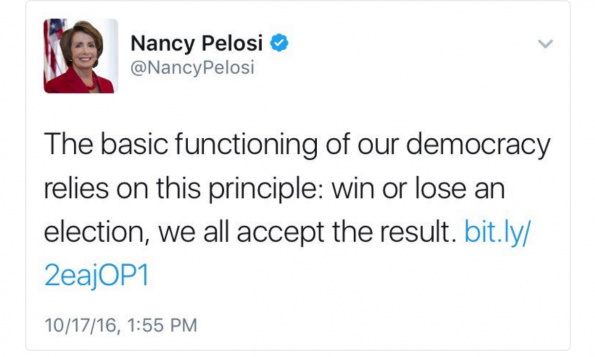
Progressives and Democrats, who performed an immediate U-turn as soon Donald Trump won the election, and after having expressing outrage and indignation when Trump had suggested, about a month earlier, that he might not “accept the results of the election,” which he had claimed was “rigged,” immediately challenged the results of the election, and claimed it was rigged.

And they are still doing it today.

 Lie of the Year

and

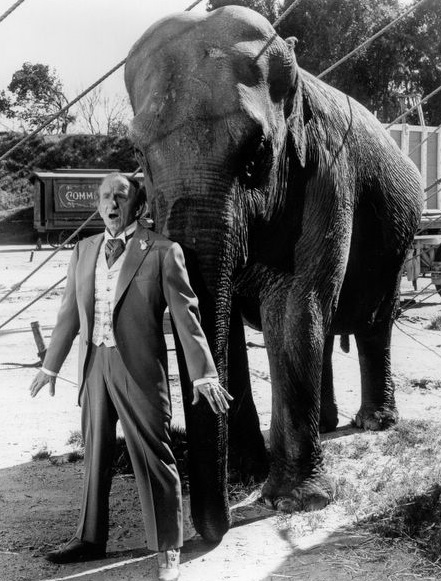
Jumbo of the Year

Jumbo film Continue reading