This Is The Heartbreak Of Anti-Trump Brain Loss…

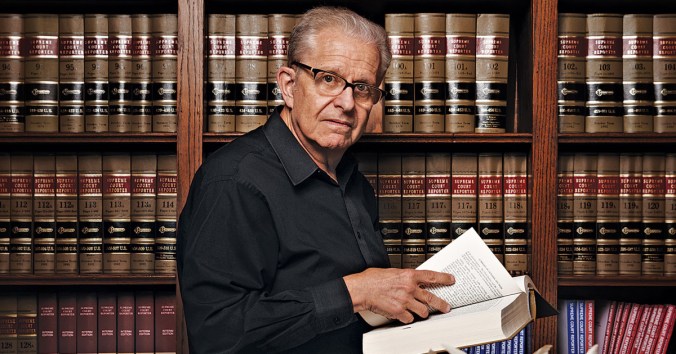
We already beheld the sad spectacle of one of the nation’s most distinguished and respected legal minds beginning to crumble under the dual attacks of anti-Trump hysteria from his peer group, and the inexplicable power of social media to make wise men and women behave like idiots..here (my linking function isn’t working this morning: http://lawnewz.com/high-profile/in-dumbest-move-famous-law-prof-broke-ethics-rules-in-apparent-shot-at-trump/), when famed Harvard Law scholarLawrence Tribe breached a basic and legal ethics principle by issuing a tweet implying that Donald Trump had once asked him about a legal matter, and wouldn’t you all love to know what it was?  When I mention this to lawyers in my legal ethics seminars, they literally laugh and roll their eyes. They know lawyers can’t do this: why didn’t the famous Constitutional Law prof from Harvard Law School have his well-oiled  ethics alarms go off? It was because, I explain, Twitter often turns lawyers and other professionals into fools, and what brains social media hasn’t chewed up can be swallowed by anti-Trump madness.

That was before the election, and poor Tribe’s deterioration has  continued. Three days after the President was sworn in, Tribe joined a group of deranged lawyers and the early stirrings of the “resistance” to sue Trump for violating the obscure Emoluments Clause, which, sane and objective authorities agree, was not intended to apply to a President who has his name on hotels, making the claim that this unprecedented situation constitutes a government official receiving prohibited payments from foreign governments. The theory is not just a stretch, but an embarrassingly  partisan one that a respected Constitutional law scholar should have been mocking, not joining.

Now Tribe has really gone around the bend, and may soon be seen wandering aimlessly through Harvard Square, wearing a Red Sox cap, muttering to himself and carrying a crudely lettered sign. Continue reading →

Calling This Lawyer Unethical And Incompetent Doesn’t Quite Capture His Basic Problem: He’s An Idiot

Defending his client of rape charges, Tennessee criminal defense lawyer Steve Farese told the jury during his closing argument,

“People can be very good at lying. Women can be especially good at it because they’re the weaker sex and we … and we want to protect them and not have anybody take advantage of them at least I do.”

Head-exploding  fact #1: The jury Ferese was appealing to by emphasizing the inherent dishonest nature of  “the weaker sex”  was made up of eleven  women and three men.

Head-exploding  fact #2: The jury still acquitted Ferese’s client.

That doesn’t make his argument ethical. The statement appealing to anti-women bias was a direct ethics violation, a breach of  Tennessee Rule of Professional 8.4 (d) forbidding lawyers from engaging in conduct that is prejudicial to the administration of justice, which deliberately appealing to anti-woman bias clearly is. For the future, the episode also raises questions about whether such a closing would breach the new ABA rule 8.4 g,  yet to be adopted in Tennessee or any state, which states that it is unethical for a lawyer to

“engage in conduct that the lawyer knows or reasonably should know is harassment or discrimination on the basis of race, sex, religion, national origin, ethnicity, disability, age, sexual orientation, gender identity, marital status or socioeconomic status in conduct related to the practice of law.”

The ABA notes specify that “This paragraph  does not preclude legitimate advice or advocacy consistent with these Rules.”

I am certain Ferese’s statement would breach 8.4 (g), not that it isn’t unethical anyway.

Continue reading →

About Fox News’ Fake Judge

In a post on the Legal Ethics Forum, not as active as it once was but still one of the best legal ethics sites around, Legal ethicist and law professor Steve Lubet clarifies something I have always wondered about, and like a lazy slug, never investigated.

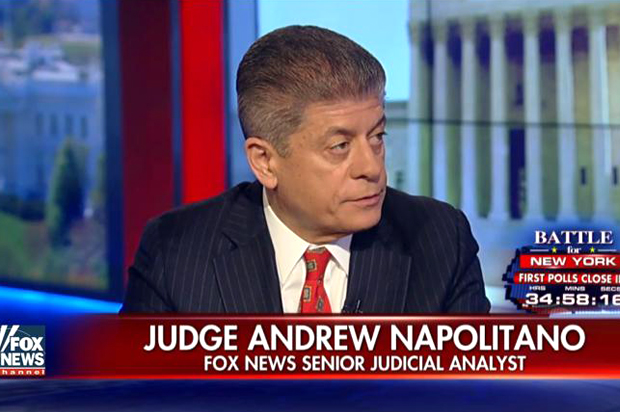
Fox News contributor Andrew Napolitano, most recently in the news for claiming that the British intelligence service GCHQ  colluded with President Obama to conduct surveillance on the Trump staff during the 2016 campaign, is always called “Judge Napolitano” during his appearances.  Lubet points out that he’s not a judge any more. Napolitano once served on the New Jersey Superior Court, but resigned in 1995 and has not held judicial office for more than two decades. It is apparently at Napolotano’s insistence that he is always addressed  as “Judge”  in Fox. His website, JudgeNap.com, refers to him as “Judge Napolitano” throughout, as does his bio on the Fox News site.

Lubet notes that The American Bar Association has held that  the use of  judicial titles by former judges practicing law is misleading and unethicalin connection with law practice.  ABA Formal Opinion 95-391 says that continued “use of the title is misleading because it may be misunderstood by the public as suggesting some type of special influence” or “to create an unjustified expectation.” In fact, said the ABA, “there appears to be no reason for such use of the title other than to create such an expectation.” Of course, Napolitano isn’t practicing law when he bloviates on Fox News, so it isn’t a Rules violation, but the Judge label is still misleading

The Ohio Rules of Professional Conduct, Lubet found,  goes further by decreeing that it is only ethical for a former judge to use the titles  “Judge” or “The Honorable” if they are preceded by the word “retired” or “former,” and the rule does not limit this caveat to ex-judges actively practicing law. Again, Napolitano is not out of compliance, because he is not subject to the Ohio Rules. That doesn’t make what he calls himself strictly accurate, or sufficiently accurate. (I confess, I have had a bias against such things ever since I suffered through a year with an insufferable  high school history teacher who called himself (and insisted that we call him)  “Dr. Arthur” because he had a PhD in history.) Continue reading →

Oh, Great: 21% Of Lawyers Are Stealing From Their Clients.

This should be a shock, but it isn’t. When the screenwriters for the film adaptation of “The Firm” changed the ending to focus on the fact that the mob’s law firm was over-billing clients, lots of lawyers and legal ethics specialists squirmed. Widespread over-billing in the legal profession has been a scandal waiting to break for decades.

The ABA journal reveals that a recent study by  CEB Inc. and Wolters Kluwer NV’s ELM Solutions, companies that work with corporate legal departments to manage their budgets, examined legal invoices from about 100 companies, and found that 21% of lawyers “upbilled” for their time in 2015. Upbilling is the practice of rounding up legal hours hours worked to the next hour or half hour. This could raise the annual legal bill for a partner billing 2,000 hours a year by about $29,000. Spread over all the clients and all the lawyers charging by the hour, the 21% figure translates into millions of dollars taken by fraud, and maybe billions, every year. You can read summaries of the reports  here and here. Continue reading →

Ethics Dunce: The Maryland State Bar Association

Do you know what legal ethics opinions are? Many lawyers don’t know, or barely pay attention to them, but the opinions are important. They are written when bar associations have to decide how to handle the gray areas of professional ethics, and believe me, there are more gray areas in legal ethics than the profession likes to admit. Some jurisdictions churn out lots of important and useful legal ethics opinions all year long; others barely bother with them. (Idaho simply stopped issuing such opinions decades ago.) Still, the LEOs, as they are called, are essential when one of the many legal ethics issues crop up that a jurisdiction’s rules themselves don’t cover.

Although bar associations do a terrible job making their legal ethics opinions’ availability known to the general public, LEOs have invaluable information to convey about how lawyers are ethically obligated to serve their clients. They are also essential if people like me are going to be able to remind Maryland’s lawyers about their ethical duties as part of continuing legal education seminars and expert opinions.

So why is it that Maryland, alone among the 51 U.S. jurisdictions, refuses to allow the public access to their legal ethics opinions? All right, neither does Arkansas, but nobody can read in ArkansasKIDDING!!! I’M KIDDING!

In order to find out what the Bar Association has decided regarding specific legal ethics conundrums, or whether the state has any position at all, one has to be a dues-paying member of the Maryland Bar. Never mind that Maryland lawyers, who, like most lawyers, often are subject to the ethics rules of other jurisdictions, can access neighboring bar association LEO’s with a couple of clicks on their computers. Never mind fairness or reciprocity.

Here’s how the question “Why do we hide our ethics opinions?” was answered by one Maryland lawyer online:

“Ethics opinions are MSBA work product: a benefit to members who pay their dues…An ethics opinion is a legal opinion about what it or is not permissible under the rules. If you want legal advice, pay for it. The “rules”, by the way, are published and are available to the public. As are the elements of negligence. Do you tell your clients for free how to prove their negligence cases?”

How’s that for a venal, snotty answer? In fact, there are no “hidden” laws or principles related to negligence, nor are the standards for what constitutes negligence and how it is proven in court only available for a fee. The legal ethics opinions, on the other hand, may be crucial to allowing non-lawyers  know when they are being victimized by unethical members of the Maryland bar. How convenient that the Bar hides these from the view of the group of citizens that have the most urgent need to know about them.

Continue reading →

Ethics Dunce: Ex-US Attorney Preet Bharara

And a good thing, too…

Preet Bharara, until recently the United States Attorney’ for the Southern District of New York, was known as an aggressive, fearless, skilled prosecutor. He was also  increasingly a partisan one, as his  felony prosecution of Dinesh D’Souza, a vocal conservative critic of President Obama, showed. Despite the ridiculous and dishonest criticism of President Trump for firing Baharara, if there has ever been a President with good cause not to trust holdovers from the previous administration, it is Donald Trump.

The last Holder/Lynch Justice Department employee he trusted was Sally Yates, and she breached her ethical and professional duties by going rogue, and not just rogue, but partisan rogue. Baharara,who referred to himself as a “completely independent” prosecutor, was such a good bet to go rogue that it would have been negligent for Trump not to fire him. Democrats in and out of government are suddenly dedicated to defying and bringing down our governmental institutions, notable the Presidency. They can’t be trusted. Even if it wasn’t  the usual course to sack the previous administration’s US Attorneys—though it is—  there was every reason for this President to sack these prosecutors.

And, nicely enough, Bharara proved that Trump was right by grandstanding on his way out the door.

Asked to resign along with his colleagues, Bharara refused, and Trump fired him  Glenn Reynolds calls the refusal to resign childish, but it was more that. It was a breach of professional ethics, and akin to Yates’ stunt.  Bharara is a government lawyer, meaning that he represents the government’s interests as his supervisors define them. If he doesn’t like their priorities, his option is to resign—not defy them until he is fired, but resign.  United States Attorneys “serve at the pleasure of the President” and that’s a term of art.  The prosecution of crimes, including the decision regarding which crimes to prosecute and which crimes not to prosecute, is made at the discretion of the Executive Branch, which is headed by the President. If, for example, Bharara felt that Obama’s executive order declaring  that illegal immigrants who hadn’t committed serious crimes were henceforth to be treated as if they were legal immigrants rather than illegal ones was unconstitutional, which it is, his option would have been to resign, not give a press conference, a la Yates, declaring his opposition to the new policy. Continue reading →

Chicago Justice, Rights, And Pop Culture Malpractice

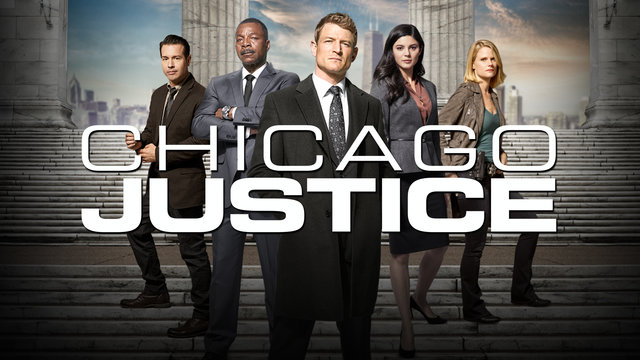
Dick Wolf, the “Law and Order” creator, is in the process of taking over NBC prime time. He now has four linked dramas dominating the schedule—“Chicago Med,” “Chicago P.D.,” “Chicago Fire,” and the latest, “Chicago Justice.” (Soon to come, at this rate: “Chicago Sanitation,” “Chicago Pizza,” and “Chicago Cubs.”)

Yesterday was Episode #2 of “Chicago Justice.” The story in involved a “ripped from the headlines” riff on the Brock Turner case, where a woman was raped while unconscious and the rapist received a ridiculously lenient sentence. In Wolf’s alternate universe, however, the judge was murdered, and the rape victim and her ex-husband were suspects. There was another wrinkle too: one of the prosecutors had a close relationship with the dead judge, and was with him right before he was killed. She was going to have to be a witness, and her colleague and supervisor, prosecuting the case, asked her if she had been sleeping with the victim. Such a relationship would have been an ethical violation for the judge, and at least a pre-unethical condition for the prosecutor, requiring her to relocate to a Steven Bochco drama, where lawyers have sex with judges all the time.

The female prosecutor indignantly refused to answer the question. After the case was resolved—I won’t spoil it, but the name “Perry Mason” comes to mind—the two prosecutors made up over a drink. She said that she would have never slept  with “Ray” (the dead judge–when he was alive, that is), but that she remembered reading “in some old document” that we all had “unalienable rights,” she believed one of them was “the right to be respected by your fellow man.”

There is no “right to be respected.” The Declaration of Independence, the “old document” she referenced, lists three rights only, though they are broad ones: life, liberty and the pursuit of happiness. None of those encompass a right to be respected. The speaker, Anna Valdez (played by Monica Barbaro, a Latina dead ringer for Jill Hennessey, who played the equivalent “Law and Order” role for many years), is a lawyer, and should understand what a right is. It is a legally enforceable guarantee of an entitlement to have something, seek or obtain it,  or to act in a certain ways. As a lawyer, she must understand that this is different from what is right, just or honorable. Her statement, coming from the mouth of a character with presumed expertise and authority, misleads much of the public, which is constantly getting confused over  the difference between Jefferson’s use of “rights” and what is right. So do journalists and, sadly, too many elected officials. Continue reading →

Ethics Train Wreck Update: Now The Dictionary People Have Boarded The Post-2016 Election Freakout

It’s really depressing. I did not expect to see so many professions and professionals debase themselves and their ethical principles because they couldn’t deal with the results of a presidential election. . Historians. Judges. Scientists. Professors. College presidents and administrators. Performing artists. Intelligence community professionals. Judges. Journ–well, no, that one wasn’t a surprise.

My own profession, legal ethicists, booked a seat on the ethics train wreck, a development that was profoundly disappointing. Wrote one member of the profession who has remained clear -eyed while keeping his integrity, Steve Lubet in Slate,  “As a liberal Democrat, I have no sympathy for Conway’s habitual disregard for truth. As a professor of legal ethics, however, I think this complaint is dangerously misguided and has the potential to set a terrible precedent…The professors no doubt have faith in the professionalism of the District of Columbia Office of Disciplinary Counsel, but the bar authorities in other states may not always be reliably even-handed or apolitical. It is hardly inconceivable that lawyer discipline might somewhere be used as a weapon against disfavored or minority candidates, or as a means to squelch protest movements and insurgent campaigns. In the 1940s and 1950s, suspected Communists and alleged “fellow travelers” found their law licenses in jeopardy in many states. In the 1960s and 1970s, civil rights lawyers were hauled before the bar authorities in the South. The complaint against Conway is an unfortunate step back in the direction of using lawyer discipline against political enemies….”

Bingo.

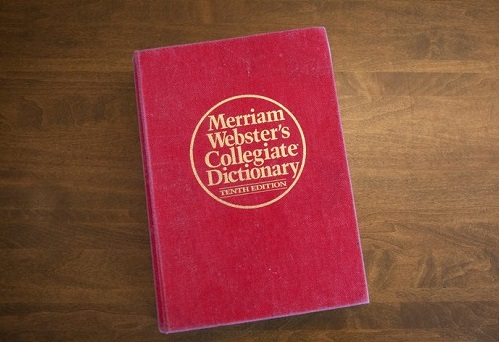
Now “America’s dictionary,” Merriam-Webster, has decided that it is within its mission and purview to attack and mock the President of the United States..

Almost immediately after his election, the dictionary’s editors began trolling Trump and his administration, defined, by Merriam-Webster, as “to antagonize (others) online by deliberately posting inflammatory, irrelevant or offensive comments or other disruptive content.”

The website Acculturated has observed that on social media and its website Merriam-Webster has ridiculed the President  “for his every spelling mistake, grammatical error, and verbal gaffe. In honor of the election, they changed their header photo to a picture of a German word defined as the “collapse of a society or regime marked by catastrophic violence and disorder.” Then they highlighted what they claimed was the word most frequently looked-up, “fascism.” On Inauguration Day, they tweeted “Welp,” a word that conveys dismay or disappointment. The company also derided Betsy DeVos, Sean Spicer, Steve Bannon, and, of course, Kellyanne Conway.

This, needless to say, is not their job, their mission, or responsible professional conduct. It is, as it is for the other derailed professionals, smug virtue signalling and tribalism. Acculturated again:

[T]he dictionary’s editors are clearly partisan. They didn’t harass Hillary Clinton, and they don’t needle sports stars, celebrities, or, well . . . anyone else like they needle the President and his people.Theoretically, even that could be okay—a good, playful, occasional joke from the dictionary could have the whole country laughing. But if you mock one person too often, you start to reveal a pattern. If that pattern persists, the fun and games lose their light-hearted feel, and begin to betray bias instead.

Ya think???

Continue reading →

Coincidence, Ethics Violation, Or A Playground Rhyme Come True: The Lawyer’s Burning Pants

I love this story!

 Miami defense lawyer’ Stephen Gutierrez shocked onlookers when his pants burst into flames mid-trial as he was addressing the  jury. Gutierrez was defending a client  accused of intentionally setting his car on fire in South Miami. Yes, it was an arson case. He had just begun his closing argument when smoke started billowing from his pants pocket.

By sheer coincidence I’m sure, the lawyer was arguing that the defendant’s car spontaneously combusted—just like the lawyer’s trousers!— and was not intentionally set on fire. Observers told police that Gutierrez had been fiddling in his pocket right before his pants ignited. He ran out of the courtroom, and the jurors were ushered out as well. After  Gutierrez returned unharmed, he told the judge that  it wasn’t a staged  demonstration gone horribly wrong, but just a coincidence. A faulty battery in his e-cigarette had caused the fire.

In an arson trial.

During closing argument.

Where the defense was “spontaneous combustion.”

Okay!

Jurors convicted Gutierrez’s client of second-degree arson anyway. Miami-Dade police and prosecutors are now investigating the episode, and Miami-Dade Circuit Judge Michael Hanzman is deciding whether to hold him in contempt of court.

Comments: Continue reading →

The Unethical, Depressing, Bar Complaint Against Kellyanne Conway

kellyanneThis post is one I do not want to write, and the fact that I have to write it is profoundly depressing. It requires me to criticize, indeed blow the whistle on,  professional colleagues in the fields of law and ethics, some of whom I know and admired very much, as well as fellow members of the District of Columbia Bar. Some of these colleagues are also members, like I am, in a distinguished association dedicated to the field of legal ethics. A superb book on the topic by one of the professors involved  sits in a prominent place in my office bookshelf.  I can see it right now.

Yesterday evening, I learned that a group of fifteen law professors and lawyers have filed a professional misconduct complaint against White House Counselor Kellyanne Conway, claiming that she violated the Rules of Professional Conduct for attorneys by giving false statements to the media. The fifteen signed the complaint, which was filed with the D.C. Bar’s Office of Disciplinary Counsel. When I read the names, signed on a statement printed upon the official stationery of Abbe Smith, a distinguished full time professor at my alma mater, (and where I worked in the administration for four years), Georgetown University Law Center, my heart sank. While I did not need to read the whole complaint to know it was contrived and intellectually dishonest nonsense, I did, and it fulfilled my worst fears. The anti-President Trump hysteria that has caused so many previously fair and rational citizens on the Left to behave atrociously and to betray their previously held values has officially infected lawyers in the legal ethics field. They are now riding the rails on the 2016 Post Election Ethics Train Wreck.

To be absolutely clear and unambiguous: the complaint is a political attack, and a cheap shot at the President of the United States through his staff. There is no merit to any of its contentions.

The professors claim that they were “compelled” to file the complaint because D.C. Rule of Professional Conduct 8.3 (a) requires that

“A lawyer who knows that another lawyer has committed a violation of the Rules of Professional Conduct that raises a substantial question as to that lawyer’s honesty, trustworthiness, or fitness as a lawyer in other respects, shall inform the appropriate professional authority.”

They are either addled by partisan political animus or lying, because there is no way, no way, these fifteen professors could know that, or even validly conclude it, based on what they have written in the complaint. To call their accusations against Conway a stretch is to be too kind. They are forced, exaggerated, trivial and manufactured. From what I have read in past commentary and opinions of several of them regarding other matters of lawyer misconduct, I have serious doubts about whether they believe them. I know that’s a serious charge, but I see no other explanation, other than temporary insanity.

To begin with, Kellyanne Conway is not working in a legal position in Trump’s White House. She is Counselor to the President, not White House Counsel. The President and Conway may choose, for his protection, to treat her non-legal policy advisor position as a legal representation, but the fact remains that she is not providing legal advice and services, only policy-related ones. Now, lawyers can violate D.C. Rule of Professional Conduct 8.4, Misconduct, while not engaged in the practice of law, but unless the conduct involved is criminal or displays “moral turpitude” sufficient to call into question the lawyer’s fitness to practice the likelihood of the conduct being regarded as sanctionable by the Bar is vanishingly slim.

From everything I can determines, Conway, though she is a member of the New Jersey Bar and an inactive (she needs to pay back dues and take my mandatory D.C. Bar ethics course before she can practice) member of the District Bar, has not practiced law in more than 20 years. She has been a pollster, an activist, a flack and TV personality as well as candidate  Trump’s campaign manager, but none of her professional profiles refer to her as a lawyer. The complaint alleges that Conway “engage(d) in conduct involving dishonesty, fraud, deceit, or misrepresentation” in breach of D.C. Rule of Professional Conduct 8.4 (c), and did so while not engaged in the practice of law.  In order to bring down the wrath of the Bar, such conduct must be extremely serious, criminal or bordering on it. Rule 8.3 “limits the reporting obligation to those offenses that a self–regulating profession must vigorously endeavor to prevent.” What kind of non-law-related “offenses” must “a self–regulating profession…vigorously endeavor to prevent”?  It is well established that questionable statements that an individual with a law license utters in the course of political activity and advocacy is not such conduct. Continue reading →