Unethical Quote of the Week: MLB Players Union Chief Michael Weiner

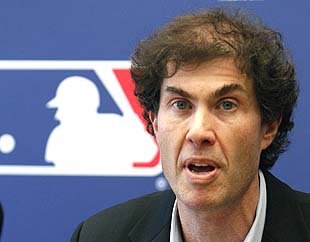
“Today’s news that those members of the BBWAA afforded the privilege of casting ballots failed to elect even a single player to the Hall of Fame is unfortunate, if not sad….To ignore the historic accomplishments of Barry Bonds and Roger Clemens, for example, is hard to justify. Moreover, to penalize players exonerated in legal proceedings — and others never even implicated — is simply unfair.”

—-Major League Baseball players union executive Michael Weiner, in a formal statement released after the news that the Baseball Writers Association of American had denied Hall of Fame admission this year to all-time home run leader Barry Bonds, pitching ace Roger Clemens, and several other players who have either admitted to steroid use or are strongly suspected of being users. No player was on the requisite number of ballots this year.
It takes a Harvard lawyer to be that unethical in so few words.

It takes a Harvard lawyer to be that unethical in so few words.

It’s not easy to pack so much bad ethics into one statement, but we should not be surprised that the baseball players’ union chief was up to the task. The union shares responsibility with baseball’s “see-n0-evil” management during the steroid era and the willful blindness of the sportswriting community for allowing steroids and other performance enhancing drugs to permanently scar the game’s integrity and distort its records beyond repair. Small wonder Weiner is eager to rationalize his organization’s complicity with an absurd, deceptive and corrupting assertion that none of it should make any difference:

  • The writers did not “ignore” Bonds’ accomplishments. To the contrary, his “accomplishment” of blatantly abusing steroids, launching a late career surge of power and prowess that was alien to the career arc of every other player who ever set foot on a field as he morphed into baseball’s version of the Hulk, all while lying his head off and convincing other players that drug-assisted cheating was the accepted way to achieve fame and fortune, was exactly why he was on less than 40% of the ballots ( 75% is required for enshrinement.) Continue reading

Professional Discipline For Unethical Law School Deans?

Why not?

What the North Carolina Bar considers a trustworthy lawyer...

What the North Carolina Bar considers a trustworthy lawyer…

Law professor Ben Trachtenberg has caused a stir by suggesting in a law review article for the University of Missouri Law School Journal  that law school administrators responsible for intentional and egregious misrepresentations in advertising for their schools have violated the professional ethics codes and could, and should, face discipline, such as disbarment.

I don’t want to cause Nando a fatal cognitive dissonance attack, really I don’t, but I agree with the professor wholeheartedly. I have long believed that the Model Rules prohibition of dishonesty in Rule 8.4 should be applied to lawyer conduct not related to the practice of law more frequently and stringently than it is. Lawyers, for their own protection, are fond of the fictional Clinton myth that one can be an upright and trustworthy lawyer while displaying deceitful and dishonest conduct in their “personal lives,” as if lawyers are ethically schizophrenic. The proof: John Edwards still has his license.

The law school deans that Trachtenberg targets, however, don’t get the benefit of this pass. They are lawyers who were dishonest in their professional duties that, while not requiring a law license, have a clear impact on the legal profession.  Trachtenberg writes,

“In light of the common application of Rule 8.4(c) to lawyers who engage in dishonesty unconnected with the practice of law, there is little doubt that dishonest law school marketing conducted by members of the bar justifies professional discipline. Paul Pless lied repeatedly, over a period of years, about the quality of incoming students at the University of Illinois College of Law, deceiving the ABA and U.S. News, along with prospective students and others who relied on statistics they compiled.191 Mark Sargent conspired with colleagues to engage in similar conduct at Villanova.192 Can anyone dispute that these men engaged in “conduct involving dishonesty, fraud, deceit or misrepresentation”? Surely serial dishonesty—committed with the purpose of gaming the rankings used by prospective students deciding whether and where to spend tens (if not hundreds) of thousands of dollars—is at least as serious a violation as falsifying a resume and transcript.”

Sure it is. As with Edwards, however, the profession is unlikely to be willing to expand the range of activities by lawyers outside of actual practice that will trigger discipline. Continue reading

The Legal Ethics Forum’s Top Ten Legal Ethics Stories of 2012

top-tenOne of my most consulted ethics resources, both for my ethics practice and Ethics Alarms, is the Legal Ethics Forum, created and operated by attorney John Steele with able assistance from some of the best legal ethics experts and scholars in the nation. John has posted the Forum’s Top Ten Legal Ethics Stories of 2012, which you can, and should, read about in detail here. These are John’s headlines: (Ethics Alarms, which is not written for an exclusively legal audience, has covered six of them, #4, #5, #6, #7, #9 (as well as this gem), and #10.) Continue reading

Ethics Quiz: The Case of the Maybe Killer Lawyer

Tough one! Are you ready?

Convicted killer and lawyer too?

Convicted killer and lawyer too?

Richard Buchli, a Missouri lawyer who was convicted of beating his law partner to death, was getting a new trial after it was revealed that the prosecution had illegally withheld exculpatory evidence from the defense. There was some strong evidence supporting his conviction, such as the fact that the partner’s blood was splattered on Buchli’s clothes in a manner consistent with a beating death. (Buchli argued that he got bloody trying to revive his partner.) The court, however, frustrated with the prosecution continuing to drag out discovery and failing to deliver all the evidence to Buchli’s legal team, threw out the conviction completely and barred all the evidence in the case, effectively making Buchli, who had been in prison since 2002, a free man.

Now Buchli, who was disbarred in 2005 (killing your law partner is considered unethical), wants his law license back. Your Ethics Alarms Ethics Quiz Question:

Should he get it? Continue reading

Ethics Dunce: The ABA Journal

"I just know we're forgetting something! "Effects"? No, that's not it..."Ethanol"? No, no..."Prosthetics"? Arrrgh! What IS it?

“I just know we’re forgetting something! “Effects”? No, that’s not it…”Ethanol”? No, no…”Prosthetics”? Arrrgh! What IS it?”

This is as disheartening and it is shocking. The American Bar Association Journal, the monthly magazine of the nation’s largest lawyer organization and in many ways the face of the legal profession in the United States, just announced its 6th Annual Blawg 1oo, its reader-chosen list of the best law-related blogs on the web. There are many excellent blogs honored, of course; indeed all of them are useful or entertaining. I’ve visited most of them, and some, like Popehat, the Legal Professions Blog, Above the Law, the Volokh Conspiracy, Scotus Blog,  the New York Personal Injury Law Blog, and Over-Lawyered, I check on several times a week. There is a remarkably wide range of blog topics covered, including superhero law, practicing law in China and zombies. Guess what’s not covered?

Legal ethics. Continue reading

TV Ethics, Viewed From A Sickbed

This isn’t how I look. This guy looks BETTER than I look…

[ As regular readers here might have guessed, I am ill, and have been since Thanksgiving. I can barely read, can’t really research, and whatever appears below was composed in 10 minute increments with hours or days in between. I’m hoping to be catching up very soon. Thank you for your patience]

What do you do when any movement or exertion makes you cough your guts out, when you can’t sleep but have to rest, when your brain is so blurry from viruses and medication that you can’t even compose a blog post for three days? (Sorry.) If you are me, and I hope for your sake that you aren’t, you watch TV.

I got one jolt of legal ethics horror that I hadn’t remembered re-watching Kevin Costner’s “The Untouchables,” directed by Brian DePalma. In the movie’s climax, Al Capone’s trial on income tax evasion has come to a crisis point, as Elliot Ness (Costner) realizes that the jury has been bribed to acquit him. Despite documentation of that fact, the corrupt judge tells Costner that the trial will proceed, whereupon Costner extorts him to prompt “a change of heart.” Now the judge shocks the courtroom by announcing that he is trading juries with another trial next door. The new, un-bribed twelve will decide Capone’s fate.

This is, of course, beyond ridiculous. Adversary attorneys must be able to choose a jury in voir dire, where each potential juror is questioned. Trading juries just invalidates two trials. Even if they could trade juries, which they couldn’t, the Capone trial would obviously have to start all over again since the new jury wouldn’t know what was going on.

None of this occurs to Al Capone’s panicky lawyer, however, who, realizing that the jig is up, announces that “we” are changing “our” plea to “guilty.” Chaos reigns. Capone (Robert DeNiro) punches his lawyer in the face, and I don’t blame him one bit.  A lawyer can’t plead guilty against the wishes of his client! The judge couldn’t accept such a plea, and Capone wouldn’t be bound by it. This would be an embarrassing distortion of the justice system in a Warner Brothers cartoon, but for a movie based on historical figures and events to sink so low is unforgivable. (“Carrie” aside, Brian DePalma was a hack.) Continue reading

Meet the Grants!

Hmmm…I wonder who’ll play Jennifer in the Lifetime movie?

If this developing story from Seattle was a Lifetime Network movie, I would regard it as proof positive that LMN was running out of plausible plots. Since it appears to be real, I regard it as proof positive that life is running out of plausible plots.

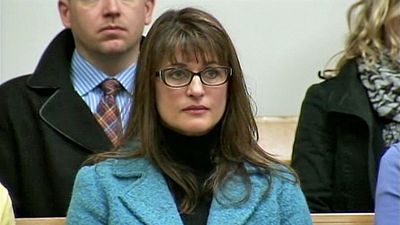
Meet the Grants. They make fun couple David Petraeus and Paula Broadwell look like Mike and Carol Brady.  Described as a Seattle “power couple”, he’s a successful lawyer, and she’s city prosecutor. He’s also an accused serial rapist.

Dan Grant faces seven charges of raping Chinese women working as massage therapists, and another charge for first-degree burglary. He has pleaded not guilty to all charges. The chances that there is sufficient evidence to charge a Seattle lawyer as a serial rapist and that the evidence is nonetheless erroneous are slim, as are the chances that the police would charge the husband of a prosecutor without an air-tight case. Still, the word alleged needs to be attached to all of this. This isn’t just alleged, however: a recently released search warrant shows that prosecutor Jennifer Grant moved her husband’s SUV from in front of the massage parlor where he allegedly raped one of the Chinese women to a location far away from both the parlor and the Grants’ home. Gee, thanks, honey! Now why would she do that? The Good Wife Prosecutor swears that she took no evidence from the SUV except a garage key card, but a search warrant affidavit indicates that police believed that the vehicle contained a knife, condom wrappers, phony police ID and DNA. Continue reading

Gen. Allen, Lockheed, John Edwards, Restraint Bias,and Further Musings on the Petraeus-Broadwell Ethics Train Wreck

Run away!

In no particular order:

  • In a tack that is being duplicated by other commentators on the left, MSNBC’s Rachel Maddow essentially pronounced the scandal as much ado about nothing (Columnist E.J. Dionne dismissively referred to Petraeus’s affair as his “little secret”). See, as long as an incident involves sex, the Left’s default position is that it can’t be that bad. Maddow mocked the actions of Jill Kelley, the woman who Broadwell threatened and who alerted the FBI, saying, “Who contacts the FBI because of threatening e-mails? If I did that, they would have to set up a special division just for me.” Ha ha.  How many of your threatening e-mails credibly suggested that the head of an intelligence agency was having an illicit affair with an unstable wacko, Rachel? Kelley did the responsible, intelligent thing given the possible national security implications. But it’s certainly good to know that you wouldn’t…because it’s only sex, of course.
  • Other pundits are complaining that the FBI became involved when what Petraeus did “wasn’t a crime.”  Yes,  it’s the “It’s legal” rationalization. Why people who can’t comprehend that dangerous, destructive, serious misconduct can occur without breaking any laws are allowed to write newspaper columns, I’ll never understand. Petraeus’s affair was a violation of the ethics rules, in an intelligence agency with major responsibilities in national security. That is serious, inherently dangerous, and easily could have led to security breaches that were illegal. If a leader materially, knowingly and publicly violates an ethics rule, he cannot lead. This is why Petraeus, who understands this, resigned, despite the certainty that the Rachel Maddows of the media would have been happy to shrug off his actions as “no big deal.” because it’s only sex, and “it’s legal.”
  • Kelley still boarded the ethics train wreck, not because of her actions in response to Broadwell’s threat, but in light of the revelation that she was maintaining a hot e-mail relationship with Gen. John R. Allen, the commander of U.S. and NATO troops in Afghanistan. The FBI has uncovered between 20,000 and 30,000 pages of primarily e-mails containing “potentially inappropriate” communication between Allen and Kelley. Wait, what? Between 20,000 and 30,000 pages? What the hell is going on with our generals? This is obsessive, unhealthy behavior, even if he’s just writing her limericks and recipes. Something is serious amiss in the ethical culture of the U.S. military leadership Continue reading

Ten More Hollywood Ethics Cures For A Post-Election Hangover (Part 2)

Here are the final five ethics movies, making 25 on the Ethics Alarms list so far. Except for the last, they are a sober batch. I think I now understand why they are at the back end of my list of 25; this group is darker than the first 15 and more tinged with defeat than hope. Their ethics lessons, however, remain inspiring, or if not quite that, thought-provoking:

6. The Insider (1999)

Another true story, one that explores the murky area of whistleblowing and whistleblowers as well as the conflict between the business of journalism and the profession of journalism.

Ethical issues highlighted: confidentiality, whistleblowing, law vs. ethics, sacrifice, courage, media ethics, integrity, honesty, trustworthiness, betrayal

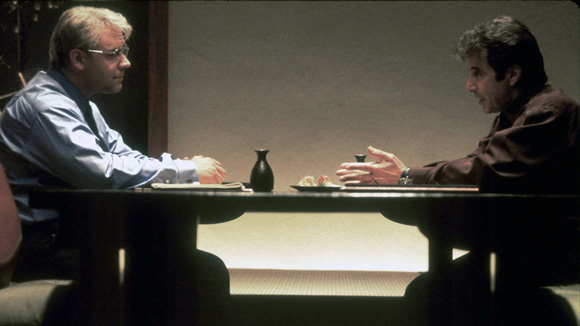
Favorite quote: “You’re in a state of conflict. Here’s how it lays out. If you have vital insider stuff that the American people for their welfare need to know and you feel compelled to disclose it and this violates the agreement – that’s one thing. On the other hand, if you want to honor the agreement, it’s simple. Say nothing. Do nothing. The only guy who can figure this out is you, and that’s you all by yourself.” Lowell Bergman (Al Pacino) Continue reading

Undercutting the “Nerd Defense”

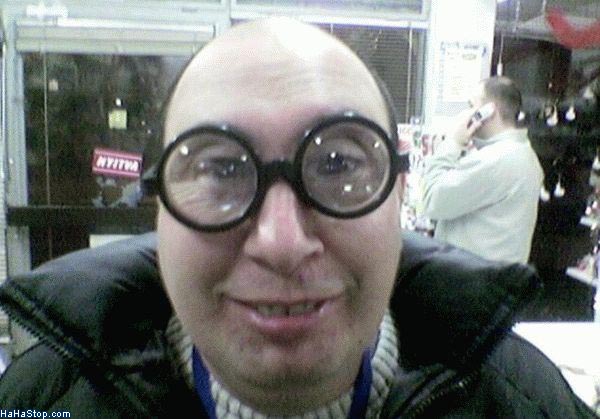
“A killer? Him? Come on, look at him. He couldn’t hurt a fly!”

More than a year ago, Ethics Alarms discussed the ethics of a current criminal defense tactic employed by lawyers with clients accused of violent crimes, putting them in nerdy glasses:

“It’s not a guarantee, but  the Daily News report says that criminal defense lawyers “swear by the gimmick, believing the right spectacles can make a sinister-looking murder suspect seem like a perfect gentleman.” “Glasses soften their appearance so that they don’t look capable of committing a violent crime,” veteran lawyer Harvey Slovis told the paper.”I’ve tried cases where there’s been a tremendous amount of evidence, but my client wore glasses, dressed well and got acquitted.” Cordero, who was represented by Slovis, wore bifocals throughout his trial, but threw them away the moment he was free.”

I’ve quizzed lawyers about the ethics of this tactic in my CLE classes, and they nearly unanimously agree that the tactic crosses no ethical lines that can be drawn with appropriate precision. I’m not so sure. I think it goes beyond merely giving your axe-murderer a shave and a haircut so he doesn’t look like an axe murderer, and edges into the realm of intentional deception. Apparently some courts may agree. Continue reading