Penn State, the Child Molester and the Dark Side of Loyalty

"Loyalty" by Joe Drache

The ethical issues in the unfolding Penn State scandal are not complex. Unless the grand jury got things completely confused, high officials of the school as well as legendary football coach Joe Paterno had credible information indicating that former Paterno assistant coach Jerry Sandusky sexually molested young boys on the Penn State campus, and did nothing about it. Now, after a three-year investigation, Sandusky has been charged with forty counts of child abuse by Pennsylvania authorities, and Penn State’s athletic director and a university vice-president have been charged with perjury and failing to report the crime. [UPDATE 11/7/20011: the University officials both resigned late yesterday.]

Paterno is apparently not going to be charged, because he alerted university administrators, technically complying with Pennsylvania law. Ethically, it doesn’t matter. Paterno, like University athletic director Tim Curley, Gary Schultz, Penn State’s senior vice president for finance and business, and apparently Penn State president Graham Spanier as well, did nothing for nine years after being alerted to Sandusky’s apparent proclivities, knowing that a probable child sexual predator was not only on the loose, but operated a foundation for at-risk kids that kept him supplied with ready victims. Continue reading

Ethics Tales From The “Occupy” Movement

1. Integrity Check

"This week only: half-price on all chicken suits!"

Reports out of Occupy Wall Street, unconfirmed but apparently credible enough for New York’s Mayor Bloomberg to rely on them, suggest that the “Occupy” gang is refusing to report the various criminals in their midst, opting instead to protect the colony by ejecting and banishing them….and, of course, inflicting them on somebody else. Such wrongdoers range from simple thieves to sexual predators, or, as in Occupy Oakland,  the violent provocateurs who have seeded riots. They might not even be banished…just protected.

How ironic. The ethical rot in America’s institutions, from government to the business world, to religions and Hollywood, to athletic teams and academia, manifests itself by a progressive willingness to ignore misconduct, lawlessness, and unethical conduct among colleagues and others within the group, cementing a “them vs. us” mentality that encourages increasingly irresponsible conduct and erodes integrity. The so-called 99% have the same vulnerability to corruption as the 1% they revile. Continue reading

How Do I Write A Measured Ethical Analysis When I Am Shaking With Indignation and Rage?

None of these men had the arrogance to believe it would be appropriate to apologize for the difficult choices made by their predecessors. They were right.

UPDATE, 10/13 Readers: This post has been proven wrong, based on a misinterpretation of a diplomatic cable that has been clarified to Ethics Alarms by a reliable and objective source. You can read  the explanation, and my apology, here.

I will try.

A secret cable dated Sept. 3, 2009 was recently released by WikiLeaks.  Sent to Secretary of State Clinton, it reported that Japan’s Vice Foreign Minister Mitoji Yabunaka told U.S. Ambassador John Roos that “the idea of President Obama visiting Hiroshima to apologize for the atomic bombing during World War II is a ‘nonstarter.'”*

The Japanese did President Obama and the United States an enormous  favor, but the utter foolishness and lack of comprehension of national principles, American history and the duties of presidential leadership shown by the fact that the idea of such an apology could get to the point where the Japanese had to reject it goes beyond mind-boggling and shocking to frightening, infuriating and offensive. Continue reading

A Word to the Wise-asses

Dear Wise-Ass,

I know that the fact you know I am a Boston Red Sox fan presents an irresistible opportunity for you to taunt, mock and tease me about the catastrophic choke-job my team just displayed to the world. To give you the benefit of the doubt, I am assuming that you are not a devoted and loyal fan of a sports team yourself, and thus think baseball is “just a game.”  If that is the case, I forgive you for your supposedly humorous comments, which have approximately the same level of sensitivity and kindness in my current state as the following:

  • “So I hear your mother kicked off! Aren’t you a little old to be an orphan? “
  • “Lost your house, did you? Hey, I have a big cardboard box you can have!”
  • “Still unemployed? I know: why don’t you start a career as a professional loser?”

I’m pretty sure you wouldn’t say any of these things (unless you’re a Yankee fan, in which case your whole moral compass is suspect), and I wonder if you understand that picking at the raw and bloody wound that is a beloved team’s tragedy is every bit as cruel and hurtful as such cracks would be. Incomprehensible as it may be to you, this was and is very important to me. My devotion to the Sox began when I was 12, and the team has given me more pleasure, grounding and wisdom than 99% of the people I have met in my life. Irrational though my emotional reaction may be, I’m in pain, and you shouldn’t have to empathize with the source of the pain to know that intentionally prolonging or magnifying that pain isn’t a very nice thing to do, and is nowhere near as funny as you seem to think its is.

I just thought you should know.

                                                                Jack

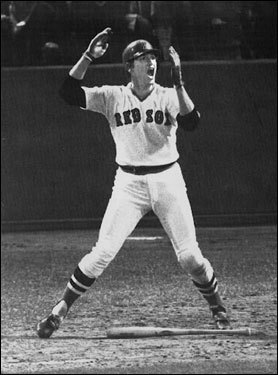
A Fan’s Obligation: 12 Life Lessons From Being a Red Sox Fan

Thanks Carlton. I won't forget.

This is not going to be a fun day.

The Boston Red Sox, the baseball team to which I have devoted a remarkable amount of my time, passion and energy over a half-century, are threatening to complete late season collapse of embarrassing and historic proportions. A spectacularly bad month of September has the team holding on to its once assured post-season play-off slot by its fingernails, and the squad appears to be dispirited and unhinged. Today the Red Sox play a double-header with the New York Yankees, the team’s blood-foe, and its prospects don’t look good. I, of course, must watch both games.

Following a losing baseball team is emotionally hard—I listened to or watched every game the Red Sox played in a six year period in which they never had a winning season— but following a collapsing winning team is much, much worse. It feels like a betrayal, yet at the same time the fan feels guilty for being angry with the players, who undoubtedly are suffering more than you are. This is, after all, their career. Still, you have had your hopes raised over many months; you have, if you are a serious fan, attached your self-esteem to your team’s fortunes. Watching it tank is like watching a presidential candidate you have argued for, and gone to rallies for and contributed to make an ass of himself in a debate. (And no, I’m not a supporter of Rick Perry.) Continue reading

The Real Meaning of Manny Being Manny

The only surprising aspect of the news yesterday that former baseball slugger-savant Manny Ramirez had been arrested for allegedly slugging his wife—the one alleging being said wife—is that any baseball fans were surprised. If anything was written in the Book of Fate, it was that this man, so completely lacking in respect for basic ethical values, was destined for trouble with the law.

While he was playing, of course, Manny’s uncivilized and cheerful contempt for basic rules and principles of right and wrong were tolerated by his employers, amused sportswriters and evoked cheers from fans. He was a great, great hitter, you see: who cares if he was habitually rude, unprofessional, slovenly, careless, disloyal, disrespectful and above all, selfish to his core? Look! He’s having fun! Isn’t that charming? Stop harping on little details, like hustling, sportsmanship, or being honest. Let Manny be Manny! Continue reading

Welcome to Carlos Zambrano’s Ethics Fun House!

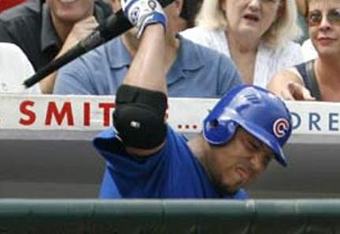
Carlos Zambrano, bludgeoning his career into submission

Carlos Zambrano is the supposed pitching ace of the Chicago Cubs, though after signing a monster multi-year contract for millions, he has shown himself to be inconsistent, over-rated, and nuts. Yesterday the flamboyant hurler gave up five home runs, seemingly attempted to bisect the Braves’ Chipper Jones with a fast ball, and got ejected from the game. Then the ethics fun started:

Ethics Fun #1: Carlos cleaned out his locker, told a Cubs trainer that he was retiring, and left the premises before the game was over. A Major League ethics whiff. Continue reading

The Case of the Excessively Flexible Lawyer

A Louisville lawyer named Keith Kamenish wants to defend Dion Neal, a drug dealer, against a murder-for-hire charge.  A police informant wearing a wire recorded a hit man as he said  that he was paid by Neal to kill a competitor for him. “I put 36 slugs in that nigger’s face and stood on his head,” the independent contractor boasted, according to a transcript of the conversation filed in court. “The whole head collapsed!”

Nice.

The government is trying to get Kamenish kicked off the case, and here is why: the guy whose head collapsed, LaJuante “B.B.” Jackson, was a Kamenish client at the time of his murder. Jackson was shot just four weeks after Kamenish got Jackson released on bond on a state drug charge; the lawyer’s blood- stained business card was found in Jackson’s wallet. Continue reading

Thanking Dick Williams…Finally

The late Dick Williams, doing what great leaders do

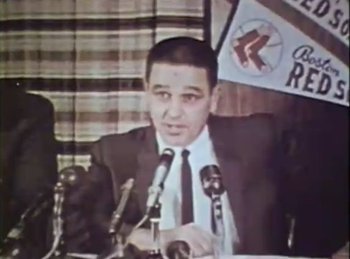
If you are not a baseball fan, or under the age of thirty, you probably never heard of Hall of Fame manager Dick Williams, who died yesterday at the age of 84. I never met Williams myself, but I have been indebted to him for four decades. I never told him the immense difference he made in my life, just by doing his job.

In the winter of 1967, I was a devoted fan of my home town team, the Boston Red Sox, and had been since 1962.  Over that period I had listened to every single baseball game on my transistor radio when a game wasn’t on TV, which was most of the time, or when I wasn’t at the game, which was almost always the case. I was the only person I knew who followed the team, and for good reason: it was torture. The Red Sox were hopelessly mediocre on the way to awful, and hadn’t had a winning season in more than ten years.

It is a great character builder to follow the fortunes of a terrible baseball team. Almost every day, for six months, you are let down, and yet return to the scene of your despair the next, attempting to muster hope while steeling yourself against likely disappointment. You find yourself finding things to appreciate other than winning: the gallant veteran player who “plays the right way” (Eddie Bressoud, shortstop, 1962-1965); the exciting rookie who gives promise of a better future (Tony Conigliaro, right fielder—rest in peace, Tony); the unique talent who is worth watching for his own sake (Dick Radatz, relief pitcher, 1962-1966). These things help, but following a perennial losing team and caring about them is like being punched in the gut four or five days a week without knowing which day you’re getting it.

Since 1965, I had always reserved seats for the first day of the season and one of the last two home games, just in case those last games would be crucial to a (hahahaha!) Red Sox pennant drive. This was especially pathetic, since the team was getting worse. They had finished in a tie for 9th place in 1966, and as the 1967 season loomed, Vegas had them installed as 100-1 underdogs to win the American League pennant. In truth, the odds should have been longer. Nonetheless, I wrote the Red Sox and got my tickets, this time for the next to last day of the season.

The team was full of rookies and near rookies, and appropriately had hired a minor league manager, Dick Williams, to be the new skipper. Williams was something else, however: he was a gifted leader. One day, in the middle of Spring Training, a Boston scribe asked the new manager what the prospects were for the upcoming season. Would the team escape the cellar? Would there be forward progress? Williams’ answer was instant front page news:

“We’ll win more than we lose.” Continue reading

When Business Rejects Ethics: the Sorabella Story

"So sorry about your wife's cancer, Carl. Let me know if there's anything we can do. Oh, by the way...you're fired."

I usually feel that organized labor rhetoric about cruel and heartless employers is archaic and exaggerated for political effect. This story, however, is almost enough to make me pick up a sign and start picketing.

Carl Sorabella, 43, got a merit raise in November for Haynes Management,  a real estate company in Wellesley, Mass., where he has worked as an accountant for almost 14 years. Then he learned that his wife, Kathy, had been diagnosed with advanced cancer. Told that the likelihood was that she had only months to live, Carl approached his boss. Sorabella explained that his wife’s illness would require him to have flexible hours as he supported her during her tests and treatment. He assured her that he would do whatever was necessary to keep his work up-to-date and complete his duties.

She fired him anyway. Continue reading