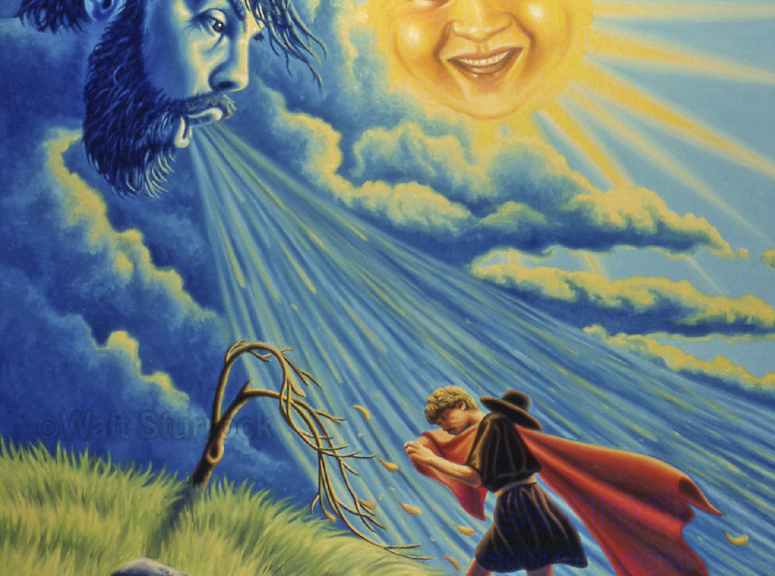
Ethics Alarms Encore: “Aesop’s Unethical and Misleading Fable: The North Wind and the Sun”

north-wind-and-the-sun-story-oil-painting

[ Like the hillbilly who pledged to take a bath every week whether he needed it or not, this is a post from 2011 that I vow to re-post every ten years whether I need to or not. It is the mystery post of Ethics Alarms: a throw-away essay on a slow ethics day that is one of a handful that accumulates new views regularly. (Another post in this category is here, but that is a bit more understandable.) I was moved to do another re-post because an episode of “Mad Men,” which I am finally watching (and glad, because it is an excellent ethics series) had a character using Aesop’s Worst Fable Ever to explain advertising philosophy.  I wrote the original post talking with my late wife  how Aesop’s Fables were joining Mother Goose stories,  Edward Lear limericks and American folk songs in the Discarded Bin of our culture. I then stumbled upon a fable I had never read or heard about.  To my surprise the post attracted intense criticism from fans of the story; I even had to ban a commenter who got hysterical about it. Apparently there are a lot of Sun-worshipers out there. Anyway, here it is again.]

Today, by happenstance, I heard an Aesop’s Fable that I had never encountered before recited on the radio. Like all Aesop’s Fables, at least in its modern re-telling, this one had a moral attached , and is also a statement of ethical values. Unlike most of the fables, however, it doesn’t make its case. It is, in fact, an intellectually dishonest, indeed an unethical, fable.

It is called “The North Wind and the Sun,” and in most sources reads like this:

“The North Wind and the Sun disputed as to which was the most powerful, and agreed that he should be declared the victor who could first strip a wayfaring man of his clothes. The North Wind first tried his power and blew with all his might, but the keener his blasts, the closer the Traveler wrapped his cloak around him, until at last, resigning all hope of victory, the Wind called upon the Sun to see what he could do. The Sun suddenly shone out with all his warmth. The Traveler no sooner felt his genial rays than he took off one garment after another, and at last, fairly overcome with heat, undressed and bathed in a stream that lay in his path.”

The moral of the fable is variously stated as “Persuasion is better than Force” , or “Gentleness and kind persuasion win where force and bluster fail.”

The fable proves neither. In reality, it is a vivid example of dishonest argument, using euphemisms and false characterizations to “prove” a proposition that an advocate is biased toward from the outset. Continue reading
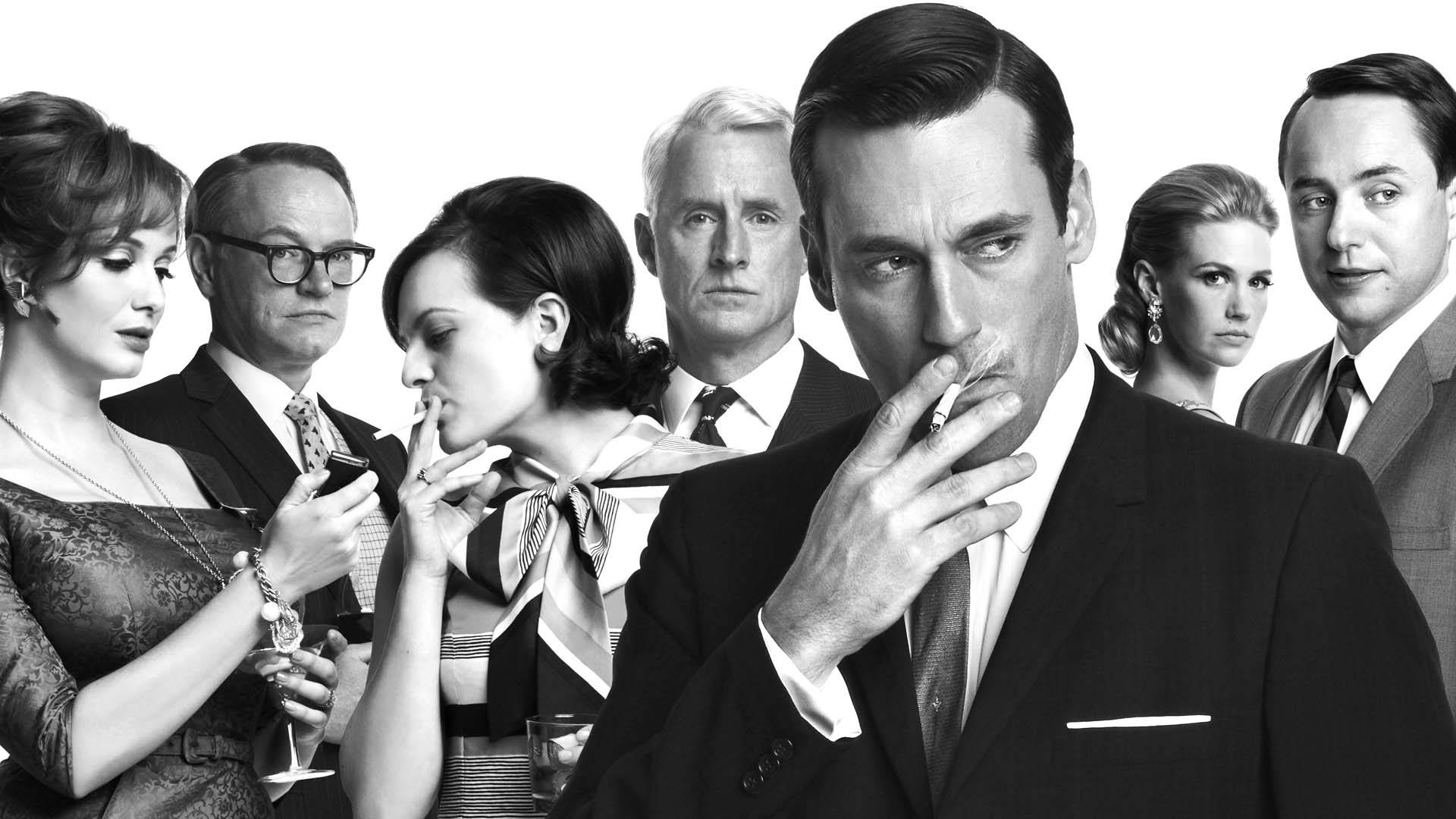
“Mad Men” Ethics: The Motive vs. Conduct Conundrum

I’m finally watching the acclaimed AMC series “Mad Men.” I’m impressed: the character development is deft and complex, the evocation of the Fifties and early Sixties is fairer and more accurate than it usually is, and the ethical issues explored are many and complex.

At the end of season five the series presented as good an example as you will find of how motives behind conduct usually don’t change the analysis of whether the conduct was ethical or not. Series anti-hero Don Draper, a talented advertising innovator, finds the Madison Avenue firm where he’s a partner facing ruin because its biggest client, Lucky Strike cigarettes, has defected to a bigger agency. Now all of his agency’s clients are spooked, and potential clients are waiting to see if it survives.

Impulsively and without consulting his other partners, Draper buys a full page ad in the New York Times, announcing that he, and therefore his firm, is giving up tobacco and cigarettes because they kill people, and marketing such a deadly product is wrong.

Draper doesn’t do this as a matter of conscience. He does it to take control of his firm’s fate, to make it seem like the loss of a large cigarette client was in fact a proactive decision made in the public interest, and by virtue-signaling and grandstanding, to attract new clients impressed by courage and integrity. The ad is, in short, self-serving, desperate, and cynical: ethics have nothing to do with it. Appearing ethical is the point.

Yet that does not change the fact that the public condemnation of smoking was the right thing to do regardless of his motives. The results of the declaration will be the same, whether the reasons behind it were pure or not. Thoughts are not ethical or unethical. Conduct is ethical or unethical.

The complicating factor in the “Mad Men” scenario is that advertising is a Bizarro World culture, like war and politics. It is inherently unethical, so applying traditional standards of right and wrong often don’t make sense, nor are ethical and unethical actions dependably likely to have the same effects they might have in other contexts. Conduct that may have salutary consequences outside of Madison Avenue may be disastrous in the weird world of advertising. Don Draper only cares about whether his shocking public attack on tobacco saves his firm, not how many lives it saves, if any.

Ironically, however, it may do both.

But even if it accomplishes neither, it is still an ethical act.

A Law Firm Finds New Ways To Be Unethical

Now remember, it’s only a complaint so far, and the law firm involved will have its own version of the story (though I’m betting on an out of court settlement before this becomes a law suit.) Still, this case suggests that there are still new vistas in unethical law firm conduct to be explored.

A “Mad Men”-style law firm required all of its female secretaries and non-legal personnel to wear high heels. One of them who was unaccustomed to wearing heels tripped on the carpeting, injuring her back. When she returned to work, the firm refused to make any accommodations for her due to the injury, such as not requiring her to lift heavy objects.

Nice.