Health And Survival Rationing Ethics

cointoss

Beginning in 2012, Dr. Lee Daugherty Biddison, a critical care physician at Johns Hopkins and some colleagues have held public forums around Maryland to solicit the public’s opinions about how life-saving medical assistance should be distributed when there are too many desperately ill patients and not enough resources. The exercise was part of the preparation  for Biddenson’s participation in preparing official recommendations for state agencies that  might end up  as national guidelines regarding when doctors should remove one patient from a ventilator to save another who might have a better chance of surviving, or whether the young should have priority over the old.

Ethically, this is pure ends justifying the means stuff. The Golden Rule is useless—How would you like to be treated? I’d want to be left on the ventilator, of course!–and Kantian ethics break down, since Immanuel forbade using human life to achieve even the best objectives…like saving a human life. Such trade-offs of life for life (or lives) is the realm of utilitarianism, and an especially brutal variety….so brutal that I doubt that it is ethics at all.

When Dr. Biddenson justifies his public forums by saying that he wants to include current societal values in his life-for-a-life calculations, she is really seeking current biases, because that’s all they are. On the Titanic, it was women and children first, not because it made societal sense to allow some of the most productive and vibrant minds alive to drown simply because they had a Y chromosome, but because that’s just the way it was. Old women and sick children got on lifeboats;  young men, like emerging mystery writer Jacque Futrelle (and brilliant young artist Leonardo DiCaprio), went down with the ship. That’s not utilitarianism. That’s sentimentalism.

The New York Times article mostly demonstrates that human beings are incapable of making ethical guidelines, because Kant was right: when you start trading one life for another, it’s inherently unethical, even if you have no choice but to do it. Does it make societal sense to take away Stephen Hawking’s ventilator to help a drug-addicted, habitual criminal survive? Well, should violating drug laws sentence a kid to death? TILT! There are no ethical answers, just biased decisions. Continue reading


Freddie Gray Prosecution Update: A Law Professor Formally Accuses The Unethical Prosecutor Of Being Unethical

finger-pointing

George Washington Law School Professor John F. Banzhaf III has filed an ethics  complaint against State’s Attorney Marilyn Mosby with Maryland’s Attorney Grievance Commission. Banzhaf accuses Mosby in his 10-page complaint of breaching Maryland’s rules of professional conduct for lawyers, which requires that a prosecutor refrain from prosecuting a charge unless it is supported by probable cause, in her conflicted and incompetent prosecution of six police officers involved in the arrest of Freddie Gray. The complaint also flags Mosby’s improper use of public statements to bias the administration of justice.

Good.

Of course he is right, as I have repeatedly explained here, here, here, here, and here. I assume there have been other complaints before this one, but he has made the issue a high profile one, and that’s excellent news.

Mosby has earned the Mike NiFong treatment: the unethical prosecutor in the Duke Lacrosse rape case was disbarred, briefly jailed, and sued. She is black, female, and a Democrat, and NiFong remains one of the very, very few prosecutors to be punished significantly for unethical conduct. I will be amazed if the commission does anything momentous or sufficient to discourage grandstanding prosecutors like Mosby in the future, even though such prosecutors are willing to ruin lives for political gain.

I hope I am wrong.

(But I’m not.)

Ethics Hero, If A Bit Late To The Party: Maryland Attorney General Brian Frosh

http://www.youtube.com/watch?v=rAe97xmVRhM

Horrified by this story in the Washington Post and others like it,  Maryland Attorney General Brian Frosh has filed suit against Access Funding and other viatical settlement companies, asserting that they take advantage of vulnerable victims of lead poisoning by purchasing their structured settlements at less than fair-market value.

Gee, ya think?

I have written about this many times and in other forums, and even been threatened by a few the despicable companies (“It’s your money!”…”I have a structured settlement and I need cash now!”) in this cruel and predatory industry. 

Few in the general public know about it or understand what’s going on. Structured settlement are annuities bought by insurance companies to ensure a regular flow of compensatory damages to personal injury and medical malpractice plaintiffs to cover their medical costs and living expenses. The settlements aren’t given out in lump sums because many such plaintiffs are poor and have no experience handling money. A large payment of millions of dollars guarantees that needy family members and friends will beg, plead for and demand loans and hand-outs, while the recipients themselves are tempted to buy luxuries they have long dreamed about with funds intended to cover lifetime cancer treatments.

As I wrote in a post almost seven years ago…

Once they are on their own, however, the compensated victims are targeted by viatical settlement companies, both those with cute opera-singing commercials and those without. They undermine the sound advice of the attorneys with slogans like “It’s your money!” and try to persuade the former plaintiffs to unstructure the structured settlement by selling the annuity’s income stream to the viatical settlement company at a deep discount. Result: the annuity company gets the regular income at bargain rates, and the victims get a new, smaller lump sum to dissipate in exchange. The statistics say that the customer of the viatical settlement company will run out of cash long before he or she runs out of the need for it. But for the company, it’s a sweet deal.

Continue reading

When Race-Sensitivity Becomes A Pathology: The Case Of Kevin Durant’s Shoes

The offensive shoes, and even though they cost $180, the offense is not the shoes...

The offensive shoes, and even though they cost $180, the offense is not the shoes...

NBA star Kevin Durant, who grew up in Maryland’s majority African American Prince George’s County, put both his initials and those of his home community on Nike’s  “KD8 PG County” model basketball shoe. Rather than being grateful or feeling honored, however, many in the community are complaining that Nike, and Durant, has “offended” the area.

“As you can imagine, we are very proud of the success of Prince George’s County native Kevin Durant, and the pride that he has in growing up in the county,” the office of County Executive Rushern L. Baker III (D) said in an e-mail sent to Nike. “We do want to make the Nike corporation aware that ‘P.G.’ is a term that many in Prince George’s County consider pejorative and/or an insult.”

What? I’ve lived in the Washington, D.C. area for decades and heard the county called “P.G.” and “Prince George’s” interchangeably without comment. Now the County’s initials are offensive?

Explains the Washington Post: “Insiders” say the initials could just as easily stand for “Pretty Ghetto” or “Pretty Grim.”

Oh.

Of course, “P.G.” could also just as easily stand for Poor Godzilla, Putrid Gin, Parsimonious Greeks, or Penis Garnish.

Kevin Durant, who is black, decides to give his community a call out and gets slammed for it by activists and race-baiters who are actively searching for ways to elevate themselves, manufacture publicity and influence, and gain the power of the victim.

A group that is perceived—accurately in too many cases—to be so determined to find racial offense that its allies, supporters,  friends and in this case, members must be constantly vigilant and wary to avoid being accused of offense will eventually find their one-time allies sympathy replaced by resentment.

Who in their right mind want to deal with people who are looking for ways to call them bigots? There is a limit to how tolerant society will be of the “microagression” game, and there should be.

Racial sensitivity is edging toward racial super-sensitivity, and that will eventually become a handicap—a self inflicted one—if it hasn’t already.

If They Threw Elliot In Jail For Kissing Erika Eleniak, What Would Have Happened To E.T.?

In a memorable scene in “E.T.,” young hero Elliot (Henry Thomas), intoxicated by his psychic link to his marooned space alien pal, loses impulse control during Middle School science class and, while E.T. watches John Wayne’s passionate kiss with Maureen O’Hara in “The Quite Man,” embraces the class heart-throb—played by barely pubescent “Baywatch” babe-to-be Erika Eleniak!

Erika

— and gives her a passionate smooch.

If Spielberg’s classic premiered today, this scene might be condemned as sexual assault by feminists, who would insist that Elliot should have been charged. Is that really fair? Rational? Sane?

At  Pikesville (Maryland) Middle School, a 13-year-old boy has been charged with second-degree assault for kissing a 14-year-old girl on a dare. Police were called to the scene by the school, undoubtedly influenced by the current sexual assault freak-out on college campuses. (The proper response of an ethical and well-led police force, by the way, would be “Don’t waste our time.”) Continue reading

The Oxon Hill High School “Art Display” Controversy

oxenhill ART

Oxon Hill (Maryland) High School allowed a display of student art to remain in the school’s rotunda for most of May. Some students and teachers said the display was “cathartic;” the Washington Post called it “an embodiment of the angst and anger” students felt “when police violence made national headlines.” “Young black males: the new endangered species,” read a placard; next to it was a cutout painted to look like a police officer with white skin reading a newspaper with obituaries of black men killed by law enforcement officers. Next to that was another silhouette painted black, depicting a black man with hands raised wearing a T-shirt with holes in it. “Blood” dripped  from the eight bullet holes, forming the stripes of an upside-down American flag.

Last week,  after a photo of the thing was posted  on Facebook and recieved criticsm there and on some conservative websites, school officials decided to remove the display. A spokeswoman for Prince George’s County Public Schools said the decision was made to protect the school and students. But those pesky students installed a new display consisting of two wooden coffins amidst flower petals, with headstones reading, “HERE LIES OUR FREEDOM OF SPEECH” and “HERE LIES OUR FREEDOM OF EXPRESSION.” They then tweeted messages with the hashtag #donttakeitdown and collected nearly 1,500 signatures on a petition demanding a statement of solidarity from the school board.

Isn’t self-righteous ignorance grand? Not only should the display have been removed, it should have never gone up in the first place, since it continues to spread a virulent and divisive lie (nobody was shot eight times with his hands up), while encouraging racial distrust and hatred. Continue reading

In Maryland, Tempting Moral Luck And The Barn Door Phenomenon In A Free Range Kids Ethics Conflict

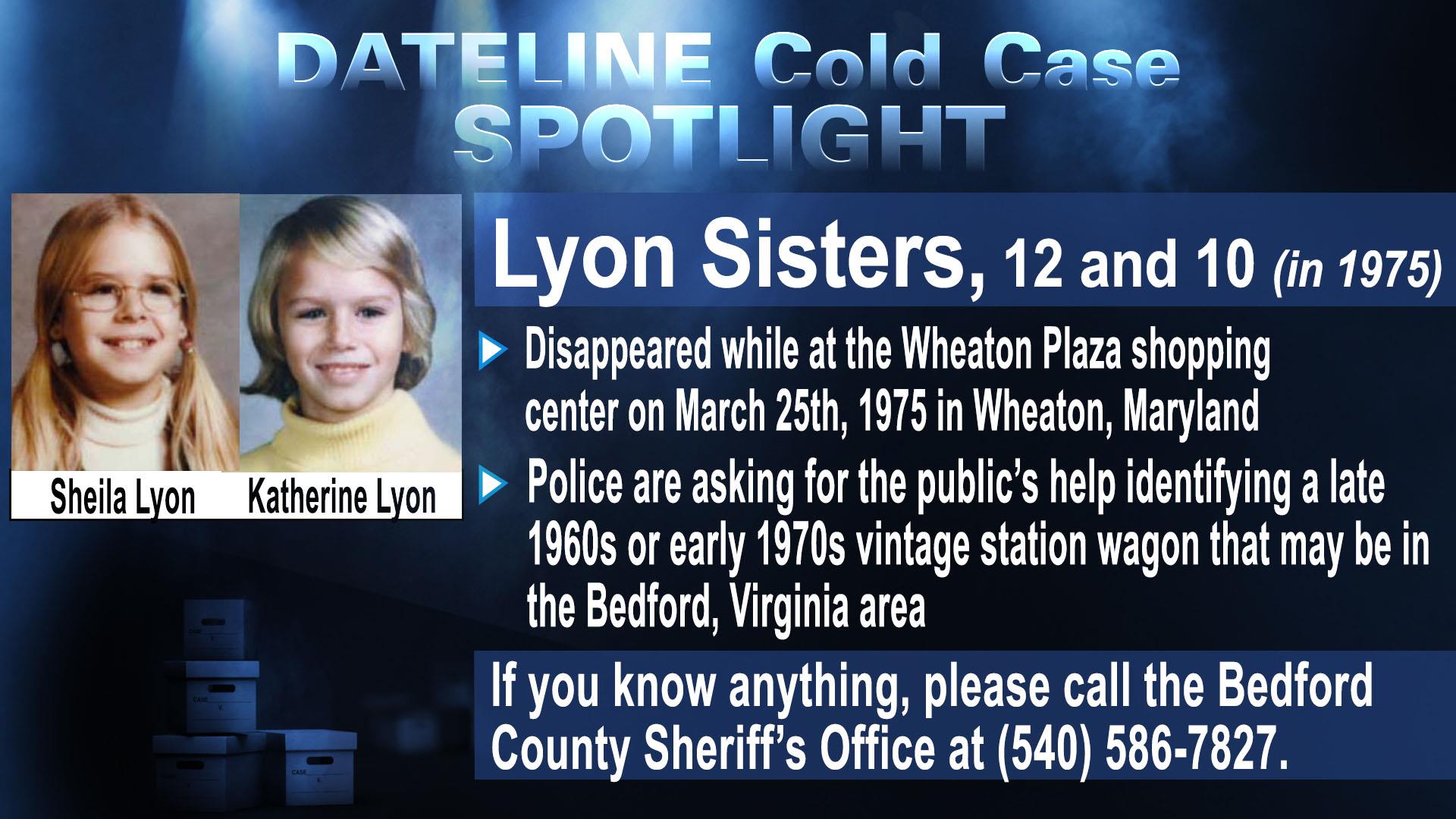
Lyon Sisters

Just months after suburban Maryland parents Danielle and Alexander Meitiv were cited by Montgomery County’s Child Protective Services for “unsubstantiated neglect” for allowing their children Rafi, 10, and Dvora, 6, to walk home from a park close to home, the defiant parents let their kids to do it again. Again, someone called 911 (anonymously), and again the children were picked up by police.

This time, the police took the Meitiv children to Child Protective Services headquarters and for some reason didn’t tell the parents, who, naturally enough, freaked out. Five and a half hours later the agitated children and frantic parents  were reunited. You can read about the initial incident from the mother’s perspective here; and obviously Lenore Skanazy is in full battle array on her “Free Range Kids Blog.” Columnists everywhere are rushing to their keyboards to write columns like this one, by the Washington Post’s Petula Devorak, titled “Why Are We Criminalizing Childhood Independence?”

The ethics of this issue are more complicated than simplistic “We used to walk around freely all the time when we were kids and it was more dangerous then than now” reminiscences are equipped to explore.

Analyzing this ethics conflict (“when two or more ethical principles are in opposition”)  screams out for the useful starting point for ethics analysis:

What’s going on here?

Before I answer, let’s get a couple of ethics verdicts out of the way: Continue reading

Ethics Hero: Montgomery County, Md. Police Chief Tom Manger

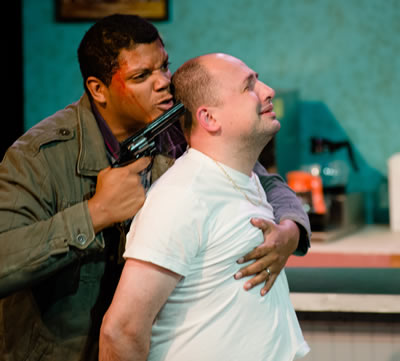
"Cops": Chaz Pando as the doomed perp; Nello DeBlasio as the hostage.

“Cops”: Chaz Pando as the doomed perp; Nello DeBlasio as the hostage.

My theater company is performing the 1976 Terry Curtis Fox drama “Cops” as we wind down this season after 20 years. I chose the show, and its companion piece in an evening called “Crime and Punishment in America,” William Saroyan’s classic one-act “Hello Out There,” in direct response to Ferguson, the growing controversy over police violence, the increased racial divide in the U.S. and the gun control debate. Both dramas, as cast, involve African American victims of violence in a law enforcement setting. “Cops,” in particular, features openly biased Chicago police (at least based on their choice of words) and the police execution of a disarmed and surrendering cop-shooter. As the lights fade, the police are discussing what their cover story should be.

I invited the Chief of Police in Montgomery County, Maryland, Tom Manger, to come to the production and field questions from the audience regarding its relevance to current controversies in Ferguson, New York City and across the nation. [Full disclosure: I have known Chief Manger and his wife for many years, and consider them friends] You might recognize him: he was a major figure in the apprehension of the D.C. Snipers, and has been seen and interviewed on the national news and on issue talk shows several times, most recently on CNN’s “State of the Nation” with Candy Crowley. Not only did Tom agree to come, but he let me schedule him twice, said the sessions could be videotaped, and that no question would be off limits.

The first of the talkbacks took place last week (I am moderating another this Sunday), and Tom was as good as his word—candid, blunt, open, and frank.  He was quizzed, hard, by our diverse, astute and always combative audience members about police training, police force diversity, bad cops, police who lie and cover-up misconduct, and racism in the ranks, as well as the details of specific shootings including the local one I have referred to here more than once, in which an unarmed white man, John Geer, was shot and killed by police as he stood in his doorway negotiating with them over a domestic dispute.

Since the episode in Ferguson, Chief Manger said, he has been meeting with community groups two or three evenings a week, doing everything he can to bolster community trust. Among his comments in response to questions: Continue reading

Ethics Reminder To The Episcopal Diocese of Maryland And Bishop Cook: “Hit, Run, Realize You’re Screwed And Come Back 20 Minutes Later To Take Responsibility” Is Still “Hit And Run”

bicycle-hit-and-run

Yesterday, Heather Cook, the No. 2 official in the Episcopal Diocese of Maryland, struck and killed cyclist Thomas Palermo with her vehicle. He later died; she did not stop and drove on, leaving the scene and her victim  badly injured by the side of the road. Another motorist stopped and called 911, and cyclists who set out to find the fleeing car reported seeing a Subaru with a smashed windshield. twenty minutes after the fatal accident Cook returned while investigators were still on the scene.

In an email to the clergy of the Episcopal Diocese of Maryland, the Right Rev. Eugene Taylor Sutton announced that Cook, the first woman to be ordained a bishop in the Maryland diocese had been involved in a fatal accident, and said,

“Several news agencies have reported this as a ‘hit and run.’ Bishop Cook did leave the scene initially, but returned after about 20 minutes to take responsibility for her actions.”

Oh. Well, leaving a man to die on the road is all right, then. Continue reading

The Ethics Conflict Of Chevy Chase’s Newlands Fountain and How To Resolve It

Chevy Chase Circle

Chevy Chase Circle is the official border separating the District of Columbia and Chevy Chase, Maryland. The inscription on the fountain at the center of Chevy Chase Circle honors Francis Griffith Newlands, saying, “His statesmanship held true regard for the interests of all men.” He was a three-term senator from Nevada,  serving from 1903 until his death in 1917, but more important to this controversy, founded the Chevy Chase Land Co., which created neighborhoods on the Washington and Maryland sides of the circle. Yes, the founder of Chevy Chase is honored with a fountain in Chevy Chase Circle. What could possibly be wrong with that?

The problem is that Senator Newlands was a racist, and a proactive one. He was a white supremacist who described blacks as “a race of children” too intellectually handicapped for democracy. In 1912, he attempted to have  the 15th Amendment, which granted voting rights to African American men, repealed. Not surprisingly, his vision of Chevy Chase did not include black residents, or Jewish ones for that matter.

The Advisory Neighborhood Commission that represents the D.C. section of Chevy Chase wants to remove Newlands’ name from the fountain, and has introduced a resolution calling on the D.C. Historic Preservation Office to rename the landmark “Chevy Chase Fountain.” The reason is his advocacy of anti-black policies.

This is a classic ethics conflict, a problem in which valid ethics principles oppose each other. There are so many conflicting ethical principles and objectives at work here: Continue reading