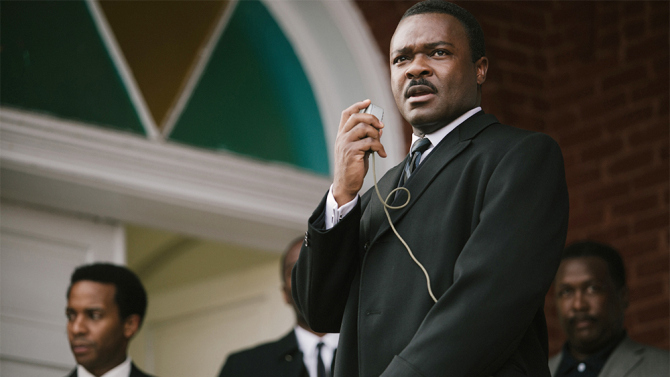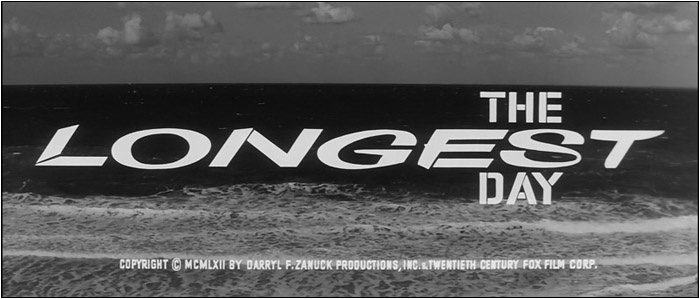
“The Longest Day,” Darryl F. Zanuck, D-Day, And Us

title_longest_day_bluray

Today is June 6, the anniversary of the Allies’ invasion of Normandy, the audacious military strike that changed the course of history. I’ll be interested in seeing how it’s commemorated this year, 71 years later, especially by the news media. A lot of Americans under the age of 40 know almost nothing about it, or worse, the values it represents to the United States.

Fortunately, there is an easy and entertaining way to teach a young American about what happened on this day 71 years ago. That is to have him or her watch “The Longest Day,” producer Darryl F. Zanuck’s epic film based closely on historian (and sole credited screenwriter) Cornelius Ryan’s 1959 book. (You can get it at Amazon, here.)I usually find understanding military battles nearly impossible; written accounts completely confound me, and few movies about any battle make a serious effort to explain the tactics and strategy without reducing the facts to pablum. (I remember how much my father, who fought in the Battle of the Bulge, detested the big budget movie of the same name, which he found outrageously sloppy, and which he summarized as “Henry Fonda won the war.”)

Not “The Longest Day,” however. Since seeing the movie with my father as a kid, I have learned a lot about what was left out, but the movie is remarkably clear and accurate about what happened and why without being either too detailed or too simplistic. It’s also just a great, inspiring movie.

That we have “The Longest Day” is entirely due to the courage of one of Hollywood’s most dynamic, flamboyant and successful studio moguls, Darryl F. Zanuck. The original producer of the adaptation of Ryan’s book (which is terrific ) gave up on the project when 20th Century Fox refused to allow him an adequate budget. Zanuck, who was still producing films but no longer ran the studio he had built,  bought the rights, and was determined to do the story, the event, and the men who fought the battle justice by mounting a production almost as ambitious as the invasion itself. Continue reading
Comment of the Day: “Ethics Hero: The Lone Juror, Adam Sirois

Juror 11

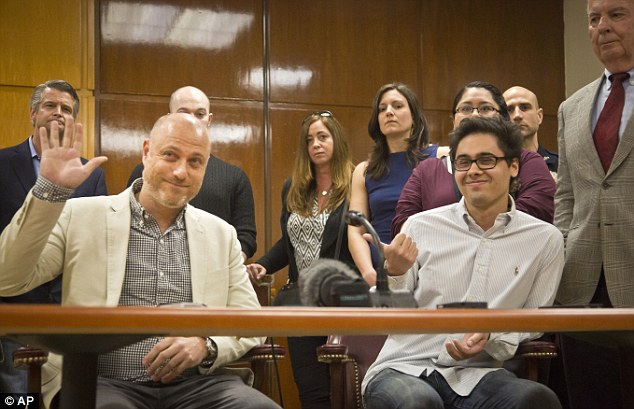
Commenter Penn posted a nuanced take on Adam Sirois’s dilemma. It would have been a COTD yesterday, but for some reason WordPress has decided to spam all of Penn’s comments of late, for no reason that I can detect. (I can only discourage commenters I ban by repeatedly spamming them until they go away.) If anyone else has a disappearing comment, e-mail me quick, and I can usually find it. I’m sorry: I swear, it’s not me!

One point before I turn the blog over to Penn. His first comment is about that photo, much criticized, of the lone juror raising his hand in the press conference and “smirking” or looking”sheepish,” or “smug.” I liked Ann Althouse’s take on that:

“The photographers must have taken thousands of pictures of Sirois’s face, and the newspaper editors have chosen one, one that supports the “smirking… sheepishly” characterization. If he “looks like a smug little prick” to you, that’s because the editors decided to help you think that and because the man just had an 18-day experience and was the kind of person who could stand up for his beliefs in a group setting for more than 2 weeks. Most people would cave and go along to get along. These people are much more likely to have a pleasant, unremarkable face.”

Now here is Penn’s spam-rescued Comment of the Day on the post Ethics Hero: The “Lone Juror,” Adam Sirois: Continue reading

Ethics Hero: The “Lone Juror,” Adam Sirois

Juror 8

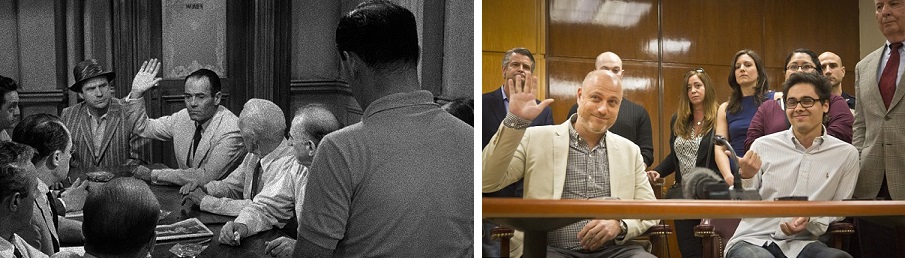
Two lone jurors…

In a remarkable example of life imitating art, a single juror, a 41-year-old health care worker, refused to vote guilty with the rest of the jurors deliberating on the case against the accused murderer of Etan Patz, a little boy whose disappearance in 1979 focused national attention on the child predator problem.  The defendant, Pedro Hernandez, had delivered an elaborate confession to police, then revoked it. For 18 days, Adam Sirois battled the eleven other jurors, who told him that they were convinced by the evidence beyond a reasonable doubt. Sirois, however, said he had doubts, too many to send a man to prison for life. In the end, the vote was 11-1. Yesterday, the judge in the case pronounced the jury deadlocked—hung— and declared a mistrial.

Sound familiar? If Sirois was made the hero of a cable TV  adaptation, it would be considered a shameless knock-off of “12 Angry Men,” the iconic 1957 jury film that originated as a live TV drama by the late Reginald Rose: Continue reading

Acting Ethics: Why We Don’t Want Actors Being Too Picky About Their Roles

FergusonX

In the strange ethics category of “Conduct That Isn’t Exactly Wrong But That Will Have Nothing But Bad Consequences To Society If There Is A  Lot Of It” (CTIEWBTWHNBBCTSITIALOI for short) is actors rejecting roles because they have philosophical or political disagreements with the script.

We’ve had two high profile examples of this occur lately. All we can do is hope that it’s a coincidence. The first was when about a dozen Native American actors, including an adviser on Native American culture, left the set of Adam Sandler’s first original movie with Netflix, “The Ridiculous Six,”a western send-up of “The Magnificent Seven,” claiming some of the film’s content was offensive.

Really? An Adam Sandler movie offensive?

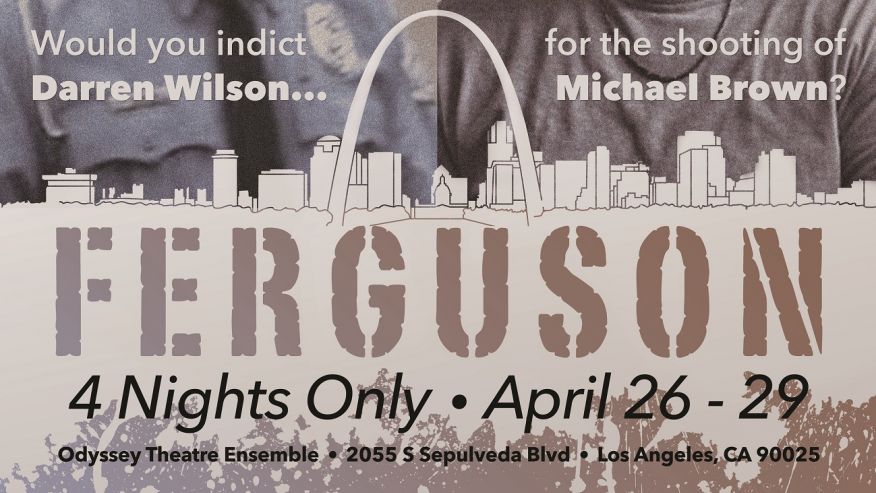
The second and more troubling was in LA,  where five actors quit the cast of the new play “Ferguson,” which consists entirely of dramatizations of the Michael Brown murder grand jury testimony, because the actors apparently felt that it did not appropriately support the “Hands Up! Don’t Shoot!” narrative.

That’s really stupid, but I’m not getting into that again.

We don’t see many examples of professional actors doing this for several reasons. One is that they can’t afford to. Acting, except for the top fraction of a per cent, is anything but lucrative; it’s a subsistence level job, redeemable because it is, or can be, art, and tolerable as long as the actor doesn’t have a family to support, or has a trust fund.

The main reason this is unusual, however, is that an actor isn’t responsible for the content of the play, movie or TV show he or she acts in, but only the skill with he or she helps present that content to an audience. Actors—and technical artists like costume and light designers—are the conduits through which a writer’s work of performance art gets to live. They don’t have to like a show, agree with it or understand it, which is a good thing, since many excellent actors don’t have the  education, experience or intellect to understand complex and profound works. As one realistic actor friend once told me, “If we were that smart, we’d be smart enough to be in another profession.” Continue reading

Iran Letter Ethics Q and A: Senate Heroes, Blame, Trust And Captain Queeg

Question:  Are the seven GOP Senators who did not sign the Iran letter Ethics Heroes?

Answer: I almost designated them as such, but that would have been a mistake. There are too many non-heroic and even unethical reasons Sen. Lamar Alexander (R-Tenn.), Sen. Lisa Murkowski (R-Alaska), Sen. Dan Coats (R-Ind.) and Sen. Thad Cochran (R-Miss.), Sen. Susan Collins (R-Maine), Sen. Jeff Flake (R-Ariz.), and Sen. Bob Corker (R-Tenn.), Senate Foreign Relations Chairman might have chosen to refuse to go along with their colleagues. Based on the explanations I’ve read, that seems to be the case. Collins, for example, says that she didn’t think the letter would work. Wrong answer: the reason to reject the letter is because it’s a flat-out violation of legislative limits imposed on the Constitution. Similarly, Flake says that he didn’t think the letter was necessary, whatever that means. It is also likely that some of the seven felt they could have their cake and eat it too: they want the letter to undermine U.S. diplomacy, but don’t want to take the criticism that goes with signing it.

Question: Do I blame President Obama for the letter?

Answer: A friend who is such a knee-jerking Obama enabler and excuser that it’s a miracle he can walk posted yesterday’s  Thirteen Ethics Observations On The GOP’s Letter To Iran on his Facebook page, and one of his knee-jerking friends wrote, “Typical: blame Obama.” I did not and do not blame Obama for the fact that the Republican Senators engaged in a foolish, dangerous and bright-line violation of the separation of powers, and anyone who could read the post otherwise is so deranged by bias that their faculties are impaired…or they just aren’t very bright.

I did write, and it is true, that the President shares significant responsibility for the poisonous and dysfunctional relations with the Congress that led to this fiasco. He is at the top of the government; it’s ultimately his job to make the government and the system work. Obama and his enablers reject accountability at every turn, but the unavoidable facts are that he is in charge, he took the job voluntarily, and whatever doesn’t work, including the government itself, is on his record. He never made a good faith, sincere, dedicated effort to work with the Republicans in Congress; he never worked to develop the negotiation, compromise, horse-trading, cajoling, quid pro quo skills that successful, competent Presidents have used to deal with the same levels of political opposition that he has found impossible to cope with. He took no steps to build trust in Congress, and engaged in serial conduct that was guaranteed to destroy trust, and has.

Finally, his illegal immigration executive order (the illegal accurately modifies both “immigration” and “order”) and his unilateral alterations to his own, incompetent and sloppy, health care law showed exactly the same contempt for constitutional limits as the Senate letter.

Obama is not to blame for the letter. He is absolutely and ultimately accountable for the conditions that prompted the letter and the decision to send it.

Question: Is there an ethical justification for sending the letter? Continue reading

Oscar Ethics 2015: The Unforgivable Dishonoring Of Maureen O’Hara

maureen ohara

Usually I follow the Oscars telecast with a post on the recently deceased actors and actresses the Academy unfairly snubs in its annual “In Memoriam” session. There is no excuse for robbing anyone of a last bow and farewell, despite the repeated claim that there “just isn’t enough time” to squeeze everyone in. Last night that dishonest excuse for disrespect and incompetence was rendered more absurd than ever: If there’s time for the longest, slowest, most repetitious speech yet by an Academy official, if there’s time for not one but two inappropriate political rants on the podium by award-winners, if there’s time for so many songs that the show seemed more like the Grammys than the Oscars, then there’s time to flash a couple more faces for a second or two.

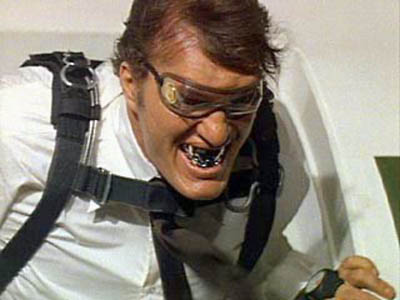
This year, the omissions were minimal compared to recent years. I noticed the absence of Richard Kiel (1939-2014),

Jaws

…the giant actor who was best known for playing the James Bond villain “Jaws” in two films, as well as less celebrated monsters, aliens and goons. Marcia Strassman, (1948-2014),

Strassman

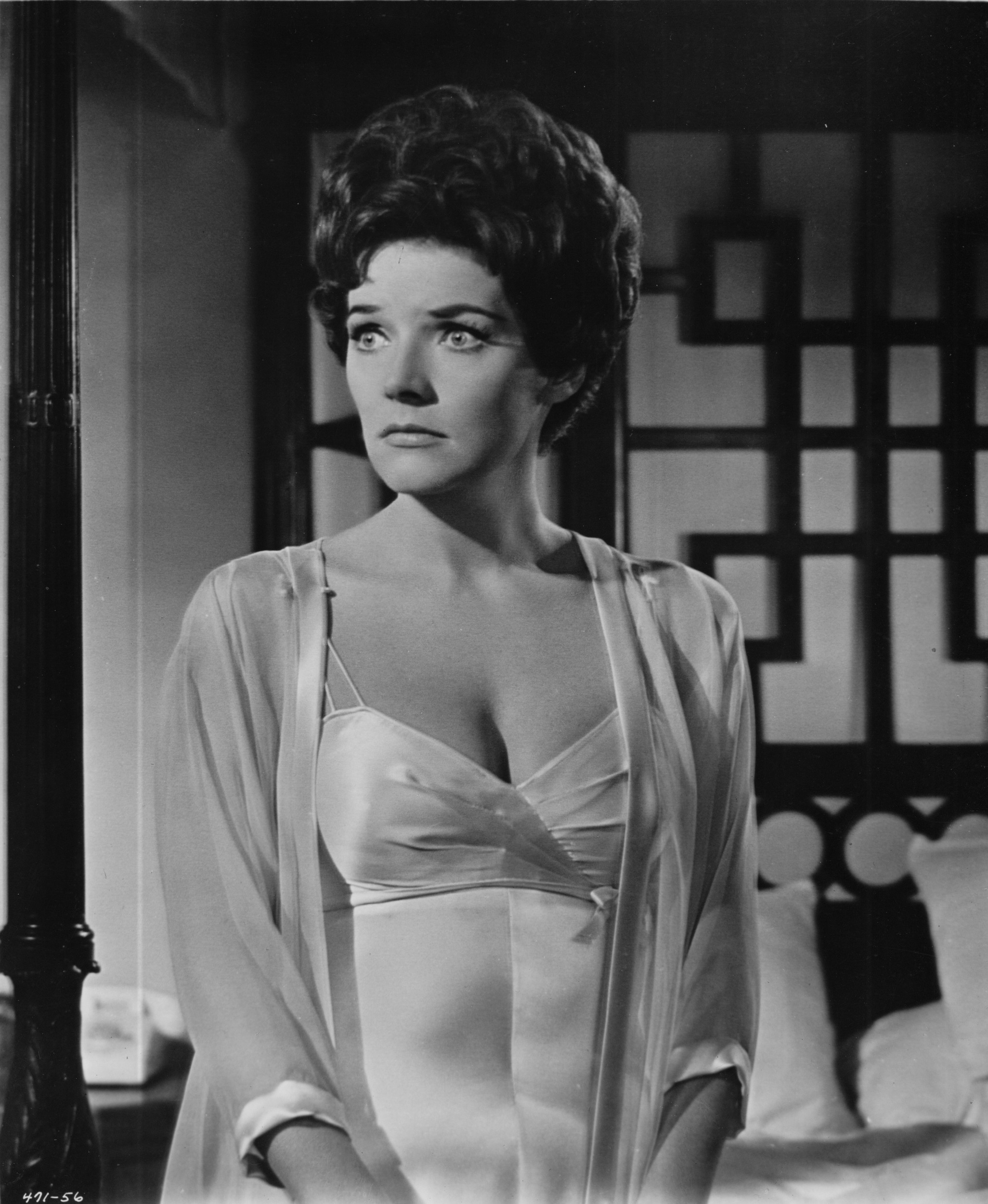
who made few films (she was predominantly a TV actress (“Welcome Back, Kotter”), but who was the co-star (with Rick Moranis) of the Disney hits, “Honey I Shrunk the Kids” and “Honey I Blew Up The Kid,” also deserved inclusion, and Polly Bergen (1930-2014)

Polly Bergen

…who played the terrorized lawyer’s wife in the original “Cape Fear”(portrayed by Jessica Lange in the Scorsese re-make) and had significant roles in several other films, was a bad omission.

Because Twitter users are about 12 or have the memories of mayflies, there was much indignation last night over the absence of Joan Rivers and former SNL standout Jan Hooks. I’d leave the appreciations of both to the Emmys, especially Rivers. A couple cameos and doing the voice of the C3PO parody in “Spaceballs” doesn’t constitute a film career, and snarky red carpet interviews are not movie-making.

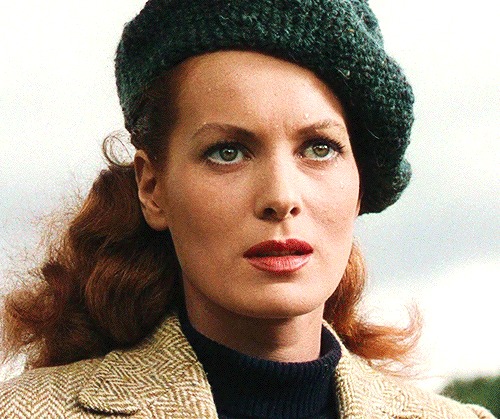
Those snubs pale in significance, however, to the disrespect shown by the academy not only to one of its all-time great stars, but to its own history, in the treatment of actress Maureen O’Hara. Continue reading

Best Ethics Movie Of The Year: “Whiplash”

I doubt that it will win “Best Picture” at the Oscar (though the consensus seems to be that J.K. Simmons, who dominates the film, has “Best Supporting Actor” in the bag), but “Whiplash” is the best film of the year that explores an ethics conundrum of long standing.

Without spoiling the film for those of you—the odds say a majority—who haven’t seen it, let me explain why.

“Whiplash” is ostensibly about a gifted music student’s quest to become not merely a good but a great jazz drummer. On the way, he encounters a fanatic, merciless, manipulative and demanding teacher (Simmons) who sees the young man’s passion and potential and is determined to either make his greatness bloom or break him trying. The movie raises the eternal question of the ethical obligation of the gifted to use their gifts to enrich society, culture and mankind. Arturo Toscanini once berated Bing Crosby for “wasting” his once-in-a-lifetime voice on popular music rather than opera. Is possession of a remarkable ability or talent something that forces the possessor to live an altruistic existence, subordinating his or her own desires to what will most benefit others? Is it unethical to refuse, to choose another path, one that is less daunting, easier, more relaxing, surer, without the stress, without the burden of chasing perfection and extraordinary success? Continue reading

The Strange And Unethical Case Of The Aging, Ageless, Part-Time Actress

Cheer up, Junie! Remember the sage words of the great Satchel Paige: “How old would you be, if you didn’t know how old you was?”

Cheer up, Junie! Remember the sage words of the great Satchel Paige: “How old would you be, if you didn’t know how old you was?”

In October of 2011, Ethics Alarms offered an Ethics Quiz that asked, “Did the Internet Movie Data Base do anything unethical by publishing the actress’s real age without her permission?” The occasion was a lawsuit asking for over a million dollars in damages by an anonymous film actress who claimed that Amazon’s Internet Movie Data Base harmed her career by researching and publishing her real age without her permission. My conclusion at the time was that Actress X was

“shooting at the wrong villain. If there is age discrimination in Hollywood, confront it: a number shouldn’t disqualify her from any roles at all. I am not saying that fighting such a long-standing tradition in the show business culture isn’t a daunting task, but that’s the real problem, not a web service that conveys information about movies and movie stars by publishing facts.”

Well, it’s almost four years later, this dubious case has wound its way to trial, and we are now learning some fascinating things: Continue reading

Ethics Quote Of The Week: Gary Sinise

gary-sinise

“With all due respect, what the hell are you talking about?”

—Actor and Wounded Warrior ally Gary Senise, in an open letter responding to Howard Dean’s statement that the audience for “American Sniper” consisted of “angry people.”

Good question. What are the vicious and anti-military critics of Clint Eastwood’s box-office busting bio-pic about Navy Seal Chris Kyle talking about?

I saw the film yesterday. It’s not pro-war, pro-Iraq invasion, or political in any way. The various critics of the film out themselves as hateful and so biased against combat, the military and, I don’t know—life? Reality?—that they can’t even keep their minds open a crack for a thought-provoking piece of popular art. Dean had said, turning his review (I’ll bet anything that he hasn’t seen the film) into a gratuitous attack on tea party supporters:

“There’s a lot of anger in this country, and the people who go see this movie are people who are very angry. And this guy basically says ‘I’m going to fight on your side.’ … I bet you if you looked at a cross-section of the Tea Party and the people who go to see this movie, there’s a lot of intersection.”

In the same forum–his weekly HBO conservative-bashing fest–Bill Maher called Kyle a “psychopath patriot” (there is nothing whatsoever in the film that supports that diagnosis). Seth Rogen compared “American Sniper” to a Nazi propaganda film. Michael Moore used the film–which he couldn’t possibly have seen–to make the ridiculous observation that snipers were “cowards.” Kyle, the most effective sniper in U.S. military history, was wounded repeatedly and awarded two Silver Stars and five Bronze stars. For him to be smeared as a coward by the likes of Michael Moore is grotesque.

The film, among other things, shows just what kind of horror our service men and women endured in Iraq, how they suffered (and suffer still), what it did to them and their families, and accords them well-deserved compassion and respect. How sad, bitter and rotten inside someone must be to resent that. As I watched the film, it occurred to me that this was probably exactly what John Wayne wanted “The Green Berets” to be during Vietnam, but had neither the discipline to avoid agitprop and sentimentality, nor Clint’s directing skills to pull it off.

After expressing his disgust at Dean’s outburst in a tweet, the stage and screen star, whose foundation works to help and recognize the soldiers and veterans he calls our “defenders,” wrote,

To Howard Dean,

I saw American Sniper and would not consider myself to be an angry person. You certainly have a right to make stupid blanket statements, suggesting that all people who see this film are angry, but how is that helpful sir? Do you also suggest that everyone at Warner Brothers is angry because they released the film? That Clint Eastwood, Jason Hall, Bradley Cooper, Sienna Miller and the rest of the cast and crew are angry because they made the film? Chris Kyle’s story deserved to be told. It tells a story of the stress that multiple deployments have on one military family, a family representative of thousands of military families. It helps to communicate the toll that the war on terror has taken on our defenders. Defenders and families who need our support. I will admit that perhaps somewhere among the masses of people who are going to see the film there may be a few that might have some anger or have been angry at some point in their lives, but, with all due respect, what the hell are you talking about?

My guess is that Dean is talking about his own estrangement from basic American values, its history, and its essential role in the world, including all the sacrifices, risks and difficult choices that role demands. He’s the angry one.


The Destructive, Useful, Unethical Presumption of Bigotry, Part 2: The Oscar “Snub”

selma-4

For the second time in nearly two decades, and for the first time since 1998, the Oscars will be awarded to only white acting nominees. This, then, if you listen to the caterwauling race-baiters, is because Hollywood is racist. The Academy’s voters just hid it well since 1998, that’s all. Does that make any sense to you?

There are few more infuriating and transparently illogical examples of an unfair slapping down of the race card than looking for bigotry in the notoriously arbitrary, bias-soaked, essentially meaningless choices for “best” in the various Academy Award movie-making categories. Yet the race card sharks were up to the task.  Naturally, the authority on the subject was Al Sharpton, he whose own performance quality on his MSNBC TV show is so amateurish that it would be shut out in any community theater awards.

“In the time of Staten Island and Ferguson, to have one of the most shutout Oscar nights in recent memory is something that is incongruous,” Sharpton told The Daily News. Wait, what??? Incongruous is the assertion that the nominations for film-making excellence should be influenced in any way by how many blacks are killed resisting arrest. Anyone who finds that to be a logical argument for why more black actors should have been nominated for Oscars is useless to any rational discussion of the issue. I want a show of hands. Continue reading