Best Ethics Movie Of The Year: “Whiplash”

I doubt that it will win “Best Picture” at the Oscar (though the consensus seems to be that J.K. Simmons, who dominates the film, has “Best Supporting Actor” in the bag), but “Whiplash” is the best film of the year that explores an ethics conundrum of long standing.

Without spoiling the film for those of you—the odds say a majority—who haven’t seen it, let me explain why.

“Whiplash” is ostensibly about a gifted music student’s quest to become not merely a good but a great jazz drummer. On the way, he encounters a fanatic, merciless, manipulative and demanding teacher (Simmons) who sees the young man’s passion and potential and is determined to either make his greatness bloom or break him trying. The movie raises the eternal question of the ethical obligation of the gifted to use their gifts to enrich society, culture and mankind. Arturo Toscanini once berated Bing Crosby for “wasting” his once-in-a-lifetime voice on popular music rather than opera. Is possession of a remarkable ability or talent something that forces the possessor to live an altruistic existence, subordinating his or her own desires to what will most benefit others? Is it unethical to refuse, to choose another path, one that is less daunting, easier, more relaxing, surer, without the stress, without the burden of chasing perfection and extraordinary success? Continue reading

The Strange And Unethical Case Of The Aging, Ageless, Part-Time Actress

Cheer up, Junie! Remember the sage words of the great Satchel Paige: “How old would you be, if you didn’t know how old you was?”

Cheer up, Junie! Remember the sage words of the great Satchel Paige: “How old would you be, if you didn’t know how old you was?”

In October of 2011, Ethics Alarms offered an Ethics Quiz that asked, “Did the Internet Movie Data Base do anything unethical by publishing the actress’s real age without her permission?” The occasion was a lawsuit asking for over a million dollars in damages by an anonymous film actress who claimed that Amazon’s Internet Movie Data Base harmed her career by researching and publishing her real age without her permission. My conclusion at the time was that Actress X was

“shooting at the wrong villain. If there is age discrimination in Hollywood, confront it: a number shouldn’t disqualify her from any roles at all. I am not saying that fighting such a long-standing tradition in the show business culture isn’t a daunting task, but that’s the real problem, not a web service that conveys information about movies and movie stars by publishing facts.”

Well, it’s almost four years later, this dubious case has wound its way to trial, and we are now learning some fascinating things: Continue reading

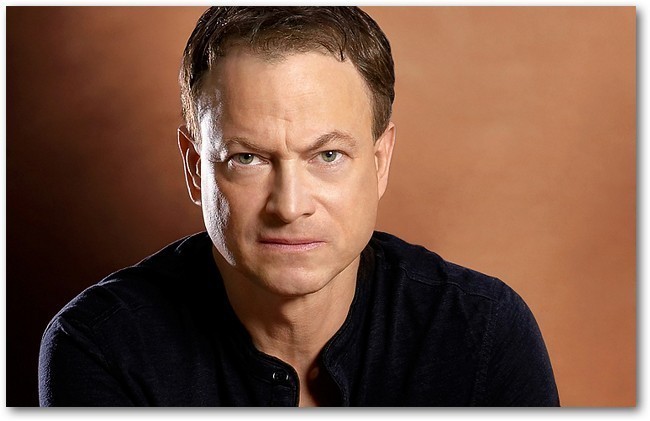
Ethics Quote Of The Week: Gary Sinise

gary-sinise

“With all due respect, what the hell are you talking about?”

—Actor and Wounded Warrior ally Gary Senise, in an open letter responding to Howard Dean’s statement that the audience for “American Sniper” consisted of “angry people.”

Good question. What are the vicious and anti-military critics of Clint Eastwood’s box-office busting bio-pic about Navy Seal Chris Kyle talking about?

I saw the film yesterday. It’s not pro-war, pro-Iraq invasion, or political in any way. The various critics of the film out themselves as hateful and so biased against combat, the military and, I don’t know—life? Reality?—that they can’t even keep their minds open a crack for a thought-provoking piece of popular art. Dean had said, turning his review (I’ll bet anything that he hasn’t seen the film) into a gratuitous attack on tea party supporters:

“There’s a lot of anger in this country, and the people who go see this movie are people who are very angry. And this guy basically says ‘I’m going to fight on your side.’ … I bet you if you looked at a cross-section of the Tea Party and the people who go to see this movie, there’s a lot of intersection.”

In the same forum–his weekly HBO conservative-bashing fest–Bill Maher called Kyle a “psychopath patriot” (there is nothing whatsoever in the film that supports that diagnosis). Seth Rogen compared “American Sniper” to a Nazi propaganda film. Michael Moore used the film–which he couldn’t possibly have seen–to make the ridiculous observation that snipers were “cowards.” Kyle, the most effective sniper in U.S. military history, was wounded repeatedly and awarded two Silver Stars and five Bronze stars. For him to be smeared as a coward by the likes of Michael Moore is grotesque.

The film, among other things, shows just what kind of horror our service men and women endured in Iraq, how they suffered (and suffer still), what it did to them and their families, and accords them well-deserved compassion and respect. How sad, bitter and rotten inside someone must be to resent that. As I watched the film, it occurred to me that this was probably exactly what John Wayne wanted “The Green Berets” to be during Vietnam, but had neither the discipline to avoid agitprop and sentimentality, nor Clint’s directing skills to pull it off.

After expressing his disgust at Dean’s outburst in a tweet, the stage and screen star, whose foundation works to help and recognize the soldiers and veterans he calls our “defenders,” wrote,

To Howard Dean,

I saw American Sniper and would not consider myself to be an angry person. You certainly have a right to make stupid blanket statements, suggesting that all people who see this film are angry, but how is that helpful sir? Do you also suggest that everyone at Warner Brothers is angry because they released the film? That Clint Eastwood, Jason Hall, Bradley Cooper, Sienna Miller and the rest of the cast and crew are angry because they made the film? Chris Kyle’s story deserved to be told. It tells a story of the stress that multiple deployments have on one military family, a family representative of thousands of military families. It helps to communicate the toll that the war on terror has taken on our defenders. Defenders and families who need our support. I will admit that perhaps somewhere among the masses of people who are going to see the film there may be a few that might have some anger or have been angry at some point in their lives, but, with all due respect, what the hell are you talking about?

My guess is that Dean is talking about his own estrangement from basic American values, its history, and its essential role in the world, including all the sacrifices, risks and difficult choices that role demands. He’s the angry one.

 

The Destructive, Useful, Unethical Presumption of Bigotry, Part 2: The Oscar “Snub”

selma-4

For the second time in nearly two decades, and for the first time since 1998, the Oscars will be awarded to only white acting nominees. This, then, if you listen to the caterwauling race-baiters, is because Hollywood is racist. The Academy’s voters just hid it well since 1998, that’s all. Does that make any sense to you?

There are few more infuriating and transparently illogical examples of an unfair slapping down of the race card than looking for bigotry in the notoriously arbitrary, bias-soaked, essentially meaningless choices for “best” in the various Academy Award movie-making categories. Yet the race card sharks were up to the task.  Naturally, the authority on the subject was Al Sharpton, he whose own performance quality on his MSNBC TV show is so amateurish that it would be shut out in any community theater awards.

“In the time of Staten Island and Ferguson, to have one of the most shutout Oscar nights in recent memory is something that is incongruous,” Sharpton told The Daily News. Wait, what??? Incongruous is the assertion that the nominations for film-making excellence should be influenced in any way by how many blacks are killed resisting arrest. Anyone who finds that to be a logical argument for why more black actors should have been nominated for Oscars is useless to any rational discussion of the issue. I want a show of hands. Continue reading

Now THIS Is Hypocrisy: Steven Soderbergh’s Copyright Exemption

Raiders_B and W

Few ethical concepts are as misidentified as hypocrisy, which is the opposite of integrity. The judge who secretly engages in crimes by night that he harshly sentences poor defendants for committing when he wears his black robe by day is a hypocrite; the parent who punishes his child for conduct she defiantly engaged in when she was the same age is not. The anti-hate speech zealot who uses what she would call hate speech in attacking others is a hypocrite; the closeted gay Baptist who opposes same-sex marriage is not. There is no danger of confusion where director Stephen Soderbergh’s copyright militancy is concerned, however. He’s a perfect hypocrite, one who distinguishes  right and wrong this way: if anyone other than  Soderbergh does it, it’s wrong.

Soderbergh is an outspoken copyright infringement hun who has testified  before Congress on behalf of the Director’s Guild of America, calling for tough legal penalties against online copyright infringers. He was also the lead plaintiff in the 2006 case of Soderbergh et al v. Clean Flicks of Colorado et al., seeking to shut down a company called Clean Flicks  that distributed versions of previously-released films edited by them to be more “family friendly.”

Soderbergh suit was successful, with the court ruling that the edited versions prepared by Clean Flicks violated his rights under sec 106(2) of the Copyright Act  by creating derivative versions of the films – defined as “works based upon one or more preexisting works, such as a translation, musical arrangement, dramatization, fictionalization, motion picture version, sound recording, art reproduction, abridgment, condensation, or any other form in which a work may be recast, transformed, or adapted”—and held that that Clean Flicks was responsible for “irreparable injury to the creative artistic expression in the copyrighted movies.”

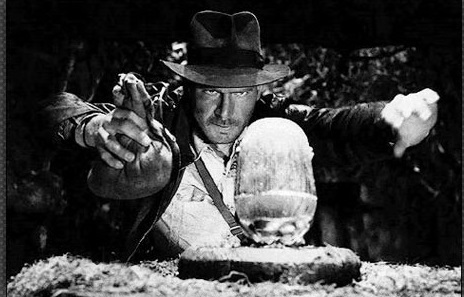
But what’s this? Now Soderbergh is posting his own specially-edited versions of the classics “Psycho,” “Raiders of the Lost Ark,” and “2001: A Space Odyssey” on his own website. Want to see how good Raiders looks as a black-and-white film for example? Soderbergh’s color-free edit will show you. And how is editing the color out of the Lucas-Spielberg film ethically and legally distinct from editing out the naughty words and images from Soderbergh’s “Sex, Lies, and Videotape?”

I have no idea. Ask Soderbergh, whose answer, I suspect, will be “because I did it, not someone else.”

Hypocrisy.

______________________

Pointer: Volokh

Professional Chauvinism At “Above The Law”

Clooneys

Lawyers really need to get over themselves. This post, by Staci Zaretski at the legal gossip site “Above the Law,” was introduced in my e-mail inbox with this line:

“Amal Clooney’s lifetime achievements are far greater than those of her husband, George Clooney. Where’s her award?”

The flip answer would be: “George Clooney.” But to the point: one has to have an enhanced regard for the profession of the law and a dismissive and culturally ignorant attitude towards the arts to state that “Amal Clooney’s lifetime achievements are far greater” than those of George Clooney.” Zaretski is welcome to her biases, but by any fair measure, the lifetime achievements of an actor of Clooney’s popularity, daring and prominence far outstrips those of a lawyer like Amal Alamuddin Clooney.  “Above the Law” makes its case thusly:

“Amal is a human rights lawyer who worked on the Enron case, was an adviser to Kofi Annan regarding Syria, and was selected to a three-person U.N. commission investigating rules of war violations in the Gaza Strip.”

Hundreds of lawyers worked on the Enron case(s): you will have to prove to me that she had some special impact that another lawyer with similar skills, and there are thousands, would not have. So she was an adviser to Kofi Annan regarding Syria: is Zaretsky aware that Annan’s misguided and naive efforts to broker a Syrian peace saved not a single life, and may well have blocked more substantive and effective initiatives? Then she served on a commission “investigating rules of war violations in the Gaza Strip.” Translation: she is a willing participant in the U.N. effort to demonize Israel for defending itself from Hamas shelling.  She also is defending Julian Assange. I don’t hold that against her: he’s a criminal, but he deserves a defense. Would he have not gotten one without Amal Clooney? Of course he would have. Continue reading

Unethical Quote of the Week: Ampersand on “Alas! A Blog”

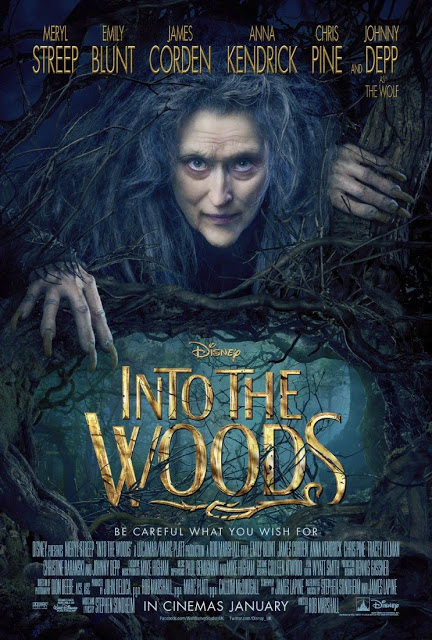
Into the Woods

There is no reason in the world, other than Hollywood’s endless racism and lack of imagination, for this movie (or the original play, alas) to have an all-white cast. Why do movies feel like they’d rather die than show us a diverse cast? (And please don’t say “they cast the best people for the roles.” I thought the whole cast was good, but Streep was the only one who turned in a performance so unique that you couldn’t imagine anyone else doing the role.)

—–Ampersand, a.k.a. Barry Deutsch, opining on the assets and deficits of Rob Marshall’s film adaptation of “Into the Woods” on his blog

I hate to pick on Barry—OK, that’s not true, I enjoy it immensely—but this statement could stand as the distillation of knee-jerk liberal thinking on race, and it is wrong in so many ways that I hesitate to start counting. The sentiment, however, poses a nice counterpoint to the discussion here about the black James Bond controversy, so I can’t resist taking aim at it.

1. So casting a mega-million dollar film—-in a dicey genre (Have you heard? Big budget Hollywood musicals died in the Sixties…) and a limited audience—with actors who comport with that audience’s expectations of the musical the film is based on is racist, eh? More unfair words and inexcusable race-baiting were seldom uttered in word or written in ink. If a director had a vision that supported casting African American actors in traditional Grimms’ fairy tale roles and could make it work, I would salute him, but Rob Marshall had other priorities. He knew that every cut would be scrutinized and attacked by the Sondheim fanatics (which, by the way, are as white as a dove convention in a blizzard); he knew that the show itself was seriously flawed; he knew that every single adaptation of a Sondheim musical (“West Side Story” doesn’t count) has been a critical and box office bomb. He had every reason to keep his casting choices as close to the traditional images of the characters and the way they were portrayed on Broadway, and none of those reasons were racism.

2. It’s impressive how casually a race-obsessed progressive will accuse a professional of racism as a first response. Irresponsible, unfair, disrespectful, and in this case, ignorant of both commerce and art. Continue reading

Abortion, “The Fly” and the Ethics Incompleteness Theorem

"AWWW! He looks just like his father!"

“AWWW! He looks just like his father!”

The most interesting aspect of ethics is at the margins, those situations where absolutists are challenged to hold to their principles because of unforseen variations that no general analysis could anticipate. The absolute ban on torture as unethical becomes shaky under the “hidden nuclear bomb” scenario.  Capital punishment opponents find that their compassion evaporates when asked whether Hitler or bin Laden deserved execution.

This is the Ethics Incompleteness problem, which I last wrote about at length in March of 2014:

“The human language is not sufficiently precise to define a rule that will achieve its desired effects, that is work, in every instance. There are always anomalies around the periphery of every normative system, no matter how sound or well articulated. If one responds to an anomaly by trying to amend the rule or system to accommodate it, the integrity of the rule or system is disturbed, and perhaps ruined. Yet if one stubbornly applies the rule or system without amendment to the anomaly anyway, one may reach an absurd conclusion or an unjust result. The Ethics Incompleteness Principle suggests that when a system or rule doesn’t seem to work well when applied to an unexpected or unusual situation, the wise response is to temporarily abandon the system or rule and return to basic principles to find the solution. No system or rule is going to work equally well with every possible scenario, which is why committing to a single system is folly, and why it is important to keep basic ethical values in mind in case a pre-determined formula for determining what is right breaks down.”

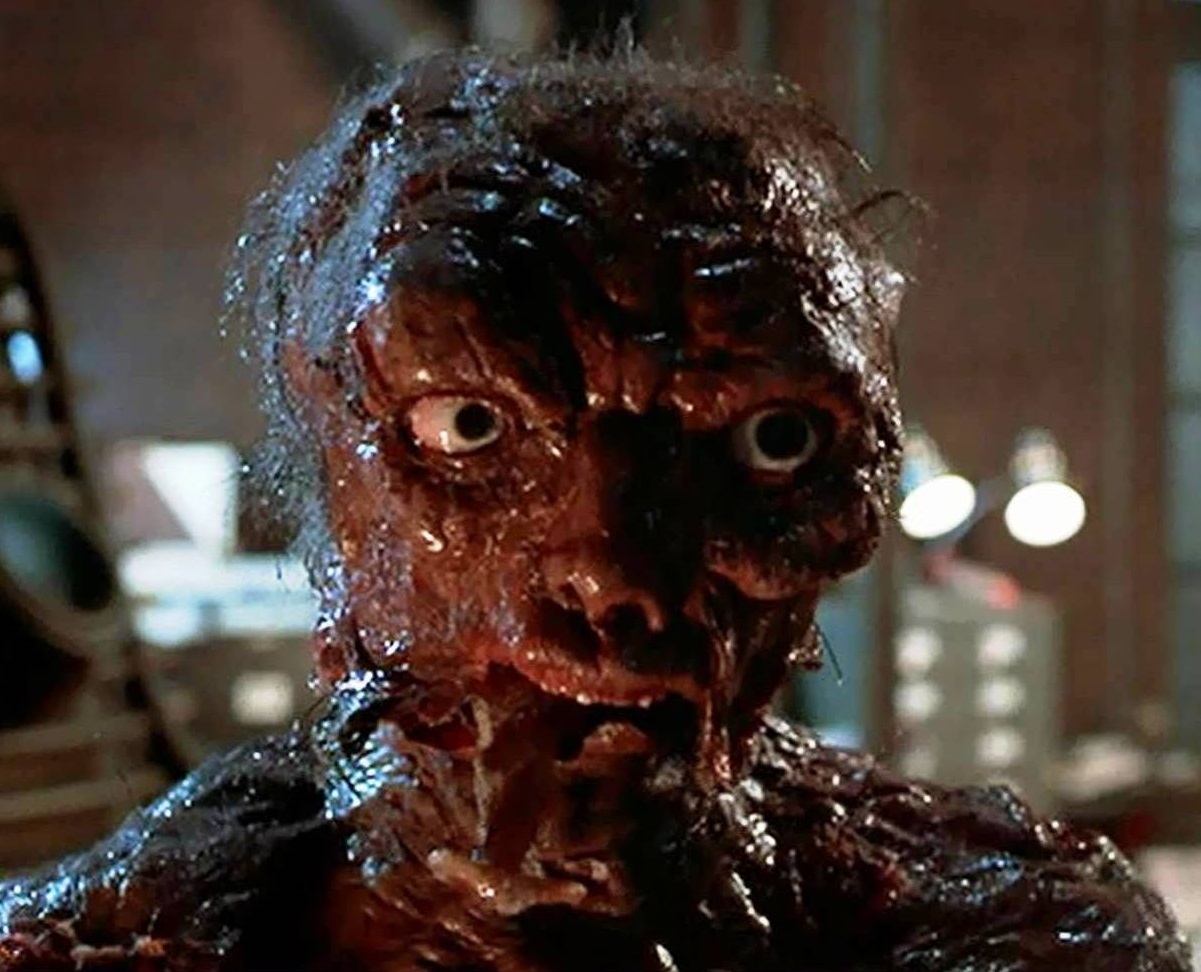
I was watching the Jeff Goldblum remake of “The Fly” (written and directed by David Cronenberg) last night, and rather than being properly horrified by Geena Davis’s nightmare of giving birth to a yard long fly larva, I found myself wondering how anti-abortion absolutists would handle her unusual dilemma. The film follows the tragedy of scientist Seth Brundle (Goldblum ) who has developed a means of teleportation. The process involves a computer breaking down a body, then transmitting the atoms electronically to a receiving “pod,” and reassembling them there. Unfortunately, when Seth tests the device on himself, an unnoticed fly gets into the sending pod, and the result is a version of Brundle that has fly DNA mixed in. (In the memorably campy Vincent Price original, what arrived in the receiving pod was a man with a giant fly head and a fly with a tiny human head.) Gradually Brundle mutates in form and mind into a monstrous hybrid, but before he knows what has happened to him, he impregnates girl friend Davis. Soon she realizes that something with insect DNA is gestating inside of her, though all tests show a healthy human embryo. Not surprisingly, she wants an abortion.

Would those who argue that abortion is murder maintain that she shouldn’t be able to have one, or that aborting the fetus is wrong? Let’s make the problem harder: let’s say she only learns that she has a fly-baby in the third trimester, when our laws wil not permit abortions unless the mother’s life is in peril. Some questions: Continue reading

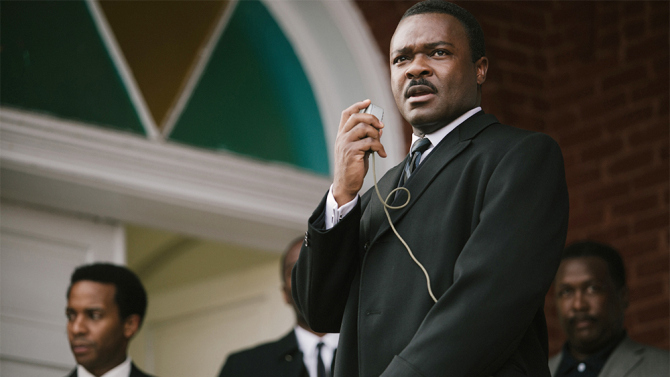
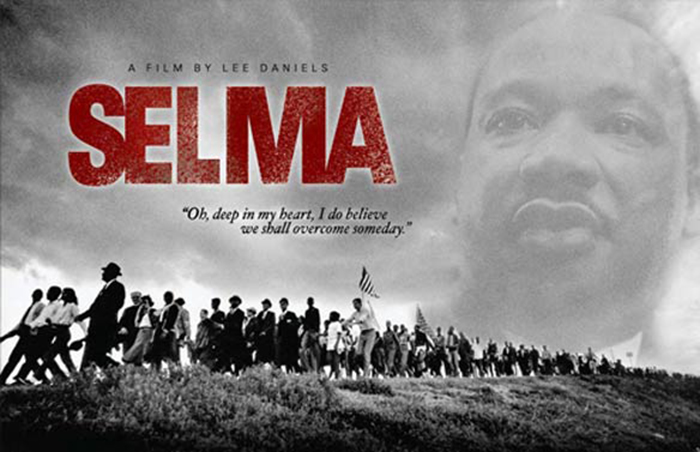
Ethics Quote Of The Month: Washington Post Film Critic Ann Hornaday on “Selma”

selma-movie

“How to reconcile facts and feelings, art and fealty to the truth? When filmmakers recall with pride about the deep reporting and research they’ve done for their projects, then they deserve to be held accountable for their projects. For fact-based films, accuracy becomes a formal element, along with acting, design and cinematography. It’s up to each viewer to identify the threshold where artistic license compromises the integrity of the entire endeavor. Cinema has more responsibility in this regard precisely because of its heightened realism, its ability to burrow into our collective consciousness and memory, where the myth has a tendency to overpower settled fact. But viewers have responsibilities, too. If accuracy has become a formal element of historical dramas, then the ensuing fact-checks have become just as integral a part of how we view them. That means it’s incumbent on audiences to engage in a mode of spectatorship that, rather than decide who’s right, can listen to and respect expert critiques, and still open themselves up to a piece of filmed entertainment that speaks to less literal, more universal truths.”

—–Ann Hornaday, Washington Post film critic, on the controversy regarding the counter-factual treatment of President Lydon Johnson in the new film, “Selma.”

The question of whether film makers have an ethical obligation to fairly represent history, and particularly individual historical figures, in their movies has been a topic visited frequently at Ethics Alarms, and I’m not going to re-hash conclusions that have been thoroughly discussed before, such as

…here, regarding the casting of “The Impossible” with a gleamingly light-skinned central family and the changing of the real life heroine from Spanish to British

…here,  discussing complaints that a fictional event was not portrayed accurately in “Noah”

…here, exploring the many falsehoods, some quite despicable, in James Cameron’s “Titanic”

…here, regarding unfair criticism of “Argo”

and here, discussing “Lincoln” screenwriter, playwright Tony Kushner’s inexcusable choice to represent a real life former Congressman voting against the Thirteenth Amendment abolishing slavery when in fact he voted for it.

The conclusion of that last one sums up the lessons of the rest, I think. Kushner’s defense against criticism of the collateral damage his invented facts wreaked was to argue that they were legitimate tactics in the pursuit of drama and “greater truths.” He then compared smearing the reputation of a Congressman, to the detriment of his descendants, to misrepresenting the kinds of socks Lincoln wore. (Kushner can be a brilliant writer, but his ideological utilitarianism is repellant.) I wrote:
Continue reading

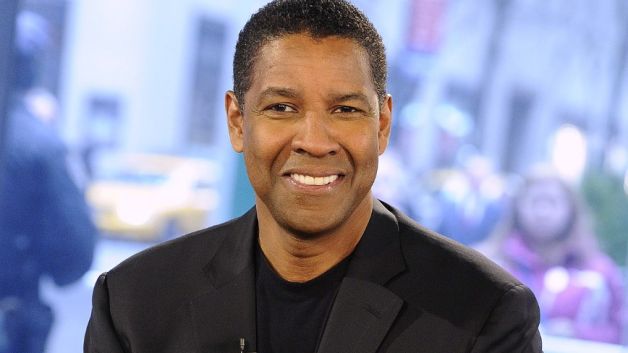
Ethics FYI To Hollywood, Pundits And Al Sharpton: There Is Nothing Racist–Or Unethical—About The Hacked Denzel Washington Memo

denzel-washington

Does anybody even bother to think about what racism is any more before accusing people of it? Do journalists think about the circumstances before they parrot knee-jerk accusations of racism from the likes of Sharpton and others? Based on the evidence of reaction to the infamous memo from a Sony honcho regarding the performance of Denzel Washington pictures abroad, apparently not.

Everywhere, this screed by an unnamed Sony executive is being called “shocking,” “unbelievable,” and, of course “racist.” It is nothing of the kind. In a scenario that reeks of the surreal Samuel L. Jackson fiasco where Ethics Alarms was virtually alone in noting that Jackson’s on-air accusation that a white TV host had confused him with fellow black star Lawrence Fishburne because “all blacks look the same to him” was unfair and completely meritless, the news media is just running with a demonstrably false accusation.

Here are the relevant portions of the e-mail exchange based on what has been reported in the media:

“I am not saying The Equalizer should not have been made or that African American actors should not have been used (I personally think Denzel is the best actor of his generation.) [But] Casting him is saying we’re ok with a double if the picture works. He’s reliable at the domestic [box office], safe, but has not had a huge success in years. I believe…the non event pictures, extra ‘bets’ should have a large inherent upside… Here there isn’t a large inherent upside….I believe that the international motion picture audience is racist – in general, pictures with an African-American lead don’t play well overseas…Sony sometimes seems to disregard that a picture must work well internationally to both maximize returns and reduce risk, especially pics with decent size budgets.”

Let’s examine this “unbelievable” e-mail, line by line and then as a whole, for ethical misconduct and incipient racism:

“I am not saying The Equalizer should not have been made or that African American actors should not have been used (I personally think Denzel is the best actor of his generation.)”

No problem there, right?

“[But] Casting him is saying we’re ok with a double if the picture works.”

The baseball analogy, a “double” over a “home run,” is a conclusion based on Washington’s films’ grosses and hard facts, not racism. It is a legitimate opinion, and one that in a business context must be made as a matter of fiduciary duty. Foriegn box office is about half (or more) of a typical film’s profit. If a star isn’t as popular in foreign markets as in the U.S., then metaphorically speaking, a “home run” is more difficult, and maybe impossible. Continue reading