Hollywood’s Ridiculous Hypocrisy on Guns

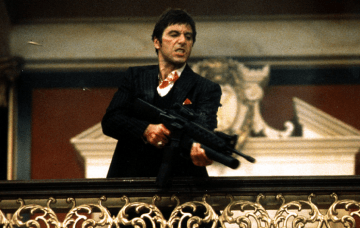
"Say hello to my little friend! And while we're on the topic of guns, don't you think it's time to be sensible about gun control?"

“Say hello to my little friend! And while we’re on the topic of guns, don’t you think it’s time to be sensible about gun control?”

In a move stunningly unconscious to outrageous hypocrisy, the group “Mayors Against Illegal Guns” have posted a video on on its website and Youtube (of course), featuring an impressive array of solemn Hollywood celebrities chiding Americans for not doing something about guns “yesterday” and to “demand a plan” to end gun violence. The problem? Many of these same celebrities owe their presence on the video to Hollywood’s obsession with gun violence, without which they would be just anonymous pretty faces. They owe their mansions and private planes to that gun violence too, which they have happily, willfully and lucratively acted out in scores of violent films and television shows. How can they presume, given how they make their living, to lecture anyone on the topic of guns?

I have some theories. Many of them are dumb as bricks. Most of them are automatic co-signers of the manifesto for any cause branded as liberal, the Hollywood religion,and don’t bother to think about whether it is consistent with their life choices or not. Probably all of them, working every day in one of the most ethics-free, cut-throat, dishonest and hypocritical sub-cultures that has ever existed in the United States are completely numb to the concept of hypocrisy, as apparently are the mayors, who work in the culture of politics, which is only somewhat better. Continue reading

Hollywood Ethics and Lindsay Lohan: Kick ‘Em When They’re Down

Here's a pro tip, Lindsay: when you find yourself in bad with Charlie Sheen, there is trouble ahead.

Here’s a pro tip, Lindsay: when you find yourself in bad with Charlie Sheen, there is trouble ahead.

If Hollywood reports are true—and when the sources are primarily gossip sites, you never know—the honchos at Dimension Films played a dirty trick on actress Lindsay Lohan. Lohan is one of the featured performers in the upcoming comedy “Scary Movie 5,” like its occasionally funny predecessors a parody of recent horror films. Lohan’s sequence has her paired with Charlie Sheen, in a spoof of “Paranormal Activity.” In one scene, we are told, Lindsay screams hysterically as if she has seen some ectoplasmic horror, when what has really upset her is having to see Lohan’s own 2005 post-“Mean Girls” pre-train wreck Disney flop, “Herbie Fully-Loaded” appear on her TV.  When the trailer for the yet-to-be-released film was unveiled, however, there had been a change in the scene to make a more hurtful joke at the actress’s expense. Now it appears that Lohan is screaming at the news that her probation has been revoked, as indeed it was just this month. Lohan could get significant jail time.

Lindsay says she was blind-sided by the switch, which holds her up to (more) humiliation and which she never approved. Inside sources say that the producers changed the trailer in retribution for Lohan’s unprofessional conduct during the shooting. Continue reading

“White Christmas” Ethics

White-Christmas

I just completed my obligatory annual viewing of “White Christmas,” one of the stranger members of the Yuletide Movie Pantheon. Yes, I still get a lump in my throat when the old general, played by Dean Jagger, gets saluted by his reunited army unit, which has gathered at his struggling, snowless, Vermont inn on Christmas Eve to remind him that he is still remembered and loved. Nonetheless, it is by far the strangest of the Christmas movies, and also the most unethical. Though everything works out in the end, the characters in the rather sloppy plot spend the whole movie lying, extorting, betraying, manipulating and generally mistreating each other, always with no recriminations at all, and usually with no consequences either.

The movie starts out with guilt extortion, as army private Phil Davis (Danny Kaye) rescues his smooth-singing captain, Bob Wallace (Bing Crosby) from being crushed by a falling wall in a World War II bombing raid, and then uses Wallace’s debt of gratitude to coerce him into accepting the aspiring comic as a partner in Wallace’s already successful civilian act.  This is obviously unfair and coercive, but Bing accepts the ploy with good spirits, and the next thing we see is the new team of Wallace and Davis knocking ’em dead and rising in the ranks of stage stars. Now they have a show on Broadway, and as a favor to a mutual army buddy, they agree to watch the boonies nightclub act of “The Haynes Sisters” (Rosemary Clooney and Vera-Ellen, of wasp-waist fame). Bing is immediately smitten with older sister Rosemary, but there is a tiff over the fact that younger sister Judy fooled them into seeing their act: she, not her brother, had sent the letter asking for a “favor.” This is the first revealed of many lies woven into the script. Continue reading

Movie Ethics: The Disruptive Child, the Weenies, and The Duty To Confront

Over at Consumerist there is a ridiculous post about a woman, “Kelly,” whose recent movie-going experience was ruined by a couple of boorish and irresponsible parents who brought their pre-schooler to the movie and did nothing while he annoyed the woman, talking to her, nudging her, and generally being a nuisance. You can read her account of the whole fiasco here.

Apparently it never occurred to the woman, or her equally passive and impotent brother, who has apparently been writing indignant e-mails to Regal Theaters after the incident, to tell the couple that 1) they have no right to let their child interfere with other audience members trying to enjoy the movie, 2) they either need to control their child or leave, and 3) if they don’t, then she will go make such a fuss in the lobby with the staff that they will be asked to leave. Continue reading

Ethics Quiz: Are Fake Dwarves Unethical?

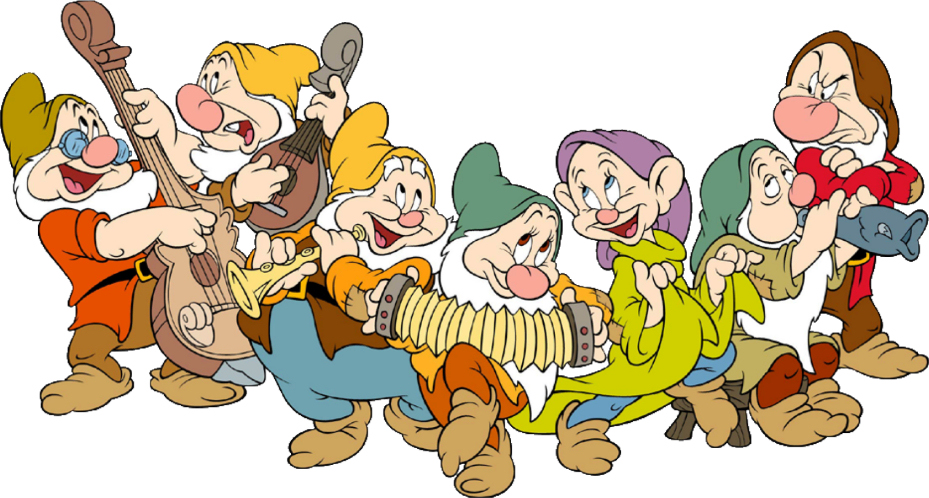
Remember, Disney didn’t cast little people as the dwarfs either…he cast ink.

The advocacy group “Little People of America” is crying foul because the seven dwarves (or dwarfs, if you’re Walt Disney) in “Snow White and the Huntsman” were played not by real little people (who don’t like being called dwarves, just playing them for money) but by digitally-altered normal-sized actors.

A representative of the group told the gossip web site TMZ that the studios should be “casting people with dwarfism as characters that were specifically written to be played by little people … and other roles that would be open to people of short stature.”

Your Ethics Quiz of the Day: Do movie makers have an obligation to cast small people in small people’s roles? Is it unethical to use special effects to do avoid casting them? Continue reading

Ethics Quiz: Is This Racism, or Just Business?

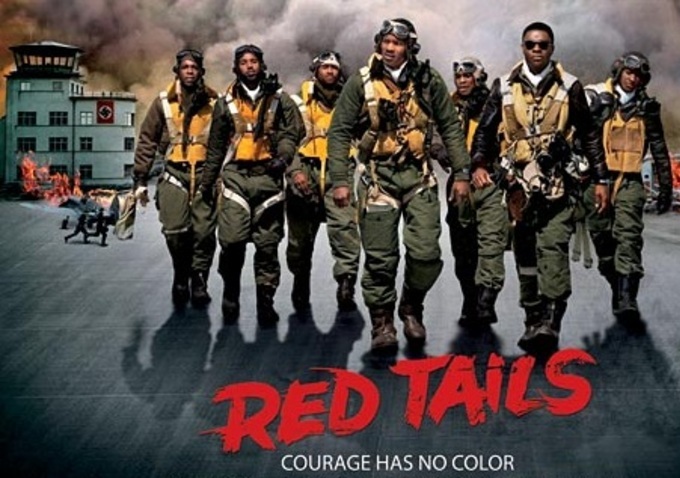
The Mother Jones headline is designed to provoke a gasp: George Lucas: Hollywood Didn’t Want To Fund My Film Because Of Its Black Cast.

The headline is literally accurate. Lucas tells the magazine that he had trouble finding backers for “Red Tails,” his upcoming film about the fabled Tuskegee airmen, because the studios told him that films without white protagonists didn’t draw a wide enough audience, especially overseas, to make his film a good investment for them. Presuming that the film-makers know their business—and presuming their real reason for rejecting Lucas was not that the movies he’s produced lately were god awful, —Lucas’s story raises this Ethics Alarms Ethics Quiz Question, which you may answer if you dare:

Is a studio that refuses to fund a movie with an all-black cast engaging in racism, or just practicing business responsibly? Continue reading

Ethics Hero: Steven Spielberg

The dwarf in the cloth monkey suit is just fine, thanks.

In a long, entertaining interview in the current issue of Entertainment (naturally!), director Steven Spielberg expresses regret over his decision to change his 1982 classic “E.T.” for its 2002 re-release, and vows never to do such a thing again. Here he splits off from the philosophy of his pal George Lucas, who continues to fiddle with his past films as technological upgrades become possible. Spielberg:

My philosophy is now that every single movie is a signpost of its time, and it should stand for that. We shouldn’t go back and change the parting of the Red Sea in Cecil B. DeMille’s “The Ten Commandments” just because with the digital tools we have now we can make it even more spectacular than it was.” Continue reading

Ethics Hero: Martin Scorsese

One of the most respectful and compassionate acts a human being can perform is to rescue the memory and achievements of a great man or woman from obscurity. Not only does this confer deserved longevity on the legacy of someone who has contributed something good and lasting to civilization and culture; it also is a gift to the rest of us, enriching our knowledge and perhaps providing us with inspiration as well.

This is what Martin Scorsese does for the early French film pioneer Georges Méliès in his new movie, “Hugo.”  The film is a fictionalized account of how Méliès, a producer, director, actor and special effects innovator, was rediscovered by film-lovers and his countrymen after years of discouragement and depression. In a nice piece of irony and symmetry, Scorsese’s film duplicates the phenomenon his movie describes. Forgotten after World War I, Méliès and his work were celebrated late in the 20’s, and he received long overdue acclaim and recognition, including France’s Legion of Honor. After his death in 1938, his contributions to the art and craft of cinema faded from public awareness a second time. Once again, thanks to “Hugo,” the public is learning Méliès’s name and being delighted and inspired by his creations. Continue reading

Ethics Quote of the Week: Charlie Chaplin

I’m heading to New York City shortly, and will make an effort to check out first hand the state of Occupy Wall Street. The nationwide protest seems to be waning in both intensity and public support, despite some hopeful, futile voices (like the New York Times editorial page) who persist in claiming that its message is “important.”

I’m not denying that it could be. At this point, however, it is in danger of redefining itself as (or, in my case, confirming the diagnosis) a self-indulgent, expensive mess that never succeeded or even tried to articulate its goals clearly enough to avoid overtaken by the worst side-effects of such protests: violence, damage to property, threats to safety, and harm to innocent bystanders. Yesterday, for example, having failed to disrupt the operations of Wall Street, the New York contingent decided to disrupt the subway system—the mode of transportation overwhelmingly used by “the 99%.”

Stupid.

Words and clear thinking are not only helpful, but an obligation for those seeking social change.  As an example of how words can inspire, I offer this, the speech that Charlie Chaplin wrote and delivered at the end of his film, “The Great Dictator.” I am far from four-square with Chaplin’s politics, but he knew how to craft an inspiring rally to change—exactly what the “Occupy” should have done. Then, at least, we would recall it for what it aspired to, rather than all the annoyance and cynicism it launched. Here is a link to an editorially enhanced version of the scene and here is the text: Continue reading

My 15 Hollywood Cures For A Paterno-Penn State-Sandusky Hangover, Part 2

Part 1 listed the first seven of my 15 cinematic remedies for Penn State-inspired ethics ennui. Part 2 includes the final eight. Please don’t take the order too seriously; I could have shuffled the whole batch. I also tried to include as many genres as possible. When it comes to ethics, good lists can be compiled using all Westerns, all sports movies, all war movies, courtroom drama or science fiction. Here we go…

8Spartacus (196o)

The raw history is inspiring enough: an escaped gladiator led an army of slaves to multiple victories over the Roman legions in one of the greatest underdog triumphs ever recorded. Stanley Kubrick’s sword-and-sandal classic has many inspiring sequences, none more so than the moment when Spartacus’s defeated army chooses death rather than to allow him to identify himself to their Roman captors (“I am Spartacus!”)

Ethical issues highlighted: Liberty, slavery, sacrifice, trust, politics, courage, determination, the duty to resist abusive power, revolution, love, loyalty.

Favorite quote: “When a free man dies, he loses the pleasure of life. A slave loses his pain. Death is the only freedom a slave knows. That’s why he’s not afraid of it. That’s why we’ll win.” [Spartacus (Kirk Douglas)] Continue reading