Ethics Quiz: Are Fake Dwarves Unethical?

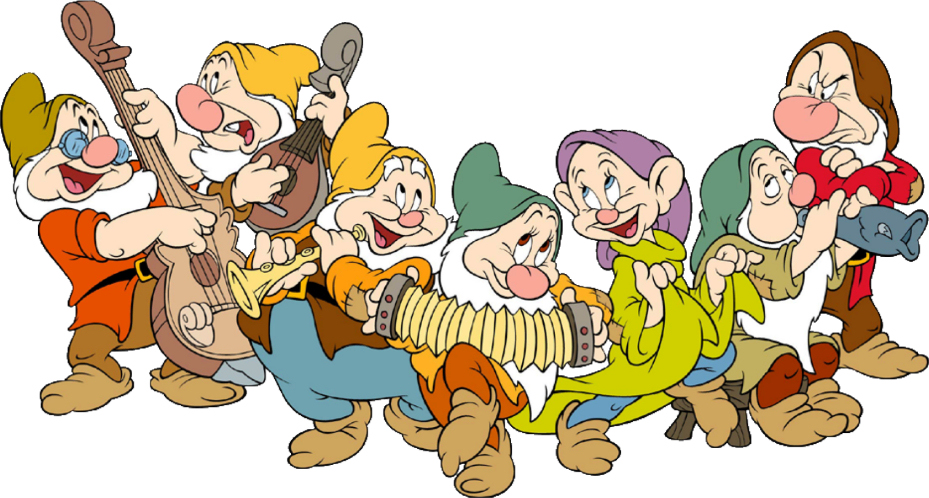
Remember, Disney didn’t cast little people as the dwarfs either…he cast ink.

The advocacy group “Little People of America” is crying foul because the seven dwarves (or dwarfs, if you’re Walt Disney) in “Snow White and the Huntsman” were played not by real little people (who don’t like being called dwarves, just playing them for money) but by digitally-altered normal-sized actors.

A representative of the group told the gossip web site TMZ that the studios should be “casting people with dwarfism as characters that were specifically written to be played by little people … and other roles that would be open to people of short stature.”

Your Ethics Quiz of the Day: Do movie makers have an obligation to cast small people in small people’s roles? Is it unethical to use special effects to do avoid casting them? Continue reading
Ethics Quiz: Is This Racism, or Just Business?

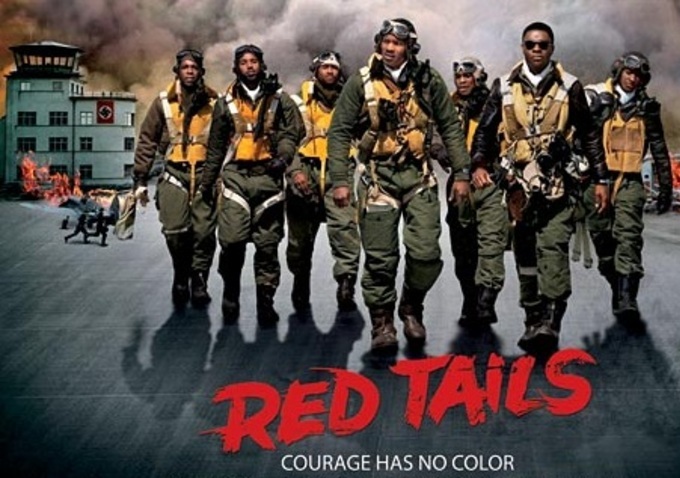
The Mother Jones headline is designed to provoke a gasp: George Lucas: Hollywood Didn’t Want To Fund My Film Because Of Its Black Cast.

The headline is literally accurate. Lucas tells the magazine that he had trouble finding backers for “Red Tails,” his upcoming film about the fabled Tuskegee airmen, because the studios told him that films without white protagonists didn’t draw a wide enough audience, especially overseas, to make his film a good investment for them. Presuming that the film-makers know their business—and presuming their real reason for rejecting Lucas was not that the movies he’s produced lately were god awful, —Lucas’s story raises this Ethics Alarms Ethics Quiz Question, which you may answer if you dare:

Is a studio that refuses to fund a movie with an all-black cast engaging in racism, or just practicing business responsibly? Continue reading

Ethics Hero: Steven Spielberg

The dwarf in the cloth monkey suit is just fine, thanks.

In a long, entertaining interview in the current issue of Entertainment (naturally!), director Steven Spielberg expresses regret over his decision to change his 1982 classic “E.T.” for its 2002 re-release, and vows never to do such a thing again. Here he splits off from the philosophy of his pal George Lucas, who continues to fiddle with his past films as technological upgrades become possible. Spielberg:

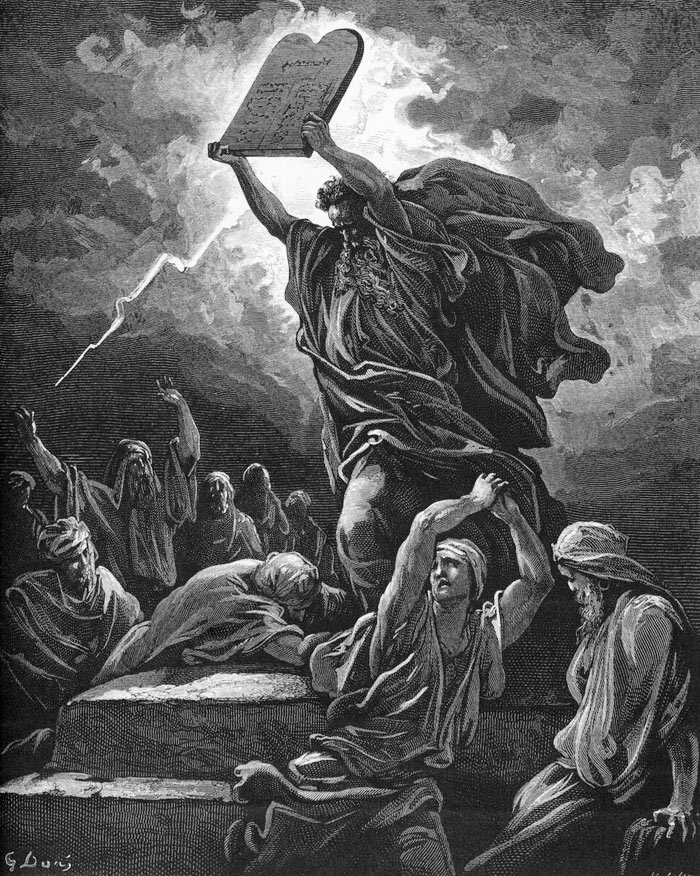
My philosophy is now that every single movie is a signpost of its time, and it should stand for that. We shouldn’t go back and change the parting of the Red Sea in Cecil B. DeMille’s “The Ten Commandments” just because with the digital tools we have now we can make it even more spectacular than it was.” Continue reading

Ethics Hero: Martin Scorsese

One of the most respectful and compassionate acts a human being can perform is to rescue the memory and achievements of a great man or woman from obscurity. Not only does this confer deserved longevity on the legacy of someone who has contributed something good and lasting to civilization and culture; it also is a gift to the rest of us, enriching our knowledge and perhaps providing us with inspiration as well.

This is what Martin Scorsese does for the early French film pioneer Georges Méliès in his new movie, “Hugo.”  The film is a fictionalized account of how Méliès, a producer, director, actor and special effects innovator, was rediscovered by film-lovers and his countrymen after years of discouragement and depression. In a nice piece of irony and symmetry, Scorsese’s film duplicates the phenomenon his movie describes. Forgotten after World War I, Méliès and his work were celebrated late in the 20’s, and he received long overdue acclaim and recognition, including France’s Legion of Honor. After his death in 1938, his contributions to the art and craft of cinema faded from public awareness a second time. Once again, thanks to “Hugo,” the public is learning Méliès’s name and being delighted and inspired by his creations. Continue reading

Ethics Quote of the Week: Charlie Chaplin

I’m heading to New York City shortly, and will make an effort to check out first hand the state of Occupy Wall Street. The nationwide protest seems to be waning in both intensity and public support, despite some hopeful, futile voices (like the New York Times editorial page) who persist in claiming that its message is “important.”

I’m not denying that it could be. At this point, however, it is in danger of redefining itself as (or, in my case, confirming the diagnosis) a self-indulgent, expensive mess that never succeeded or even tried to articulate its goals clearly enough to avoid overtaken by the worst side-effects of such protests: violence, damage to property, threats to safety, and harm to innocent bystanders. Yesterday, for example, having failed to disrupt the operations of Wall Street, the New York contingent decided to disrupt the subway system—the mode of transportation overwhelmingly used by “the 99%.”

Stupid.

Words and clear thinking are not only helpful, but an obligation for those seeking social change.  As an example of how words can inspire, I offer this, the speech that Charlie Chaplin wrote and delivered at the end of his film, “The Great Dictator.” I am far from four-square with Chaplin’s politics, but he knew how to craft an inspiring rally to change—exactly what the “Occupy” should have done. Then, at least, we would recall it for what it aspired to, rather than all the annoyance and cynicism it launched. Here is a link to an editorially enhanced version of the scene and here is the text: Continue reading

My 15 Hollywood Cures For A Paterno-Penn State-Sandusky Hangover, Part 2

Part 1 listed the first seven of my 15 cinematic remedies for Penn State-inspired ethics ennui. Part 2 includes the final eight. Please don’t take the order too seriously; I could have shuffled the whole batch. I also tried to include as many genres as possible. When it comes to ethics, good lists can be compiled using all Westerns, all sports movies, all war movies, courtroom drama or science fiction. Here we go…

8Spartacus (196o)

The raw history is inspiring enough: an escaped gladiator led an army of slaves to multiple victories over the Roman legions in one of the greatest underdog triumphs ever recorded. Stanley Kubrick’s sword-and-sandal classic has many inspiring sequences, none more so than the moment when Spartacus’s defeated army chooses death rather than to allow him to identify himself to their Roman captors (“I am Spartacus!”)

Ethical issues highlighted: Liberty, slavery, sacrifice, trust, politics, courage, determination, the duty to resist abusive power, revolution, love, loyalty.

Favorite quote: “When a free man dies, he loses the pleasure of life. A slave loses his pain. Death is the only freedom a slave knows. That’s why he’s not afraid of it. That’s why we’ll win.” [Spartacus (Kirk Douglas)] Continue reading

Ethics Quiz: Is There An Ethical Obligation To Help An Actress Lie About Her Age?

An actress who is, so far, unidentified is suing Amazon.com in federal court for over $1 million in damages for disclosing her age on its Internet Movie Database website, and refusing to remove the reference when she requested, then demanded, that it do so.

She says that IMDb misused her personal information after she signed up for the “industry insider” IMDb Pro service in 2008. Soon she saw that her legal date of birth had appeared on her online acting profile. IMDb refused to remove it.

Now, she says, she is being discriminated against in Hollywood for her age (40), as is its custom. Producers won’t hire her for younger roles, because she’s now regarded as “too old.” Yet she can’t get older roles either, because she still looks much younger. The lawsuit seeks $75,000 in compensatory damages and $1 million in punitive damages.

Your Ethics Quiz question of the day:

Did the Internet Movie Data Base do anything unethical by publishing the actress’s real age without her permission? Continue reading

The Ten Commandments for Ethical Reviewers

Film critic Roger Ebert’s autobiography is out, and I’m sure it’s terrific: Ebert is a lively writer, and he has many good stories to tell. One tale from the book that has been recounted in several  reviews, however, caused me to slap my forehead. Ebert says that he adopted longtime New Yorker film critic Pauline Kael’s approach to film reviewing, which she wrote was, “I go into the movie, I watch it, and I ask myself what happened to me.”

Ah HA! That’s why Pauline Kael was such a destructive film reviewer, and the predominance of her attitude is why reviewers of stage and film do far more damage than good. Once upon a time, when critics had professional standards and cared about fairness, the accepted approach of someone who reviewed films or plays for public consumption wasn’t how a work made the critic feel, but rather how it was likely to make a typical audience member feel. It doesn’t take much insight to decide whether one likes a play or a movie; anyone can do that. Continue reading

Ethics Hero Emeritus: Marlene Dietrich (1901-1992)

The great Marlene Dietrich, Ethics Hero

It was on this date in 1992 that the magnificent Marlene Dietrich died, in her sleep, in her Paris apartment at age of 91. She had hidden her face from the world since she had stopped performing over a decade before, saying that the public should remember her as she had been. Sadly, Dietrich is one of those former icons of Hollywood whom the public is slowly failing to remember anything about at all; most are more familiar with Madeleine Kahn’s send-up of her in the Western spoof “Blazing Saddles” than they are with Marlene herself. That is wrong, for she deserves better. Not only was Marlene Dietrich a unique performer and important cultural figure, she was also an Ethics Hero.

She was a rising German stage and screen actress when director Josef von Sternberg cast her as Lola-Lola, the beautiful, cynical leading character in “Der blaue Engel,” (The Blue Angel), Germany’s first talking film. The movie made Dietrich a star. Von Sternberg took her with him when Hollywood beckoned and signed her with Paramount Pictures. There Dietrich built her image and legend by perfecting her femme fatale film persona in a series of classic films directed by her mentor: “Morocco” (1930), “Dishonored” (1931), “Shanghai Express” (1932), “Blonde Venus” (1932), “The Scarlet Empress” (1934), and “The Devil Is a Woman” (1935).

Meanwhile, she had already begun fighting Hitler’s regime. Continue reading

Oscar, Jean Luc-Godard, and the Ethics of Honoring Talented Creeps

The Academy of Motion Picture Sciences will be giving an honorary Oscar to French director Jean-Luc Godard, and nobody who knows anything about film can object to the award on the basis of merit. Godard is one of the most influential film makers who ever yelled “Cut!;”  there are dozens of film classes about his work in schools all over the country. He makes great movies, and has for decades. He deserves the honor.

Or does he? Mr. Godard, it seems, has also been resolutely anti-Jewish, at least in his sentiments, for almost as long as he has been making classic films. Some in the industry and without are questioning whether Hollywood should be honoring a likely Anti-Semite.

Excuse me…did I miss something? When did the rest of the Oscars get junked, leaving only the Jean Hersholt Humanitarian Award? Continue reading