
Ethics Quiz: Is There An Ethical Obligation To Help An Actress Lie About Her Age?

An actress who is, so far, unidentified is suing Amazon.com in federal court for over $1 million in damages for disclosing her age on its Internet Movie Database website, and refusing to remove the reference when she requested, then demanded, that it do so.

She says that IMDb misused her personal information after she signed up for the “industry insider” IMDb Pro service in 2008. Soon she saw that her legal date of birth had appeared on her online acting profile. IMDb refused to remove it.

Now, she says, she is being discriminated against in Hollywood for her age (40), as is its custom. Producers won’t hire her for younger roles, because she’s now regarded as “too old.” Yet she can’t get older roles either, because she still looks much younger. The lawsuit seeks $75,000 in compensatory damages and $1 million in punitive damages.

Your Ethics Quiz question of the day:

Did the Internet Movie Data Base do anything unethical by publishing the actress’s real age without her permission? Continue reading
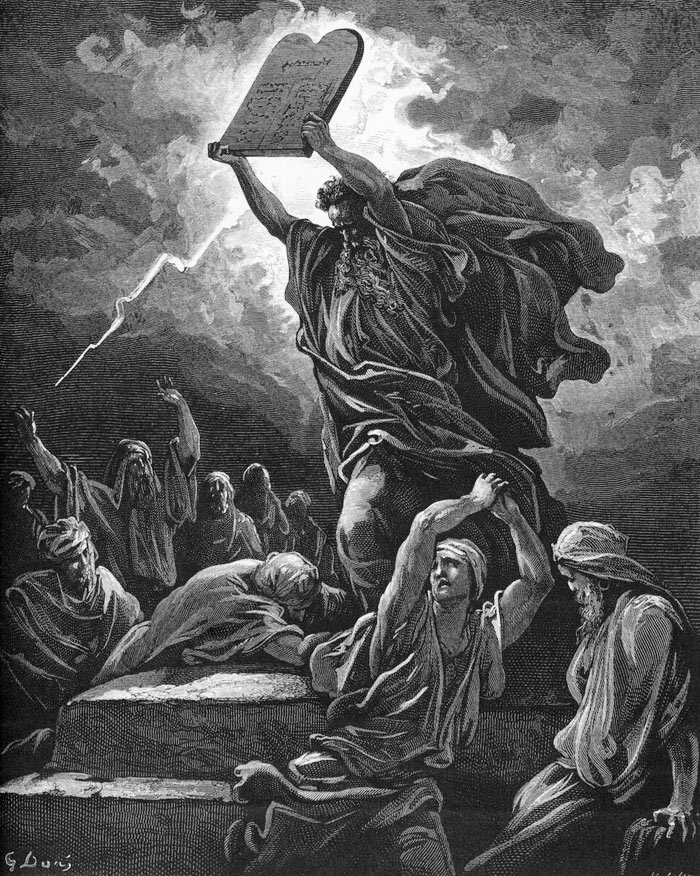
The Ten Commandments for Ethical Reviewers

Film critic Roger Ebert’s autobiography is out, and I’m sure it’s terrific: Ebert is a lively writer, and he has many good stories to tell. One tale from the book that has been recounted in several  reviews, however, caused me to slap my forehead. Ebert says that he adopted longtime New Yorker film critic Pauline Kael’s approach to film reviewing, which she wrote was, “I go into the movie, I watch it, and I ask myself what happened to me.”

Ah HA! That’s why Pauline Kael was such a destructive film reviewer, and the predominance of her attitude is why reviewers of stage and film do far more damage than good. Once upon a time, when critics had professional standards and cared about fairness, the accepted approach of someone who reviewed films or plays for public consumption wasn’t how a work made the critic feel, but rather how it was likely to make a typical audience member feel. It doesn’t take much insight to decide whether one likes a play or a movie; anyone can do that. Continue reading

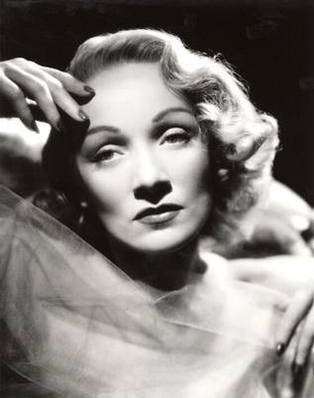
Ethics Hero Emeritus: Marlene Dietrich (1901-1992)

The great Marlene Dietrich, Ethics Hero

It was on this date in 1992 that the magnificent Marlene Dietrich died, in her sleep, in her Paris apartment at age of 91. She had hidden her face from the world since she had stopped performing over a decade before, saying that the public should remember her as she had been. Sadly, Dietrich is one of those former icons of Hollywood whom the public is slowly failing to remember anything about at all; most are more familiar with Madeleine Kahn’s send-up of her in the Western spoof “Blazing Saddles” than they are with Marlene herself. That is wrong, for she deserves better. Not only was Marlene Dietrich a unique performer and important cultural figure, she was also an Ethics Hero.

She was a rising German stage and screen actress when director Josef von Sternberg cast her as Lola-Lola, the beautiful, cynical leading character in “Der blaue Engel,” (The Blue Angel), Germany’s first talking film. The movie made Dietrich a star. Von Sternberg took her with him when Hollywood beckoned and signed her with Paramount Pictures. There Dietrich built her image and legend by perfecting her femme fatale film persona in a series of classic films directed by her mentor: “Morocco” (1930), “Dishonored” (1931), “Shanghai Express” (1932), “Blonde Venus” (1932), “The Scarlet Empress” (1934), and “The Devil Is a Woman” (1935).

Meanwhile, she had already begun fighting Hitler’s regime. Continue reading

Oscar, Jean Luc-Godard, and the Ethics of Honoring Talented Creeps

The Academy of Motion Picture Sciences will be giving an honorary Oscar to French director Jean-Luc Godard, and nobody who knows anything about film can object to the award on the basis of merit. Godard is one of the most influential film makers who ever yelled “Cut!;”  there are dozens of film classes about his work in schools all over the country. He makes great movies, and has for decades. He deserves the honor.

Or does he? Mr. Godard, it seems, has also been resolutely anti-Jewish, at least in his sentiments, for almost as long as he has been making classic films. Some in the industry and without are questioning whether Hollywood should be honoring a likely Anti-Semite.

Excuse me…did I miss something? When did the rest of the Oscars get junked, leaving only the Jean Hersholt Humanitarian Award? Continue reading

Avocations and Conflicts of Interest, Part II

As if to give ethical guidance to conflicted umpire Joe West, a similarly conflicted judge has shown Country Joe the way by quitting the bench to avoid ethical conflicts.

Admittedly, the ethical issues surrounding independent filmmaker/ New Jersey Judge Kenneth Del Vecchio are a little bit different from Joe’s. One of his creative efforts was called “O.B.A.M. Nude,” and was a satirical critique of the President, though Del Vecchio played the Obama-like hero himself. A judicial ethics panel opined that his film exploits raise the specter of an ethical conflict under the Code of Judicial Conduct, presumably including the section that reads, Continue reading

Why Professional Reviewers Are Unethical, and Why We’ll Be Better Off Without Them

When Variety recently announced that it was firing its in-house film and drama critics, there was much tut-tutting and garment-rending over the impending demise of professional reviewing in magazines, newspapers and TV stations. The villain, the renders cry, lies, as in The Case of the Slowly Dying Newspapers, with the web, which allows any pajama-clad viewer of bootleg videos to write film reviews, and any blogger who cares about theater to write a review of a play. “I think it’s unfortunate that qualified reviewers are being replaced,” said one movie industry pundit, “but that’s what’s happening.”

I say, “Good. It’s about time.” (And also: QUALIFIED?”) If there has ever been an excessively influential non-professional profession that caused as much damage as reviewing, I’m not sure I want to know about it. The end of full-time film and drama critics as we know them can only prove to be a boon for artists and audiences alike. Continue reading

Fracking Ethics

The Eric Massa affair quickly revealed itself as the spectacle of a foolish, narcissistic, dishonest man trying to milk every drop of attention out of the well-deserved implosion of a political career that never should have begun in the first place. Fortunately, there was a side benefit: its reporting by the media exposed the dishonesty of the practice of fake civility. Genuine civility is one of the foundations of ethical conduct, though admittedly a shaky one right now. Fake civility, however, is cynical, dishonest, disrespectful and, on top of all that, silly and ineffective.

One of the inappropriate supervisory moments that punched Massa’s ticket out of Congress was that he told a male staffer, in the presence of others, that “I should be fucking you.” Someone at the Mainstream Media High command issued a memo that the gentile and classy way of reporting this statement was “I should be fracking you.” Not that there was any pretense about what the word signified. On the Headline News morning show with giggly news-bimbo Robin Meade (an in-your-face insult to every serious female broadcast journalist in America), Meade listened to the “fracking” account and said—every one of the times the story was repeated during the program— some version of “Gee, I never heard that word before (giggle)!” Whereupon the newsreader replied with some form of “I know (snicker) neither have I!” They were far from the only ones. Dana Milbank used the same code in his account of Massa’s messes in the Washington Post.  “Fracking” is the euphemism of the week. Continue reading