Comment of the Day: “Murder House Ethics and the Validity of Feelings”

"Oh THAT! You would have cared about THAT?"

Tgt, the ghosts of whose earlier argument in series of comments haunted me prompted a revisit to the issue of murder houses and a seller’s obligation to reveal their history to potential buyers, came back with this Comment of the Day, thought-provoking, as usual:

“…I still want to know the line that determines what ethically does and does not need to be disclosed. It was never settled. This post generally boils down to another emotional appeal that something should be done in some cases. I want to know which cases and why those. Otherwise, my argument holds fast. I don’t see multiple murders (the latest clearly having nothing to do with the earlier ones) as being any more relevant than one murder.

“I also believe Jack misrepresented my position on emotion in general. Us rational humanists still mourn our dead, though we try to celebrate their lives more than anything else. While humans are not special in the concept of the Universe, we understand that we are special to ourselves and in our relations with other people. Humanism is about celebrating human life and relationships.

“As for death specifically, I see no need of a grave or burial rites. A dead body is just decomposing flesh. It does not need to be prayed for and cleansed. The person though, the lasting effects they have had on others, the memories of them – these are all important. I cried when a somewhat distant high school friend died in a freak accident at 17. I sent his family flowers on the anniversary of his death for the next 2 years. Why? Because it let his family know that he wasn’t forgotten, that he made an impact on other lives. It let them knew that people cared… people they only knew by name. I cherish the cards they sent in response. Continue reading


Murder House Ethics and the Validity of Feelings

We last visited the issue of the ethical selling of murder houses in February, when  the Jon Benet Ramsey house went on sale. I opined that even though Colorado doesn’t have a legal requirement that a seller must reveal the history of the house as long as it has no structural implications, there is an ethical obligation to let prospective buyers know about house-related events that might cause them to reconsider their decision to buy it:

“The truth is still this: there is something about the $2,300,000 house that makes it undesirable to a lot of prospects, and that means that even if the law doesn’t require the seller to tell interested house-hunters the story of the little dead girl in the basement, fairness and the Golden Rule do.”

The debate over this issue was unexpectedly intense. Ethics Alarms’ resident rational humanist “tgt” objected strenuously, writing,

“I don’t see how you can avoid the slippery slope question. Your basis is 50% of the population having a desire. Is that the cutoff? I think over 50% of people would prefer to live in a house where there hasn’t been child abuse. Go back a few years, and I bet a significant portion of the population would prefer to live in a house that had never had black occupants. Back in today’s world, more than 50% of the population doesn’t want to live in a haunted house. If a previous tenant thought the house was haunted, does the complete nonexistence of ghosts make not mentioning this a material representation? If an event is uncommon, does a realtor need to take a poll before deciding what is material and what isn’t?”

Karl Penny, however, bolstered my position:

“…the question is, does the realtor have an ethical obligation to fully reveal the history of this house. Well, the funny thing about behaving ethically is, it often requires us to act in ways that are not in our own immediate best interest… this may give a potential buyer a leverage point to negotiate a lower price for the house, to the detriment of the realtor, who could end up taking a lower commission as a result. No surprise, then, that the realtor would love to find a reason not to opt for full disclosure. But, if that realtor successfully conceals the house’s history from an actual buyer, one who would not have bought had they known otherwise? The realtor had a simple, human duty to disclose, even if it cost him money (and, yes, even if it cost me money, were I the realtor)….Jack’s right: this is Golden Rule time. If I am willing to treat with someone else in a way that I would not want anyone to treat with me, is that logically consistent (much less ethically consistent)? And would any of us want to live in the resulting society should everyone behave in that fashion?”

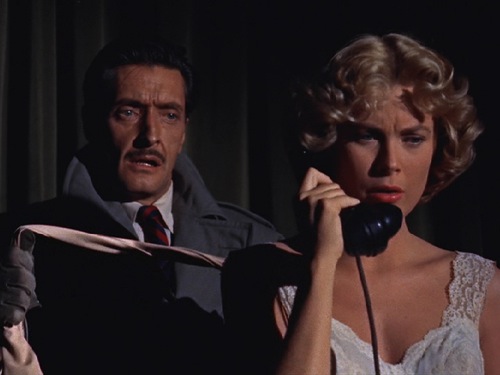
Now another house with a Hitchcock-worthy past is on the market: 9337 Columbia Boulevard in Silver Spring, Maryland, a state that also doesn’t require its realtors to disclose when a house has been the scene of a murder…or, in this case, three murders in the last decade. Continue reading

Sending Teenagers To Prison Forever

He's only 14. Could he really be irredeemable?

The Wisconsin Supreme Court has upheld a life sentence for a man who helped throw a boy off a parking ramp when the prisoner was only 14 years old. At issue was whether sentencing someone to life imprisonment without parole for a crime committed at such a young age was prohibited by either the U.S. or the Wisconsin Constitution. The Court ruled not, finding that no national consensus has formed against such sentences.

I can accept that this is the proper legal standard, and that the decision may be correct regarding the law. It is also ethically wrong.

All such problems involve line-drawing and its well-known slippery slopes: if a 19-year old can be sentenced to jail forever, how different is an 18-year-old? 17? 16? Before you know it, we are sentencing 6-year-olds to life imprisonment. We do not have to fall into that trap, however, to declare that it is unethical, though legal, to sentence a 14-year-old boy to an endless jail term. Why? The sentence lacks compassion, mercy, proportion and common sense.

Certainly the crime was a horrible one. Omer Ninham was convicted of first-degree intentional homicide for his role in the death of 13-year-old Zong Vang  in 1998. Ninham and four others between the ages of 13 and 14 accosted the boy  as he was riding his bike home from the grocery store. Ninham and another member of the group teased Vang, punched him, and when Vang ran into a nearby hospital parking ramp, assaulted him on the top floor. Ninham and a friend seized Vang by the wrists and ankles, and as Vang screamed for help, threw him over the edge. He fell five stories, and hit the ground “like a wet bag of cement hitting the pavement,” as a witness put it. Two years later, when Ninham was 16, a judge sentenced him to life without parole. Continue reading

In Search of Accountability, Fairness, Justice and a Champion: the Unending Persecution of Anthony Graves

Job would pity Anthony Graves

Governments and other bureaucracies are capable of unimaginable callousness, stupidity, and wrongful conduct, allowing individual fools to multiply their power to harm exponentially, and then to see an inhuman computer-driven monstrosity run amuck as everyone denies responsibility. You could not devise a better example of this process than what Texas is doing to Anthony Graves.

He is an innocent man convicted of murder in 1994 who was released last October after spending 18 years in prison, condemned to death. He had been convicted with fabricated evidence and coached testimony employed against him by former Burleson County District Attorney Charles Siberia, and a state investigation got a Texas judge to set Graves free. But the maw of Texas bureaucracy wasn’t through ruining his life. Continue reading

Why I Hate Hate Crime Laws

Just do it with love, and they'll be lenient...

I did it to myself, I confess: reminding myself of the nation’s offensive hate crime laws while writing about the McDonald’s beating, pausing in the middle of the main theme of the post to note the foolishness of investigating whether or not an unprovoked attack qualifies as a hate crime. Hate crime laws infuriate me every time I think about them, because they represent the lowest and most cynical form of cultural values-setting by lawmaking, an important governmental task that is increasingly a lost art, because today’s lawmakers care more about posturing and power than values.

Two unidentified men beat Bryan Stow, a 42-year-old paramedic, senseless in the parking lot outside Dodger Stadium on opening day. Why? He was wearing a San Francisco Giant jersey, and it was Dodger territory. Continue reading

“Lethal Advocacy”: Not Ethical, and Not Protected Speech, Either

"Go ahead! Jump! You know you want to!"

William Melchert-Dinkel, aged 48, posed as a female nurse in internet chat rooms and preyed on depressed people by talking them into killing themselves.  A misguided mission? A perverted hobby? A salesmanship challenge? Who knows. But occasionally, he was successful.

Melchert-Dinkel was charged with assisting suicides after he encouraged IT technician Mark Drybrough, of Hillfields, Minnesota, to kill himself. Drybrough, who was recovering from a nervous breakdown, received e-mails from Melchert-Dinkel, found on his computer, containing detailed advice on how Drybrough could hang himself. He used that advice to commit suicide in 2005. Melchert-Dinkel also provided encouragement and guidance to Canadian Nadia Kajouji,  18, who drowned herself by leaping into an icy river in 2008. Continue reading

“The Strange Case of the Threatening Hypothetical”, Continued: The Verdict Is In!

The Victim

Lawrence Connell, the Widener School of Law criminal law professor placed on administrative leave for using the school Dean in a “violent scenario” to illustrate legal principles to his class, has given a revealing and clarifying interview to the National Association of Scholars website.

This section is most relevant to his current plight, and the fairness of complaints leveled against him by some of his students. It’s also about one of my favorite topics in criminal law, attempt law, which has a significant ethical component, as you will see. But the main point of interest is that includes one of the supposedly racist, sexist, threatening hypotheticals he used.

Q: Can you give me an example of a hypothetical you might have used in class, to which the students who complained might have been referring? Can you describe the context in which you would have used it? Continue reading

Comment of the Day: “How Not To Promote Tolerance and Undersatnding of Muslim Culture

From Jeff, a.k.a. King Kool, discussing a Muslim TV executive’s murder and beheading of his wife, who with him founded a New York tlevision channel aimed at promoting better understanding and less fear of Muslims:

“…This will certainly not promote tolerance, but in its own horrible way, it might promote understanding. On the one hand, all variety of men are capable of producing the sort of person who would sooner slay their significant other to avoid the shame of divorce. In a strange way, this just says that they’re just like anyone else.

On the other hand, the misogyny that is integral to some people’s practice of the religion is something that should be held to higher scrutiny. Continue reading

How Not To Promote Tolerance and Understanding of Muslim Culture

Here is how it works: When a Muslim couple sets up television station specifically for the purpose of advancing understanding and tolerance of Muslims in America, the couple also creates a duty to further that goal by  their own personal behavior. It would be more damaging for the proprietors of a station with such an important goal to be implicated in a terror plot, for example.  Muslims doing so while claiming to be devoted to bridging the chasm of distrust between America and Islam would make the chasm deeper, perhaps deeper than the usual, garden variety Radical Islamic terrorist plot.

Another no-no for such a couple, I’d say: the husband stabbing the wife to death and cutting off her head. Continue reading

Abortion Ethics: The Delusions of P.Z.Myers

Mere “Ethics Dunce”-dom doesn’t suffice for P.Z. Myers, gonzo biologist and professor who writes the intermittently enlightening, frequently infuriating blog, Pharayngula. Writing about the horrific case of Dr. Kermit Gosnell, an abortionist/quack/butcher whose method would make him a likely model for an episode of “Criminal Minds,” Myers wrote this, referring to the charges against him based on the fact that his version of “abortion” consisted, in at least seven cases, of inducing a live birth and murdering the baby afterwards, with a scissors: Continue reading