Halloween Ethics Shocks, 10/31/2020: Boo!

1. There is absolutely no good reason to kill Halloween this year because of the Wuhan virus, but that appears to be what the fear-mongered flock is going to do. Children as well should know by now, are at about as much risk from this virus as any other, everyone is wearing masks anyway, and how hard is it to find ways to drop candy in bags?

Mark this down as one more little joy young lives are losing out on due to a) adult hysteria and b) partisan scaremanship. We never get many Trick-or-Treaters anyway, but I hereby announce that any costumed kids that drop by 2707 Westminster Place in Alexandria, Virginia will receive extra-generous treats for their spirit of adventure.

2. Not that they haven’t been trying to scare kids out of the tradition long before thisHere, for example, is an article that gratuitously warns us that “marijuana edibles” can look a lot like candy, so parents should be extra vigilant—never mind that pot treats are about ten times more expensive than candy, and the likelihood of any stoners slipping those into the TOT bags instead of peanut butter cups are about the same as the odd of my voting for Joe Biden next week. Poisoned Halloween candy is a hoary urban legend: there are no recorded cases of its, except the monstrous father who poisoned his own son’s Halloween haul to collect on an insurance policy. (That doesn’t count.)

Continue reading

Ethics Quote Of The Month: Time Op-Ed Writer Bret Stephens

shhhh

“It’s a compromise that is fatal to liberalism. It reintroduces a concept of blasphemy into the liberal social order. It gives the prospectively insulted a de facto veto over what other people might say. It accustoms the public to an ever-narrower range of permissible speech and acceptable thought. And… it slowly but surely turns writers, editors and publishers into cowards.”

Bret Stephens, intermittently conservative New York Times columnist, in an op-ed condemning the acceptance of censorship and self-censorship as norms by the modern Left.

Stephens is certainly on a roll lately. His previous column (effectively and accurately) condemning the pet Times race propaganda “1619 Project” for what it is (that is to say, cultural and historical toxic waste) was not his last, as many predicted, and apparently emboldened by his survival, Stephens is determined to “let it all hang out,” as they used to say in the Sixties. Once again, he is attacking his own paper, which has doubled-down in its determination to publish only the news it feels safe to let its readers know about.

It is telling that Stephens’ column was published in tandem this week with another attempt by the Times to hide the utter corruption of the Biden family from the public, at least until the election is over. Above the Stephens piece—also telling—is the poisonous Michelle Goldberg’s screed suggesting that the discovery of Hunter Biden’s incriminating (to both him and his father) laptop is more GOP “collusion.” The Times’ truly despicable headline: “Is the Trump Campaign Colluding With Russia Again?” Note “Again”: the Mueller investigation found no evidence of “collusion” by any American citizen, much less the Trump campaign (to be fair, it didn’t investigate the Clinton campaign’s Russian dealings), and yet the Times allows that lie to lead its Editorial page. Polls show (I know, I know: polls) that over 70% of Democrats still think the President won the election by colluding with Russia, and mainstream media descriptions like this is a main reason. And it’s intentional.

Continue reading

Morning Ethics Wake-Up, 10/20/2020: Being Kind To Jeffrey And Other Matters

happy wake-up

1. Time to leave Jeffrey Toobin alone in his misery. I assume this will be an awful day in an awful week for poor Jeff Toobin, now that the full story of his Zoom debacle is out and being commented upon in the social media.  I would like to make an appeal for the mirth and ridicule to be cut short and minimized. It isn’t a case of “he’s suffered enough.” It’s a case of “he’s going to suffer as much as its possible for a human being to suffer without being convicted of a crime and thrown in jail even if nobody says another thing about him in public.” This hasn’t happened before to a public figure: the closest was Anthony Weiner’s sexting women, and as humiliating as that was, it doesn’t come close to what Toobin’s Zoom botch has done to the legal analyst’s career, reputation and dignity.

I hope his family is standing by him; I hope he has a group of loyal and compassionate friends who will care for him now; I hope the popular culture shows that it is capable of compassion, though my optimism on the latter point is far from high. I fear for his life. I was trying to imagine something as emotionally devastating as Toobin’s level of personal and professional humiliation, and my mind kept flipping to the end of  the ugly thriller “Seven,” when police detective Brad Pitt murders serial killer Kevin Spacey after having a package delivered to him containing Pitt’s young wife’s severed head. Pitt’s character, who is presumably on his way to a long stay in a padded room, is actually better off than Toobin: at least he is completely blameless.

It’s not a good analogy, but it’s all I can think of.

Ethics Alarms will not be mentioning the Toobin-Zoom affair again. But before we never speak of this again, let me mention that in Ann Althouse’s blog post on the topic yesterday she wrote (in addition to “This may be the stupidest thing I have seen in 17 years of blogging”), “Who believes he thought he was off camera? Even if he thought he had “muted the Zoom video,” how could he not make absolutely sure before bringing his penis out…?”

I don’t know what goes through Ann’s mind sometimes. Did she think Toobin would deliberately torpedo his life? Of course he thought he was off camera!

Continue reading

Wednesday Ethics Wind-Down / Thursday Ethics Warm-Up, 10/14-15/2020: The Unmasking Of News Media And Social Media Bias Continues…[UPDATED!]

phantom-of-the-opera

1. Notes from The Great Stupid. Here is a passage from a New York Times book review of “The Tragedy of Heterosexuality”:

In examining the pressure to partner with the opposite gender we find the extortions of capitalism, the misogyny of violence against women, the racist and xenophobic erasure of nonwhite families, and the homophobic hatreds that pervade so much of everyday life.”

Well, that and the biological imperative to continue the species. This brilliance is the work of Haley Mlotek,  a senior editor for SSENSE. Imagine: this is the quality of thought among our intellectual class.

No wonder the political class is so idiotic.

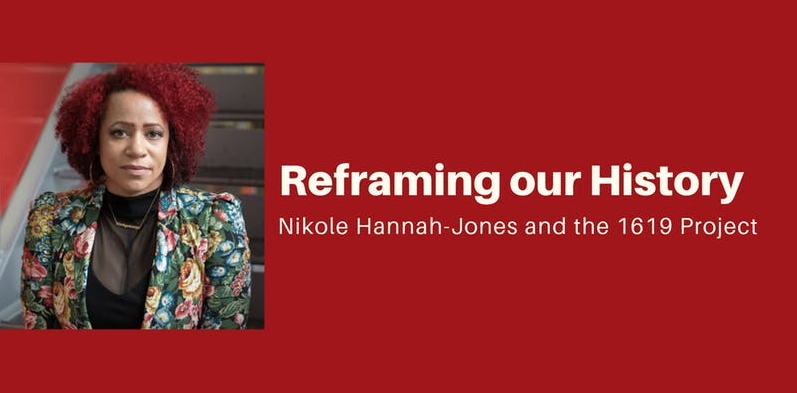
2. So this is a Pulitzer Prize winning journalist, is it? Nikole  Hannah-Jones, faced with a careful and accurate fisking of her fraudulent “1619 project” by Times columnist Bret Stephens (covered by Ethics Alarms here) did not try to rebut him, or make a civil, reasoned argument. She did what her entire generation of prominent African Americans have been conditioned to do, because it works so well. She accused Stephens and the Times of racism, with a dash of sexism for flavor. Hannah-Jones tweeted,

“In 1894, the NYT called Ida B. Wells a ‘slanderous and nasty-minded mulattress’ for daring to tell the truth about lynching. 100 years later she earned the Pulitzer Prize. These efforts to discredit my work simply put me in a long tradition of [black women] who failed to know their places.”

(It is satisfying to watch the Washington Post pounce on the Times over this fiasco. The rivalry between the papers is one of the few factors that ever pushed one of them into practicing actual journalism these days.)

As for Nikole Hannah-Jones, she is a child. Her tantrum was irresponsible and an embarrassment to the Times, and she should, by rights, be fired. She won’t be, because of black privilege, now enhanced in the wake of the George Floyd Ethics Train Wreck. The embarrassment for the Times, however, will linger. This woman was given leave by the paper to create and promote a false historical narrative that was not designed to enlighten but to further a political agenda. In truth, the Times deserves the embarrassment even more than Hannah-Jones deserves to be fired.

Continue reading

Ethics Hero: New York Times Op-Ed Columnist Bret Stephens

1619

Bret Stephens has been criticized on this site for regularly failing his alleged assignment of bringing a principled conservative voice to the New York Times op-ed pages, and seeming to yield to the strongly biased culture of the uenthical paper that employs him.

In his most recent column, however Stephens courageously and unblinkingly calls out the New York Times’ controversial “1619 Project” for what it is—dishonest, misleading, falsified—oh, let’s not mince words— crap. [Ethics Alarms discussed the “1619 Project” and its unethical creator, Times reporter and race activist Nikole Hannah-Jones, here] Josh Blackmon, for example, writing at Reason, thinks that the columnist metaphorically biting the hand that feeds him will mark the beginning of the end of Stephens at the Times. After all, a Times editor recently resigned after the paper’s Jacobins called for his head for daring to allow a Republican Senator to voice an opinion that went against the Times’ view of the world. Stephens has gone far, far beyond that.

He knows it, too. At the end of his dissection of the bad history and unethical journalism that disgracefully won the Times a Pulitzer Prize, the columnist writes,

For obvious reasons, I’ve thought long and hard about the ethics of writing this essay. On the one hand, outside of exceptional circumstances, it’s bad practice to openly criticize the work of one’s colleagues. We bat for the same team and owe one another collegial respect.On the other, the 1619 Project has become, partly by its design and partly because of avoidable mistakes, a focal point of the kind of intense national debate that columnists are supposed to cover, and that is being widely written about outside The Times.

To avoid writing about it on account of the first scruple is to be derelict in our responsibility toward the second.All the more so as journalists, in the United States and abroad, come under relentless political assault from critics who accuse us of being fake, biased, partisan and an arm of the radical left. Many of these attacks are baseless. Some of them are not. Through its overreach, the 1619 Project has given critics of The Times a gift.

Continue reading

Afternoon Ethics Jaunt, 10/5/2020: Our Unethical Journalists

Strolling

1. Multiple head explosion alert from the “Nah, there’s no mainstream media bias” files. In the New York Times book Review section. Times business editor David Enrich reviews a book about Fox News by CNN’s fake news ethics watchdog Brian Stelter. The headline for the review is “Fox in the White House.” One would think a reputable book review editor would assign the reviewing of a book by CNN’s main shameless propagandist to a journalist who was at veery least sort of neutral, but no. Enrich is the author of “Dark Towers: Deutsche Bank, Donald Trump, and an Epic Trail of Destruction, “ and apparently incapable of exploiting  the hilarity when a biased and partisan hack like Stelter writes that “Fox News has become little more than a propaganda organ.” That is exaggerated but close enough for journalism horse shoes. However the man who constantly and shamelessly covers for CNN’s pro-Democratic and  anti-Trump propaganda is ethically estopped from making such  criticism, and Enrich disqualifies himself as an objective and honest reviewer when he writes, after noting that CNN is hardly objective, by writing,

“To be clear, there is no equivalence between the occasionally inaccurate and misleading “liberal media,” which generally owns up to its mistakes, and the highly productive factory of falsehoods at Fox.’

Generally owns up to its mistakes? GENERALLY OWNS UP TO ITS MISTAKES!!!!! Enrich’s own paper is one of the primary offenders. Is the key word here mistakes? Maybe that’s the trick: the biased, partisan, untrustworthy news media Enrich is a part of doesn’t own up, because its distortion of the news, like Stelter’s, isn’t a mistake.

OK, I’m going to start the timer…NOW. It’s 2: 17 PM. How long before I find an item debunking Enrich’s characterization? I think I’ll try Professor Turley’s blog: he’s almost as disgusted with the news media as I am. Annnd, TIME! I found one. It’s 2:21 pm….

“The New York Times on Thursday published an opinion column by Regina Ip, the Hong Kong official widely denounced as “Beijing’s enforcer.” Ip declared “Hong Kong is part of China” and dismissed the protesters fighting for freedom in their city.  I have no objection to the publishing of the column. Ip is a major figure in Hong Kong and, despite her support for authoritarian rule and crushing dissent, there is a value to having such views as part of the public debate. Rather, my concern is that the New York Times was denounced by many of us for its  cringing apology after publishing a column by Sen. Tom Cotton (R, Ark.). and promising not to publish future such columns. So it will not publish a column from a Republican senator on protests in the United States but it will publish columns from one of the Chinese leaders crushing protests for freedom in Hong Kong.’

Of course, the apology for publishing an opinion that was not welcomed by the Left wasn’t a mistake. It was a reaffirmation of the Times’ deliberate bias.

Continue reading

Observations On The Trump Tax Returns Dud

Someone at the IRS finally leaked the President’s taxe returns to the Times. That’s a crime, just as it would be if someone leaked my taxes or yours. Of course, this was inevitable, filled as the government bureacracy is with unethical employees who feel it is their duty to try to undermine their ultimate supervisor. Those who cheer on this per se wrongful conduct are enabers and rationalizers.

Other points:

1. In “An Editor’s Note on the Trump Tax Investigation,” the Times felt it necessary to remind readers, “Some will raise questions about publishing the president’s personal tax information. But the Supreme Court has repeatedly ruled that the First Amendment allows the press to publish newsworthy information that was legally obtained by reporters even when those in power fight to keep it hidden. That powerful principle of the First Amendment applies here.” That’s right, the news media has a right to encourage others to break the law and to publish the results. It’s still unethical, except in the rare circumstances where the public interest is indisputably served by furthering an illegal act, as with (arguably) the Pentagon Papers. Publishing documents protected by law that show no wrongdoing only to encourage partisan attacks in an election year is not such a situation.

The Times can’t be punished, but whoever leaked the documents can, and should.

2. I guess this is the time to post this tweet by CNN’s Brain Stelter, which proves his stunning ethical deficits as well as anything he has ever said on CNN. He was responding to another tweet pointing out that leaking tax returns is a crime, as I just did.

Oh! So if Stelter knows he has received embezzled funds from a bank employee, Stelter can spend the cash on a hairpiece because the thieving employee had legal access to the cash!

Has any news network simultaneously employed three dolts as mentally deficient as Stelter, Don Lemon, and Chris Cuomo? Continue reading

Thursday Ethics Warm-Up, 9/24/2020: It’s “Supreme Court Day”!

Literally!

On this day in 1789, The Judiciary Act of 1789 was passed by Congress and signed into law by President George Washington, thus establishing the Supreme Court of the United States. Notably, it was then designed as a tribunal made up of only six justices—an even number! (The Horror!)  President Washington quickly nominated John Jay to preside as Chief Justice, and John Rutledge, William Cushing, John Blair, Robert Harrison and James Wilson to be Associate Justices.  You should know Rutledge: he sings that cool song about slavery and the Triangle Trade  in “1776.”  You also should recall Wilson from that show—he’s the one slandered by being portrayed as a total weenie, which he most assuredly was not.  Two days later, the six appointments were confirmed by the U.S. Senate.

Nobody thought it was a big deal.

1. We knew the New York Times’ “1619 Project” was flagrant Black Lives Matter-inspired propaganda and based on lies, correct? Ethics Alarms discussed this when the Pulitzers honored the thing’s Liar in Chief, Nikole Hannah-Jones, who even admitted that it was really more about creating a useful “narrative” than accurately presenting history. Ben Crump, the serial race-hustler who gets huge damage settlements for family members of black victims of various tragedies by proclaiming the police and America as racist, cited  the “1619” project’s narrative yesterday while helping to incite riots. See? It works!

But the project is used in many school systems as “history,” and the central dishonesty was a problem, so the Times, without announcement or explanation, erased the central claim of the 1619 Project, which was that the year the first slaves were brought to Colonial Virginia was the “true founding” of the United States.

The  initial introduction to the Project, when it was rolled out in August 2019, stated that

The 1619 Project is a major initiative from the New York Times observing the 400th anniversary of the beginning of American slavery. It aims to reframe the country’s history, understanding 1619 as our true founding, and placing the consequences of slavery and the contributions of black Americans at the very center of the story we tell ourselves about who we are.

Sometime this year, the text became,

The 1619 Project is an ongoing initiative from The New York Times Magazine that began in August 2019, the 400th anniversary of the beginning of American slavery. It aims to reframe the country’s history by placing the consequences of slavery and the contributions of black Americans at the very center of our national narrative.

The change was discovered after Hannah-Jones denied  last week that the project’s core thesis was what she and the Times  had said it was. It “does not argue that 1619 is our true founding,” she said. Well, not any more. Continue reading

The Insidious News Media Disinformation Campaign [UPDATED]

In hundreds, maybe thousands of ways, large and small, every day, the mainstream media advances its slanted narratives.

For example, I just saw this in a Times piece about the BBC:

[T]wo billionaire media moguls are hatching plans for 24-hour news channels that would be politically opinionated, bringing the model of Fox News to a market dominated by the BBC’s studied impartiality.

The Fox News model! Not, say, the MSNBC model, or the CNN model, or the CBS, ABC, NBC models of fake “objectivity” slanted Left that made Fox News necessary, or even the New York Times model, but the Fox News model, because that’s where the fake news comes from!

And the BBC is anything but impartial.

This next one is a classic. Continue reading

Sunday Ethics Warm-Up, 8/23/2020, As If Anyone Needs To be Warmed Up Today…

Hot enough for ya?

1. False narrative, bad analogy. The popular media narrative is that President Trump is in a similar position to George H.W. Bush in 1988, when polls at this point showed him trailing Democratic Presidential nominee Michael Dukakis by a large margin. Conservative media had cited the comparison earlier this summer to make the simple point that being behind in the polls in July is relatively meaningless. Lately the mainstream media has been flogging the analogy in order to continue its doomsday prediction for the Trump campaign.

“Bush ’88 rally could be map for Trump ’20” is somehow deemed worthy of a front page spot in the Sunday Times. To begin with, that’s fake news of the “future news” variety. (“…or, it might not be.”) More importantly, it’s straw man: the article exists to to show that President Trump may not be able to prevail, because, you see, having begun with the false assertion that his situation is similar to Bush’s, the Times explains that the situations aren’t that similar at all. The bad analogy is created to rebut it.

In fact, the differences between the Bush challenge in 1988 and Trump’s in 2020 mostly favor the President. Bush was never a popular figure; he was distrusted by conservatives, and only was nominated because an epicly popular President, Ronald Reagan, anointed him as his approved successor. (Barack Obama, in contrast, avoided “anointing” Biden.) A strong Democratic opponent would have beaten Bush; Dukakis was weak. He was ahead in the polls when nobody outside of Massachusetts knew what  he was like. Trump has a large base of passionate supporters, something Bush never had. He is an incumbant (Bush was not), and if they run, incumbents almost always win. Bush was an awful debater; Trump has proven effective in debates. And while Dukakis was completely supported by the liberal wing of the party, Biden has critics on the hard left, among feminists (the non-hypocrite faction), and African Americans. The Democratic party of the 1980s had not spent four years trying to overturn an election. Moreover, polls are less reliable now than they were before news media bias began warping them, and Trump’s support, as the last election showed,  is especially hard to measure. Continue reading