“The Walking Dead” Ethics: The Toughest Leadership Dilemma Of All

“Michonne, you’re gone..these are words that Rick choke upon, my Michonne…

“Michonne, you’re gone..these are words that Rick should choke upon, my Michonne…

In the absence of “Homeland,” currently waiting for Claire Danes to get back in shape after becoming a mom, AMC’s “The Walking Dead” is the best ethics show on TV. Apocalypse ethics is instructive and fascinating, because it addresses ethical problems as they were originally considered, before laws, before enforcement methods, and before organized morality. The objective is survival and continuation of the tribe and the species, without abandoning all semblance of humanity.

Yesterday’s episode built to an ethical dilemma of major consequence; naturally, some reviewers thought this was boring. Rick, the former sheriff leading the (mostly) good guys through the zombie-filled wilderness that was once the United States, is trying to protect the group’s refuge, an abandoned prison, from the imminent attack of a larger, better-armed commune run by a deranged psycho who calls himself “the Governor.” A former member of Rick’s group who now consorts (cough!) with the Governor (and who has been rightly condemned as an idiot for doing so, since she either knows or should know that he has the basic instincts of Vlad the Impaler), attempts a mediation to avoid bloodshed, and Rick and the Governor meet to parley. Continue reading
What Al Should Have Said

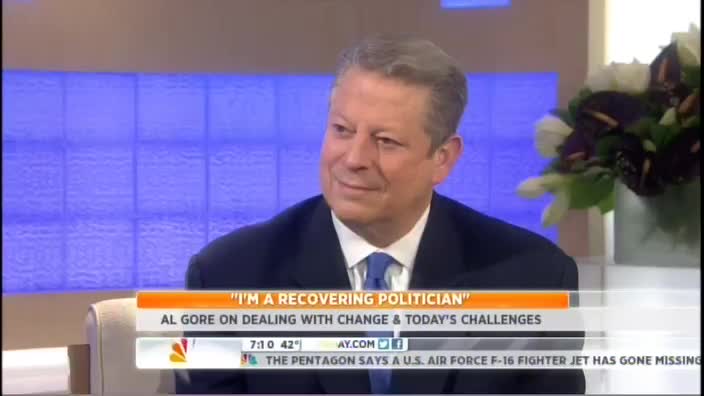
I have no illusions about Al Gore, but he will always occupy a warm place in my heart.

Gore

My first run-in with Al Gore was long ago. I had taken over the president’s job at a struggling national health promotion organization, and Sen. Gore was our angel in Congress. Health care screening was his mission back then, and he opened doors to sponsors, allies and funding around the country. Then, one day, he stopped answering our phone calls. We were curtly told that Sen. Gore was no longer the Herald of Preventive Health Care. Now he was the guru of something called “the information super-highway,” and we would have to fend for ourselves. (The organization went belly-up a year later). Thus I learned that Gore was nothing if not opportunistic, and perhaps not the guy you would want to be in a World War II foxhole with if he spoke fluent German.

Still, I can’t imagine how hard it must be to be the unlucky loser of the highest office in the land in one the nation’s rare popular vote/electoral vote splits, and I admire the fact that Al’s not in a rubber room by now. I thought his concession speech in 2000 was one of the high-points of political nobility during my lifetime, and the  Saturday Night Live appearance that was Gore’s farewell to politics will always stand as one of the bravest, quirkiest, saddest, funniest, most fascinating public breast-barings in media history. Al is a phony, and an opportunist, and I wouldn’t trust him as far as I could throw him, but he’s lived out a roller-coaster life in the hot lights of center stage, and I’m not certain I could do it any better. Continue reading

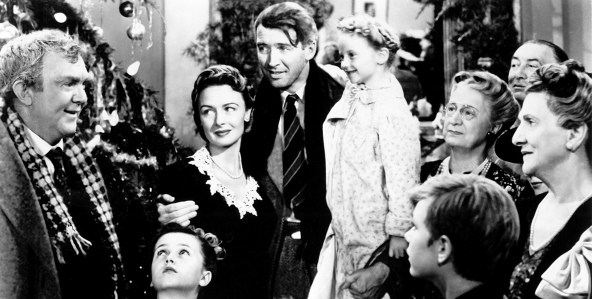
The Complete “It’s A Wonderful Life” Ethics Guide [UPDATED]

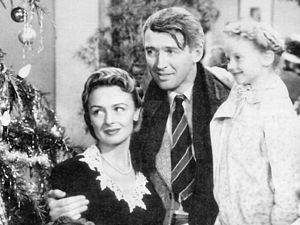
 Frank Capra’s 1946 masterpiece “It’s A Wonderful Life” is one of the great ethics movies of all time, perhaps the ethics movie of all time. In 2011 I prepared a guide through its complex ethics thicket. The post was divided into three separate posts, and I eventually combined them s0 readers can have the pleasure, if one can call it that, of watching the film like I do: having ethics arguments the whole way through. And now, here is your guide. Additions are welcome and encouraged.

1. “If It’s About Ethics, God Must Be Involved”

The movie begins in heaven, represented by twinkling stars. There is no way around this, as divine intervention is at the core of the fantasy. Heaven and angels were big in Hollywood in the Forties. Nevertheless, the framing of the tale advances the anti-ethical idea, central to many religions, that good behavior on earth will be rewarded in the hereafter, bolstering the theory that without God and eternal rewards, doing good is pointless.

We are introduced to George Bailey, who, we are told, is in trouble and has prayed for help. He’s going to get it, too, or at least the heavenly authorities will make the effort. They are assigning an Angel 2nd Class, Clarence Oddbody, to the job. He is, we learn later, something of a second rate angel as well as a 2nd Class one, so it is interesting that whether or not George is in fact saved will be entrusted to less than heaven’s best. Some lack of commitment, there—then again, George says he’s “not a praying man.” This will teach him—sub-par service!

2. Extra Credit for Moral Luck Continue reading

A Choice, A Doubt, and One of a Million Moments

In the end, a life is made up of more than a million choices, large and small, that we make according to a witch’s brew of factors. There is timing, and how we are feeling at the moment, and there are random factors, our emotions, past experiences and needs, and, just maybe, some ethical analysis involving altruism, the Golden Rule, a careful balancing of outcomes, and solid principles of right and wrong. We hope to make good choices, and yet even a good one can have disastrous effects, leaving us illogically hesitant to make the same choice the next time. We hope, if we strive to be ethical and learn from our mistakes while not learning the wrong lessons—cowardice, fecklessness, self-obsession, fear of responsibility and risk, procrastination—from our failures, to reach the finish line having made existence better for more of our fellow human beings than we made miserable, and having been a net benefit to civilization while we were part of it.

Yet there really are a million or more such choices,  many of them present themselves without any warning, and the results of the choice are often unknown. The only one keeping score is you, most of the time. I was presented with such a choice tonight, and I fear that I chose badly. Continue reading

“Luck,” Causation, and the Complex Computation of Mixed Motivations

Was it good luck, or bad luck?

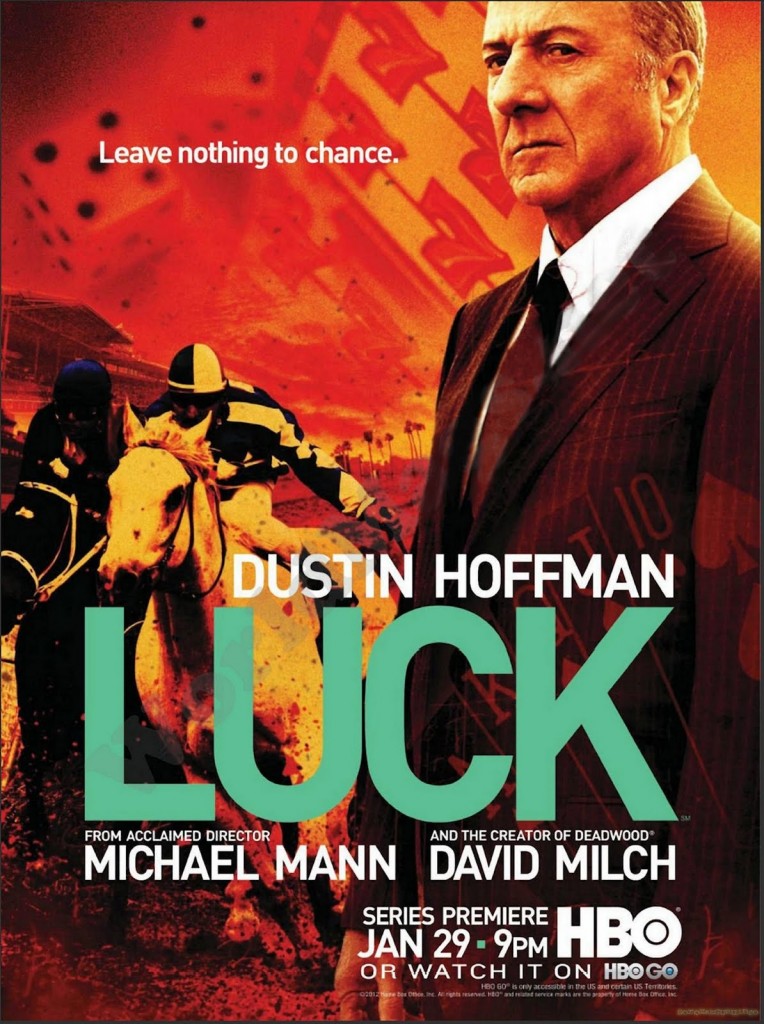
HBO has announced that it is cancelling “Luck,” its well-reviewed series about corruption in the sport of professional horse-racing. Why? Well, that’s an interesting question.

The immediate impetus for the decision was the death of a one of the horses used in the series. It was the third horse to die, so the announcement took the form of a sensitive and humane decision based on concerns for the animals. “While we maintained the highest safety standards possible, accidents unfortunately happen and it is impossible to guarantee they won’t in the future,” HBO’s statement said. “Accordingly, we have reached this difficult decision.”

I was initially impressed, but a couple of things about the move, which seemed uncharacteristically ethical by show business standards, bothered me. “Luck” was much-praised but low-rated, despite a cast headed by Dustin Hoffman and Nick Nolte and a production team headed by respected film director Michael Mann. Though it had been renewed for a second season, some felt that the renewal was dictated by a corporate decision not to embarrass its Hollywood royalty. Continue reading

“It’s A Wonderful Life” Ethics, Part 3

Here is the final installment of the Ethics Alarms overview of the ethical issues raised in Frank Capra’s classic. Some of the comments on Parts 1 and 2 have suggested that my analysis is unduly critical. Nothing could be further from the truth. I love the movie, and have already said that I find it ethically inspiring. Noting that characters act unethically in a movie about ethics is no more criticism than pointing out that people in horror movies never just leave when things start getting weird (as I would). I know that their actions drive the plot and are necessary. This is, however, how an ethicist watches a movie with as many ethical choices as “It’s A Wonderful Life.” I can’t help it.

Now back to George, Mary, and Bedford Falls:

11. Uncle Billy screws up as we knew he would

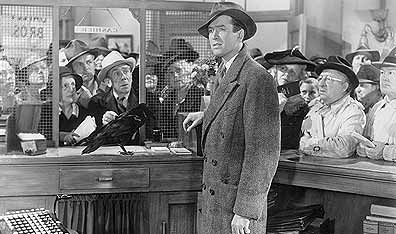
11.  Christmas Eve arrives in Bedford Falls, and Uncle Billy manages to forget that he left the week’s deposits in the newspaper he gave to Mr. Potter. Thus more than $8,000 is missing on the same day that the bank examiner is in town. Why is Uncle Billy still working for the Savings and Loan? He’s working there because George, like his father, is putting family loyalty over fiduciary responsibility.  Potter, of course, is a thief; by keeping the lost money to trap George, he’s committing a felony, and an unnecessary one. As a board member on the Savings and Loan, Billy’s carelessness and George’s negligence in entrusting him with the bank’s funds would support charges of misfeasance. Mr. Potter, had he played fair, might have triumphed over George legitimately, and no Christmas miracle or guardian angel could have saved him. But this is the inherent weakness and fatal flaw of the habitually unethical: since they don’t shrink from using unethical devices, they often ignore ethical ways to achieve the same objectives that would be more effective.

12. George folds under pressure Continue reading

“It’s A Wonderful Life” Ethics, Part 2 (of 3)

When we last saw George Bailey, he was defending his father’s dubious loan practices. In this, Part 2 of the three installments of  “It’s A Wonderful Life” Ethics, we take the saga up the fateful Christmas Eve when George Bailey meets his guardian angel.

6. George’s Fork in the Road

George Bailey’s decision to give up his plans to go to college to save the Savings and Loan is clearly not motivated by his personal dedication to the institution; he doesn’t like the place. He says so over and over again. He admires his father’s motivations for starting it. Had Potter not sparked his resentment with his nasty comments about George’s late father, George would have been out the door. But his passionate speech in rebuttal of Potter’s words put him on the spot: after those sentiments, turning down the Board’s appointment of him to be the new operating manager of the S&L would have made George a hypocrite in his own eyes, and rendered his passion  laughable. If George had integrity, then he had to accept the appointment.

It is one of the most interesting ethical moments in the film, because it represents a realistically complex ethical decision. George does what he does for selfish reasons as well as altruistic ones, and irrational reasons as well as considered ones. He wants to respect himself; he fears what might happen to his family and the community if Potter becomes the only financial power in town, and knows he will feel guilty if the consequences are bad. He feels like not staying will be taking Potter’s side over his father’s—completely irrational, since his father had given his blessing to George’s college plans, and wasn’t alive to be harmed by whatever he chose to do anyway. A large proportion of George’s decision seems to be motivated by non-ethical considerations, for he doesn’t like Potter—even hates him, perhaps—and wants to stick it to the old tycoon by foiling his victory. There are few ethical decisions in real life that are made purely on the basis of ethics, and Capra makes George’s decision wonderfully impure. Continue reading

Do Nicer People Earn Less Money? Of Course They Do. And That’s the Way it Should be.

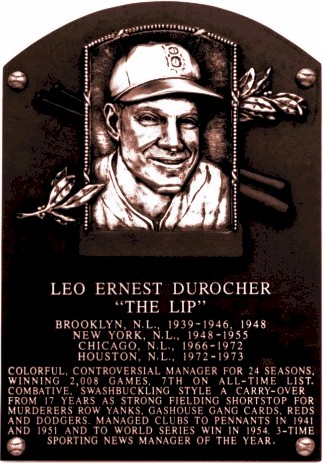
Leo Durocher figured out that "nice guys finish last" 60 years ago, and he never went to college. Now three academics, after extensive research, have "discovered" the same thing. Ah, scholarship!

A study by Cornell professor Beth A. Livingston,  Timothy A. Judge of the University of Notre Dame and Charlice Hurst of the University of Western Ontario study used survey data to examine “agreeableness” and found that disagreeable men made 18%, or $9,772 annually, more in salary than those who are more accommodating. The salary disparity was  less among women, with disagreeable females making 5% or $1,828, more than those who are easier to get along with. Does this shock you? It shouldn’t.

As is depressingly often the case, the academics who come up with such crack-brain studies—I read this one, and will want that wasted hour back when I’m on my death-bed so I can watch one last re-run of “Magnum, P.I.”—have so little experience with the working world and the reality of non-academic cultures that they don’t even comprehend their own research and draw absurd conclusions from it.

“The problem is, many managers often don’t realize they reward disagreeableness,” Livingston told the Wall Street Journal. “You can say this is what you value as a company, but your compensation system may not really reflect that, especially if you leave compensation decisions to individual managers.”

Oh brother. Continue reading

The Provocative T-Shirt Problem

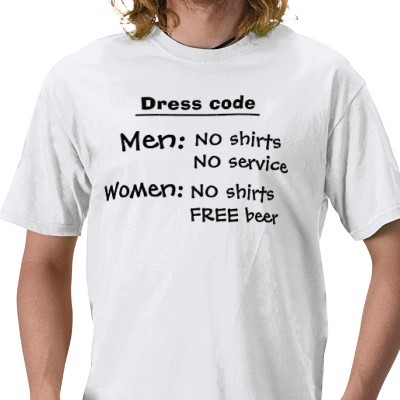
Dress codes+grievance-mongers+freedom to be rude...oh, it's hopeless.

An ethical dilemma occurs when a clear ethical principle clashes with a strong non-ethical consideration. An ethical conflict occurs when multiple ethical principles suggest diametrically opposed results. The question of what is ethical conduct when it comes to wearing apparel bearing controversial messages has the elements of both a dilemma and a conflict.

                                                                                Welcome to Dollywood!

A same-sex couple visiting Dollywood Splash Country with friends and their children was told by a park gatekeeper that one of the women had to wear her T-shirt inside-out because its message—“Marriage is so gay”— “might be objectionable” to some visitors at the “family-friendly” park.

   <Sigh.> Continue reading

We Know Enough about Ethics Already

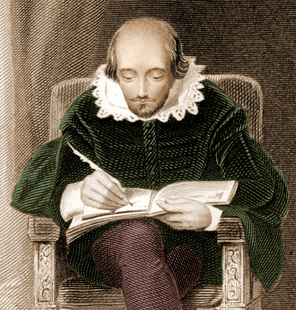
If Shakespeare understood ethics so well, why are we still pretending to be ignorant about it?

I awoke to read about a breathlessly announced new work on ethics, a book called “Blind Spots: Why We Fail to do What’s Right and What to do About it.” Business Professor  Ann Tenbrunsel and co-author Max Bazerman write that we are unaware of the “ethical blind spots” that keep us from recognizing how we engage in unethical actions. The book cites tests and new research showing behavior that the authors call “ethical fading” and “motivated blindness.” They examine such case studies as Enron and the Madoff scam to show how people “believe they will behave ethically in a given situation, but they don’t. Then they believe they behaved ethically when they didn’t. It’s no surprise, then, that most individuals erroneously believe they are more ethical than the majority of their peers.”

Stop the presses! Conflicts of interest make us ignore core values and act in our own best interests, and we rationalize our actions to avoid confronting the true nature of our conduct!

Oops! I just stated the entire thesis of the book. I’m sorry, Ann! Apologies, Max! Continue reading