Ethics Quiz: Second Thoughts About An Ethics Hero Emeritus

challenger-shuttle-disaster-crew

I periodically read random posts here from years ago, to check and see if I would make a different analysis today, and why. It almost never happens, which is good: though I may not trace all of the steps in every post, the systems, methods, models, values and priorities I use to assess various events and scenarios are established and consistent. I also check older posts when I am uncertain about a new version of an issue I have addressed before. Again, I am almost always struck by how closely my thinking then matches my approach now. I am also often struck by the fact that I don’t recall writing the earlier post at all. There are over 6000 of them, so I don’t feel too senile.

Today, however, I read this NPR story, about a previously unnamed engineer at NASA contractor Morton Thiokol who had been interviewed, with a promise of not being named, by NPR after the Challenger Space Shuttle exploded, 30 years ago. Now Bob Ebeling has finally come forward publicly, and allowed his name to be attached to his tragic story.The night before the launch, he and four other engineers had tried to stop it, because the weather was too cold—it was the coldest launch ever— and their research told them that that the rubber seals on the shuttle’s booster rockets wouldn’t function properly in the extreme temperatures. They begged for the launch to be postponed, but their supervisors and NASA overruled them.

That night, Ebeling told his wife, Darlene, “It’s going to blow up.” It did.

“I was one of the few that was really close to the situation,” Ebeling told NPR. “Had they listened to me and wait[ed] for a weather change, it might have been a completely different outcome…NASA ruled the launch. They had their mind set on going up and proving to the world they were right and they knew what they were doing. But they didn’t.”

Thirty years ago, when Ebeling didn’t want his name used or his voice recorded,  he said he feared losing his job but that,”I think the truth has to come out.” After the interview, the investigations, and the law suits, he left the company and suffered from depression and guilt that has lasted to this day. He told NPR that in 1986, as he watched that horrible video again on TV, he thought, “I could have done more. I should have done more.”

Reading and listening to the NPR story, I agreed with him. He should have done more. I was about to write a post from that perspective, when I realized I had not only written about another engineer who had tried to delay the launch, but inducted him into the Ethics Alarms Heroes Hall of Honor. His name was Roger Boisjoly, and of him I wrote in part…

Six months before the Challenger disaster, he wrote a memo to his bosses at Thiokol predicting”a catastrophe of the highest order” involving “loss of human life.” He had identified a flaw in the elastic seals at the joints of the multi-stage booster rockets: they tended to stiffen and unseal in cold weather.  NASA’s shuttle launch schedule included winter lift-offs, and Boisjoly  warned his company that send the Shuttle into space at low temperatures was too risky. On January 27, 1986, the day before the scheduled launch of the Challenger, Boisjoly and his colleague Allan J. McDonald argued for hours with NASA officials to persuade NASA to delay the launch, only to be over-ruled, first by NASA, then by Thiokol, which deferred to its client.

And the next day, on a clear and beautiful morning, the Shuttle’s rocket exploded after take-off, killing the crew of seven and mortally wounding the space program.

My ethics verdict then? This:

“Can we accurately call Roger Boisjoly an Ethics Hero, even though he didn’t stop the launch? I usually don’t like to call people heroes for doing their jobs. If Thiokol and NASA had behaved ethically, competently and rationally, we would not know anything about his memo or him. He did the right things, as his duties demanded. He alerted management to a deadly problem in plenty of time to address it. When they went forward, he argued and protested, until the decision was final. Afterwards, he told the truth to investigators, so the decision-making problems could be addressed. In his world, in that bureaucracy, this—doing his duty, doing the right thing—took courage. He knew, I am certain, that his career would suffer as a result of his actions. Yes, that makes Roger Boisjoly an ethics hero.”

If Boisjoly was a hero, then so is Ebeling, though Boisjoly spent the rest of his professional life lecturing at engineering schools around the world on ethical decision-making, trying to prevent future disasters.

So please help me resolve a Present Jack vs. Past Jack conflict, by considering this Ethics Alarms Ethics Quiz:


Are Bob Ebeling and Roger Boisjoly really heroes?

Continue reading

Ethics Reflections On The Sudden Death Of Wonderful Human Being

regret

I returned from a legal ethics teaching tour to the horrible news that a friend of mine had died in a freak accident at his home. I had just seen him for the first time in many months when he showed up unexpectedly on the final weekend of my theater company, and the production I directed for it as a final bow. When I spotted him in the theater lobby that day two months ago, I shouted his name and gave him a long hug. He was one of those amazing people who just made you feel better about the world knowing that people like him were still in it.

Now, just like that, he’s gone. An e-mail from him that arrived right before my trip sits unanswered in my in-box. I didn’t rush to return it—what was the rush? Life, of course, is the rush, and this has happened to me before. Why don’t I learn? Continue reading

Further Thoughts And Questions On “The Lottery Winner’s Sister-in-Law” (Part 2)

Money-box-gift

As promised, here are some proposed lines regarding the ethics quiz on the lottery-enriched brother and whether his financially-challenged sibling  should ask for a cut—and had a right to expect one. (Part 1 of the “Further Thoughts” is here)

All of the following assume that the lottery-winner does not have a personal emergency or crisis of his own that would require him to spend all or most of the money.

1. The wealthy brother is ethically obligated to offer financial assistance, if he can afford it without excessive hardship, without being asked, if his brother or his brother’s family is facing a health crisis of other catastrophe.

This is true regardless of whether his new financial resources come from luck, planning, work or skill, and regardless of how much money he has. Offering a loan rather than a gift is still fair and ethical. Charging interest under these circumstances is not, unless the poor brother has a record of not paying back earlier loans.

Possible exceptions: Continue reading

Further Thoughts And Questions On “The Lottery Winner’s Sister-in-Law” (Part 1)

lottery win

The last ethics quiz posed the questions of whether a financially struggling (that is, like most people) brother [NOTE: In the earlier version, I incorrectly said they were twins. Why, I don’t know, except that it makes the set up more perfect. I apologize for the error. It didn’t change the issues any, or the commentary.]  in his Sixties should suggest to his lottery-winning brother, now 50 million dollars richer, that he could use some of that excess cash…and whether the brother would be unethical to refuse.

The more I think about it, the more I am sure that Slate advice columnist Emily Yoffe was answering a fictional hypothetical carefully devised to coax out the answer it did. I write these things for a living, and the brothers element is suspicious. The idea was to emphasize the perception of unfairness: here we have two genetically similar human beings raised with the same advantages and disadvantages, not just metaphorically “created equal” but equal in fact. How cruel and unfair that, in “Dear Prudence’s” words,  “your brother-in-law, through no effort of his own—save the purchase of a quick pick—was smiled on by fate and now enjoys luxuriant leisure. Especially since the two brothers suffered from a start in life that would have crushed many, it’s disturbing that the lottery winner hasn’t been moved to share a small percentage of his good fortune so that his brother doesn’t spend his last years scrambling to meet his basic needs.”

I didn’t exactly give my preferred answer to the quiz, but I did suggest that Yoff’e’s answer and the orientation of the questioner were redolent of the prevailing ethos of the political left. This was met with some complaining in the comments, but come on: “it’s disturbing that the lottery winner hasn’t been moved to share a small percentage of his good fortune so that his brother doesn’t spend his last years scrambling to meet his basic needs” would be a great Occupy Wall Street poster if it wasn’t so long, and it perfectly states the ethically dubious mantra we can expect from Bernie, Hillary or Elizabeth and probably any other Democrat who is selected to be called “a lightweight” and “a loser” by Republican nominee Trump.  In fact, I think this hypothetical would be a great debate question….and better yet if we explore some of the  variables.

For example: Continue reading

Ethics Quiz: The Lottery Winner’s Sister-in-Law

_rich_man_poor_man“Dear Prudence” (a.k.a Emily Yoffe), my least favorite advice columnist (who answers weird questions from weird people at Slate), received an ethics quiz worthy query from a woman whose husband has had some business reverses and now, as he near retirement age, is looking at two jobs and tarnished golden years without a pension or vacations. Meanwhile, her husband’s brother (let’s assume this is true: it sounds like a hypothetical to me) won 50 million bucks in the lottery a few years ago, and is having a ball. The two brothers are on good terms and speak often. She asks,

“What I don’t understand is how he can stand to see his little brother so stressed and working so hard while he has more money than he could spend in a dozen lifetimes. Obviously he is under no obligation, but he does not seem to realize how hard it is to see how he spends his money on travel and amusements. I think he should help his brother out. What do you think?”

Prudence  thinks the poor brother should ask the rich brother for money, and that if he won’t, the wife of the poor brother should: Continue reading

Ethics Alarms Mail Bag: The Cologne Allergy

Perfume allergyEvery now and then readers think I’m Ann Landers. Today I got a “Dear Ethics Alarms: What’s right?” e-mail from a friend, and I thought I’d answer it on the blog because it raises a classic ethics conundrum.

The inquirer belongs to a social group that meets weekly. It is a weekly joy, I am told; the writer has been attending for years. Everyone convenes, on the given day, right after work. Attendance varies, and membership is informal, though individuals have been told, on rare occasions, to come no more.

Of late an infrequent attendee, but a member of long standing, has begun to attend meetings with some regularity. My friend says this is not the happiest of developments, because the two do not get along. It is a breach of long-standing, I am told and is not going to be healed. “She is an asshole,” is how the letter delicately puts it.

Last week, shortly before the end of the 90 minute gathering, the recent interloper stood up and declared that she had developed a serious allergy to colognes, perfumes, aftershave, and all chemical scents. Looking right at my friend, she declared that this allergy made exposure to any sort of commercial scent unbearable, and she asked that in the future no members should wear perfume of any kind.

“I have worn a favorite brand of cologne every day for over thirty years,” the from my acquaintance letter says. “I always get complimented on it; the scent is subtle and nobody would notice it unless they were right next to me. The asshole and I have been separated by the length of the room since she started coming. Personally, I think she made the demand just to make me miserable. She knows, from our previous relationship [NOTE: I think it was more than just a friendship], that I wear the cologne.”

The question: Is she ethically obligated to stop wearing cologne on the day of the meeting (she goes right from work) to accommodate this member’s special problem?

Add to this the broader ethics question that comes up often: Does a group member with special sensitivity have the ethical upper hand allowing such a member to demand that all other members avoid conduct that only bothers that member? Continue reading

My Street Just Went Stupid: Now What?

The Stupiding is coming...

The Stupiding is coming…

For the last 34 years I have lived on Westminster Place in Alexandria, Virginia. The address, a cul de sac, was a happy accident, as a wonderful, affordable house just happened to be there and for sale the day after I asked my wife-to-be to marry me, but it has always given me pleasure. Westminster Abbey is third among my five favorite and most cherished places on earth, the others being Fenway Park, The Alamo, Disneyland, and the Gettysburg battlefield.

Protecting my address’s integrity isn’t easy. Everyone, from clerks to salespersons to the people who address our junk mail try to change the name to Westminister Place, only to be corrected by me, or when it happens to her,  my anglophile wife. “It is Westminster Place, no “i”—you know, like the Abbey,” we say politely. The number of times the response is, “Huh? What abbey?” is a fact too depressing to relate.

Nevertheless, we refuse to let this constant attempted error pass. We have seen what can happen when illiteracy and ignorance are permitted to prevail and fester.

Just a few blocks away from us is the intersection known locally as Stupid Corner, where for decades the Waffle House there has sported a sign reading “WAFLE HOUSE.” The sign immediately lowers the IQ of anyone nearby: there mothers push their baby carriages into traffic, and pedestrians mysteriously forget where they were headed. (I just made four typos even writing about it.) When they repainted the traffic lanes—I’m not making this up—there was an arrow turning LEFT painted in the far right lane, an arrow point RIGHT in the middle lane, and an arrow pointing STRAIGHT ahead in the far left lane, when in fact no lane could go straight, since the road ends there. It was like a Stephen King story. “The Stupiding.” Continue reading

Occupational Hazard: Those Annoying, Hair-Trigger Ethics Alarms

cab metter

The danged ethics alarms start ringing loudly at the oddest times.

On Thursday afternoon, I was completing a cab ride from Houston’s Bush airport to the downtown law firm where I was to participate in an elaborate Inn of Court presentation, when I noticed some fine print on the window to my left. In its wisdom, the state of Texas had a)  designated me a senior before my time, and b) decreed that such newly-minted seniors were among those guaranteed  a 10% discount on their can fares. I had two disparate reactions to this stunning development in rapid succession.

First, in the tradition of Shirley MacLaine in “Terms of Endearment” when she raged at her daughter (Debra Winger) for becoming pregnant and thus making it imminent that she would be a grandmother, I was ticked off. Then I thought, “Well, what the hell. If Texas wants to save me money (this was going to be a hefty fare), why should I stop it?” Then the ethics alarms started ringing. Continue reading

The Fifth Annual Ethics Alarms Awards: The Best of Ethics 2013

Ethics Story 2013

I decided to start with the Best in Ethics this year, in contrast to other years, on the theory that it would get things off to a positive start in 2014. What it did, instead, was make me realize how negative Ethics Alarms was in 2013. Either there wasn’t much positive going on in ethics, or I wasn’t seeing it. My thanks to those of you who send me nominations for Ethics Heroes (and other stories); even when I don’t write about them, they are valuable. Please keep them coming. In the meantime, I pledge to try to keep the jaundice out of my eye in 2014. Things just can’t be as dire as they seemed last year.

Could they?

Here are the 2013 Ethics Alarms Awards for the Best in Ethics:

Most Important Ethical Act of the Year:

The U.S. Supreme Court declared the Defense of Marriage Act unconstitutional, paving the way for the universal legalization of gay marriage. Yes, it was a legal decision, but it was also based, as all such culturally important decisions are, on a societal recognition that what was once thought to be wrong and immoral was, in fact, not. This is ethics, an ongoing process of enlightenment and wisdom about what is right and wrong, and the U.S. Supreme Court did its part. Continue reading

Obamacare, “The March Of Folly,” And The Ethical Obligation To Accept Unpleasant Facts

Charge+of+the+Light+Brigade+Cavalry+Charge

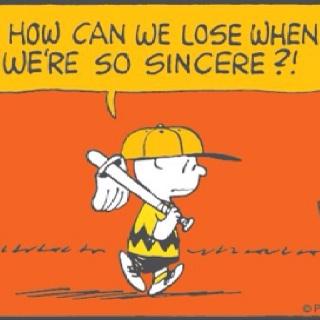
Today, while listening to the furious efforts of such liberal talking heads as E.J. Dionne (NBC’s Meet the Press), Donna Brazile (ABC’s Sunday Morning With George) and Juan Williams (Fox News Sunday) to explain why the Affordable Care Act disaster is not really a disaster and why it should be full steam ahead even as the legislation is unraveling before our eyes, my mind kept jerking back to two disparate sources. One was Barbara Tuchman’s “The March of Folly,” the celebrated historian’s 1985 examination of how governments persist in doomed policies long after it is obvious to all, including them, that the effort is not only futile but disastrous. The other was “Peanuts:”

Sincere

For this is what the bitter-enders regarding the Affordable Care Act have become. Because the absurdly flawed and over-reaching legislation was well-intentioned, and because it was sincerely designed to help people who need and deserve help, and because the hearts of those who rammed it through the process, ignoring warnings, systemic checks and balances, prudence and common sense, were pure, the law just has to work. Former White House spokesperson Robert Gibbs literally said this to David Gregory on “Meet the Press” this morning. There’s just no choice, he said. The administration just has to make it work, that’s all. Anyone who has read Tuchman, or who has been alive longer than Justin Bieber, should get chills to hear sentiments like that. Continue reading