During a violent storm here in Alexandra, with the internet going in and out, my wife and I gave up and watched “Spotlight” again, an ethics movie, and a genuinely heroic story about journalists doing their jobs, informing the public, exposing popular institutions. Those were the days. The ending speech, where the Boston Globe’s editor talks in high-minded terms about the reason journalism is worth the effort, made me physically nauseous. The profession he described is virtually unrecognizable from what I see on CNN, Fox News, NPR, the Washington Post and the New York Times.
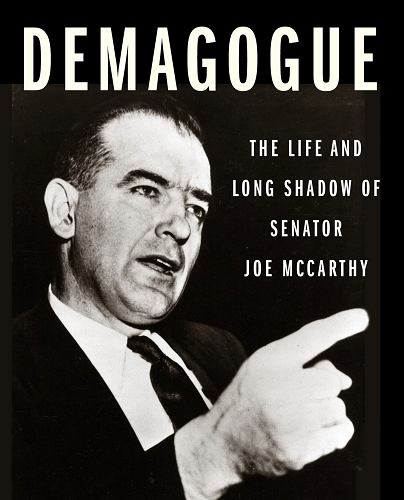
Almost immediately after, I read a column in the Times from two days ago, in the Arts section. It’s a periodic feature by John Williams where he interviews an author, “5 Things About Your Book.” This time he was talking to Larry Tye, whose biography of Joe McCarthy has just been published. The cut line read that Larry Tye “discusses his biography of that American bully, and an eerie echo.”
Having read the Times for the last four years and watched with admiration how it can toss gratuitous insults and sinister innuendoes about President Trump in any context no matter how remote, from book reviews to cooking columns to fashion essays. I was certain what the “eerie echo” would be. Joe McCarthy was a bad guy, so the article would show how much Donald Trump is like Joe McCarthy.
For the nonce, I will ignore that salient fact that it is “the resistance,” the Democrats and the anti-Trump media, which is to say, the media, that have been using relentless McCarthyite tactics against the President from before he was elected.
So where was this eerie echo of Trump in the life of “Tail-gunner Joe”? Here’s Tye’s shocking illumination of that question:
I knew there was a general link between Senator McCarthy and President Trump, but I didn’t realize how eerily echoing it was.
Huh? What “general connection”? The Senator died in 1957, when Trump was 10. How can you have a “general connection” with someone who isn’t in your family, you never met, and whom you didn’t know anything about at all until well after he died?
1. Our trustworthy news media, which we can trust to behave like this... From my AOL news feed: “Trump says he may not accept 2020 election results.” From the transcript of the Chris Wallace interview that the headline is referring to:
WALLACE: Are you suggesting that you might not accept the results of the election?
TRUMP: No.
What the President would not do is promise to accept the results if there were a valid reason not to accept the results. Once Al Gore challenged the Florida vote count after Bush had been declared the winner in 2000, the long standing precedent, followed by election losers like Andrew Jackson, Samuel Tilden and Richard Nixon, all of which had reasons to question the results in their contests, of accepting defeat without a challenge was erased. If any of it remained at all, Hilary Clinton’s pursuit of some way of reversing the Electoral College tally in 2016 completed the job. Trump’s refusal to promise a return to the old tradition is reasonable, especially with the chicanery enabled by mail-in ballots. What Joe Biden has suggested, despicably, is that Trump will not give up the Presidency even if he is defeated unequivocally and fairly. There is no justification for suggesting this. There is far more reason to believe that any Trump victory, even a resounding one, will send angry and frustrated Democrats into the streets
Trump, as usual, was trolling with his coy response here…
WALLACE: There is a tradition in this country — in fact, one of the prides of this country — is the peaceful transition of power and that no matter how hard-fought a campaign is, that at the end of the campaign that the loser concedes to the winner. Not saying that you’re necessarily going to be the loser or the winner, but that the loser concedes to the winner and that the country comes together in part for the good of the country. Are you saying you’re not prepared now to commit to that principle?
TRUMP: What I’m saying is that I will tell you at the time. I’ll keep you in suspense. OK?
TRUMP: And you know what? She’s the one that never accepted it.
WALLACE: I agree.
TRUMP: She never accepted her loss and she looks like a fool.
This isn’t a topic he should be playing with, because the Democrats and the news media will claim that something sinister is in the works. Trump gives a strong hint of his real meaning: if Hillary looked like a fool by refusing to accept the election results, he wouldn’t want to behave like Hillary. But the President should have simply said, “If I lose, fair and square, of course I will accept the results.”
He also should have answered Wallace’s question as I would have, by saying, “Chris, the tradition you speak of has been rejected twice by losing Democratic candidates since 2000.”
I thought that a TV version of “The Hard Way” (1991) I watched a bit of until I couldn’t stand any more had wrapped up the all-time prize for idiotic Bowdlerization of movie dialogue with such substitutions as “slug in a ditch” for “son of a bitch.” I mistakenly assumed that the days of red-penciling movie dialogue on the theory that a film’s audiences would be made up of six-year-old Mennonites and 88-year old nuns were long gone. But here was a a 2017 movie with a lot of rough language being made ridiculous by word censorship. “Fuck” was alternately represented by “flock,” “flip,” and “freak.” “Mother-fucker” became “flipper”—in a bar scene, I at first thought a fight started because one character called another a dolphin. “Bitch” for some reason was removed in favor of the word “cuck,” except it was pronounced like “cook.” A character complained about there being “too many cucks in here,” and for a second I thought I was watching “The Great British Baking Show.” All of these strange words ruined the movie, first because the silly replacements turned a smart and moving drama into a absurdist Monty Python skit, and second because the word substitution was so eccentric that I was constantly taken out of the story by wondering, “What word was supposed to be in there?”
In one scene, the protagonist played by Frances McDormand burst into the police station calling the officer played by Sam Rockwell a “fig-head.” Another officer indignantly shouts at her, “You can’t come in here and call a law enforcement officer a fig-head!” Wait–what the hell is a fig head?
This is incompetent and unfair to the film, the artists who made it, and the audience.
3. OK, I admit it, I have no idea what Kanye West is doing. And I don’t care. After announcing he was running for President, then implying that he wasn’t, the mentally ill rapper held a campaign event yesterday highlighted by his criticism of Harriet Tubman on the grounds that she “never actually freed the slaves, she just had them work for other white people.”
This is gallactically stupid, but it’s still smarter than Candidate Trump’s criticism of John McCain’s war heroism. At least Tubman, her family and friends aren’t alive to exact their revenge on West should he get elected.
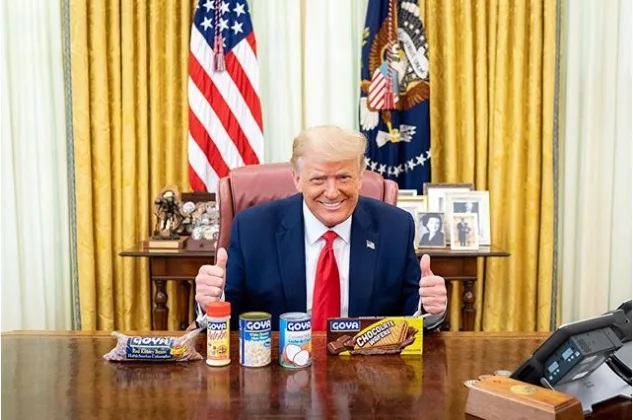
(Yes it’s unethical, but that photo just cracks me up.)
The United States Office of Government Ethics, which has the responsibility of “preventing conflicts of interest in the executive branch,” has among its guidelines ,
“Executive branch employees may not use their Government positions to suggest that the agency or any part of the executive branch endorses an organization (including a nonprofit organization), product, service, or person.”
The provision is clear, and I think obviously, necessary. Yet after anti-Trump zealots announced a boycott of Goya, the largest Hispanic-owned company in the U.S., after the company’s CEO Robert Unanue praisedPresident Donald Trump in a Rose Garden event last week, the First Family went to extraordinary—and unethical—lengths to support the “buycott” that conservative groups launched in response.
First, White House adviser Ivanka Trump posted a photo of herself holding a can of Goya black beans this week, captioning it, “If it’s Goya, it has to be good” along with the translation, “Si es Goya, tiene que ser bueno.”
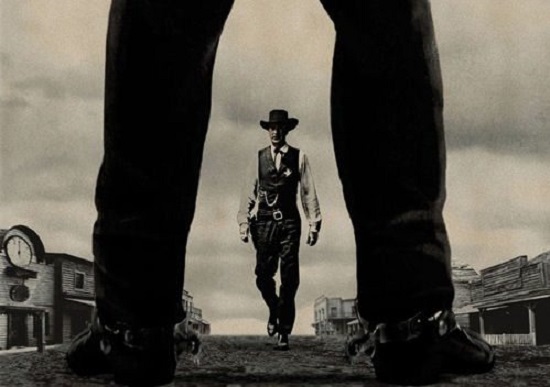
“High Noon” is a Western that shows the American people at their worst, refusing to help a single law man threatened on his wedding day, and cringing in fear and denial when their values need to be fought for.
I have long felt that the movie is like a “Twilight Zone” episode, or a Western version of “Invasion of the Body-Snatchers.” What’s wrong with those people? However, it feels less like a Rod Serling parable now, when I find myself thinking “What’s wrong with those people?” several times a day as I surf the news feeds.
It is reported that John Wayne was offered the role of the desperate law man, eventually played by the Duke’s friend, Gary Cooper. Wayne, who was always protective of the heroic character he had created over the course of his career, hated the script, and turned it down. I cannot imagine John Wayne running around a town begging for help as four gunfighters are on the way to seek revenge, and apparently neither could he. In response to “High Noon,” Wayne and Howard Hawks made “Rio Bravo,” about a sheriff who keeps refusing assistance as a rancher hires gunfighters to free the sheriff’s prisoner, his brother. At every turn, people keep saving the sheriff anyway.
I think one reason Wayne wanted to star in “True Grit” so much is that Rooster Cogburn, old and fat, takes on four villains by himself, charging them on horseback with the reins in his teeth and guns blazing.
1. It’s amazing that everyone isn’t sick of this yet.The latest Times “fact check” of President Trump, like so many others, relies on an interpretations of the notoriously sloppy-speaking POTUS that nobody fair and attentive could possible think was his intended meaning. The statement at issue was that “99% of which are totally harmless.”
By “totally harmless,” the hyperbole addicted President meant “aren’t fatal.” The game, however, is to pretend the Presidents words, whatever they are, are lies. (The Washington Post just updated its hilarious Trump lie database. I challenge anyone to pick ten entries at random that even include a majority of “lies.”)
The Times even writes, “Studies that have calculated the death rate based on broader antibody testing that takes these silent cases into consideration suggest an infection death rate of less than 1 percent, said Dr. Ashish K. Jha, the faculty director of the Harvard Global Health Institute.” Continue reading →
1. Atticus, Aaron and Alexander. Today, July 11, was a crucial date in history for two great Americans, now in danger of being canceled by the ignorant woke. One cancellee was a real man, Founder Alexander Hamilton; the other is fictional, Atticus Finch. Both have been pronounced wanting in character of late because they did not manage to discern in their eras the full extent of the necessary racial equities Americans have largely come to understand today, with the benefit of decades more of debate and experience than Finch, and with a 250 years advantage over Hamilton.
In Finch’s case, this is his “birthday”: on July 11, 1960, 34-year-old novelist Harper Lee published her first, and except for a rejected “sequel” to “Mockingbird” published later under ethically dubious circumstances, her only, novel. Fortunately for Atticus, the version of the Depression Era small town Alabama lawyer that most Americans know is the film’s, where he is played by Gregory Peck as a pure idealist without any of the alleged flaws—like saying that it is wrong to assume that racists can’t still be good people—that the novel’s Atticus is condemned for today. (The multiple Atticus problem is discussed here.)
While Atticus Finch was “born” on this date, Alexander Hamilton died, perhaps by bravely but naively exhibiting ethical character while at the mercy of a man whose ethics were elusive at best, Aaron Burr, who fatally shot the nation’s first Secretary of the Treasury in a duel this day in 1804.
The adversaries met at 7 a.m. at the dueling grounds near Weehawken, New Jersey on the same spot where Hamilton’s son had died defending his father’s honor in 1801. (The concept of karma was apparently unknown in 1804.) According to Hamilton’s “second,” Hamilton deliberately fired his weapon into the air rather than at Burr (Burr’s second claimed that Hamilton fired at Burr and missed) , whereupon Burr, who had the second shot, killed Hamilton by sending a bullet through his stomach into his spine. Hamilton died the next day.
If you think politics are crazy now, consider: Hamilton’s death was the direct result of his publicly attacking and demeaning Burr for years (“I feel it is a religious duty to oppose his career,” he once wrote). Hamilton also was instrumental in blocking Burr from becoming President in the ridiculous election of 1800, when a quirk in the election rules threatened to allow the sociopathic Vice-Presidential candidate to defeat his running mate, Thomas Jefferson. Continue reading →
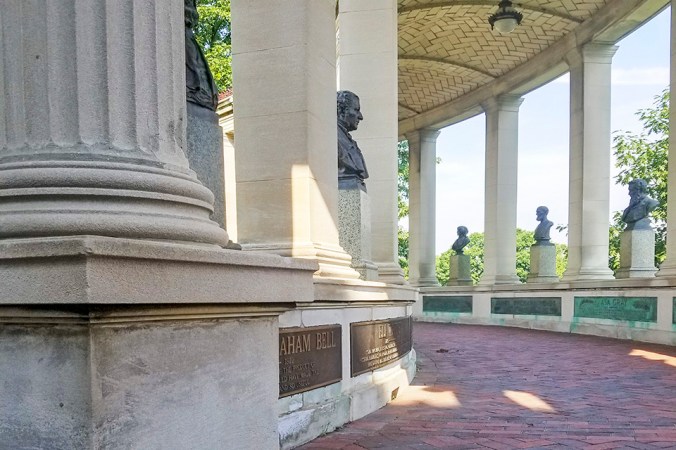
“So today, under the authority vested in me as President of the United States, I am announcing the creation of a new monument to the giants of our past. I am signing an executive order to establish the National [Garden] of American Heroes, a vast outdoor park that will feature the statues of the greatest Americans to ever live.”
President Donald J. Trump, in his otherwise superb July 3, 2020 Mt Rushmore speech.
Ugh. I winced when I read those words, and I’m sure I was not alone. Did the President just come up with that hare-brained idea on the spot? I hope so. I hope his staff is better than to endorse or, worse, support such a terrible, half-baked idea. It is incompetent and irresponsible, and guaranteed to be divisive. Here are three unsolvable problems:
I. The project exposed itself as ill-planned and poorly conceived immediately. The initial list of “great Americans” looked as if it had been assembled by throwing darts at a poster, with someone coming in later to try to make politically correct additions. Here is the (incomprehensible) list, in alphabetical order:
• John Adams
• Susan B. Anthony
• Clara Barton
• Daniel Boone
• Joshua Lawrence Chamberlain
• Henry Clay
• Davy Crockett
• Frederick Douglass
• Amelia Earhart
• Benjamin Franklin
• Ulysses S. Grant
• Billy Graham
• Alexander Hamilton
• Thomas Jefferson
• Martin Luther King, Jr.
• Abraham Lincoln
• Douglas MacArthur
• Dolley Madison
• James Madison
• Christa McAuliffe
• Audie Murphy
• George S. Patton, Jr.
• Ronald Reagan
• Jackie Robinson
• Betsy Ross
• Elvis Presley [2]
• Antonin Scalia
• Frank Sinatra
• Harriet Beecher Stowe
• Harriet Tubman
• Booker T. Washington
• George Washington
• Orville and Wilbur Wright
To only mention some of the choices that make no sense: How can the first group include Douglas MacArthur, who was justly fired for insubordination by President Truman, rather than Dwight Eisenhower, who coordinated the victory over Hitler in Europe, or his boss, General George Marshall? Why would Dolly Madison make the cut, while two far more important First Ladies, Abigail Adams and Eleanor Roosevelt, be omitted? I am an admirer of Davy Crockett, but he didn’t do much of anything except create the model for media-hyped celebrities and manage to get himself killed at the Alamo. There are, oh, I’d say several hundred more substantial “great Americans,” including almost every President, than Davy. If there is going to be an inventors on the list, why only the Wright Brothers? Thomas Edison, Henry Ford, Steve Jobs and Alexander Graham Bell all were of equal importance. Henry Clay’s naive compromises on slavery really did enable the slave trade. He’s a better choice than John C. Calhoun, but less deserving than Daniel Webster. Frank Sinatra? FRANK SINATRA? Ol’ mobbed-up Blue Eyes, leaving off Bing Crosby and Elvis, to name just two equally important pop singers? I’d have Sam Cooke, Buddy Holly, and Chuck Berry planted in the Garden before the likes of Sinatra. Meanwhile, why singers but no songwriters? Where’s Irving Berlin? Rodgers and Hammerstein?The Gershwins? Hank Williams? Why singers but no dancers? Continue reading →
Adding international and historical perspective to yesterday’s post regarding President Trump’s “dark and divisive” speech at Mt. Rushmore ( the mainstream media narrative has been so remarkably consistent that it has been credibly suggested that a memo went out. I could believe it…), E2 gives us this Comment of the Day on “Independence Day With Ethics Alarms 1… Ethics Quote Of The Month: President Donald Trump”:
Re the media’s race/Trump racism false commentary:
Doesn’t anyone know any history? As an amateur historian of British history, Churchill, the Holocaust, and WWII, I understand the horrors of British imperialism in the 18th-19th century (Africa, the Near and Far East, and on and on), but…
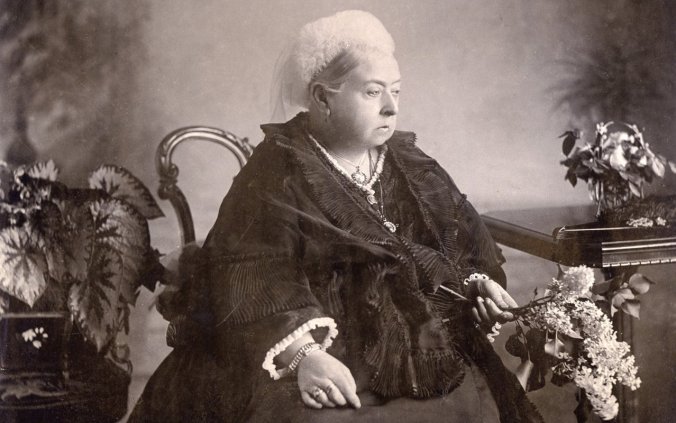
Queen Victoria (against the South’s fond hopes) refused to support the Confederacy for one reason: slavery. Despite England’s need for cotton, she wouldn’t put her stamp of approval on slavery in the interest of their economy. Of course one could argue that British imperialism was almost as bad as slavery, but it really was not, and unlike the French, who conquered African nations, hunted with chieftains, slept with their women, stole their resources, then left when it seemed appropriate or necessary, the British, in their unique fashion, created whole government structures (e.g. India) that survived as useful bureaucracies after WWII and the end of British imperialism. Smart they were, though, creating the British Commonwealth, which their conquered countries could join if they chose. An amazing number did.
But slavery of a particular race was not in the British ethic. (Or the Romans either, who enslaved everyone they conquered, regardless of race/origin/culture…) The result — especially after WWII — is that Britain became populated by traditional Englishmen, Indians, African blacks, Asians — all with the hope and most always the realization of good, safe, respected, lives. (The European Union, Brexit, etc., is changing that, I’m sure. It’s been a decade since I’ve been to England.) But to the point: Continue reading →
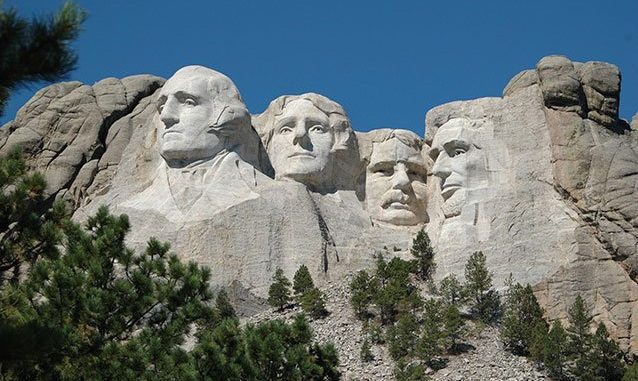
“It is time for our politicians to summon the bravery and determination of our American ancestors. It is time. It is time to plant our flag and to protect the greatest of this nation for citizens of every race in every city in every part of this glorious land. For the sake of our honor, for the sake of our children, for the sake of our union, we must protect and preserve our history, our heritage, and our great heroes. Here tonight before the eyes of our forefathers, Americans declare again, as we did 244 years ago, that we will not be tyrannized, we will not be demeaned, and we will not be intimidated by bad, evil people. It will not happen.”
President Donald J Trump,speaking at Mt. Rushmore last night, and aggressively defending the United States of America, its Founders, its history and culture.
Bravo.
Last night’s speech, a ringing assertion of American greatness and a defiant condemnation of those who would topple it, despite the inevitable Trump flourishes of exaggeration, hyperbole, and deliberate provocation, was exactly what was needed, called for, and had to be said. It was inspiring, or should have been: I wonder about anyone who could read the transcript and not be stirred. I would ask, “What happened to you?” We also now know why it was appropriate to give that speech by Mt. Rushmore. The President extolled and defended our heroes, and devoted a section of the speech to each of the Presidents on the mountain, including, as CNN said last night to its damnation, “two slaveholders.”
There are about ten passages in the speech that I could have highlighted. I picked that one because it reminded me of this speech by a fictional President in a movie I detest, “Independence Day.” I would not be surprised to learn the speechwriter had that model in mind:
“President Whitmore” is talking about space aliens trying to destroys us. The mobs of America-haters who are attacking our core values and culture remind me of the aliens in “Invasion of the Body-Snatchers,” taking over the minds and bodies of one rational citizens, and terrorizing those who won’t submit to their “conversion.”Continue reading →
“Cases are going up in the U.S. because we are testing far more than any other country, and ever expanding. With smaller testing we would show fewer cases!”
Now, this could be a joke. It should be a joke, because the statement is per se idiotic. Cases are doing whatever they are doing regardless of whether they are identified or not. Not knowing about a case of a virus infection, or a thousand cases, because we aren’t testing enough to find them, doesn’t make the cases disappear. This is so obvious, and the opposite assertion so ridiculous, that one almost has to believe that Trump’s tweet is a joke. After all, the logical extension of that tweet would be that the pandemic could be eliminated if we ceased testing. He can’t possibly think that.
A little more than a year ago, Ethics Alarms discussed a controversy over alleged “foot-dragging” by the Trump administration regarding the institution of the planned Harriet Tubman twenty dollar bill:
The latest outrage committed by the Trump Administration is dragging its collective feet and not completing the Obama Administration’s pandering to women and African-Americans—heck, maybe epilepsy sufferers too—by replacing President Andrew Jackson’s likeness with that of Harriet Tubman, the famed Underground Railroad conductor. Jack Lew, Obama’s Secretary of the Treasury, announced the decision to put Tubman on the twenty in April 2016, too late to get the change done. …President Trump didn’t regard this deliberate swipe at the Seventh President, a transformative and important one whether you like it or not, and the equivalent of progressive statue-toppling —I didn’t see the connection at the time, because the Great Airbrushing hadn’t started yet, but that’s exactly what it is—as one of his top priorities, or, frankly, a priority at all. This is an outrage, according to a Washington Post editorial, “Mnuchin’s excuse for delaying the Harriet Tubman $20 bill is insulting.” A representative excerpt:
“No one can blame [Lew] for a failure to imagine that any future administration would be so petty and narrow-minded as to go out of its way to thumb its nose at women, minorities and history.”
Of course, removing Jackson is as much nose-thumbing as delaying Tubman’s honor, and Trump’s resistance to following the usual Democratic racial and gender spoils script is no more political than the Post making this another “Orange Man Bad” manufactured controversy.
I have no problem with putting a female, an African-American, or someone who isn’t a Founder or a President on our currency. I also have no problem with honoring Andrew Jackson, who did as much to define the office as anyone. I also have no problem with President Trump refusing to exert himself to complete a purely political pander to the Democratic base pander by Obama, when Democrats have withheld from him the most basic courtesies and accommodations that any President should be able to expect from the opposing party.
Now it’s a year later, Harriet still isn’t on the twenty, and her honor looks further off than ever. Treasury Secretary Steven Mnuchin said last week that a new $20 bill would not be released until 2030 and that a future secretary would have to make the decision about whether Andrew Jackson would be replaced at all. In a news briefing, the Treasury Secretary explained that redesigning the currency required developing complicated anti-counterfeiting technology and a new printing process, and all of that takes many years.
“This is something that is in the distant future,” he said. Mnuchin also said that the currency timelines were set by career officials in an extensive interagency process, with the $10 bill next on the schedule to be redesigned and released in 2026. A Treasury Department spokesperson told reporters that the 2030 timeline was set before 2015 by the Bureau of Engraving and Printing, the Federal Reserve Board and the Secret Service. The decision was to redesign the $10 and the $50 first because the $20 is the most used bill, thanks to ATM machines. Because it is the most used and is the favorite bill of counterfeiters—remember that it was a fake twenty that George Floyd was allegedly trying to pass before his fatal encounter with the police—the twenty dollar bill requires robust security features and sufficient time to make those security changes.


 Ethics Alarms