A New Rationalization For A Slow Sunday: #57A The Utilitarian Cheat, or “If It Saves Just One Life”

On another thread, a reader attacked the Rationalization List <GASP!>,, the beating heart of Ethics Alarms, arguing that many of what are labelled rationalizations are valid justifications and cited as such on this very site. A vile canard! Of course many rationalizations can also be valid arguments for or against conduct. Take #59. The Ironic Rationalization, or “It’s The Right Thing To Do.” We do the right things because they are right, but we also have calculated why they are right, which means dealing with and rebutting the counter-arguments that might suggest those decisions are not right.  However, #59 addresses the frequent use of the “It’s the right thing to do” as a argument-ender, employing it as evidence when it really has to be a conclusion based on other evidence and analysis.

The latest addition to the Ethics Alarms Rationalization List does not have this problem. It is almost always a cheap rhetorical device, slyly edging what needs to be a clear-eyed, rational analysis of proposed conduct into the confounding realm of emotion. #57 A, The Utilitarian Cheat or “If its saves just one life” is a sub-rationalization under #57, 57. The Universal Trump, or “Think of the children!”  (It could easily be the other way around.)

#57 A. The Utilitarian Cheat or “If it saves just one life”

Invoking Rationalization #57A is as good a test as there is for identifying an untrustworthy demagogue. The claim that something is worth enacting, eliminating, establishing or doing is ethically and morally validates “if it saves juts one life” is aimed directly at the mushy minds of sentimentalists  and the dangerously compassionate. If the argument is made in good faith, the speaker is an incompetent dolt; usually it is the desperate last resort of a someone who has found that their real arguments are inadequate or unpersuasive.

The insidious trick inherent in the device is that we agree that human life is precious, and that we can not and will not place a dollar sign on a human being. The next step, however, in which a single life, or even many, is deemed justification for any expense or other draconian societal trade-offs, is impractical and irrational. It would save many lives if automobiles were built like tanks and could never exceed five miles an hour. Locking up ever angry husband that threatened the life of an estranged spouse with a menacing phone call would save many lives. So would forcing women to carry their babies to term, eliminating the right to have an abortion. Torture used without restrictions probably would save one life or more. Prohibition was sold using #57A.

All of these policy conundrums and many others are too complex by far to use simple-minded absolutism as their ethical guideline, and about 30 seconds of logical clarity will usually make that clear.  Those who employ The Utilitarian Cheat, however, don’t want clarity. It is an appeal to embrace acts that can do wide-ranging harm to society, civilization, human aspirations and liberty, because un-named lives can be saved. Though it is opposite of the exploitation of human life for other goals that Kantian ethics forbids, it is equally invalid.

___________________________

Graphic: gunssavelives.net

Comment Of The Day: “From The Ethics Alarms ‘Do The Ends Justify The Means?’ Files: The Breast Cancer Survivor’s Inspiring Scam”

Glenn Logan took off from the post about Paulette Leaphart’s self-promoting breast cancer awareness 1,000-mile walk and CNN reporter Jessica Ravitz’s strangely equivocal exposé to muse on the toxic influence of social media. It’s a great post, as usual for Glenn, and I’m especially grateful because I’m behind on posts today but I have an ethical obligation to watch the Red Sox Opening Day game. (Pirates-Red Sox tied 0-0 in the 5th.)

Here is Glenn Logan’s Comment of the Day on the post “From The Ethics Alarms “Do The Ends Justify The Means?” Files: The Breast Cancer Survivor’s Inspiring Scam”:

This is yet another social media-driven disaster. We have proven ourselves unable to handle the medium, either as consumers or producers of content. In the grand scheme of things, social media has probably been the vehicle for more scams, dissociation from the real world, submersion into self-congratulatory alternate reality, fake news, and general mayhem than any innovation in my memory.

I have occasionally referred to Twitter as “the Devil,” and my loathing for Facebook knows no bounds. I still use it once a week or so just to check on friends and family (for which it is at least useful), but 99% of my input to Facebook consists of “Happy birthday, (first name here). Many happy returns” or to message Jack a link. No Luddite I, as I have been using the Internet since the early 1990’s Usenet days, and Linux as my primary operating system since 1997, so technology and I are old, old friends.

But the temptation of social media to generate attention in the name of good causes is, to me, the lesson here besides the obvious ethical wreckage caused by “the ends justify the means.” Many of us see the apparent benefits of fame, and want our 15 minutes of it very badly, usually for entirely selfish reasons. When we can achieve that in the name of a good cause, it becomes all the more insidious as a rationalization for otherwise self-serving and dishonest behavior. Continue reading

From The Ethics Alarms “Do The Ends Justify The Means?” Files: The Breast Cancer Survivor’s Inspiring Scam

At one point, profiling the double-mastectomied Paulette Leaphart’s 1,000-mile walk from  Mississippi to Washington, D.C….topless…CNN reporter Jessica Ravitz writes,

“If even one woman’s life was saved thanks to a conversation Paulette started, wasn’t that enough? So what if our hero was flawed?”

Oh, no: the “just one child/just one life” rationalization again! (Which, I now notice, isn’t on the Rationalizations List, and it should be.)

Ravitz writes this to begin a long, detailed, infuriating narrative about the well-publicized and much-hyped crusade of Leaphart, whose journey, displaying her scarred chest,  was to ostensibly demand more funds for cancer research cure and  better and more affordable health care. She said she was a champion for women without breasts “to believe in their beauty and be proud of their strength.”

“By showcasing and embracing her scars, she hoped to inspire others to do the same,” Ravitz writes. “Her journey was bold, visual, moving. It offered a hero to admire and, given Paulette’s audacious decision to walk shirtless in the face of strangers, a rich spectacle to witness. It spoke to African-American women, who face the highest breast cancer mortality rate. It inspired legions of survivors. And it spoke to many who’d lost someone to the disease.”

Ravitz is conflicted, clearly, as she tells the complicated story of the woman whose official cause is admirable, but whose motives are murky, and whose credibility is non-existent. While explaining the mounds of evidence she uncovered that the woman has a record of deception, venality and financial flim-flam, that she sees the long walk as a ticket to fame and cash, and that she has lied and fabricated aspects of her ‘inspirational story” repeatedly while the efforts of journalists to pin her down. Yet Ravitz still ends up by  being wishy-washy and equivocal:

“There’s no way to measure how much of a difference Paulette Leaphart made in shaping the conversation about cancer in this country. She touched many minds and hearts, but whether she did so in the most honest and transparent way remains questionable.”

What? There is nothing questionable about whether Leaphart has been honest and transparent—she hasn’t. Ravitz documents her deceptions impressively. She lied about her cancer treatment. She lied about her eligibility for Medicaid and financial resources. She lied to a documentary team that had arranged to follow her, leading them to end the relationship. She lied on her Facebook page, representing her health travails by using the experiences of a friend. Her unguarded comments suggest that she began the walk as a way to make money for herself as well as research. She accepted contributions under false pretenses.  Yet the journalist still seems to want to say that all of this doesn’t matter,  if some good resulted from it: Continue reading

Incident At Big Bowl

Am I the only one who has weird  encounters  every single time I travel? That can’t be. (Can it?)

This week, I had a quick trip to Boston (where my heart resides, so I have to visit it) to present a legal ethics program to recently minted lawyers. On the way, I tried to grab a meal at Reagan airport. The flight was at 6:30, and I wanted to eat before I had to get on the plane. I chose an allegedly fast food outpost near my gate, Big Bowl. It was not busy: maybe two people ahead of me, one behind. The order was simple: a “big bowl” of kung pao chicken with white rice, no drink. I paid, and got my slip with the number 555.

When they called 555, it wasn’t my order. They called 549 before that, and it wasn’t right either. All the numbers on all the orders were wrong, and the confusion added about 10 minutes to everyone’s wait, notably mine. Finally, they skipped the numbers entirely, and shouted out the contents of each order. My big bowl had been mislabeled 550, and for a while I had to argue with the customer who had the 550 ticket, until she realized she had ordered fried rice, not white rice.

Meanwhile the employees were just shrugging, giggling and smiling away. “You had the wrong number,” one said to me. “No, you had the wrong number on my order. Why?” She shrugged and smiled.

“That’s no answer, ” I said. “Do you have a system, or not?  Can’t you tell me what happened? I was inconvenienced. Part of what I’m paying for is service. Why did this happen?”

Another shrug. No acceptance of responsibility. No apology or anything remotely sounding like one.  At this point, a superannuated hippy who looked like she was ready to do a Joan Baez set intervened with a condescending, “They made a mistake. Mistakes happen.” Continue reading

Comment Of The Day I: “The “Transitioning” Female Wrestler: A Failure Of Ethics And Common Sense”

toaster

Jeff H, along with Tim LeVier and Glenn Logan, represents the longest commenting ethics observers on this site, their participation going back to the old Ethics Scoreboard. It is always a special pleasure to welcome one of them to a Comment of the Day honor, for, like all who venture into the comment wars, they have done a great deal to provide lively, perceptive and useful content here, and I am more grateful than I can express. (Jeff, a cartoonist, also contributed the drawing of Muhammad as cute Teddy Bear you will periodically see in the side header.

Here is Jeff H’s Comment of the Day on the post, “The “Transitioning” Female Wrestler: A Failure Of Ethics And Common Sense”:

OK. Here’s what I think:

I am the sort of person who thinks a person is whatever they feel they are inside. People like to talk about, ‘well, a transperson will never really be a woman” or whatever. I’ve not got much time for that. I ain’t got it in me to judge people for something like that. As I said to someone who was talking about the ‘perverts’ who dress like women, “Far as I care, I ain’t going to say you’re wrong. You are whatever you say you are. You say you’re a toaster, I’ll give you two pieces of bread.”

That also means that I think that a transperson should use the bathrooms they’re comfortable with. The notion that there are creeps purposely crossdressing to get into the ladies’ room seems basically fictitious. Even if it was true, unless it was to a gigantic density, I don’t see that as a legitimate reason to force them to use a bathroom they’re not comfortable with.

(It’s been going around, but there have been three Republican congressmen arrested for inappropriate conduct in men’s rooms, and they say no transpeople have been arrested for the same. I hope it doesn’t turn out that is HAS happened, but if it had… I think someone would have brought it up by now.)

So this is where I stand on the issue of the transgendered. I try to be as permissive and accepting as possible without being dismissively so. I’m not likely to budge on this, since most of the arguments against it seem similar to the anti-homosexual arguments most of us reject on sight.

Having said this… if Mack is really, in his heart of hearts, a male… then I don’t understand what possible pride he can take beating a bunch of girls at a sport when he’s ALSO taking performance-enhancing drugs. (Aside from everything else, I don’t really care if you have a legitimate reason to take steroids; I think you shouldn’t play competitive sports if you have to take them because they self-evidently give an unfair advantage.) Continue reading

The “Transitioning” Female Wrestler: A Failure Of Ethics And Common Sense

The girls wrestling champion, Matt Beggs.

The girls wrestling champion, Mack Beggs.

Mack Beggs is a competitive wrestler at Euless Trinity High School, and also is a biological female more than a year into the process of “transitioning” to male.  Beggs just won his third consecutive girls’ wrestling tournament victory in the 110-pound weight class. I’ll call him “he” because that is what the student wants to be called, and he, in great part due to the male steroid treatment he has been undergoing,  is now 55-0 on the season. All of his opponents have been high school girls who are not taking steroids, and unlike Mack, do not intend to become, for all intents and purposes, male.

While Beggs says he wants to wrestle in the boy’s competitions,  the University Interscholastic League rules use an athlete’s birth certificate to determine gender, a measure that makes sense in most cases, just not this one. (See: The Ethics Incompleteness Principle) The rules prohibit girls from wrestling in the boys division and vice versa, and rules are rules. If you are a rigid, non-ethically astute bureaucrat, you follow rules even when you know that they will lead to unjust, absurd results, like Mack’s 55-0 record in matches.

The  rules also say that taking performance enhancing drugs like the testosterone that has given Beggs greater muscle mass and strength than his female competitors is forbidden, but  UIL provides an exception for drugs prescribed by a doctor for a valid medical purpose. After a review of Beggs’ medical records, the body granted him permission to compete while  taking male steroids—compete as a girl, that is.  Rules are rules!

One athletic director, after watching Beggs crush a weaker female competitor who left the ring in tears,  asked for his name not to be used as he commented to reporters, and opined that “there is cause for concern because of the testosterone,” and added, “I think there is a benefit.”

Really going out on a limb there, sport, aren’t you?

Here, let me help.

This is an unfair, foolish, completely avoidable fiasco brought about by every party involved not merely failing to follow ethical principles and common sense, but refusing to. Continue reading

From The “It’s No Fun Being An Ethicist” Files: I Offend Some Seminar Attendees…

mao

I facilitated a professional ethics seminar a while ago for a scholarly institution, (The locale, names and client have been changed to protect the guilty.) The discussion came around to rationalizations and my favorite on the list, #22:

22. The Comparative Virtue Excuse: “There are worse things.”

If “Everybody does it” is the Golden Rationalization, this is the bottom of the barrel. Yet amazingly, this excuse is popular in high places: witness the “Abu Ghraib was bad, but our soldiers would never cut off Nick Berg’s head” argument that was common during the height of the Iraq prisoner abuse scandal. It is true that for most ethical misconduct, there are indeed “worse things.” Lying to your boss in order to goof off at the golf course isn’t as bad as stealing a ham, and stealing a ham is nothing compared selling military secrets to North Korea. So what? We judge human conduct against ideals of good behavior that we aspire to, not by the bad behavior of others. One’s objective is to be the best human being that we can be, not to just avoid being the worst rotter anyone has ever met.

Behavior has to be assessed on its own terms, not according to some imaginary comparative scale. The fact that someone’s act is more or less ethical than yours has no effect on the ethical nature of your conduct. “There are worse things” is not an argument; it’s the desperate cry of someone who has run out of rationalizations.

In this case I did a sarcastic riff that is usually well received, about the common example of #22, “It’s not like he killed somebody”:

“Well, you can’t argue with that logic, can you? And if he did kill somebody, it’s not like he killed two people. And even then, that’s not as bad as being, say, a serial killer, like Son of Sam, who, when you think about it, isn’t nearly as bad as a mass murderer like Osama bin Laden. But he’s not as bad as Hitler, and even Adolf isn’t as bad as Mao, who killed about ten times more people than Hitler did. And Mao’s no so bad when you compare him to Darth Vader, who blew up Princess Leia’s whole planet…”

It made the point, and the audience laughed. Then, quite a bit later, I received an e-mail from a participant, complaing about this section. Can you guess what the complaint was?

Think about it a bit…

Time’s up!

Do you have an answer? Continue reading

Ethics Quiz Of The Day: Deadly Dairy Queen?

The late Kenneth Sutter

The late Kenneth Sutter

Harley Branham, 21, a manager at the Dairy Queen in Fayette, Missouri, has been charged with second degree felony manslaughter following the suicide of 17-year-old Kenneth Suttner, whom she supervised. At an inquest called by the Howard County coroner, witnesses testified that Branham mistreated the teen. She  made Suttner lie on the restaurant floor as he cleaned it by hand, and once threw a cheeseburger at him.  Other witnesses said the boy also had been bullied for years at his school, where students mocked his weight and a speech impediment.

The coroner’s jury blamed both the Dairy Queen and the Glasgow School District for failures in training and prevention of harassment, concluding that Branham “was the principal in the cause of death,” and also that Dairy Queen negligently failed to properly train employees about harassment prevention and resolution, according to the inquest’s verdict form. Jurors also found that the Glasgow Public School system was negligent in failing to prevent his bullying.

All of those factors, the inquest concluded, caused the boy “to take his own life.”

Suttner shot himself on December 21, 2015.

Howard County Coroner Frank Flaspohler explained the inquest and the verdict, saying,  “I felt there was bullying going on and things weren’t getting corrected. Hopefully this makes the school pay attention to what’s going on. And it’s not just in that school. We all need to wake up and say this exists and we need to take care of it.”

Your Ethics Alarms Ethics Quiz of the Day:

Is this an ethical use of the criminal laws?

Continue reading

Super Bowl Sunday Ethics Quote Of The Day: Professor David DeSteno

pro-brady

“It’s not about the true facts, or about how honest you believe a group is, or what the group’s past behavior is. It doesn’t matter what sport it is, or what team it is, or even if it’s sports at all. Just being a part of a group, any group, is enough to excuse moral transgressions because in some way, you’re benefiting from it. Your moral compass shifts.”

—-David DeSteno, Northeastern University Professor of psychology, explaining why Boston fans believe the New England Patriots, their coach, Bill Belichik, and their star quarterback, Tom Brady, are as pure as the driven snow, while the rest of the country sees them as detestable

The professor’s point will be familiar to any Ethics Alarms readers who have perused the various pots here regarding cognitive dissonance, or even those familiar with the mantra, “Bias makes you stupid.”  However, he has done some interesting research on the phenomenon described in the Times Sports article this morning.

In a psychological experiment, researchers separated people into two groups and offered some of them an option: Complete a fun, 10-minute task, or take on a difficult, 45-minute one. Placed in a room alone, they were told to choose which task they would have to do, or let a coin flip decide. Either way, the person entering the room next would be left with the other task.

Afterward, those people were asked to rate how fairly they had acted, and 90 percent said they had been fair. Except that they were lying. In fact, they had picked the easy task for themselves, without even flipping the coin, wrongly believing that no one was watching…

DeSteno and his former student Piercarlo Valdesolo conducted studies that showed that even strangers placed into groups quickly start favoring the people in their group, as they would favor themselves, even if that group was created randomly, and only minutes earlier. Morality, as it turns out, can change by the second, and for no good reason.

Professor DeSteno told the Times that this isn’t a conscious decision, but an innate survival reaction…. Continue reading

Unethical Quote Of The Month: Jon Gruden

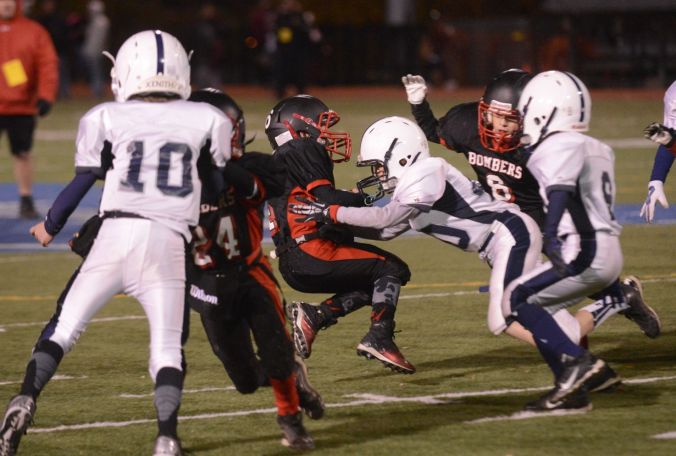
youth-football

“There are a lot of geniuses that are trying to damage the game, and ruin the game. Do you feel it? There are a lot of geniuses that want to eliminate all sports, including recess. Not on my watch, and clap your hands if you’re with me on that!”

   —-Jon Gruden, ESPN analyst and former NFL coach, speaking at last week’s annual U.S.A. Football convention, the three-day  meeting of  the national governing body for amateur football.

This will be my annual Super Bowl week post,  one of the “watch the game if you have to and enjoy your nachos, just understand that by doing so you are supporting a billion-dollar industry that pays young men to cripple themselves and that is covering up the real risks of brain damage as long as it can” essay that I have written here the last few years.

The New York Times reports that U.S.A. Football is experimenting with a radically altered  version of the game for kids that is designed to reduce head trauma:

Each team will have six to nine players on the field, instead of 11; the field will be far smaller; kickoffs and punts will be eliminated; and players will start each play in a crouching position instead of in a three-point stance…

“The issue is participation has dropped, and there’s concern among parents about when is the right age to start playing tackle, if at all…There are, legitimately, concerns among parents about allowing their kids to play tackle football at a young age,” [Mark Murphy, the president of the Green Bay Packers and a board member at U.S.A.] continued, “so they can look at this and say they’ll be more comfortable that it is a safer alternative.”

Later we are told that the new, supposedly safer version will only be tested in a few locales, and that it may be years before the new rules are widely instituted. And how many kids will sustain brain damage in the meantime, I wonder? From the Times piece…

Continue reading