Comment of the Day: “Murder House Ethics and the Validity of Feelings”

"Oh THAT! You would have cared about THAT?"

Tgt, the ghosts of whose earlier argument in series of comments haunted me prompted a revisit to the issue of murder houses and a seller’s obligation to reveal their history to potential buyers, came back with this Comment of the Day, thought-provoking, as usual:

“…I still want to know the line that determines what ethically does and does not need to be disclosed. It was never settled. This post generally boils down to another emotional appeal that something should be done in some cases. I want to know which cases and why those. Otherwise, my argument holds fast. I don’t see multiple murders (the latest clearly having nothing to do with the earlier ones) as being any more relevant than one murder.

“I also believe Jack misrepresented my position on emotion in general. Us rational humanists still mourn our dead, though we try to celebrate their lives more than anything else. While humans are not special in the concept of the Universe, we understand that we are special to ourselves and in our relations with other people. Humanism is about celebrating human life and relationships.

“As for death specifically, I see no need of a grave or burial rites. A dead body is just decomposing flesh. It does not need to be prayed for and cleansed. The person though, the lasting effects they have had on others, the memories of them – these are all important. I cried when a somewhat distant high school friend died in a freak accident at 17. I sent his family flowers on the anniversary of his death for the next 2 years. Why? Because it let his family know that he wasn’t forgotten, that he made an impact on other lives. It let them knew that people cared… people they only knew by name. I cherish the cards they sent in response. Continue reading
Ethics Dunces: Joe Klein and Chris Matthews

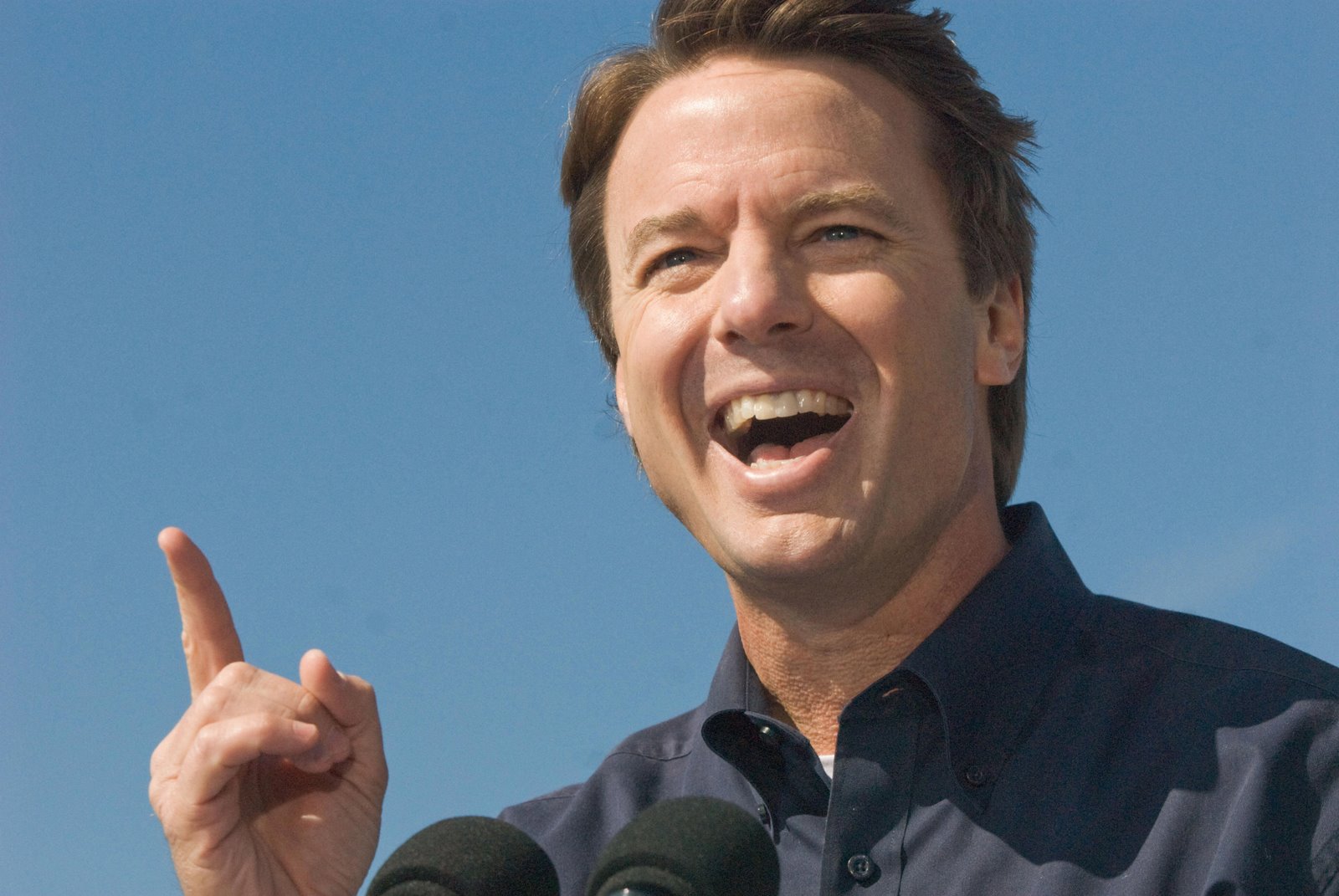
John Edwards agrees with Chris Matthews

Journalist Joe Klein has been a candidate for an Ethics Dunce award for a long time, because he has been ethically suspect or worse for a long time. His defining integrity moment came when he lied about his authorship of the Bill Clinton roman-a-clef, “Primary Colors.” Since that time, Klein has gradually evolved into a shamelessly biased and ethically muddled political commentator from the left. Too bad. He’s a perceptive guy and a wonderful writer, but he makes his living now shooting from the hip, so we seldom get the benefit of his best qualities.

It was inevitable that the Chris Matthews Show would allow Klein’s ethical blindness to reach full flower.  Matthews has been on his own journey of self-diminishment since MSNBC decided to become the anti-Fox; where once he could be counted on to treat the issues of the day fairly and avoid partisan cheerleading, the Obama years have seen him abandon any effort at objectivity or even-handedness. Matthews’ Sunday morning panel show now eschews ideological balance and has Matthews posing questions to a rotating group of reliable conservative-bashers, with an occasional straight journalist mixed in who at least pretends to be neutral.  On Sunday, Matthews asked his panel about the appropriateness of the Justice Department’s prosecution of uber-cad John Edwards for violations of the federal election laws. It’s not a bad question, and reasonable people can disagree about the answer. The charges against Edwards stem from solicitation of large cash gifts from two long-time friends and supporters while he was simultaneously running for president and trying to cover up the existence of his love-child with Rielle Hunter and the adulterous affair that spawned her.  The money was given directly to Hunter, raising a legal question as to whether it was really a campaign contribution at all. Continue reading

When An Apology Proves You’ll Say Anything: Ed Schultz’s Amazing Mea Culpa

"Hey Ed! Your masks are showing!

After MSNBC had announced that it was suspending Ed Schultz for a week without pay for calling conservative talk-show host Laura Ingraham a “slut” on his syndicated radio show, its boorish left-wing star delivered an on-air apology. Schultz certainly seemed sincere and contrite, saying solemnly that his “vile and inappropriate language” was wrong and uncalled for.  “I am deeply sorry, and I apologize,” he said. “I apologize to you, Laura, and ask for your forgiveness…It doesn’t matter what the circumstances were. It doesn’t matter that it was on radio and I was ad-libbing. None of that matters. None of that matters. What matters is what I said was terribly vile and not of the standards that I or any other person should adhere to…..And I have been in this business since 1978, and I have made a lot of mistakes. This is the lowest of low for me. I stand before you tonight in front of this camera in this studio in an environment that I absolutely love. I love working here. I love communicating with all of you on the radio and the communication that I have with you when I go out and do town hall meetings and meet the people that actually watch. I stand before you tonight to take full responsibility for what I said and how I said it, and I am deeply sorry.

“My wife is a wonderful woman,” Ed continued, getting emotional. “We have a wonderful family. And with six kids and eight grandkids, I try to set an example. In this moment, I have failed. And I want you to know that I talked to my sons especially about character and about dignity and about the truth. And I tell you the truth tonight that I am deeply sorry and I tell them every day that they have to live up to standards if they want to be a successful human being in life. And I have let them down. I have never been in this position before to the point where it has affected so many people. And I know that I have let a lot of people down…. Continue reading

Murder House Ethics and the Validity of Feelings

We last visited the issue of the ethical selling of murder houses in February, when  the Jon Benet Ramsey house went on sale. I opined that even though Colorado doesn’t have a legal requirement that a seller must reveal the history of the house as long as it has no structural implications, there is an ethical obligation to let prospective buyers know about house-related events that might cause them to reconsider their decision to buy it:

“The truth is still this: there is something about the $2,300,000 house that makes it undesirable to a lot of prospects, and that means that even if the law doesn’t require the seller to tell interested house-hunters the story of the little dead girl in the basement, fairness and the Golden Rule do.”

The debate over this issue was unexpectedly intense. Ethics Alarms’ resident rational humanist “tgt” objected strenuously, writing,

“I don’t see how you can avoid the slippery slope question. Your basis is 50% of the population having a desire. Is that the cutoff? I think over 50% of people would prefer to live in a house where there hasn’t been child abuse. Go back a few years, and I bet a significant portion of the population would prefer to live in a house that had never had black occupants. Back in today’s world, more than 50% of the population doesn’t want to live in a haunted house. If a previous tenant thought the house was haunted, does the complete nonexistence of ghosts make not mentioning this a material representation? If an event is uncommon, does a realtor need to take a poll before deciding what is material and what isn’t?”

Karl Penny, however, bolstered my position:

“…the question is, does the realtor have an ethical obligation to fully reveal the history of this house. Well, the funny thing about behaving ethically is, it often requires us to act in ways that are not in our own immediate best interest… this may give a potential buyer a leverage point to negotiate a lower price for the house, to the detriment of the realtor, who could end up taking a lower commission as a result. No surprise, then, that the realtor would love to find a reason not to opt for full disclosure. But, if that realtor successfully conceals the house’s history from an actual buyer, one who would not have bought had they known otherwise? The realtor had a simple, human duty to disclose, even if it cost him money (and, yes, even if it cost me money, were I the realtor)….Jack’s right: this is Golden Rule time. If I am willing to treat with someone else in a way that I would not want anyone to treat with me, is that logically consistent (much less ethically consistent)? And would any of us want to live in the resulting society should everyone behave in that fashion?”

Now another house with a Hitchcock-worthy past is on the market: 9337 Columbia Boulevard in Silver Spring, Maryland, a state that also doesn’t require its realtors to disclose when a house has been the scene of a murder…or, in this case, three murders in the last decade. Continue reading

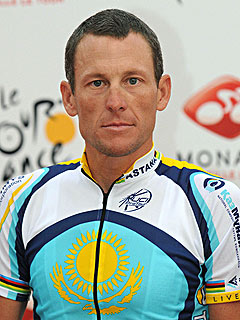
No Excuses and No Mercy For Lance Armstrong

Sorry, Lance…good guys don’t cheat.

Back when Barry Bonds was still playing baseball, a sportswriter mused about why it was that everyone assumed  Bonds was a performance-enhancing drug cheater despite his protestations to the contrary, while most Americans and sports journalists brushed away similar allegations regarding Lance Armstrong. Both competed in sports with acknowledged steroid abuse problems; indeed, the problem in bicycle racing was presumed to be more pervasive than in baseball. (A few years later, with the banning of multiple Tour winners, the presumption became a certainty.) Both athletes had improbable late career improvements in their performance to reach previously unimaginable dominance in their respective sports. Both had to explain or deflect multiple credible accusations of cheating and circumstantial evidence that suggested that they were doping. Both claimed they had never failed drug tests, and there were good reasons to doubt the denials.

So why was Bonds a villain by consensus and Lance an untouchable hero? The sportswriter explored many theories (Apologies: I cannot locate the article. If someone can, please send it), among them the greater popularity of baseball over cycling, Bond’s startling physical transformation into a behemoth while Armstrong remained cyclist-sinewy,  Armstrong’s inspiring story as a cancer survivor, Armstrong’s philanthropic work,and the fact that Bonds, unlike Armstrong, was black. The biggest difference, however, and to the writer the key one, was that Armstrong acted the role of a hero, while Bonds refused to. Armstrong was friendly and accommodating, while Bonds was angry, intimidating and antagonistic. Armstrong seemed like someone who played by the rules, and who lived his ethical values. Bonds seemed like a rebel, one who wouldn’t hesitate to break the rules for his own benefit. In short, the public wanted Armstrong to be the hero he seemed to be, so they ignored the evidence linking him to performance-enhancing drugs.

After last Sunday, the disparate public perception of Bonds and Armstrong, always illogical, became unsustainable. Continue reading

Unethical Quote of the Month: Tim Gannon

The choice came down to Greg Anderson or Jack the Ripper...

“Some parents have a problem with him being a coach, but it’s not like he was caught stealing or did some bad things with children.”

Tim Gannon, a real estate broker and father, explaining why he has no problems with Barry Bonds’ steroid-pushing trainer, Greg Anderson, serving as an assistant coach for his son’s Capitol Electric team in the Burlingame Youth Baseball Association, according to an article in Sunday’s New York Times.

It’s seldom that one sees in print a more perfect example of my least favorite rationalization for unethical conduct, “It’s not the worst thing.” This popular and despicable rationalization seeks to excuse bad conduct by comparing it to worse conduct, an intellectually dishonest device that can be used to try to minimize the seriousness of literally any behavior, no matter how heinous. (“Sure, Jack the Ripper did some bad things, but he was no Hitler!” ) It is the ethics embodiment of the dishonest rhetorical technique of the false choice. Continue reading

“Everybody Beat A Dead Horse Day” Ethics

Cartoonist Jeff Hibbert's conception of Muhammad

I was stunned to discover that “Everybody Draw Muhammad Day,” last year’s mass warped exercise in going out of the way to insult the religious beliefs of fine, upstanding, moral Muslims world-wide,  is supposed to be an annual event. I would have thought that the justifiable abuse heaped on serial Islam-provoker Rev. Terry Jones would have shown the organizers of EDMD the error of their ways (which I correctly pointed out to them here, and here). But no. The self-styled defenders of the undoubted right to use freedom of expression recklessly and badly still claimed to be standing up for the sullied rights of  the “South Park” creators, who last year had their show censored by cowardly and hypocritical “Comedy Central” suits after a threat by some Muslim nut-jobs. For their part, Trey Parker and Matt Stone have happily moved on to the more profitable work of making fun of Mormons on Broadway, because they won’t kill you. Continue reading

Comment of the Day: “Ethics Dunce: Guitarist Carlos Santana”

Michael has posted the Comment of the Day regarding my post of Carlos Santana’s criticism of Georgia’s new anti- illegal immigration law. The post expresses my continuing amazement and dismay at the strong support for illegal immigrants in the media and in segments of the public, which I view as both irrational and impossible to defend without recourse to rationalizations and dishonesty. In his comment, Michael is less critical of these defenders as he explores the factors that could make reasonable people oppose efforts to crack down on illegals.

“I can understand why reasonable people are against laws that punish illegal immigrants. I understand your conviction that a law should be either enforced or repealed, but sometimes a law is a bad law that, for whatever reason, legislators cannot or will not turn into a good law (given your frequent posts criticizing Congress, you can understand why some bad laws are not changed). When such a bad law is in place, there is often sympathy for those who break it because reasonable people conclude that, if they were in the same position as those who break the law, they would break the law as well. Continue reading

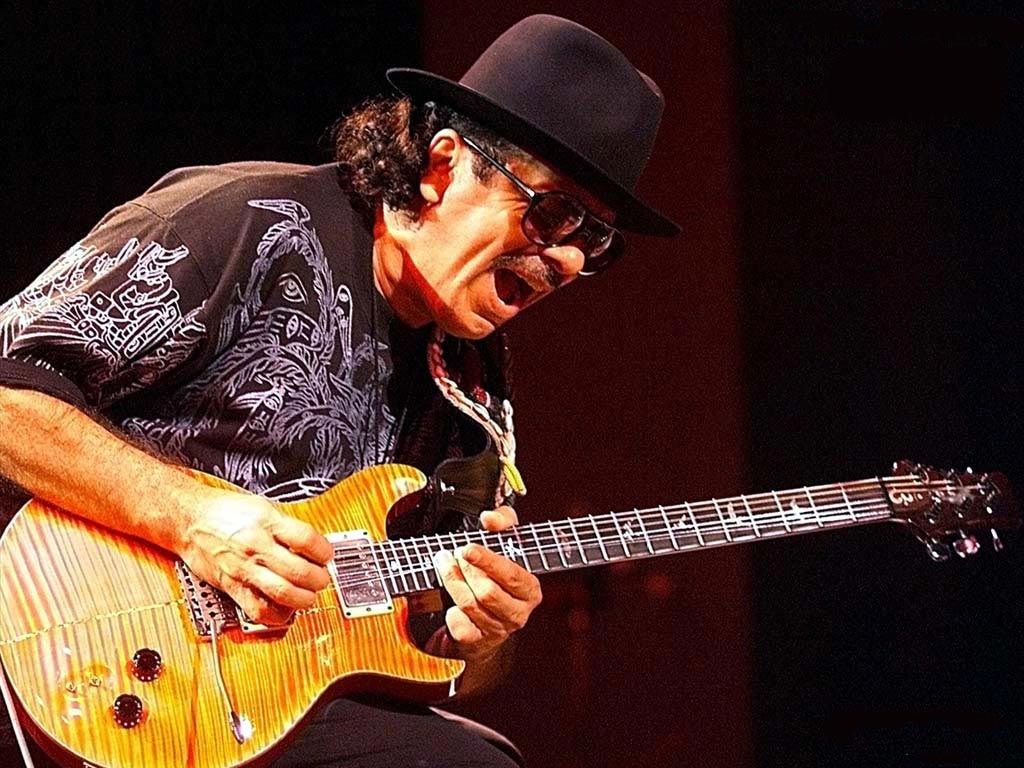
Ethics Dunce: Guitarist Carlos Santana

Legendary rock guitarist Carlos Santana thought it was appropriate to lecture a ballpark full of Atlantans when he was  honored with a “Beacon of Change” award at Sunday’s MLB Civil Rights Game at Turner Field. Pronouncing Georgia’s  new immigration law just signed into law by Georgia Gov. Nathan Deal “anti-American,” the Mexican-born Carlos Santana said,“I represent the human race. The people of Arizona, the people of Atlanta, Georgia, you should be ashamed of yourselves.”

Dear Carlos: If you can't say something responsible about immigration, please just shut up and play.

Later, he told reporters , “This is about fear, that people are going to steal my job. No we ain’t. You don’t clean toilets and clean sheets, stop shucking and jiving.”

Santana is entitled to express his opinion; he is even entitled to express stupid and ignorant opinions. But when he uses his fame, name recognition and a forum given to him as an honor to express a stupid, ignorant and irresponsible opinion, that is intolerable. Continue reading

The Uncommon Common Dilemma

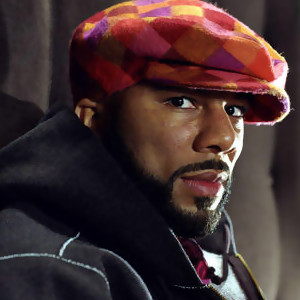
Emily Dickinson, he's not.

It is unusual to encounter a situation where there is no course that doesn’t violate some legitimate ethical principle. The dilemma involving rapper Common’s controversial invitation to the White House is one of them. None of the options are strictly ethical, and this has led advocates both for and against his inclusion in Michelle Obama’s poetry event, “An Evening of  Poetry at the White House,” to behave unethically themselves. Let’s see: what comes closest to being ethical conduct of the possible outcomes?

Option A: Michelle has her poetry event, but doesn’t invite any mainstream rapper. Ethical breaches: Incompetence, bias, censorship, dishonesty.

Rap is the most dynamic and popular form of poetry in America today. Having an event to “showcase the impact of poetry on American culture” at the White House that excludes popular rappers is absurd on its face; it would be like the White House celebrating the influence of sports in American culture and omitting football. Continue reading