Morning Ethics Warm-Up, 10/19/2017: Gwyneth’s Mom, Harvard’s Airbrush, Salon’s Favorite Conservatives

Yes, I KNOW it’s Thursday, but I meant to use this song yesterday, but didn’t, because I thought it was Tuesday…

GOOD MORNING!

1 We have several Ethics Train Wrecks barrelling along. The Harvey Weinstein Express is still picking up expected passengers, like Harvard University’s Hutchins Center for African and African American Research. The Executive Committee unanimously voted to award Weinstein the 2014 W.E.B Du Bois medal for contributions to African and African-American culture. In the midst of complaints by the African American community that Hollywood was slighting black artists and themes in its films, Weinstein’s Miramax studio had stood out as a notable exception.

The same professors voted Tuesday night to rescind the honor in the wake of the Weinstein’s (long-known but only recently publicly exposed) sexual predator proclivities, announcing in a statement: “We have voted unanimously to rescind the Du Bois Medal awarded to Mr. Weinstein in 2014. We stand with the women who have courageously come forward to fight for themselves and indeed for all of those who have experienced similar abuse.”

Wrong, and cowardly. What does sexual harassment have to do with African American culture? The mania among progressive missions groups to insist that only those who satisfy all broad progressive agenda mandates are worthy of any honor is why the nation’s continued celebration of Jefferson, Washington and other founders is hanging by a thread. Did Weinstein deserve the award in 2014? Yes, I assume. Has anything changed regarding the producer’s contributions to black culture through his movies? No.

I covered this substantially identical situation here, in 2015. Continue reading

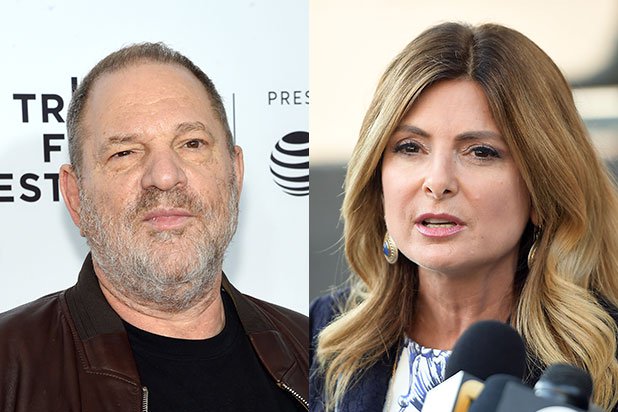
That Settles It, If It Wasn’t Obvious Already: Lisa Bloom Is An Unethical Hack (But I Could Be Wrong…)

Now, don’t sue me, Lisa! Remember what it says in the “About” section (above), this is all just my opinion. When I say you are a stunningly unethical lawyer, that’s just my analysis; it’s true I know something about legal ethics, teaching and consulting on it full time, but I can’t assert my opinion as fact. I can’t read your mind or slog through your soul. I don’t know what a bar disciplinary committee would decide, though I know this is a famously gray area in legal ethics, so unethical conduct is unlikely to be punished.  And when I say you’re a hack, remember that “hack” isn’t a description subject to objective proof, any more than, say, “asshole.” Perhaps your definition of “hack’ is different from mine. In fact, I’m sure it is.

That said, your conduct is a professional disgrace. I think. Who knows? I may be wrong.

In an interview with BuzzFeed News published this weekend, Bloom, speaking of her recently terminated representation of Harvey Weinstein, said

“I can see that my just being associated with this was a mistake. All I can say is, from my perspective, I thought, ‘Here is my chance to get to the root of the problem from the inside. I am usually on the outside throwing stones. Here is my chance to be in the inside and to get a guy to handle this thing in a different way.’ I thought that would be a positive thing, but clearly it did not go over at all.”

Bloom added that she will no longer represent men accused of sexual misconduct, “even those who convincingly tell me they are innocent….I will just make the best choices I can out of every situation. I have clearly not been successful. I think anybody who does big bold things fails. And I definitely failed on this one.”

What Bloom has failed at is called “being a trustworthy and competent lawyer.”

The next day, during an appearance on Good Morning America, Bloom even more explicitly threw her former client under the metaphorical bus:

“It’s gross, yeah,” Bloom told GMA. “I’m working with a guy who has behaved badly over the years, who is genuinely remorseful, who says, you know, ‘I have caused a lot of pain.’”

Did Bloom actually graduate from law school, or did she just apprentice in her mother’s office (she is Gloria Allred’s daughter) and somehow get an honorary license? Did she never learn about the a lawyer’s duties of loyalty and confidentiality? She obviously didn’t know about conflicts of interest, since she represented Weinstein while agreeing to let him turn her book into a TV miniseries.

Ethics Alarms has previously criticized lawyers who have publicly undermined their former clients. The most recent example  was last year, when a former Trump lawyer used his experiences while representing the future Presidential candidate decades earlier to write a scathing mid-campaign attack on his former client in the Huffington Post. I wrote,

There is strong disagreement in the profession about whether the answer to “Is this unethical?” should be an outright yes. The status of loyalty among the legal ethics values hierarchy is as hotly contested now as it ever has been. If a lawyer wants to attack a former client in a matter unrelated to the representation and no confidences are revealed in the process, is that a legal ethics breach? If it is, it would be a very tough one to prosecute. I think it’s a general ethics breach, as in wrong and unprofessional. It is disloyal, and clients should be able to trust their lawyers not to come back years later, after a client let the lawyer see all of his or her warts, and say, “This guy’s an asshole.” It undermines the strength of the public’s trust in the profession.

Continue reading

Morning Ethics Warm-Up, 10/14/17: Too Much Liberty, Too Much Precision, Too Much Success, Too Much Posturing, And More

Good Morning!

1 Today I’m going to have to waste several hours responding to a vexatious and retaliatory lawsuit by an Ethics Alarms commenter. It’s remarkable I’ve been able to avoid this annoyance for so long, I suppose, but annoyance it is. I’ve been threatened with a few lawsuits, and served once before, in that case by a lawyer who was angry that I described his ridiculous law suit against a Hollywood film as ridiculous.

The misuse of the legal system to harass and extort is an expensive price we all pay for living in a democracy that agrees with Clarence Darrow that in order to have enough liberty it is necessary to have too much. Our prices are higher, our medical expenses are inflated, and other rights, like freedom of expression, are constrained by the nation’s commitment to let common people, and often common people with unethical motives, have easy access to the courts to address their grievances, real, imagined or manufactured. I support this without reservation, , but it is no fun being the victim of it.

2.  It is a common refrain in resistance circles and the social media echo chambers that President Trump “isn’t doing anything.” That is hardly the case, and like a lot of anti-Trump rhetoric, is intentional disinformation. Since the anti-Trump collective spends all of its time trying to devise ways to somehow un-elect him—the 25th Amendment nonsense in back in the news—-while focusing on his tweets, his boorishness,  his feuds, and what he hasn’t done, they ignore the fact that Trump’s administration has been remarkably productive in addressing the issues that helped elect him. The U.S. is no longer wink-winking about illegal immigration. It is undoing the Obama policy of issuing restrictive energy regulations to signal concern over climate change that won’t have any measurable effect on climate change. The disastrous “Dear Colleague” please start assuming all male college students accused of sexual assault are guilty letter is gone and unlamented. We are not being bullied by little North Korea any more. Regulations of all kinds are being cut back. He is remaking the judiciary, pointing it away from judicial activism. Consumer confidence is high, and the stock market is soaring.

All of this has taken place in less than a year. The wisdom of many of these measures can be debated, and progressives hate all of it, but that’s irrelevant. There is much to criticize President Trump for, and much to deplore about his long and short-term effects on his office and the culture. Not accomplishing his stated goals, however, is not one of his flaws.

3. The Washington Nationals, who have morphed into the post 1986 Boston Red Sox as the team that always finds a way to miss winning the World Series, were eliminated in the National League Division Series with the assistance of many flukey plays that went against them. Particularly galling was when an 8th inning Nats rally was cut short in the fifth and decisive game against the Chicago Cubs because Washington’s second-string catcher was picked off first base with the potential game-tying run in scoring position. Jose Lobaton—now a name that will live in D.C. infamy–looked safe on TV and was called safe by the umpire when a snap throw to first by Cubs catcher Wilson Contreras caught him taking too big a lead. A slow motion review of the instant replay, however, showed that Lobaton’s  foot came off the first base bag for a nanosecond while Cubs first baseman Anthony Rizzo still had the tag on him. The naked eye would never have caught it. Still, if a runner is tagged while not on a base, he’s out.

On the NBC Sports website, blogger Bill Baer argued that this was a misuse of instant replay, writing in part,

“I]t feels unfair to use replay review in this manner. Both teams’ success or failure hinged on Lobaton’s foot coming off of the bag for one-sixteenth of a second. It’s a technicality, like coming back to your car at 10:01 only to see the meter maid walking away and a ticket on your windshield.

The spirit of replay review wasn’t about microscopic technicalities, it was about getting certain calls right: home run/not a home run, fair/foul, safe/out (in other areas, obviously, given this argument). Major League Baseball should greatly consider amending the rules to make it so that a player simply returning to the bag is grounds to be called safe, ending the pedantry of these types of reviews.”

This reminds me to add “It’s just a technicality” to the rationalizations I haven’t gotten around to adding to the Ethics Alarms list. (This makes four.)  It may feel unfair to enforce the rules, just like it feels unfair when you flunk the written test to get a license by one question, or get a ticket when you were driving just a little over the speed limit, or win the popular vote and still don’t get to be President because of the Electoral College. The “spirit of replay review” was to get calls right based on what really happens, not based on what the umpire saw or what he thought happened. Not “certain calls”: there’s no virtue in a wrong call that was just a little wrong. The difference between safe and out isn’t small or technical in baseball. It is everything. Lobaton was out, and it isn’t anything but a benefit to the integrity of baseball that he was finally called out. Continue reading

Here’s Something The News Media Hasn’t Explained Regarding The Weinstein Scandal: Those Victim Confidentiality Agreements Are Unethical, And Maybe Illegal

Rose McGowan, the new Sexual Harassment Fury on social media, says she was raped by Weinstein and had to accept a $100,000 settlement with a confidentiality agreement as a condition of the deal. That means that if she subsequently told her story and accused Weinstein, she would be liable for damages, and would have to return the money. Right?

Not exactly. Most of the accounts in this sordid series of events make it seem like confidentiality agreements are iron clad and enforceable. Often they are neither. McGowan’s almost certainly wasn’t.

Debra Katz, an attorney specializing in sexual harassment law suits, recently explained that if employees or former employees came forward with information about Weinstein participating in criminal misconduct, their non-disclosure agreements or confidentiality agreements would probably be unenforceable, saying,

“These kind of very broad NDAs or confidentiality agreements typically violate public policy. Employees have to have the legal ability to discuss any concerns about unlawful behavior in the workplace … These broad provisions that would effectively silo people, make them feel like they can’t speak about this, are simply an instrument to put fear in people.”

My position has always been that lawyers who construct such agreements, knowing that they are unenforceable, are committing sanctionable ethical misconduct. The lawyer for the employee being silenced, moreover, has an obligation to let the client know that the requirement is unconscionable. Of course, it’s the client’s decision whether she wants to take the money.  It is also unethical to make an agreement you have no intention of honoring. Continue reading

Morning Ethics Warm-Up, 10/11/2017: Words, Debt, And Costumes

Good morning from Richmond, Va.!

1 Passengers keep piling onto the Harvey Weinstein Ethics Train Wreck:

  • Fashion designer Donna Karan, questioned about Weinstein at an event, said in part:

“I also think how do we display ourselves? How do we present ourselves as women,” Karan said to the Daily Mail. “What are we asking? Are we asking for it by presenting all the sensuality and all the sexuality?”

Then she pointed to Weinstein’s achievements, and said Weinstein and his wife were “wonderful people.”

(Note to the designer: men who use their power to harass and assault women are not wonderful people by definition.)

After the predictable response to these idiotic comments, Karan protested that her quote was taken out of context, as if the context wasn’t Harvey Weinstein, and issued a low level apology that could only mean, “I’m deeply sorry I said something in public that reveals the miserable level of my values.”

  • Lindsay Lohan, currently in exile in Great Britain and Dubai, used social media to remind her fans in the US that she is, after all, a moron, writing on Instagram,

“I feel very bad for Harvey Weinstein right now. I don’t think it’s right what’s going on….He’s never harmed me or did anything to me – we’ve done several movies together.I think everyone needs to stop – I think it’s wrong. So stand up.”

One of the real benefits of social media is that it reveals the total lack of ethics comprehension, reasoning ability and life competence that inflict so much of the public, including celebrities. With clarity of thought like that, is there any mystery regarding how the once rising star managed to mangle her career despite beauty, talent, and early success?

  • NBC was presented with the Weinstein story before it was broken by the New York Times, says Ronan Farrow, the author of a new Weinstein investigative piece in The New Yorker. The network hasn’t said why. Does it have to? Weinstein was close to both the Clintons and the Obamas, and the scandal directly implicates the Democratic party and its core supporters….like NBC. It is fascinating to watch cable and network anchors and guests desperately try to analogize Weinstein to President Trump, but the Hollywood mogul was enabled by self-righteous liberals and was given the King’s Pass (with an assist from the Saint’s Excuse) because he gave to Planned Parenthood and Hillary, making him, in Donna Karan’s words, “wonderful” by definition. The analogy is Bill Clinton, of course, and any journalist who refuses to acknowledge that has confessed crippling partisan bias.

2. This brings us to a quote by blogger Ann Althouse:

“My hypothesis is that liberals — including nearly everyone in the entertainment business — suppressed concern about sexual harassment to help Bill Clinton. Giving him cover gave cover to other powerful men, and the cause of women’s equality in the workplace was set back 20 years.”

Her hypothesis is correct, and I said so when the liberals, feminists, abortion zealots, artistic community and others circled their wagons around Clinton during the Lewinsky scandal. This is one reason why Hillary’s campaign stance as standard-bearer for women’s rights and victims of sexual assault was so grotesque.

Here’s another quote from Althouse that I like:

“Who are the women who accepted the deal as offered by Harvey Weinstein? Will their names be kept out of the press? Should they?…

…So much silence facilitating so much harm! Should the women who took the bargain and got what they wanted out of it be regarded as victims and entitled to keep their names secret, or are they part of a system that hurt many others, and subject to outing.”

I’ve answered this question in various comments on previous posts, much to the unhappiness of readers who believe that victims who remains silent and thus allow evil to continue shouldn’t be criticized. The women are part of the system, and accountable. Continue reading

Ethics Quiz: Branding Ethics And The Weinstein Scandal [Updated]

I’m lounging in Richmond’s wonderful Jefferson Hotel, watching the hilarious and despicable parade of actors, actresses and Democrats—Hillary, the Obamas–rushing to condemn Harvey Weinstein now that his use to them is probably ended, and they see safety in numbers. Many of their statements—I was just listening to Mira Sorvino—mouth the same platitudes about how “this is no longer conduct that can be tolerated”—pssst: It was never tolerable behavior; your industry and colleagues just tolerated it anyway—and how it is essential that such sexual predators be stopped—pssst again: why didnt YOU do anything to stop it?– while saluting the courage of victims who come forward, without any adequate explanation in many cases of why they, or others, didn’t come forward for years and even decades while  other actresses were victimized and even raped. (The alleged rape total is now up to three.)

Angelina Jolie said today that she was harassed by Weinstein a decade ago, decided not to work with him, and “warned other actresses she knew not to do so as well.” This dovetails nicely with another harassed non-reporting actress’s tale, that of Gwyneth Paltrow—years late, of course, that she was attacked by Weinstein, and her boy friend at the time, Brad Pitt, confronted him. Presumably Pitt also later  knew about Jolie’s experience,being married to her and all. Brad Pitt was afraid to expose Harvey Weinstein? Sorry, I don’t believe it. I don’t believe George Clooney’s statement either, or long-time stars like Glenn Close. I also don’t understand Paltrow, whose father was himself an influencial producer. Her father wasn’t willing to stop Weinstein? Why not?

[CORRECTION: an earlier version of the post conflated Sorvino with Paltrow. Thanks to Spartan for the alert.]

This was a conspiracy of silence, abetted by Weinstein’s wallet. As long as he was a useful ally to ambitious actresses willing to exchange their ethical duties as citizens and human beings for parts and pay-offs, and liberal politicians employing wilful ignorance to keep money flowing to their campaigns and causes, Weinstein had a free pass to molest and abuse, and knew that he had a free pass.

The posturing by so many powerful people who could have made Weinstein a pariah at any time—but just not during the current campaign at the time, or while the latest promising Miramax project was being produced—is nauseating.  Even if one excuses the struggling starlet—and I don’t, not when she’s struggling and afraid, and definitely not years later, when she knows what happened to her is still going on but she’s now a Hollywood power herself—there is no way to excuse the community. This isn’t sort of like inner cities that have a “no snitch” culture that allows crime, drugs and murder to rot everything while innocent victims are terrorized, it is exactly like them. Victims still have ethical duties as citizens and human beings. Of course it’s hard. If being ethical was easy, we wouldn’t have to keep talking about it.

Of course, the most complicit of all may have been Harvey Weinstein’s business partners, including his brother. There is no reasonable possibility that some, most, or all of them didn’t know that their meal-ticket was a sick, sexual predator. Certainly Weinstein’s brother, now running The Weinstein Company. Now I read in the Wall Street Journal before me that the company is planning on rebranding, taking the Weinstein name off of the company. The idea is that after a few successes and maybe some convenient amnesia,  people will begin trusting the company again. Hey, let’s call it “Trust Entertainment”! (That’s my idea, not theirs.)

Your Ethics Alarms Ethics Quiz of the Day:

Is this ethical? Continue reading

Morning Ethics Warm-Up, October 10, 2017: Post-Columbus Day Edition

Good Morning.

1 The rhetoric against celebrating Columbus Day is at bottom an attack on American values and the nation itself,  making the case that the culture should bask in eternal guilt and shame for the crime of existing. It has always been thus: I heard the counter-Columbus claims when I was a kid and living in Boston, where you can’t throw a spitball without hitting an Italian or a Catholic. Then, however, there were sufficient numbers of responsible elected officials who put those ignorant and warped arguments in their place—the trash. Now, the path of least resistance reigns.

We celebrate Columbus because he brought European culture and civilization to the New World, making our nation possible. He was the butterfly flapping his wings in the Amazon, in Chaos terms: without Columbus, everything might be different. One thing that would not be different, however, is that the stone age cultures that lived in the Americas would not have prevailed, thrived and survived. Blaming Chis for the inevitable destruction of primitive cultures when more advanced and ambitious ones arrived, as they were going to with or without Columbus, is scapegoating of the worst kind.

We also celebrate Columbus because of the good and important things his first voyage symbolizes: mankind’s constant search for knowledge; the bravery of explorers; the visionary who dares to challenge conventional wisdom.

We have not, so far at least, renamed Martin Luther King Day as Victims of Adultery Day. Columbus was a man of his time, working for a brutal regime. He did many things that were wrong even by the standards of the time. Irrelevant. He opened the door  from the Old World to the New, and made the United States of America possible.

That’s worth celebrating.

2. Robert E. Lee  High School in San Antonio wins some kind of weasel award for responding to pressure to de-honor that racist slave-owner Robert E. Lee by renaming it LEE High School, with LEE being an acronym meaning Legacy of Educational Excellence High School. Pretty impressive, that: managing to be cowardly, irresponsible, and deceitful, all at once. Capitulating to the Left’s statue-toppling, historical airbrushing mania is wrong; doing so while not really doing it is worse. Keep recognizing the General, or don’t.

Who wants people like this teaching their children?

3.  ESPN  didn’t think it was necessary to suspend  anchor Jemele Hill  for tweeting that the President of the United States was a white supremacist, but when she dared to suggest that advertisers boycott NFL teams that forbade the kneeling stunt currently killing NFL  fan loyalty, ratings, ticket sales and popularity, that really crossed some lines. The network suspended Weeks after she expressed outrage at the ownership of the Dallas Cowboys and Miami Dolphins for making a “No-knee” policy for its players.

“Jemele Hill has been suspended for two weeks for a second violation of our social media guidelines,” ESPN said in a statement. “In the aftermath all employees were reminded of how individual tweets may reflect negatively on ESPN and that such actions would have consequences. Hence this decision.”

Ethics Alarms is on record as holding that Hill should have been disciplined for the anti-Trump tweet, but I sympathize with her here. She had every reason to believe that she had received special dispensation to air her progressive, resistance, Black Lives Matter advocacy using her ESPN visibility as a platform, especially after Disney’s CEO admitted that she hadn’t been disciplined because she was black.

ESPN’s standards are as incoherent as the cause of the kneeling players. They send mixed signals to employees and viewers, satisfying no one, and creating a chaotic culture undermining their own business, which is, remember, covering sports. Continue reading

Here We Go Again: Harvey Weinstein, Lisa Bloom And The Thing About Lawyer Ethics That The Public And The News Media Just Cannot Seem To Grasp

LawNewz writes, and in so doing wins a Legal Ethics Dunce so easily that I’m not even going to bother,

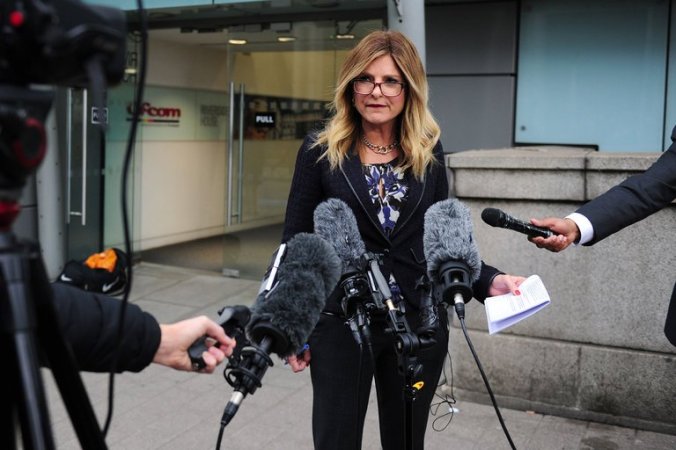
Feminist attorney Lisa Bloom, who has represented dozens of women against accused sexual harassers like Donald Trump and Bill O’Reilly, is now representing an alleged sexual harasser. In, quite frankly, a shocking move, Bloom agreed to give her “advising” services to film studio executive Harvey Weinstein, who is accused of harassing women over a thirty-year timespan. Immediately, many in the legal world wondered what would motivate such a principled women’s rights advocate to represent a man facing such sordid accusations.

Weird! I have the strangest feeling I have been here before…it’s Ethics Alarms déjà vu!

No, I have been here before, and if you’ve read the blog regularly, so have you, like here, for example, when the post was called,  No, There Is Nothing Unethical Or Hypocritical About A Feminist Lawyer Defending Roger Ailes.or here, when I defended Hillary Clinton….yes, you read that right…when she was being called a hypocrite for once defending not only a child rapist, but a guilty child rapist.  Then there was this post, when liberal icon Larry Tribe was representing a coal company. Bloom, Tribe, Estrich and Hillary all have the same defense, not that lawyers should need a defense for being lawyers.

Let’s see…I think I’ll quote myself from the Hillary piece this time… Continue reading

Morning Ethics Warm-Up, 10/6/17: Pigs And Hypocrites

Good Morning!

(and thank heaven THAT week is over with…)

1 There will be a full post on the Harvey Weinstein matter later today, but let’s get his vomit-inducing statement to the Times out of the way. If you are late to this party, Weinstein has been a powerful Hollywood producer and power-broker for decades, as well as a high profile supporter of the Democratic party, the Clintons, and Barack Obama. In a New York Times exposé yesterday, he was also revealed as a serial sexual abuser and harasser, whose conduct and cover-ups his industry and the politicians who received and accepted his checks were almost certainly aware of. More of that later; let’s look at the mogul’s response to the Times story. You can read the whole nauseating thing here. I’ll focus on these lowlights…

I came of age in the 60’s and 70’s, when all the rules about behavior and workplaces were different. That was the culture then. I have since learned it’s not an excuse, in the office – or out of it. To anyone.

Sexual harassment has been unambiguously condemned in our law and culture for more than 30 years.  This is a weak “Everybody used to do it” excuse. When did he “learn” it’s not an excuse? If he knows it’s not an excuse, why is he offering it as an excuse?

My journey now will be to learn about myself and conquer my demons. Over the last year I’ve asked Lisa Bloom to tutor me and she’s put together a team of people. I’ve brought on therapists and I plan to take a leave of absence from my company and to deal with this issue head on. I so respect all women and regret what happened. I hope that my actions will speak louder than words and that one day we will all be able to earn their trust and sit down together with Lisa to learn more.

I don’t even know how to describe this, except that more blatant BS I have seldom read in my life.  Who is supposed to be convinced by such transparent “Damn! I’m caught! How can I pretend I’m sorry?” blather?

Here’s the pièce de résistance, though: Continue reading

Morning Ethics Warm-Up, 9/17/17: Boy Scouts, “Will and Grace,” An Actress Whines, Wedding Cakes, And (I’m Sorry!) More Hillary

Good Morning!

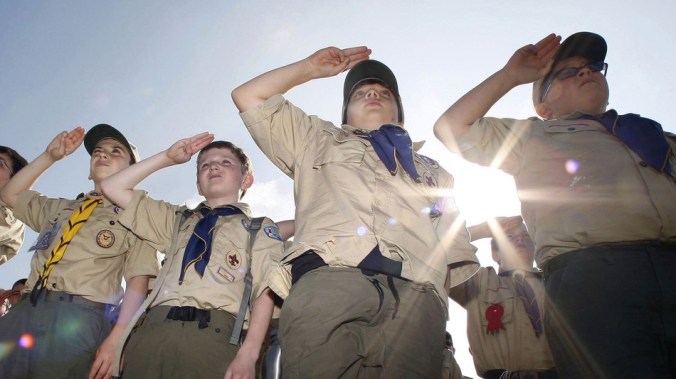
1 I’m giving an ethics talk to a Boy Scout troop this afternoon. Figuring out how to use example that are appropriate to ages 11-14 while avoiding hot-button issues like race, sexual orientation, police, guns and politics in general is a lot more difficult than I thought it would be. What pop culture reference points will work is also a conundrum. What movies are they likely to have seen? In the Sixties, I could have referred to Westerns, many of which routinely embodied ethics lessons. But they also often involved shooting people, and kids don’t see Westerns now. In the Eighties, I might have sent Boy Scouts to episodes of “Star Trek: The Next Generation,” which was virtually all about ethics. But Patrick Stewart is just an old guy doing commercials now, and there have been four TV incarnations of the franchise since Data packed it in, not counting the movies. Pixar movies are usually ethics-rich, but a lot of kids will bristle at being presumed to be cartoon fans. Superhero movies? The ones that raise ethics issues usually do so badly, or the issues are too complex—or too dark– for a Boy Scout Troop. Here we see the serious cultural problem of declining cultural literacy and deteriorating cross-generational communications as a result of the loss of common experience. and interests.

Well, it’s early. I’ll figure out something.

One approach I considered was to suggest they practice ethical analysis by reading the newspaper, picking out the ethics dilemmas and controversies that appear, thinking about them and arguing about them. Of course, that was foolish: they would probably ask, “What’s a newspaper?” However this morning’s Sunday Times is a perfect example. I could teach a four hour ethics seminar based on the stories in this edition alone. Look…

2. The baker who refused to sell a cake to a gay couple is back on the front page, thanks to the case winding its way to the Supreme Court. This time, the focus isn’t on Freedom of Religion (in this case, freedom to act like a jackass using your religion as an excuse), but Freedom of Speech. The government cannot compel speech, nor will the law compel specific performance of an artistic nature. The baker claims that his cakes are artistic creations, and he doesn’t have to make them for anyone or anything if he doesn’t want to.  The gay couple says that they weren’t asking for him to create an artwork, just to sell them a wedding cake. If the cake is a commodity, then the bake shop should be a public accommodation, and subject to applicable laws. Then the baker has to sell his cakes to anyone. If the cake is an “artistic creation” made specifically for the couple, then the law cannot force the baker to make it, or punish him if he refuses. Art is speech.

I hate these kinds of cases, and I’m sure the SCOTUS justices do too. A cake is sometimes just a cake, and sometimes a work of art. The confrontation should have been handled with ethics rather than law. The baker is a bigoted jerk, that’s all. I think he has a right not to make a cake for a gay couple, but exercising that right is cruel and insulting. Continue reading