As Ethics Corrupters Run Amuck, Ethics Alarms Presents “Ethics Corrupter Weekend”! Part I: “Truth” Is False

Truth

“Truth” is in theaters now, and reportedly bombing. As soon as I learned about the source of the film (disgraced ex-CBC producer Mary Mapes’ memoir, “Truth and Duty: The Press, the President, and the Privilege of Power”) and its plot, I resolved not to watch it, as I would just end up walking out of it. Nonetheless, the fact that Robert Redford is connected with the project is profoundly disappointing. Redford is the ultimate Hollywood liberal, but his films have often been about ethics, and I regard him, or perhaps past tense is more appropriate, as having principles and integrity. True: actors need not agree with or endorse their roles or the projects of others, but Redford is unusual: he lends credibility to any project he allows to carry his name.

Connecting his name to “Truth” is a betrayal. The film makes martyrs of Mapes and Dan Rather, who attempted to tilt the 2004 election by smearing George Bush, without evidence, on “60 Minutes.” Not only was this a political hit job by biased journalists, it was one tainted by intentionally manufactured evidence. Mapes and Rather presented a forged document alleging that Bush went AWOL during his Texas Air National Guard service in the early 1970s. It was all the pair had that went beyond hearsay to make the allegation, and after the document was decisively shown to be a forgery (its font wasn’t available on the typewriter that had to have been used to make the original document.) Once the forgery was discovered by an enterprising blogger and confirmed by multiple document specialists. Rather and Mapes embarked on a rationalization orgy. Rather, to his undying shame, repeated his defenders’ argument that the forgery as “fake but accurate,” and does to this day, in essence rejecting journalism ethics wholesale. So determined was he to prove what he believed to be true but couldn’t prove fairly or ethically that he cheated, playing dishonest political operative to achieve worthy partisan goals “by any means necessary.”

Bias makes us stupid, and in this case, bias made Dan Rather corrupt.

AND stupid. Continue reading

Ethics Heroes: Five Democratic Economists

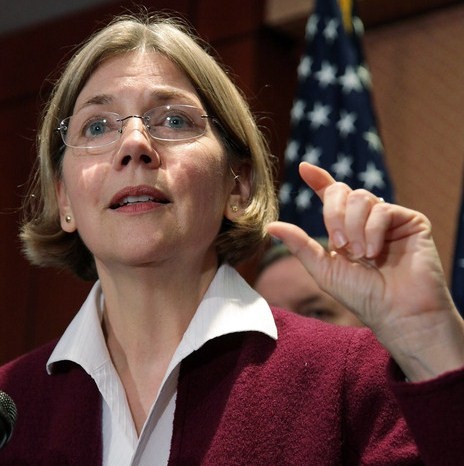
Senator Warren, who is always right.

Senator Warren, who is always right.

Senator Elizabeth Warren (D-Mass)  was annoyed that Robert Litan, a nonresident and unpaid economics fellow at the reliably liberal Washington think tank, the Brookings Institute, dared to author a study critical of financial advisor regulations being pushed by Warren and the White House. Thus she sent a letter to Brookings last week, challenging the independence of the study and the integrity of Litan, since the study was, as Litan states up front, “supported by the Capital Group, one of the largest mutual fund asset managers in the United States.”

Warren called the report “highly compensated and editorially compromised work on behalf of an industry player seeking a specific conclusion.”

You know, unlike the various donors to Warren’s political war chest, who are not trying to buy specific policies and votes from her.

Literally hours after receiving the letter, Brookings, knowing which side of the bread its butter was on, dutifully forced Litan to resign.

The issue isn’t whether the policy Warren wants is a good one or not; personally, I tend to agree with Warren on the need for the regulation, which would make 401(k) and 403(b) advisors as well as other compensation-related retirement plan advisors be subject to fiduciary duties. the issue is Warren’s embrace of the increasingly popular tactic from the Left of dealing with adversaries by silencing them. Continue reading

The Aftermath: Final Observations On The Papelbon-Harper Incident

Jonathan Papelbon in another career highlight...

Jonathan Papelbon in another career highlight…

More on the aftermath of the incident that has the baseball world talking and the sports ethics world cogitating…

1) The Nationals punished the right player, suspending reliever Papelbon for four games, which combined with the three games the league suspended him for intentionally throwing at a player in an earlier game, ends his season in embarrassing fashion. The four lost games will cost the closer about $280,000 in salary, and his total loss, with the additional three games, will be close to a half-million dollars.

2) The word out of the Nationals clubhouse is that many players agree that Harper was dogging it to first base (the impetus for the criticism that started the fight) and that Papelbon was within his rights to call Harper on his lack of hustle. This indicates that Papelbon was reacting to a perceived lack of leadership on the team. In fact, the team does lack leadership, as manager Matt Williams is neither respected nor listened to, and this was one of the reasons the heavily favored Nats collapsed down the pennant stretch. Thus it seems that Papelbon, a recent acquisition who was new to the Nats culture, may have been trying to fill a leadership vacuum and botched it. Still, he engaged in his unethical conduct for an ethical reason; that only places him in “the ends justify the means” territory, however.

Moreover, any team whose leader is Jonathan Papelbon is in big, big trouble.

3) Incredibly, manager Matt Williams, who left Papelbon in the game after the fight to pitch the ninth and get clobbered, claimed that he wouldn’t have done so if he was aware of what happened. Williams said that he was at the other end of the dugout, and didn’t understand the import of the commotion that had players shouting and separating two combatants, including his best player and his current pitcher. Wow.  The Nats dugout isn’t that long. He wasn’t curious? Didn’t he feel, as the man in charge, a need to investigate? Worse still, none of his coaches felt that he needed to be informed, even considering that this was happening in full view of the fans and TV cameras.  Continue reading

Boehner, Leadership And The Consequentialism Exception

At the end of John Beohner’s press conference responding to his sudden resignation, there was this exchange:

QUESTION: Can you talk about what you think your legacy is as you’re leaving? What are your most important accomplishments, and what are you going to do on November 1st? Are you moving to Florida?

BOEHNER: I was never in the legacy business. You all heard me say it, I’m a regular guy with a big job. And I never thought I’d be in Congress much less I’d ever be speaker. But people know me as being fair, being honest, being straightforward and trying to do the right thing every day on behalf of the country. I don’t need any more on that.

I will frequently inveigh here against the fallacy of consequentialism, the mistake of believing that whether conduct is ethical or not can be judged by its results. This leads inexorably to an “ends justifies the means” orientation and a misunderstanding of ethics. The ethical nature of an act can only be weighed according to how it was arrived at, its intent, and whether the conduct itself meets the tests of one or more ethical systems. Then moral luck takes over: an ethical decision can have catastrophic consequences and still be ethical, and the most unethical conduct can have wonderful results.

In life, however, and especially in some fields, ethics isn’t enough, and we all know it, or should. This is why consequentialism can’t be snuffed out of our thinking. There are fields of endeavor in which results are the primary standard by which we can—and should— judge whether someone was competent in the role he or she took on for themselves when others could have done the job better. In these fields being ethical isn’t enough, and often is grossly inadequate.  If one is a leader, for example, it cannot be right to lead those behind you to disaster, indeed to fail. In a field that is defined by the successful completion of a task that affects others, failure and ethics are incompatible. A failed leader is a bad leader. The objective in leadership is not just to “do the right thing,” but to succeed at ethical objectives in the right way. Continue reading

Ethics Observations On The Great “2015 Best American Poetry” Scandal

William Wordsworth (April 7, 1770-April 23, 1850)

William Wordsworth (April 7, 1770-April 23, 1850)

Sherman Alexie is the editor of the 2015 edition of Best American Poetry, an annual anthology that came out this week. One of his choices for inclusion was “The Bees, the Flowers, Jesus, Ancient Tigers, Poseidon, Adam and Eve” by Yi-Fen Chou.

After being informed by Alexie that his short poem, previously published in a small journal, had been honored with selection,  Yi-Fen Chou contacted Alexie to reveal that he wasn’t Yi-Fen Chou, but boring, white, privileged  Michael Derrick Hudson of Fort Wayne, Indiana.

Hudson explained to Alexie, and in his bio for the anthology, that he had posed as an obscure Asian poet rather than as an obscure WASP poet after his poem was rejected by 40 different journals when it was submitted under his real name. He decided to test his theory that the poem would suddenly seem better to editors if it had a little pro-diversity, cultural bias behind it. He was right. Now two editors had favored it.

Alexie left the poem in the collection, with the poet’s real name, and has been attacked for doing so, from all sorts of angles. Hudson has received criticism as well. Alexie wrote a heartfelt, thoughtful, and self-contradictory explanation of why he thought he did the right thing. Read it, if you can stand it. Also worth reading is Jesse Singal’s essay, inspired by this rhyme-crime, in New York Magazine about bias.  His most useful statement—“It can feel threatening to acknowledge that we are all susceptible to bias. The reality is that it’s simply a part of being human”—is wise. Otherwise, he is far too kind to Alexie simply because he was transparent and thoughtful in analyzing his conduct. Transparent and thoughtful Alexie is. He is also wrong.

Observations: Continue reading

Out Of 199 Quotes, 40 That Reveal Donald Trump’s Ethics

Slogging through 199 Donald Trump quotes is too much for anyone to endure. Here are the 40 that matter...

Slogging through 199 Donald Trump quotes is too much for anyone to endure. Here are 40 that matter…

I don’t like or trust the technique of cherry-picking quotes from famous people to make them sound stupid, venal, mean or distasteful. First of all, the technique has been  abused by the news media, which uses it against people like Sarah Palin and Dan Quayle, but seldom digs up quotes to embarrass the leaders and political figures they like and support. Many liberal icons—Barney Frank comes to mind—talk so incessantly that it would be easy to make them sound like monsters or fools using the technique, but if it is done to these people at all, it is done by ideological blogs with minimal exposure. Second, those who make such lists often cheat, taking quotes out of context, or worse, making them up. Many lists designed to show that Sarah Palin is an idiot, for example (she is many things, but idiot is not among them) use lines actually said by Tina Fay while lampooning Palin.

Michael Kruse’s feature for Politico called “The 199 Most Donald Trump Things Donald Trump Has Ever Said”, however, deserves a bit more deference. After all, he appears to have waded through a putrid swamp of Trump interviews, books, and videos, which probably left him drooling and giggling in a corner some place; I’ll be relieved when I see evidence that he’s OK. That task took courage, dedication and endurance: attention must be paid. Moreover, this isn’t the usual list of ten or twenty quotes: you could make Stephen Hawking  seem like a dolt in twenty quotes if you chose them maliciously. This is 199. Impressive.

Also horrifying. In selecting the 199 juiciest and most provocative quotes from any prominent American, wouldn’t you expect at least one that was articulate, thoughtful, wise or memorable? I’m not looking for Samuel Butler here, or even Barack Obama, but for someone who is at least for the nonce a “serious” candidate for the highest office in the land, it would be reassuring to find some evidence of wit, perspective, reflection, or a vocabulary beyond that of a typical 8th grader, and it just isn’t there. Has Trump  read any literature? Has he ever seen a play? Is he capable of a relevant famous quote or a cultural reference (saying that Bette Midler is “grotesque” doesn’t count, though “grotesque” may be the most sophisticated word that appears on the list)? If so, there is no hint of it. Maybe Kruse intentionally left out quotes that would reflect well on Trump, and omitted utterances like “I suppose there’s a melancholy tone at the back of the American mind, a sense of something lost. And it’s the lost world of Thomas Jefferson. It is the lost sense of innocence that we could live with a very minimal state, with a vast sense of space in which to work out freedom” (George Will) or “When buying and selling are controlled by legislation, the first things to be bought and sold are legislators” (P.J. O’Roarke) or even“Our political differences, now matter how sharply they are debated, are really quite narrow in comparison to the remarkably durable national consensus on our founding convictions.” (John McCain). I doubt it.

There are three Trump bon mots in the 199 that barely justify quoting, like  #57: Continue reading

Senator McCaskill, A Cheater And Proud Of It

Inexplicably, Richard Nixon never wrote an article boasting about how his campaign forged an attack letter that tricked Edmund Muskie into an emotional meltdown that let George McGovern get the 1972 Democratic nomination.

Inexplicably, Richard Nixon never wrote an article boasting about how his campaign forged an attack letter that tricked Edmund Muskie into an emotional meltdown that let George McGovern get the 1972 Democratic nomination. Strange…

What is increasingly disturbing is that so many of our representatives and high elected officials appear to have no idea what ethical conduct is. This leads them, as Donald Trump did in the Republican candidates debate, to boast about their unethical conduct in public and assume that the public, as well as the news media, will nod approvingly. It is more than disturbing that they are usually correct, and thus are both exploiting the nation’s ethics rot and contributing to it as leaders are uniquely able to do.

This was what the leader of Senate Democrats, Harry Reid did when he expressed no remorse for lying about Mitt Romney during the 2012 campaign (“Romney lost, didn’t he?”). Now, in a signed article in Politico, Sen. Claire McCaskill (D-Mo.) has explained how she gained re-election by manipulating the democratic process in Missouri. Obviously, she sees nothing the matter with what she did: the article is essentially one long gloat.

With it, she marks herself as a cheat, a fick, and an ethics corrupter, as well as a disgrace.

But she’s a winner, so it’s all good!

In the essay called “How I Helped Todd Akin Win — So I Could Beat Him Later,” McCaskill explains how, after her campaign identified Todd “Legitimate Rape” Akin as the weakest Republican candidate to run against her, it ran cognitive dissonance ads engineered to increase his support among the most ignorant and extreme Republican primary voters. She writes,

So how could we maneuver Akin into the GOP driver’s seat? Using the guidance of my campaign staff and consultants, we came up with the idea for a “dog whistle” ad, a message that was pitched in such a way that it would be heard only by a certain group of people. I told my team we needed to put Akin’s uber-conservative bona fides in an ad—and then, using reverse psychology, tell voters not to vote for him. And we needed to run the hell out of that ad….Four weeks out we would begin with a television ad boosting Akin…then we’d go back into the field and test to see if it was working. If it was, we’d dump in more “McCaskill for Senate” money, and we’d add radio and more TV in St. Louis and Kansas City. ..As it turned out, we spent more money for Todd Akin in the last two weeks of the primary than he spent on his whole primary campaign..

Let me explain this so even the most hopeless “the ends justify the means” partisan can understand it. The idea behind democracy is to have the best possible candidates run for office, and to give the public good choices rather than lousy ones. Each party has an obligation to run a fair competition to find the candidate it believes is 1) best qualified for the office and 2) most able to prevail in the election. It is not fair, ethical or legitimate politics for the opposing party to interfere with this process to ensure weaker competition. This is not fair to the public, which has a right to have a good choice, not a horrible one. It is also undemocratic. It is wrong, no matter how clever it is. Continue reading

Ethics Quote Of The Month: Popehat Lawyer/Blogger Ken White

Dept_Of_Justice_USF“That’s your justice system, and mine: a consequence of our culture of servility towards to police and prosecutors.”

—Former prosecutor, current lawyer, and epic blogger Ken White, summing up the outrageous misconduct of the U.S. Attorney’s Office in its attempt to subpoena Reason’s commenter’s identities for potential prosecution, specifically the use of a gag order to prevent the publication from communicating.

Ken White has been following this story, which is a frightening example of how power can be, and is perverted in a supposed democracy that respects a free press. The short version (you can read the posts about this here and here, which link to Ken’s more intense and thorough commentary) is that libertarian publication Reason found itself ordered to reveal the identities of some mean commenters on its website who made obviously hyperbolic and facetious “threats” about a judge, including suggesting that she be Steve Buscemied…

Woodchipper foot


Continue reading

“You Know I Can’t Hear You With All Those Ethics Alarms Ringing”: Hillary Clinton’s CNN Interview

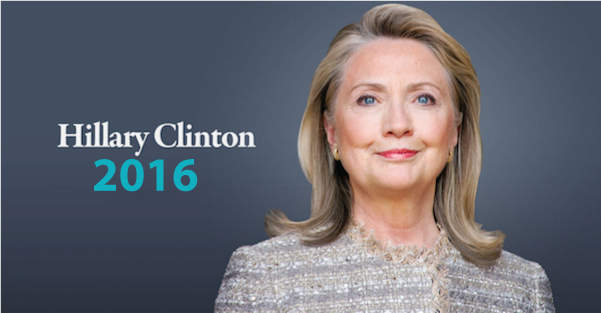
Hillary_Clinton_2016

The frightening thing—it should frighten Democrats more than anyone, but if they have let Hillary get this far, they may be beyond frightening—is that Hillary Clinton had a long time to prep for this interview—her first substantive one since announcing her candidacy, about five or six scandals ago—had a hand-picked, friendly interviewer, was not pressed to clarify any of her non-answers, obfuscations or incomprehensible blather, and she still came off looking defensive, evasive, and basically like Tommy Flanagan in drag.

Ethics Alarms were ringing so loudly that the interview was almost inaudible. My observations in bold….

BRIANNA KEILAR, CNN SR. WHITE HOUSE CORRESPONDENT:  Secretary Clinton, thank you so much for talking to us today.  You’re here in Iowa for a couple of events.  You’re the front-runner in this state but we’re also seeing Bernie Sanders attract a lot of attention.  He has had big crowds here, 10,000 people in Wisconsin last week, 7,500 people in Maine last night. Why is it, do you think, that someone who is a self-described Democratic socialist is really attracting this organic interest that your campaign seems to be struggling a little bit with?

HILLARY CLINTON, FORMER SECRETARY OF STATE:  Well, first of all, I always thought this would be a competitive race.  So I am happy to have a chance to get out and run my campaign as I see fit and let other candidates do exactly the same.

Non-responsive. Also a lie: Clinton has always assumed she could get the nomination by just showing up.

I feel very good about where we are in Iowa.  We are signing up thousands of volunteers, people committed to caucus for us.  We have a committed supporter in every one of the 1,600 precincts.  And one of the things that I learned last time is it’s organize, organize, organize.  And you’ve got to get people committed.  And then they will follow through and then you bring more people.

Non-responsive.

So I feel very good about where my campaign is.  It’ll be three months and a few days that we’ve been at this.  I think I’ve learned a lot from listening to people in Iowa.  And it’s actually affected what I say and what I talk about on the campaign trail.

Non-responsive.

So I couldn’t be happier about my campaign.

Non-responsive. Pretending to open yourself to a candid question and answer session and then refusing to answer the very first question while pretending you did: Dishonest. Disrespectful.

KEILAR:  Senator Sanders  has talked about how, if he’s president, he would raise taxes.  In fact, he said to CNN’s Jake Tapper, he would raise them substantially higher than they are today, on big corporations, on wealthy Americans. Would you?

CLINTON:  I will be laying out my own economic policies.  Again, everybody has to run his or her own campaign.  And I’m going to be telling the American people what propose and how I think it will work and then we’ll let voters make up their minds.

“I refuse to answer on the grounds that I might incriminate myself actually let voters know what I stand for. After all, I’m a vagina. That’s what really matters.”

KEILAR:  Is raising taxes on the table?

CLINTON:  I’m going to put out my policies and I’ll other people speak to their policies because I think we have to both grow the economy faster and fairer so we have to do what will actually work in the short term, the medium term and the long term.  I will be making a speech about my economic proposals on Monday.  And then I look forward to the debate about them.

If Clinton made a speech Monday (July 7) about specific economic proposals, she did it in her closet, because all anyone actually heard was this.

KEILAR:  I’m wondering if you can address a vulnerability that we’ve seen you dealing with recently.  We see in our recent poll that nearly six in 10 Americans say they don’t believe that you’re honest and trustworthy. Do you understand why they feel that way?

CLINTON:  Well, I think when you are subjected to the kind of constant barrage of attacks that are largely fomented by and coming from the Right and –

The vast right wing conspiracy again! Ironic, because one very good reason people shouldn’t, and  many sane people actually do not, trust Hillary is when she made teh same accusation on the Today Show to Matt Lauer, claiming that the Monica Lewinsky scandal had been “largely fomented by and coming from the Right,” when in fact she knew otherwise and was lying for her husband.

KEILAR:  But do you bear any responsibility for that?

CLINTON:  – well, I – you know, I can only tell you that I was elected twice in New York against the same kind of onslaught.

“I got away with it before, didn’t I?” Continue reading

Ethics Quote Of The Week: The Washington Post

“The court’s legal analysis in Arizona State Legislature v. Arizona Independent Redistricting Commission was something of a reach. But the ruling’s practical implications are unequivocally positive.”

—–The Washington Post in an editorial praising the Supreme Court’s approval of Arizon’s unconstitutional solution to the persistent problem of gerrymandering abuse.

"IGNORE WHEN INCONVENIENT" Really?

“IGNORE WHEN INCONVENIENT” Really?

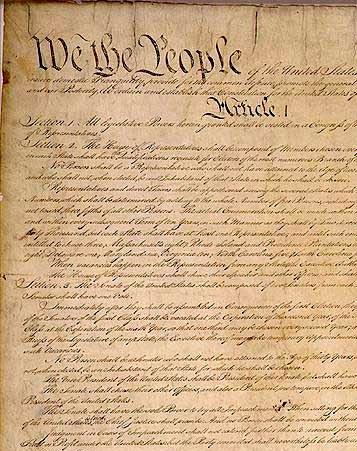
The Post’s quote means nothing more nor less than “the ends justify the means.” “Something of a reach” is a shameless equivocation: John Roberts’ dissent to the 5-4 majority’s “legal analysis” —there really is none—resembles Mike Tyson slapping around Honey Boo-Boo. The decision’s argument approving the Arizona end-around the Constitution’s Elections Clause that reads, “The Times, Places and Manner of holding Elections for Senators and Representatives, shall be prescribed in each State by the Legislature thereof” can be fairly summarized as “this will work, so the Constitution be damned.” It’s not a “reach.” It’s  obvious defiance of what the document says.

It that so bad? It depends on what you think is more important, integrity or solving a problem. All of the big Supreme Court decisions in the past week have essentially raised this ethics conflict, and it is clear that the liberals on the Court is on the side of solving problems—at least as they see them— even when it means compromising what the Constitution says and what the Founders intended who drafted it, with the libertarian Justice Kennedy, who tends to lean away from laws constraining citizens anyway, often joining the  colleagues to his left. This issue is as stark an example as there can be,

Gerrymandering is unethical and anti-democratic. It was not foreseen by the authors of the Constitution, who can’t be expected to have predicted every devious political maneuver their successors would come up with to pollute their ideals. Unfortunately, the Constitution doesn’t provide a way for the public to stop the practice, other than electing less corrupt legislators, and legislators use gerrymandering to make that exceedingly difficult. A tweak of the wording in the Constitution could carve out an exception, but the Founders also made amending the Constitution in any way at all an almost impossible chore, including amending it to allow easier amending.

What’s a country to do? Well, sometimes the ends really do justify the means: that’s what utilitarianism means. If the Court can kill or limit gerrymandering by, as John Roberts felicitously put it in his dissent, gerrymandering the Constitution, it might be a good choice on balance. It benefits democracy. The conservatives argue, however, and legitimately so, that such a decision also creates a dangerous, even sinister precedent despite its good intentions (none of the Justices seem to think that gerrymandering is anything but unhealthy for democracy). What other laws that violate the plain words of the Constitution will the Court approve because its “practical implications are unequivocally positive,” to the cheers of partisans?  How many times can the Court do this before the Constitution is a dead letter, and any executive–or despot— can claim that government action, regardless of what Constitutional guarantees oppose it, is to be rubber stamped because it solves a real problem? Continue reading