Ethics Hero: Ashley McLemore

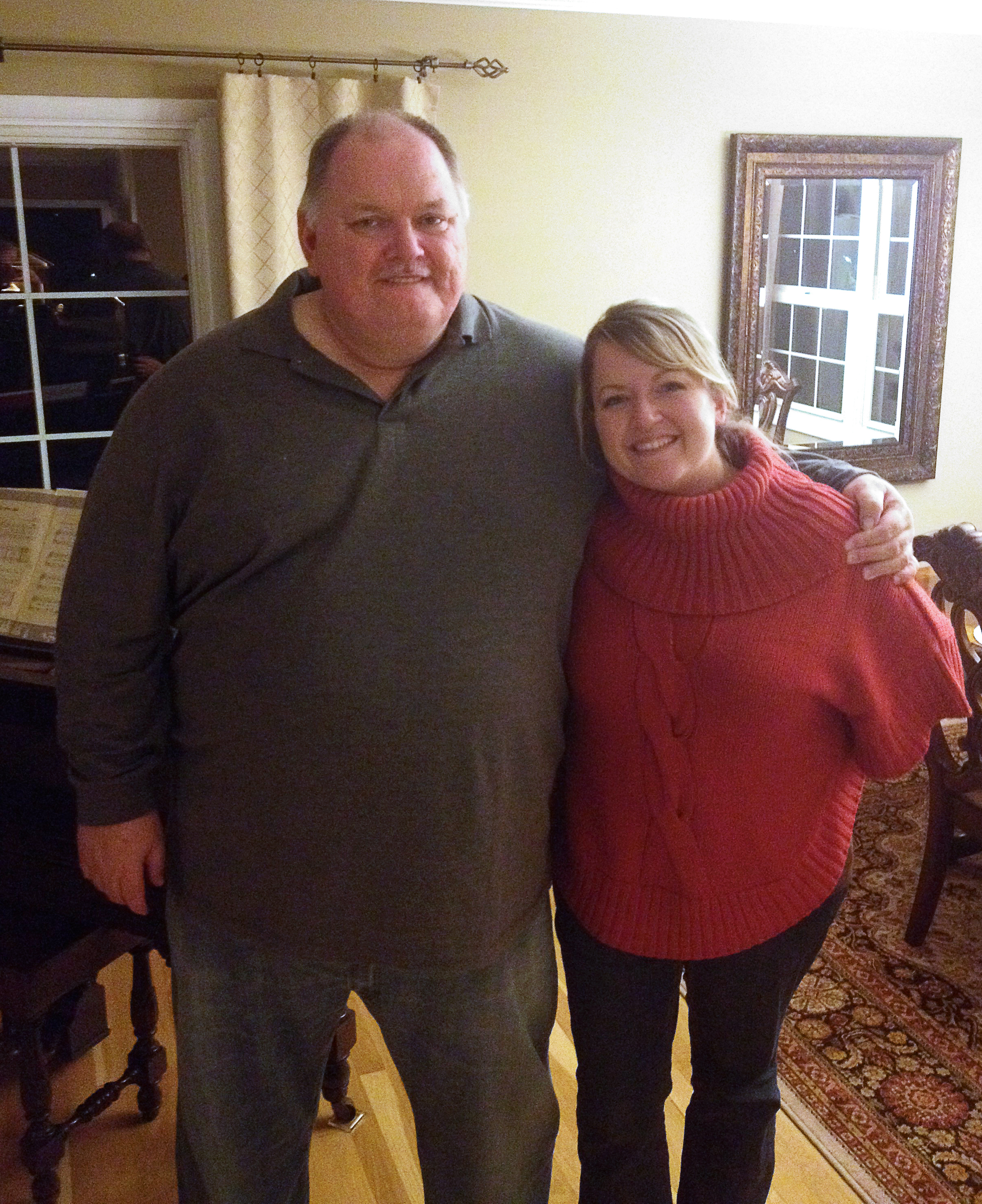
Neal Shytles and Ashley McLemoreIt is important to keep in mind that there are an awful lot of good people in this world.
From the Washington Post:

“It started with the loneliest of pleas: “Large, 54 y.o. Christian, homeless male is looking for a person, family or couple to share Thanksgiving day with,” Neal Shytles wrote in an online ad. Last year he spent the holiday at a shelter, and although probably 200 other men were there eating turkey, “you sit down, you eat, you get up and leave,” he said. “Every day of the year is pretty much lonely for me, but Thanksgiving, Christmas is the worst time to be alone.”

So when a stranger, Ashley McLemore, offered to take him to her family’s home in Newport News for the holiday, he burst into tears. She did, too.

But that was just the beginning. His story resonated with people in Norfolk, where he has been staying at Union Mission Ministries, across Virginia and as far away as Europe and the South Pacific.”

Read what happened next here. Continue reading

Ethics Dunce and Unethical Facebook Post of the Month: Elizabeth Lauten, Spokeswoman for Rep. Stephen Fincher (R-Tennessee)

Elizabeth Lauten, communications director for Republican Congressman Stephen Fincher, decided that she is authorized to give parental advice to First Offspring Sasha (13) and Malia (16) Obama. She was deeply troubled by the young ladies looking bored in photographs she saw online, so she posted this jaw-dropper on Facebook:

Facebook lecture

Wow. What a Thanksgiving feast of unethical features! Let’s see: Continue reading

Ethics Dunce: Jon Stewart

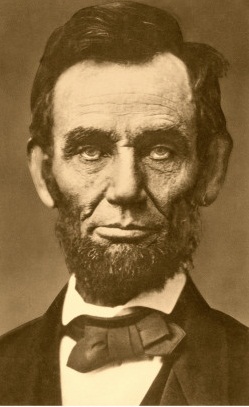
Meanwhile, Lincoln pretty much just lay around after he was President...

Meanwhile, Lincoln pretty much just lay around after he was President…

Face the Nation had George W. Bush on today as its primary guest,  so the show’s lead in, CBS This Morning, asked its guest, “Daily Show” host Jon Stewart, what question he would ask the man who preceded President Obama in the Oval Office.  Stewart’s smirking reply,

“ ‘Tell me about umber and how it helps you in painting cats.’ Jimmy Carter’s like 108? He’s out in Africa pulling guinea worms out of children’s feet, trying to cure them. Bush is at home. ‘Bring me my fruit bowl. Doin’ a still life!”

The technical term for this is, I believe,“being a dick.” Yes, it’s vulgar, but the usual terms don’t quite do Stewart’s gratuitous and unfair nastiness justice in trhis instance.

I recognize that Stewart, who eschewed a flood of well-deserved Democrat jokes over the past five days because he could not get around his massive anti-Republican biases, is in mourning over the GOP electoral avalanche that turned the nation red at all levels of government in all regions. Poor baby. Nonetheless, mocking one President of the United States for his activities in retirement because they do not measure up, in Stewart’s value system, to what Presidents are supposed to do is evidence of a stunning lack of grace, decency,proportion, self-awareness and common sense. Continue reading

Ethics Dunce: “Girls” Creator/Actress Lena Dunham

Dunham

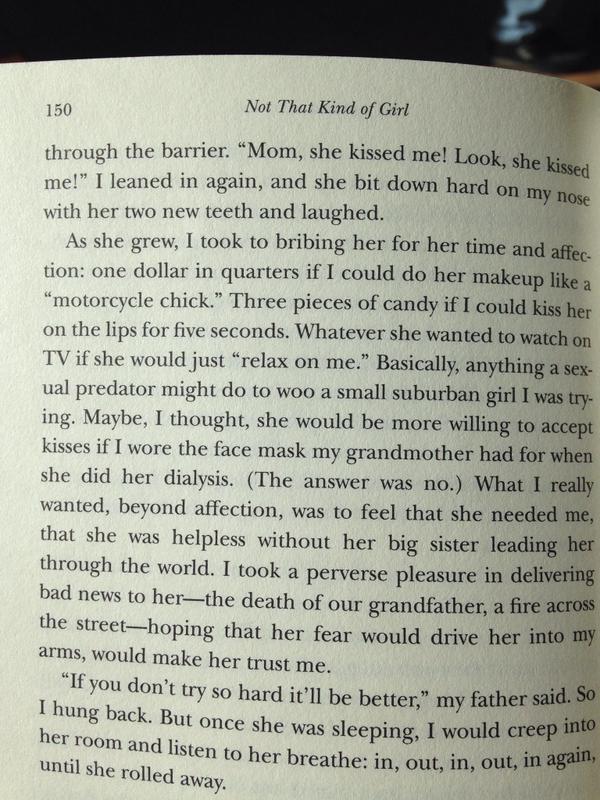
Lena Dunham, creator and star of the inexplicably critically acclaimed HBO series “Girls,” has written a memoir, “Not That Kind of Girl.” Here are ten inquiries regarding its most controversial passages, like the one above,  and the reaction to them:

1. What does one say about a Hollywood figure who puts a passage like this in her memoirs, writing about her relationship with her sister, who was six years younger…

“As she grew, I took to bribing her for her time and affection: one dollar in quarters if I could do her makeup like a “motorcycle chick.” Three pieces of candy if I could kiss her on the lips for five seconds. Whatever she wanted to watch on TV if she would just “relax on me.” Basically, anything a sexual predator might do to woo a small suburban girl I was trying.”

2. Or this…

“I shared a bed with my sister, Grace, until I was seventeen years old. She was afraid to sleep alone and would begin asking me around 5:00 P.M. every day whether she could sleep with me. I put on a big show of saying no, taking pleasure in watching her beg and sulk, but eventually I always relented. Her sticky, muscly little body thrashed beside me every night as I read Anne Sexton, watched reruns of SNL, sometimes even as I slipped my hand into my underwear to figure some stuff out.”

3. Or, most famously, this...

“Do we all have uteruses?” I asked my mother when I was seven.

“Yes,” she told me. “We’re born with them, and with all our eggs, but they start out very small. And they aren’t ready to make babies until we’re older.” I look at my sister, now a slim, tough one-year-old, and at her tiny belly. I imagined her eggs inside her, like the sack of spider eggs in Charlotte’s Web, and her uterus, the size of a thimble.

“Does her vagina look like mine?”

“I guess so,” my mother said. “Just smaller.”

One day, as I sat in our driveway in Long Island playing with blocks and buckets, my curiosity got the best of me. Grace was sitting up, babbling and smiling, and I leaned down between her legs and carefully spread open her vagina. She didn’t resist and when I saw what was inside I shrieked.

My mother came running. “Mama, Mama! Grace has something in there!”

My mother didn’t bother asking why I had opened Grace’s vagina. This was within the spectrum of things I did. She just got on her knees and looked for herself. It quickly became apparent that Grace had stuffed six or seven pebbles in there. My mother removed them patiently while Grace cackled, thrilled that her prank had been a success.

?

I say that that the Hollywood darling apparently used her little sister as a sex toy for at least a decade, was never stopped or admonished for doing so by remarkably negligent parents, and has grown to adulthood without recognizing that there is anything wrong with her conduct.

The first passage not only treads on the borders of incest, but also leaves the uncomfortable question of what else she did to her sister that emulated a sexual predator. The second is profoundly creepy, and the third describes what, if true, is abuse of an infant in terms designed to sound erotic. As blogger Ann Althouse points out, does anyone believe that an infant would stuff pebbles in herself “as a prank,”or that a compos mentis parent wouldn’t immediately assume that the older girl had done it to the younger girl? At best, Dunham is lying, and doesn’r realize that her lie puts her and her family in a terrible light.

4. What can we conclude about the character of a celebrity who proposes such conduct as harmless fun, apparently unaware that it violates standards of fairness, respect and caring, to be emulated and embraced by her readers and anyone whom they have influence over, including their own children, as a legitimate cultural norm? I conclude that her values are seriously and perhaps clinically warped. and that the more critics point this out, the safer everyone is, present and future. Lena Dunham is an ethics corrupter. Continue reading

Comment of the Day: “’Bang The Drum Slowly,’ My Old Friend, and Me”

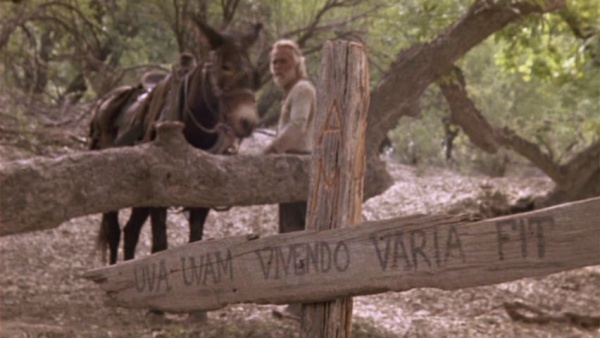
Gus Grave

Extradimensional Cephalopod was kind enough to post this wise and evocative reflection prompted by my recent post following the sudden, but really not so sudden, death of an old friend over the weekend. His thoughts helped me a great deal, and I am grateful: here, without further comment, is EC’s Comment of the Day on the post, “’Bang The Drum Slowly,’ My Old Friend, and Me”: Continue reading

“Bang The Drum Slowly,” My Old Friend, and Me

The American Century Theater's "Bang the Drum Slowly"

The American Century Theater’s “Bang the Drum Slowly”

I haven’t mentioned it here, but we are ending the 20 year adventure of my intentionally out-of-fashion theater company, The American Century Theater, after next season. One of the things I will miss most about it is that working so closely with the great works of stage literature we produce causes their wisdom and life observations to stick with us. Since I tend to choose works that involve ethical dilemmas, this has had professional as well as personal benefits.

I was thinking about the Mark Harris play (and novel, and movie) “Bang The Drum Slowly” in May, when I wrote about the kindness shown to Pasco High School student Vanessa Garcia, who was dying of cancer, because we were performing it at the time.  The story involves a baseball team and how it responds to a third-string catcher who is dying of Hodgkin’s Disease. It is about kindness and the Golden Rule, and the ways the impending death of someone in our life often brings into sharper focus the importance of kindness and our shared obligations on this perplexing journey to oblivion we all must travel together. But I really wasn’t thinking about “Bang The Drum Slowly” yesterday. Yesterday, I was just having a wonderful time talking about baseball, politics and family with my old friend from law school, who happened to be in a hospice. Continue reading

Ethics Dunce: Chris Blasko (Whoever He Is)

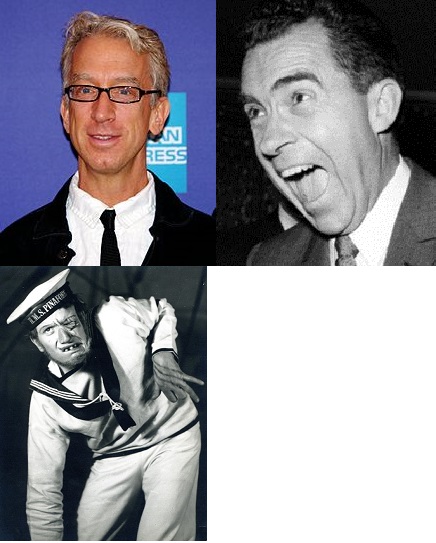
Chris's photo goes in the lower right...

Chris’s photo goes in the lower right…

A Chris Blasko proudly posts the following on Google Plus:

Today is a good day. I just had a call from a telemarketer. Did I yell and scream at them, you ask? Certainly not. Like a good IT administrator I put my skills to use for their benefit. Here’s how the conversation went:

Computer: “Press 9 to not be contacted in the future. Press 4 to speak to someone about your mortgage issues”
<presses 4>
TM: “Hello, are you having problems paying your mortgage?”
Me: “Hi, this is the IT department. We intercepted your call as we detected a problem with you phone and need to fix it.”
TM: “Oh… ok, well what do we need to do?”
Me: “We’re going to need to fix the settings by pressing 4-6-8 and * at the same time”
TM: “Ok, nothing happened.”
<alright, so he’s not using a Polycom>
Me: “Are you using the new Polycom phones that we deployed?”
TM: “No, it’s a Yealink”
Me: “Ok, I see. You haven’t had the new Polycom phone deployed to your desk yet. Let me check our technical documentations for the Yealink.”
<did a quick Google search, “yealink phone factory reset”>
Me: “Alright, do you see an “OK” button on your phone?”
TM: “Yes I do”
Me: “Alright, you’re going to press and hold that button for 10 seconds.”
TM: “OK, pressing it now”
Me: “Perfect, let me know if you get a password request”
TM: “OK, nothing has popped up ye-
<click>

That’s right. I made a telemarketer unwittingly factory reset his phone which means he will be unable to make anymore calls until someone is able to reconfigure his phone and that will take at least an hour or longer if they can’t do it right away!

I’m sure all of Chris’s fans think this is just the coolest thing in the world, but it’s really not. It’s just gratuitously mean. His victim’s employer is actually pretty ethical, since Chris could have pushed 9 to end the call and not be bothered in the future. Instead, he decided to make life miserable for some poor minimum wage earner in one of the most boring jobs on earth, who is probably trying to eke out a living and support his family during tough economic times. Continue reading

A Proposed Guide To Spoiler Ethics

"It SINKS??? You spoiled the ending!!!"

“It SINKS??? You spoiled the ending!!!”

I was just admonished on Facebook by a friend (a real friend, not just the Facebook variety), for referencing the end of the last episode of Season One of “Orange is the New Black.”  He hadn’t finished viewing the season yet, and this was a breach of spoiler ethics. Or was it?

Ever since I encountered for real someone who was angry with me for “spoiling” the end of “Thirteen Days,” ( “Yes, World War III started and everybody died”), I have been dubious about spoiler etiquette. The advent of DVDs and Netflix has made this all the more annoying. If I’m in a group of five, and one individual hasn’t kept up with “House of Cards,” are the rest of us obligated to censor our discussion? As a devotee and fanatic devourer of popular culture, I admit that my first instinct is to say, “Keep up, get literate, or pay the price.” If I actually live by that rule, however, I will be a walking, talking, writing, spoiler machine.

Chuck Klosterman, “The Ethicist” in the world of the New York Times, recently pronounced himself an anti-spoiler absolutist:

“I’m an anti-spoiler fascist. I don’t believe that any conversation, review or sardonic tweet about a given TV show is more valuable than protecting an individual’s opportunity to experience the episode itself (and to watch it within the context for which it was designed). I’ve never heard a pro-spoiler argument that wasn’t fundamentally absurd.”

Even Klosterman, however, excepted sporting events (the question posed involved mentioning World Cup scores to a friend who was annoyed that the game had been “spoiled” for him) from his fascism, writing, reasonably:

“I must concede that live, unrehearsed events are not subject to “spoiler” embargoes A live event is a form of breaking news. It’s not just entertainment; it’s the first imprint of living history. …Because this guy is your buddy, you might want to avoid discussing the games’ outcomes out of common courtesy — but not out of any moral obligation. It’s his own responsibility to keep himself in the dark about current events.”

For once I agree with Chuck. But what are reasonable ethics rules for dealing with the other kind of spoiler, involving literature and entertainment?

Luckily, this is not new territory, though it is evolving territory. The underlying ethical principles include fairness, trust, consideration, compassion, and empathy, which means that the Golden Rule is also involved.

Back in 2010, an erudite blogger calling himself The Reading Ape proposed a draft “Guide to Responsible Spoiling.” That blog is defunct; the promised successor is not around, and so far, I haven’t been able to discover who the Ape is. Whoever he is (Oh Aaaaape! Come back, Ape!) , he did a very good job, though some tweeks might  improve his work, especially in light of the emergence of Netflix.  (I have edited it slightly, not substantively…I hope he doesn’t mind, or if he does, that he’s not a big ape.) His approach is to frame the problem as an ethical conflict, in which two competing ethics principles must be balanced. I think that’s right.

Here is his “draft”—what do you think?

“A Brief Guide to Responsible Spoiling”

by The Reading Ape (2010)

The objective is to balance two ethical principles:

I. The Right to Surprise: The inherent right of any viewer or reader to experience the pleasure of not knowing what’s
going to happen next.

II. The Right to Debate: The inherent right of any viewer or reader to engage in public discourse about the content of
a given work of narrative art.

Part 1: When Spoiling is Fair Game

In the following circumstances, one can discuss crucial plot details and reveal endings with a clear conscience. Continue reading

Ethical Conflict: The Case Of The Confused Cabbie

taxi1Heading to downtown Washington D.C. for an early morning ethics presentation for the Federal Bar (at the GAO building), I encountered an ethical dilemma that got the day off to a challenging start.

Traffic in D.C. is ridiculous, so I arranged to have an Alexandria cab pick me up at 8:15 AM for a 9:30 AM presentation, assuming that I would arrive close to 9:00. I would have too, except that my young, African-accented cab driver had no idea where he, or I was going. I should have foreseen the problem when the cab was ten minutes late (this company knows my address and typically arrives early), but it came into sharp focus when the driver asked “So you know how to get there, right?” (No, I don’t know how to get anywhere, which is why you are the cab  driver, and I’m not) and made it startlingly clear that he didn’t know how to read his GPS. As a result, he made multiple wrong turns, even though the screen in front of him was showing him the way, and I ultimately had to interpret the GPS directions for him. I barely arrived on time, and felt like I had done the driving.

My initial instinct was to call the company and complain. I even took down the cab number.

And my thinking went like this: Continue reading

Ethics Quiz: If There Is Going To Be A Racial Double Standard For Bigoted Statements, Can We Please At Least Know What It Is?

stop-sign2

Item: Donald Sterling, billionaire owner of the NBA Clippers, while speaking with his mistress/girl friend/ escort in the bedroom, announces that he doesn’t want her bringing black men to Clippers games. In the process, he does not say anything specifically derogatory about African- Americans. He believes the statement is private, and that he is talking to someone he could trust.He was wrong. A recording of the conversation was leaked to the press, and Sterling has been roundly vilified as a vile racist, threatened with a boycott by the players, mostly African-American, in the NBA, fined 2.5 million dollars and banned from the game.

Item: Via Mike Wise, Washington Post sports writer—

“Following Wednesday’s Pacers-Wizards game in Indianapolis, during the time when NBA rules permit media members to be present, the music blaring in the Indiana locker room was filled with vile language: racist, homophobic and misogynist. Afterward, I complained on Twitter that if Commissioner Adam Silver truly wants an inclusive league, he ought to address this (common) practice.”

Result: Wise, who is white, was attacked as a racist. What NBA players listen to in the locker room is none of his business, he is told (but what Donal Sterling says in his bed room is their business.) The NBA has done, and is expected to do, nothing.

Item: Appearing on ESPN where he is a commentator, Charles Barkley, former NBA star (and an African-American), decided to deride the women of San Antonio, Texas as fat. “There’s some big ‘ol women down there,” said Barkley. “That’s a gold mine for Weight Watchers.” He added, “Victoria is definitely a secret. They can’t wear no Victoria’s Secret down there.” A spokesperson for a fat acceptance group protested:

“Making slurs about body size is just as offensive as making comments about body color. One would think being a black man, he’d be more sensitive to having his physical body criticized. It’s totally out of line. He should absolutely apologize.”

Barkley not only refused to apologize, but defiantly challenged anyone objecting to his remarks, jokes or future comments to “change the channel.”  Nobody expects Barkley to suffer any consequences from this series of events.

Item: In 2007, talk show provocateur Don Imus got into a facetious discussion with a broadcast team member about how te women’s basket ball team from Rutgers was “rough looking” and had some “nappy-looking ho’s.” He also referenced Spike Lee’s “Do the Right Thing,” and the film’s “Jigaboos vs.  Wannabes.” Imus apologized profusely, pronouncing the exchange inappropriate, thoughtless and stupid. Under pressure from various civil rights groups,  WFAN, which produced his show, fired Imus, who has never regained his previous prominence.

Item: In 2013, media professional Justine Sacco tweeted a race-based joke before boarding a plane to Africa: “Going to Africa. Hope I don’t get AIDS. Just kidding. I’m white!” A furious cyber mob condemned her as a racist, and demanded her punishment. When she landed in Africa, she learned that she had  been fired.

Your Ethics Alarms Ethics Quiz for today is…

What the hell is going on here?

Continue reading